AHA ACLS
- 39.00
- 3.4
- Installs
- 50.00K
- Price
- Free
Screenshots

Analysis by Reviewed
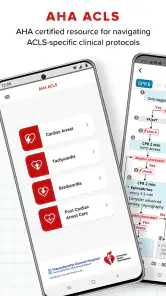
I came away from AHA ACLS with a fairly clear impression: it is a focused medical reference and practice tool for people who already need to think in advanced cardiac life support terms, not a general first-aid app for casual users. Its purpose is practical. It puts ACLS protocols and a code-running format into a mobile app that can be opened during study, preparation, or a structured training session. I found that narrower focus more valuable than a long collection of unrelated medical topics.
The app is published by Massachusetts General Hospital IS and is available as a free medical app for Android users. It has an Everyone content rating, so the store presentation is not aimed at a restricted age group, but the subject itself is serious and clinically oriented. The current release is version 3.2.0, and it runs on Android 8.0 or later. That makes it accessible on many older phones, although anyone using it in a clinical environment should still treat it as an educational reference rather than a substitute for current institutional policy, formal certification, or direct clinical judgment.
What using the ACLS reference feels like
The most useful way to approach this app is as a compact companion for rehearsing how an emergency response unfolds. Instead of opening a broad medical encyclopedia and searching through unrelated material, I can go directly to the ACLS-oriented content. That makes a difference when I am reviewing a rhythm-management sequence, preparing for a class, or trying to identify where my reasoning becomes uncertain.
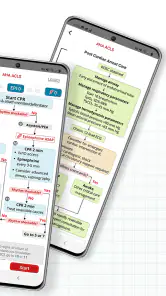
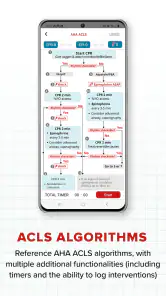
Its code-runner concept is especially relevant to learners who struggle with memorizing isolated steps. ACLS is not only a collection of drug names, rhythms, and interventions; it is also about timing, reassessment, communication, and choosing the next action as the situation changes. A guided run-through can expose whether I understand the order of decisions or whether I merely recognize individual terms when I see them on a page.
I would not describe the experience as a replacement for hands-on simulation. A phone cannot reproduce the pressure of a team leader managing compressions, airway decisions, defibrillation, medication preparation, and changing patient information at the same time. What it can do well is support mental rehearsal. That is a valuable middle ground between reading a protocol once and practicing it with a full training team.
The protocol material is also more useful when I read it actively. Rather than scrolling passively, I would pause at each decision point and ask myself what I would do before checking the next instruction. This simple habit turns the app into a self-test. It also reveals a practical weakness: users who only skim the screens may feel familiar with the process without actually being able to recall it under pressure.
A better workflow for study sessions
My preferred workflow would be to start with a short review of the relevant protocol, then run through the code sequence without looking ahead, and finally return to the points where I hesitated. That last step matters more than repeating the entire exercise from the beginning every time. It turns the app into a targeted revision tool rather than a digital document that I open only before an exam.
More From Our News Desk

Clash of Clans Is Won Between the Battles

Android Auto Makes the Case for Quieter Car Software

MobiOffice: Transforming Mobile Productivity with Seamless Integration

EA SPORTS FC™ Mobile Soccer: Redefining Mobile Sports Gaming

How Microsoft OneDrive Became a Mobile Productivity Giant

How Google Translate Breaks Language Barriers Effortlessly
Another useful approach is to use it with a partner. One person can act as the team leader and explain each decision aloud while the other checks the app. This exposes gaps that silent reading hides, particularly around transitions between assessment, intervention, and reassessment. The app becomes more valuable when it supports conversation instead of being treated as an authority that removes the need to think.
I also see a role for it after a classroom session. A course may provide the social realism and equipment that a phone cannot, while this app offers a convenient way to revisit the sequence later. That combination is stronger than either method alone. The app is easier to access than printed notes, but the classroom remains better for practicing teamwork, communication, and physical skills.
For an instructor, the app could help structure a quick warm-up before a more demanding exercise. It may also help identify which protocol areas deserve discussion. I would still want the instructor to verify that the material matches the course’s current teaching approach and local procedures before making it the only reference used by a group.
Where it is genuinely stronger than ordinary alternatives
The usual alternative for ACLS revision is a handbook, a course manual, or a general web search. Those options can contain more explanation, but they are not always convenient when I need a focused sequence. A handbook is dependable for extended reading, while a search engine often produces a mixture of official, educational, and outdated pages. A dedicated app reduces that initial friction by keeping the subject in one place.
Compared with a simple PDF, an interactive code-running approach has a practical advantage: it encourages decisions rather than recognition. A PDF can be excellent for checking a detail, but it does not naturally prompt me to commit to the next step before moving on. That difference is small on a quiet afternoon and much more important when the goal is to build usable recall.
Compared with a full simulation platform, however, AHA ACLS is intentionally limited. It does not give me the physical or interpersonal experience of a resuscitation team. It is better for individual review, quick refreshers, and protocol orientation than for evaluating whether I can perform effectively in a realistic room.
The app’s free entry point is another practical benefit. I can try the core experience without first making a purchase decision, which is helpful for students and clinicians deciding whether this style of revision suits them. There are in-app purchases priced at $3.99 per item, so I would check what is included before treating the app as a completely cost-free study solution. The free availability lowers the barrier, but the optional paid items may affect how much of the experience is available without spending more.
The limitations I would take seriously
The average rating sits at 3.4 from around 164 ratings, with 39 written reviews. I would read that as a sign to keep expectations measured rather than assuming the app will feel polished for every learner. A middling reception does not make the content useless, but it suggests that usability, clarity, or the balance between free and paid material may matter to different people in different ways.
The biggest limitation is the danger of false confidence. An app can help me remember a sequence, but successful ACLS performance also depends on rhythm recognition, high-quality CPR, equipment familiarity, communication, and adapting to the patient in front of me. If someone uses the app as proof that they are ready to lead a real resuscitation, they are asking it to do a job it cannot do.
I would also be cautious about relying on any mobile protocol reference without checking it against the current course materials and workplace guidance. Medical protocols can be taught within specific systems, and a hospital or training provider may expect particular documentation, terminology, or processes. The app is most sensible as a study companion that supports formal learning, not as the sole source consulted during a live emergency.
There is a second kind of friction: focused tools can feel too narrow if I want broader emergency-care coverage. Someone looking for pediatric guidance, general first aid, symptom information, or a complete clinical reference will probably find this app insufficient. Its strength comes from concentration on ACLS, so the same concentration becomes a weakness for users whose needs extend beyond that area.
Phone-based review also depends on the user’s environment. A small screen is convenient for a quick check, but it is not always ideal for comparing several branches of a protocol or reading while managing other tasks. I found that the app makes the most sense when I set aside a few uninterrupted minutes rather than trying to use it as background material during a busy shift.
Who should install it
I would recommend AHA ACLS most strongly to healthcare students, clinicians reviewing advanced cardiac life support concepts, and people preparing for a structured ACLS learning experience. It is particularly suitable for someone who wants a focused way to rehearse decision paths instead of carrying a manual everywhere. The fact that it has over 50 thousand installs suggests that it has reached a meaningful audience, although popularity alone should not be confused with clinical completeness.
It can also suit a learner who knows that reading is not enough. If I tend to recognize an answer after seeing it but struggle to produce the answer independently, the code-runner format gives me a more active way to study. I would use it before a course to identify weak areas, after a course to reinforce the sequence, and periodically afterward to maintain familiarity.
It is less appropriate for a member of the public who simply wants to know what to do in an emergency. The subject matter is specialized, and an untrained person should follow emergency-dispatch instructions and seek professional help rather than trying to navigate an ACLS protocol from a phone. It is also not the right choice for someone seeking a full simulation experience, an all-purpose medical reference, or a replacement for certification training.
For educators, I see the most value when the app is used as one layer in a larger lesson. An instructor can ask learners to explain why they chose a particular branch, then use the app to check the sequence. That approach preserves clinical reasoning and avoids turning the material into a memorization contest. The app is a prompt and reference; the educator supplies context, correction, and realism.
Practical questions before relying on it
One question many users will have is whether it is useful without a course. My answer is yes, but only in a limited sense. It can introduce the structure of ACLS and help a motivated learner organize revision, yet it cannot provide the complete instruction, assessment, or practical feedback that formal training delivers. I would not begin with the app alone if I had no background in resuscitation.
Another question is whether the free download makes it suitable for regular study. It is worth trying because there is no purchase price for the app itself, but the presence of $3.99 in-app items means I would inspect the available material before building a long-term study plan around it. If the sections I need are behind individual purchases, the total cost and convenience should be compared with a course manual or another authorized reference.
Users may also wonder whether an older Android phone can handle it. The minimum requirement of Android 8.0 or later is relatively accommodating, so compatibility should be reasonable for devices that still receive normal app support. I would nevertheless install and test it before a class or shift, especially if the phone is old, storage is tight, or dependable access matters.
A further concern is whether the app can replace a printed protocol card. I would not make that substitution automatically. A phone is searchable and interactive, but it can be distracting, run low on power, or become awkward to handle when gloves and equipment are involved. A printed or institution-approved reference may remain the better choice for immediate operational use, while the app is more comfortable for preparation and revision.
Finally, is it worth using if I already own an ACLS handbook? I think it can be, provided the roles are clear. The handbook is better for detailed reading and annotation; the app is better for quick, active rehearsal. If the app merely duplicates material I already know and does not improve my recall, the handbook may be enough. Its value depends on whether the interactive format changes how I study.
My final assessment
AHA ACLS succeeds because it addresses a specific problem: turning ACLS knowledge into a sequence that can be mentally rehearsed. I appreciate that focus, the low initial barrier, and the possibility of using it in short study sessions rather than committing to a long reading session. The strongest benefit is not that it places medical information on a phone; it is that the code-running idea can make me actively choose what happens next.
At the same time, I would keep its boundaries visible. It is not a live emergency guide for untrained users, not a full replacement for certification, and not a substitute for simulation or local clinical guidance. The middling average rating also tells me to approach the interface with realistic expectations, while the paid items mean that “free” should be understood as free to start rather than necessarily free in every part.
My recommendation is therefore specific: install it if you are already studying or practicing ACLS and want a compact tool for decision-based revision. Use it alongside formal instruction, hands-on practice, and approved current references. Skip it if you need general first aid, broad medical advice, or a realistic team simulator. For the right audience, its best role is a rehearsal partner, not a replacement for training or clinical judgment.
AHA ACLS Frequently Asked Questions
Is AHA ACLS free to download, and are there any in-app purchases?
AHA ACLS is free to download, with in-app purchases listed at $3.99 per item. That means you can install the app without an upfront purchase, but some content or features may require an additional payment. Check the app’s purchase details before buying anything, and consider whether its study and reference tools fit your needs before proceeding.
What operating system does AHA ACLS require, and is it available for my device?
AHA ACLS requires Android 8.0 or later. Before downloading, check your device’s operating system version and confirm that the app is offered for your device through its app store. The app is a medical reference and study tool, so it is also worth considering whether you can comfortably read and use clinical material on your phone or tablet.
What is the AHA ACLS app used for?
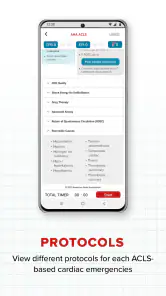
The AHA ACLS app is designed to support healthcare professionals and students studying Advanced Cardiovascular Life Support procedures based on American Heart Association guidelines. It can help users review treatment algorithms, cardiac arrest protocols, medication information, and resuscitation concepts. It should be considered an educational and reference tool, not a replacement for approved training, certification courses, clinical supervision, or local emergency-care protocols.
Who can benefit from using AHA ACLS?
This app is mainly useful for nurses, physicians, paramedics, emergency medical technicians, medical students, and other healthcare workers preparing for or maintaining ACLS knowledge. It may also help certified providers refresh important concepts between courses. However, users should already have suitable medical education, because the terminology and treatment recommendations can be difficult for beginners without clinical background or formal instruction.
Does AHA ACLS replace an official ACLS certification course?
No. Using an ACLS reference app does not provide official certification and cannot replace hands-on training, instructor guidance, practical skills testing, or an American Heart Association course. ACLS requires more than memorizing algorithms; providers must demonstrate assessment, teamwork, airway management, rhythm recognition, and resuscitation skills. Always confirm certification requirements with your employer or recognized training center before relying on the app.
Pros
- Clear ACLS algorithms for fast reference during emergencies.
- Includes practical case scenarios to reinforce clinical decision-making.
- Useful for students
- nurses
- paramedics
- and practicing healthcare professionals.
- Covers key cardiac arrest rhythms
- medications
- and treatment steps.
- Offline access makes essential reference material available without internet.
Cons
- Some content may require a paid subscription or in-app purchase.
- Not a substitute for official certification courses or hands-on training.
- Medical guidelines may need updates as resuscitation recommendations change.
- The amount of clinical information can feel overwhelming for beginners.
- Primarily designed for healthcare professionals
- not general users.
- Category
- Medical
- Version
- 3.2.0