102.5 The Bone: Real Raw Radio
- 901.00
- 3.3
- Installs
- 50.00K
- Price
- Free
Screenshots
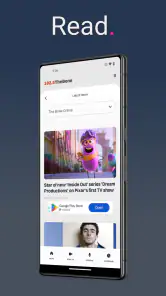
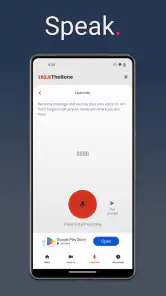
Analysis by Reviewed
102.5 The Bone: Real Raw Radio is the kind of app I would open when I want a direct connection to a particular radio station rather than a broad news feed or a general-purpose music service. It belongs to the News & Magazines category, but its appeal is more focused than that label suggests: this is a station-centered listening app from Cox Media Group Inc., built around the identity of 102.5 The Bone.
After spending time with it, my impression is fairly clear. This is best understood as a companion for people who already want 102.5 The Bone in their daily routine, not as a replacement for every radio, podcast, or news app on a phone. It can make station listening more convenient, especially when I am away from a traditional radio, but its value depends heavily on whether the station’s style matches what I want to hear.
The app is free, carries a Teen content rating, and supports devices running Android 8.0 or later. Its current version is 12.0.91, while the app itself has been available since May 27, 2014. That long presence gives it a different feel from a newly launched streaming experiment: it is an established station app that has moved through several versions, even though the quality of the experience still needs to be judged by how well it serves the simple task of listening.
How the current version feels in everyday use
My first recommendation is to approach 102.5 The Bone with one question: do you want this station specifically? If the answer is yes, the app makes more sense immediately. Instead of searching through a large radio directory, I can go straight to the station’s digital presence and use it as a quick access point during a commute, while doing chores, or when I want background audio at home.
A realistic example is a morning drive. I might already know that I want the station’s familiar programming rather than a playlist assembled by an algorithm. Opening a dedicated station app reduces the decision-making involved. I am not comparing dozens of channels or trying to recreate a local-radio feeling through a music service. I am simply choosing the station and settling into the broadcast.
That focus is also the app’s main limitation. A broad radio platform is usually more useful if I want to explore stations from different cities, switch between music formats, or find a particular kind of talk content. A podcast application is better when I want to pause a discussion, resume it later, or select episodes on my own schedule. This app is more immediate and less flexible: it is designed around the station experience rather than personal control over every piece of audio.
The store summary, “Real. Raw. Radio.”, captures the intended personality without explaining how the app fits into a wider listening routine. In my experience, the important distinction is between live listening and on-demand listening. If I am happy to join whatever is currently airing, a dedicated station app can feel refreshingly simple. If I expect a library of selectable programs, replay controls, or a carefully organized archive, I would look elsewhere.
More From Our News Desk

Clash of Clans Is Won Between the Battles

Android Auto Makes the Case for Quieter Car Software

MobiOffice: Transforming Mobile Productivity with Seamless Integration

EA SPORTS FC™ Mobile Soccer: Redefining Mobile Sports Gaming

How Microsoft OneDrive Became a Mobile Productivity Giant

How Google Translate Breaks Language Barriers Effortlessly
What the app is genuinely good at
The strongest use case is convenience for an existing listener. I do not need a separate physical radio nearby, and I can keep the station tied to the same device I already use for messages, navigation, and other daily tasks. That is especially useful for people who have moved away from the station’s traditional broadcast area but still want to check in with it digitally.
Another useful habit is treating it as a deliberate audio choice rather than leaving it running all day by default. I would open it for a commute, a workout, or a short household task, then close it when I need concentration. This helps avoid one of the common problems with live radio apps: starting a stream without considering whether the current program suits the moment.
The station-specific design can also reduce the clutter found in larger radio services. General radio apps often add discovery screens, recommendations, station categories, and unrelated content. Those tools are valuable when I am exploring, but they can slow me down when I already know what I want. With 102.5 The Bone, the narrow purpose is part of the appeal.
There is a trade-off, though. A narrow app has fewer ways to rescue a disappointing listening session. In a broad service, I can jump to another station or genre immediately. Here, if the current broadcast is not right for my mood, I may need to switch to another app entirely. That is not necessarily a flaw in the station app, but it is something I would consider before making it my only audio option.
How the app compares with radio and podcast alternatives
Compared with a regular FM radio, the app offers the convenience of phone-based access, but it also depends on the quality of the phone experience and the surrounding connection. Traditional radio remains effortless in a car with a strong local signal. The app becomes more attractive when I want the station on a device that does not include a conventional radio tuner or when I am outside the usual broadcast range.
Compared with a radio directory, it sacrifices variety in exchange for identity. A directory is a better fit for someone who enjoys browsing local stations, international channels, and niche formats. 102.5 The Bone is a better fit for a listener who does not want to browse and already has a clear destination.
Compared with a podcast app, the difference is even more important. Podcasts give me control over timing, episode selection, and often playback position. A live station app gives me immediacy and the feeling of joining an ongoing broadcast. I would choose the former for a long discussion I need to finish later, and the latter when I want the atmosphere of radio without planning what to play.
Compared with a music streaming service, the app is less personalized but potentially more spontaneous. Streaming services are excellent at letting me pick artists, moods, and playlists. A station can surprise me and provide a sense of shared listening, but I have less control over the next track or segment. That makes it a poor choice for a carefully controlled workout playlist and a reasonable choice for casual background listening.
What has changed over the app’s life
The current version, 12.0.91, shows that the product has continued to evolve since its original release. I see that as meaningful context, but I would not treat a version number alone as proof that every part of the experience has been transformed. Version updates can represent maintenance, compatibility work, interface adjustments, or broader technical changes, and the practical question for me is whether the current build feels dependable on my device.
For someone who has used the app for years, the most important effect of continued development is likely less about novelty and more about staying usable on modern phones. An app first released in 2014 needs ongoing attention simply to remain comfortable on newer operating systems and screens. The current Android requirement of 8.0 or later places it within a still-accessible range for many users, while also excluding older devices that have not been updated.
I would approach updates with a simple routine. After installing a new version, I would test the station before relying on it for a commute or a long drive. I would also check whether the app still behaves as expected when I move between Wi-Fi and mobile data, because live audio is more sensitive to changing conditions than a downloaded podcast. This is a practical precaution, not a criticism of this particular release.
The app’s average rating is 3.3 from around 1,900 ratings, with roughly 900 written reviews. I read that as a mixed signal rather than an automatic rejection. It suggests that the station has a meaningful audience but that the experience does not satisfy everyone consistently. For me, those numbers reinforce the need to test it personally: a station fan may value the direct access much more than someone who is judging the app only as a generic audio player.
Where existing users may notice friction
The first potential frustration is that a live station does not always match the moment I open it. I may arrive during a segment I do not enjoy, or I may want something quieter while the station is offering energetic talk. The app cannot solve that basic reality without turning into a different kind of product. My workaround is to treat it as one source in a small rotation rather than expecting it to cover every listening situation.
The second issue is the difference between access and control. Opening a station app can be fast, but it does not give me the same control I get from an on-demand library. If I am interrupted, I may not be able to handle the session in the same way I would with a podcast. Anyone who needs precise pause-and-resume listening should keep a podcast service available.
A third consideration is data and battery planning. Live audio is not the same as playing a file stored on the phone. I would use Wi-Fi where practical, especially for extended listening, and I would avoid assuming that a long session is cost-free simply because the app itself is free. The price of the app is free, but mobile data usage and battery impact are still part of the real-world decision.
There is also the question of content suitability. The Teen rating is a useful reminder that the station’s material may not be appropriate for every child or every family setting. I would be comfortable recommending it to a teenager only with the same judgment I would apply to the station itself, and I would not leave it playing automatically around young children without knowing what kind of segment is currently airing.
Small workflow choices that improve the experience
I found that the best way to use a station app is to give it a role. For example, I might reserve it for driving and household tasks, while using an on-demand service for focused work. That separation prevents me from becoming annoyed when live radio behaves like live radio. It also makes the app easier to evaluate because I am judging it against the job it is meant to do.
Another useful approach is to open it before I begin an activity rather than halfway through it. If I am leaving home, I can start the broadcast while still on Wi-Fi and then continue during the trip. This does not guarantee uninterrupted listening, but it avoids beginning a session in a weak-signal location and then blaming the app for a connection problem.
I would also keep a second audio option ready. This is particularly important for longer journeys. The station may be exactly right for most of the trip, but a saved podcast or offline music selection gives me an escape when the live program does not fit. The smartest setup is not choosing this app over everything else; it is using it where live station listening is the better tool.
For returning users, I would judge an update by practical behavior rather than by the appearance of a new interface. Can I reach the station quickly? Does listening remain stable during an ordinary session? Does the app still fit naturally into the way I use my phone? Those questions matter more than cosmetic changes, especially for an app whose central purpose is straightforward.
Who should install it, and who should skip it
I would recommend 102.5 The Bone to an existing fan of the station, someone who wants a direct mobile route to its broadcast, or a listener who prefers live radio’s shared, unscripted feeling over carefully selected playlists. It is also worth considering for people who want a simple station-specific app instead of a crowded radio directory.
I would be more cautious about recommending it to someone searching for general news coverage, a large selection of stations, or a full podcast catalog. Despite its News & Magazines classification, this is not the kind of app I would install as my main source for broad news reading. Its identity is tied to radio listening, and that distinction matters.
I would also skip it if I need offline playback, precise episode control, or a listening experience that stays identical from one session to the next. A podcast or music app will usually be better for those needs. Likewise, people with older Android phones should check compatibility before planning around it, since the app requires Android 8.0 or newer.
The install base is over 50,000, which indicates that it has reached a real audience without making it a universally used radio platform. I see that as consistent with its focused purpose. A station app does not need to appeal to everyone to be useful, but its usefulness is naturally strongest among people who recognize and want the station behind it.
What I would watch going forward
For future versions, I would pay attention to reliability first. A station app lives or dies by whether it gets me into the broadcast without unnecessary friction. I would also watch how well it keeps pace with Android changes, because long-running apps need to remain comfortable on current devices while still serving users who do not upgrade frequently.
I would be interested in whether the experience becomes more helpful around the live broadcast without losing its simplicity. Useful additions would need to support the station rather than bury it under unrelated discovery tools. The danger for a focused app is adding so many extras that the quick path to listening disappears.
I would also watch how the app handles the expectations of users who want more than a live stream. Some listeners may be satisfied with immediate access, while others increasingly expect replay, program information, or more control. Any move in that direction would need to be evaluated carefully: extra flexibility could make the app more useful, but it could also make it feel less direct than the station companion it is now.
My final view is positive but specific. 102.5 The Bone: Real Raw Radio is a sensible free download for people who already want 102.5 The Bone on their phone. I like its focused purpose and the way it can fit naturally into a commute or casual listening session. I would not present it as a universal replacement for radio directories, podcasts, or music streaming services, because it does not need to be all of those things. Its mixed average rating tells me to keep expectations realistic, while its long availability and current version suggest an app that continues to be maintained. If the station’s sound is what you are looking for, I think it is worth trying; if you want broad choice and complete playback control, another category of app will suit you better.
102.5 The Bone: Real Raw Radio Frequently Asked Questions
Who publishes 102.5 The Bone: Real Raw Radio, and what devices can run it?
102.5 The Bone: Real Raw Radio is a free News & Magazines app published by Cox Media Group Inc. It is available for Android and iOS, with Android support beginning at version 8.0. The app is intended for listeners who want to keep up with the station on a compatible mobile device, whether they are tuning in to the broadcast or exploring station-related content.
What is 102.5 The Bone: Real Raw Radio?
102.5 The Bone: Real Raw Radio is the official mobile app for the Tampa Bay radio station known for talk radio, comedy, entertainment, local personalities, and uncensored opinions. After installing it, listeners can generally use the app to stream the station live, check programming information, follow station updates, and access additional content connected with the station and its shows.
Can I listen to 102.5 The Bone live through the app?
Yes, the main purpose of the app is to provide access to the station’s live broadcast on a compatible Android or iOS device. Once the stream is started, you can listen over Wi-Fi or mobile data, although playback quality may depend on your connection, location, device settings, and the station’s streaming availability. Data charges may apply when using cellular networks.
Is 102.5 The Bone: Real Raw Radio free to download and use?
The application is generally available to download without an upfront purchase, but using its live audio stream requires an internet connection. Your mobile provider may charge for data usage, especially during long listening sessions away from Wi-Fi. The app may also include station promotions, advertising, contests, or links to external content, so the exact experience can vary by platform and version.
Does the app offer on-demand shows, podcasts, or extra station content?
Besides live radio, the app may provide access to show information, podcast-style recordings, interviews, news, promotions, event details, or other content published by 102.5 The Bone. Availability can change depending on the station’s current programming and licensing arrangements. Not every live segment is necessarily saved for later listening, so users should check the app’s content sections for the latest options.
Pros
- Live access to uncensored talk
- comedy
- and rock programming
- Easy way to follow 102.5 The Bone while away from a radio
- On-demand podcasts help catch up on missed shows
- Background playback lets audio continue while using other apps
- Useful for fans who want station updates and show information
Cons
- Content may include explicit language and mature discussions
- Streaming quality depends heavily on your mobile connection
- Continuous listening can consume significant mobile data
- Some shows or segments may not be available on demand
- Audio playback may pause because of battery-saving restrictions
- Category
- News & Magazines
- Version
- 12.0.91