تدارس القرآن
- 125.00
- 4.8
- Installs
- 500.00K
- Price
- Free

Screenshots
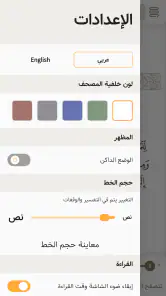
Analysis by Reviewed
Before installing, I’d think about how I expect to use a Quran study app. تدارس القرآن is presented as a learning companion rather than just a digital reading copy: the published review describes recitation, verse explanations, translations, and knowledge checks. That mix is appealing if I want to alternate between listening and study, but it also means the experience may depend on the content loading smoothly when I’m away from a reliable connection.
Where connectivity can shape a study session
For a short session at home, I’d open the app while connected and choose what I want to focus on before settling in. Audio and supplementary study material can make a session richer, but they are also the parts I would be most cautious about relying on when my signal is weak. If I’m heading somewhere with patchy reception, I wouldn’t assume every section will be available without a connection; I’d check the specific material beforehand rather than discover a loading delay halfway through listening.
A practical routine is to use the app in two passes: first listen or read when the connection is steady, then use a separate note or personal study plan to remember the passage I want to revisit. That avoids treating one app session as the only record of my learning. It is a small habit, but especially useful if a commute, shared network, or busy household makes uninterrupted use unpredictable.
Good fit for some routines, not every one
I can see this being useful for someone who wants more than a plain Quran reader and likes having several learning modes gathered together. A beginner may appreciate being able to pair a translation with an explanation, while a regular learner might use recitation and quizzes to vary a familiar study routine. If I were helping a family member build a brief daily habit, I’d suggest choosing one passage and one learning task rather than trying to explore every section at once.
It may be less suitable for a reader who mainly wants a minimal text-only interface, or for someone who needs dependable access to every resource while offline. In those cases, a lightweight reader or a dedicated audio option may be a better match. I’d also treat explanations as a starting point for learning, not a substitute for asking a qualified teacher when a question needs context or careful interpretation.
A realistic mobile use case
Imagine I have a few quiet minutes before an appointment. I can use that time for a short reading or listening session, then return to the same topic later when I have enough time to work through its explanation or a knowledge check. On a phone, that kind of split session is more realistic than expecting to complete a long study block in one sitting. The trade-off is that switching between tasks can make it harder to keep a train of thought, so I’d decide on a small goal before opening the app.
For data-conscious use, I’d be especially mindful of audio on mobile data. If I’m trying to limit usage, I can save listening for a trusted Wi-Fi connection and use shorter reading-focused sessions when away from it. This is not a claim about a particular data-saving setting; it’s simply a sensible way to plan around any app that includes audio. A quick check of the phone’s data controls can also help me understand which apps are using mobile data in the background.
More From Our News Desk

Clash of Clans Is Won Between the Battles

Android Auto Makes the Case for Quieter Car Software

MobiOffice: Transforming Mobile Productivity with Seamless Integration

EA SPORTS FC™ Mobile Soccer: Redefining Mobile Sports Gaming

How Microsoft OneDrive Became a Mobile Productivity Giant

How Google Translate Breaks Language Barriers Effortlessly
Simplifying Quranic Studies
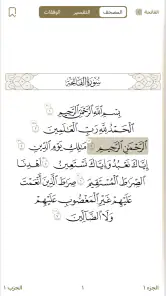
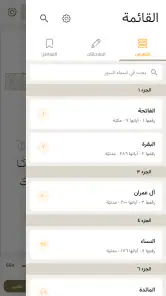
One of the first things you'll notice about تدارس القرآن is its sleek and intuitive design. The app is designed to make Quranic studies not just accessible but also engaging. With its easy navigation, you can jump from one chapter to another without any hassle. It’s like having a Quran in your pocket, but with added features that make learning a breeze.
Features That Stand Out
What truly sets this app apart are its features tailored for both beginners and advanced learners. For starters, the app provides audio recitations from renowned Qaris, which is a boon for those who prefer listening to the Quran. You can even choose from different recitation styles to match your preference.
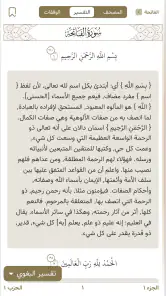
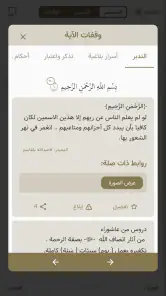
Another fantastic feature is the comprehensive tafsir (exegesis) available for each verse. It's like having a scholar explain the complexities of the Quranic verses to you in a way you can easily grasp. Plus, the app offers translations in multiple languages, so you're not limited if Arabic isn’t your first language.
Engage and Test Your Knowledge
Learning and understanding the Quran isn’t just about reading or listening. تدارس القرآن takes it a step further by incorporating quizzes and tests. These are not just fun but also a great way to measure your understanding and retention of what you've learned. It’s a fantastic feature that keeps you engaged and encourages you to learn more.
Seamless User Experience
The developers have done an incredible job ensuring the app runs smoothly on both Android and iOS. The interface is clean, and transitions between different sections are seamless. Whether you’re using an Android phone, an iPhone, or even a tablet, the experience is consistent and enjoyable.
Moreover, the app doesn’t bombard you with ads, which is a refreshing change from many other free apps. It respects your focus and dedication to learning, which I find quite commendable.
How I’d judge it against alternatives
In the Quran study app category, the usual alternatives tend to emphasize one main activity: reading a digital text, listening to recitation, or following structured lessons. The appeal here is the combination described in the review, which can reduce app-hopping when I want to move from a verse to its translation or explanation. The trade-off is that a focused specialist app may offer a simpler workflow for someone who already knows exactly what they need.
If a section takes time to load or a session is interrupted, I’d avoid tapping repeatedly or restarting immediately. I’d first check whether the connection has returned, then reopen the relevant section and continue with a smaller task. For study that matters to me, I’d keep track of the passage and question I was working on outside the app as well. That makes recovery less frustrating if I have to pause and come back later.
The app is free, rated for Everyone, and developed by TADARS. Its average rating is 4.8 from around 13 thousand ratings, with more than 500 thousand installs. It is listed in the Libraries & Demo area, which fits its educational, reference-like purpose better than a conventional entertainment app. The current version is 3.0.9, and the listed minimum Android requirement is 7.0; those details make it easier to judge basic compatibility before downloading.
Making a study routine that lasts
I’d approach the app as a place to support a repeatable habit, not as a checklist to finish. A useful first session could be as simple as reading a passage, listening to it once, and then checking one explanation. On another day, I could return to that same passage and use a quiz to see what stayed with me. Keeping the task small makes the different modes feel connected rather than like separate features competing for attention.
For a parent or older sibling helping a new learner, I’d set a clear boundary around the session: choose a short passage together, decide whether the focus is pronunciation, meaning, or recall, and stop when that goal is met. That gives the app a practical role without assuming that every learner benefits from moving through every tool. A child may enjoy a knowledge check, while an adult learner might prefer to spend the available time comparing a translation with the explanation.
Questions worth answering before relying on it
Would I use it for a full study plan? I would use it as one part of one, especially if I already know which passages or questions I want to revisit. I’d keep any longer-term goals in a notebook or calendar so that the routine remains clear even if I switch devices or pause the app. The distinction matters: a collection of learning resources can make study easier, but a personal plan still helps me decide what to do next.
Would it suit someone who is just beginning? I think so, provided they are comfortable taking the material step by step and asking for help when an explanation raises a difficult question. Translations can open a door for readers who do not know Arabic, and recitation offers another way to engage, but neither removes the value of patient guidance. I’d use the app to support curiosity, not to settle every interpretive question on my own.
Would I choose it for a long journey or a place with unreliable reception? Only after checking how the particular material I need behaves under those conditions. Before leaving, I’d open the planned passage and relevant resources while connected, then make sure I have a simple fallback, such as a written note of where I stopped. That is more dependable than discovering mid-journey that the session depends on network access.
And what if I’m mainly looking for recitation? The app may still be worth exploring, but a dedicated audio player can be a better fit if I want a listening-first routine and do not need explanations, translations, or quizzes. Likewise, a basic digital mushaf may feel calmer if my priority is uninterrupted reading. The right choice depends less on which app has more tools and more on whether those tools match the way I actually study.
Connectivity and the right expectations
My main practical question would be whether the parts I plan to use are available under my usual network conditions. I’d test a short recitation and open an explanation while connected, then see how the app behaves during an ordinary brief interruption rather than relying on assumptions. That simple check helps answer whether it suits travel, a workplace break, or a home study routine without turning the first session into a troubleshooting exercise.
The listing dates the app’s release to May 11, 2019, and its store summary points to a substantial creative effort. I don’t take that as a promise that every device or connection will behave identically; real use still depends on the phone and network in front of me. What matters most is whether its study tools fit my own pace and whether I can access the material when I need it.
Final Thoughts
In a world where distractions are aplenty, تدارس القرآن stands out as a beacon for those serious about deepening their understanding of the Quran. It’s not just an app; it’s a comprehensive tool that supports your spiritual journey. So, if you’re looking to enhance your Quranic knowledge in a structured yet flexible way, give this app a shot. It might just transform the way you engage with the Quran.
In summary, تدارس القرآن is an app that brilliantly combines modern technology with traditional teachings. It’s user-friendly, rich in features, and most importantly, it makes learning the Quran accessible to everyone. So go ahead, download it, and start your journey today!
My connectivity verdict
I’d recommend it most to someone who wants recitation and study resources in one place and can usually use the app with a stable connection. If I needed guaranteed access during long stretches without service, I’d choose a tool whose offline behavior I had already tested rather than assume this one will meet that need. For everyday connected study, though, its range of learning approaches makes it worth trying, with a modest first step: pick one passage, check how the resources load, and build a routine from there.
تدارس القرآن Frequently Asked Questions
Who develops تدارس القرآن?
تدارس القرآن is developed by TADARS, the team behind this Quran-focused app. The store describes its creation as an unprecedented creative idea supported by tens of thousands of hours of continuous work. If you are comparing Quran study apps before downloading, the developer name can help you identify the app and distinguish it from similarly named products.
What age group is تدارس القرآن intended for?
تدارس القرآن has an Everyone content rating, so it is presented as suitable for a broad audience. Families can consider the app for shared Quran reading and study, while taking a child’s age and learning needs into account when choosing how to use it. Its focus is the Quran and related study materials.
How large is تدارس القرآن, and when was it released?
تدارس القرآن was released on May 11, 2019, and has attracted more than 500,000 installs. That reach may be useful context when deciding whether to try the app, though downloads alone do not determine whether its approach suits your study habits. It is a Libraries & Demo app developed by TADARS.
Is تدارس القرآن free to download?
تدارس القرآن is free to download, so you can try the app without paying for access upfront. It is a Quran-focused app in the Libraries & Demo category, intended for people who want to read and study the text. Before installing, check that your device meets the minimum operating-system requirement, and make sure you are selecting the app from the developer TADARS.
What is the minimum operating-system requirement for تدارس القرآن?
The app requires Android 7.0 or later, so it is important to check your device’s software version before downloading. If your device meets that requirement, you can install the current version, 3.0.9. Keeping your operating system and app updated can also help you use the software smoothly and benefit from the latest improvements.
Pros
- Comprehensive Quranic study features
- User-friendly interface
- Audio recitations available
- Offline access to resources
- Daily reminders for consistency
Cons
- Limited language options
- Requires initial setup time
- Some features need internet
- Occasional bugs in updates
- Limited customization options
- Category
- Libraries & Demo
- Version
- 3.0.9










