World Map Quiz
- 998.00
- 4.7
- Installs
- 5.00M
- Price
- Free

Screenshots
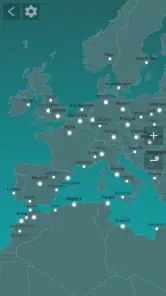
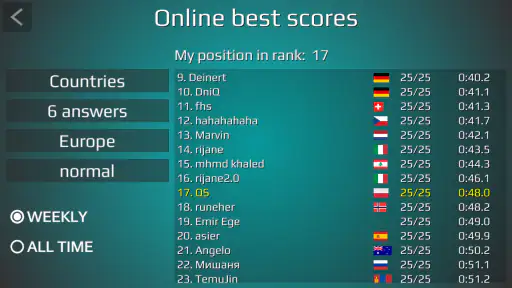
Analysis by Reviewed
I like geography games most when they turn a vague sense of familiarity into a useful mental map. The World Map Quiz is a trivia game from Qbis Studio built around that simple aim: look at a place, recall what you know, and get more comfortable locating countries around the world. It suits quick practice better than a long lesson, and I’d reach for it when I have a few spare minutes rather than when I want a detailed geography course.
A practical way to build a map in your head
My most useful approach is to treat each session as a small check-in, not a test of everything I know. I focus on one region at a time when possible, pause before guessing, and try to connect each answer to nearby countries or coastlines. That extra mental step is more valuable than tapping quickly: it helps turn isolated names into a picture I can recall later.
This makes the game a good fit for students who want informal revision, travellers curious about unfamiliar places, or anyone who enjoys testing general knowledge. It can also work as a low-effort shared activity: a friend can call out guesses while you play, then you can compare what each of you remembers. If you want detailed explanations of borders, history, or physical geography, though, a reference atlas or structured learning app will be a better companion.
Articles Related to World Map Quiz
Settings and habits that make practice count
Before settling into a routine, I’d check the available settings and choose a pace that feels comfortable. The best choice depends on whether I’m warming up, studying, or playing casually; I wouldn’t assume a faster pace automatically means better learning. When a question catches me out, I make a mental note of the location and revisit it in a later session instead of immediately tapping through on autopilot.
A useful everyday scenario is a short break between tasks. I can play for a few minutes, identify the places I hesitated over, and use those as a personal review list in my head. On another day, I can start with those weak spots before moving on. This repeatable routine makes a simple quiz more purposeful without needing a lengthy study plan or turning leisure into homework.
Where it fits among geography games
World Map Quiz has an average rating of 4.7 from around 58,000 ratings, and it has been installed over 5 million times. Those figures suggest broad appeal, but they don’t tell me whether its style suits every player. Compared with trivia games built around broad subjects and changing question formats, this one keeps its appeal tightly tied to map knowledge. That focus is a strength if you want to practise locations; it is a limitation if you’re looking for varied general-knowledge rounds or detailed teaching.
The game is free, with optional in-app purchases ranging from $1.99 to $12.99 per item. I’d start with the free experience and only consider spending if I already know I enjoy the format. It is rated for Everyone, runs on Android 5.0 or later, and its current version is 3.30. The game was released on July 22, 2015, and its 998 reviews give prospective players more user feedback to consider alongside the rating.
You May Like

How Microsoft OneDrive Became a Mobile Productivity Giant

How Google Translate Breaks Language Barriers Effortlessly
Why Google Sheets Is the Ultimate Mobile Productivity Tool

Unveiling the Dynamic World of My Talking Tom Friends
Free Fire MAX: Dominating the Battle Royale Arena
Free Fire: Winterlands – The Ultimate Winter Gaming Adventure
Getting Started with World Map Quiz
Once you download the World Map Quiz, you'll notice it's designed to be straightforward and user-friendly. No complicated sign-ups or unnecessary permissions – just hop right into the world of maps. The app provides a minimalist interface, which is refreshing in a world full of cluttered screens. It’s all about the maps here and trust me, your inner geography nerd will thank you for it.
Gameplay and Features
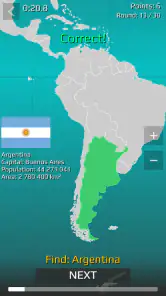
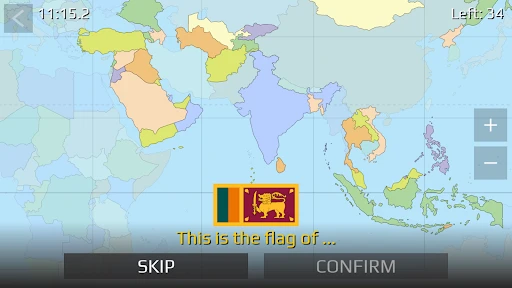
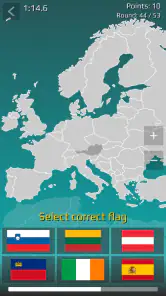
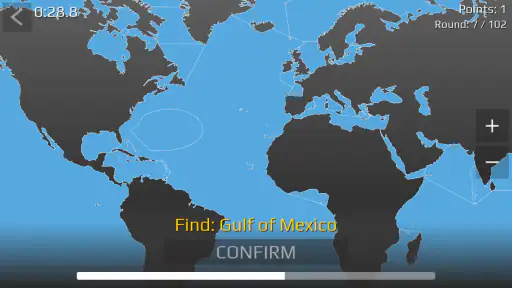
Now, onto the gameplay. The app presents a map without borders, and it’s your job to identify countries, cities, capitals, and even flags. You start off with the basics, identifying countries, and as you progress, the app throws trickier challenges your way. Each correct answer earns you points, and you can use these to unlock new levels or get hints when you're stuck.
One of the cool features is its multiplayer mode. You can challenge friends or random players globally, making it not just educational but also a competitive thrill. There's something about knowing you've outperformed someone on the other side of the world that makes learning even more rewarding. Plus, the app updates regularly with new challenges and maps, so it never really gets old.
Why You'll Love It
Honestly, what sets World Map Quiz apart from other educational apps is how it seamlessly blends learning with fun. There’s no pressure, no grades – just you and the map. Whether you're a student brushing up for a geography quiz or an adult looking to sharpen your knowledge, this app has something for you.
Moreover, the app is lightweight, meaning it won't eat up your phone's memory or battery. It works smoothly on both Android and iOS, so no one is left out. And hey, it's free! With optional in-app purchases, you can enhance your experience, but the core content is readily available at no cost.
Choosing a useful rhythm
I get more out of a location quiz when I avoid turning every mistake into a frantic attempt to clear the screen. A better pattern is to make a first pass at a comfortable speed, then take a moment after each uncertain answer to place the country relative to something I already know. Is it inland or coastal? Does it sit beside a familiar country? Those small comparisons create retrieval cues that a bare name often lacks.
For a practical routine, I’d use one session to expose gaps and a later one to check whether I can now find those places with less hesitation. I wouldn’t try to memorise every location in one sitting; fatigue makes neighbouring shapes and names blur together. A short return to a missed region is more useful than a long run of guesses, especially if I’m playing during a commute or between errands.
The game can also make a casual conversation more engaging. If a friend is curious about geography, we can take turns calling out an answer or explaining where we expect a place to be. That works best as a low-stakes challenge, not a contest where speed is the only measure. Someone who knows the answer can share a landmark or neighbouring country, making the exchange more memorable than simply announcing who scored higher.
What to check before settling in
I’d spend a moment looking through the settings before building a habit around the game. A setting that changes the pace or presentation can affect whether a round feels like relaxed practice or a test, so I’d choose based on the moment rather than assuming there is one ideal configuration. If I’m winding down, I want a manageable rhythm; if I’m checking recall, I can make the task more demanding without making speed the whole point.
It is also worth deciding what you want the session to accomplish. If the goal is to recognise places, pause long enough to think before answering. If the goal is a quick break, play casually and don’t treat every missed response as a failure. This distinction sounds simple, but it keeps the app from becoming frustrating: a short trivia game can be both entertainment and practice, though those are not always the same kind of session.
I would not assume that an available hint or progression mechanic automatically teaches the reason behind an answer. A prompt can help you get past a sticking point, but it is still useful to make your own connection afterward: which nearby country or coastline will help you remember the location next time? This is an effective way to turn a correct guess into knowledge you can retrieve without help.
Where the focused format helps—and where it doesn’t
Compared with a broad trivia app, a map quiz gives me a narrower task and a clearer way to notice improvement: I either recognise a location more readily or I don’t. That focus is useful when I want to get oriented across the world, but it also means there is less variety than in a game that moves among history, science, entertainment, and current affairs. If I’m in the mood for changing subjects, the usual all-purpose quiz is the better pick.
Compared with an atlas or a geography lesson, the quiz asks for recall rather than offering a deep explanation. That can be an advantage for quick self-testing, but not for understanding why borders look the way they do or how a region’s history shaped them. I’d use a reference source when I need context, then return to the game to see whether I can locate the places without looking them up. The two approaches complement each other rather than compete.
It is less suitable for someone who wants a carefully guided course, detailed feedback after each answer, or a dependable substitute for school materials. It may also be a poor choice for a player who dislikes repeating factual questions or who expects every round to introduce something surprising. The game’s appeal rests on practising map knowledge; if that sounds like a chore rather than a satisfying small challenge, a different kind of trivia game will probably be more enjoyable.
Making progress without overplaying
One concrete technique I like is to group hesitation by the kind of mistake, rather than just by the country name. Sometimes I know the name but confuse its position; sometimes I recognise the area but cannot recall the label. Those are different gaps. For the first, I’d connect the shape to surrounding places. For the second, I’d say the name aloud and mentally attach it to a region before the next session. This makes review more deliberate without needing a separate notebook.
Another useful habit is to stop after a handful of genuinely uncertain answers and come back later. Pushing through while tired can give the illusion of practice because I’m tapping repeatedly, but it doesn’t necessarily improve recall. A brief pause lets me reset, and a later attempt tests whether I retained anything. The game works best as a small recurring exercise, not a demand to finish a huge study checklist in one sitting.
If you are playing with someone else, agree on what counts as a good round before starting. One person may care about speed, while another wants to explain each location. Alternating those styles prevents a quick player from dominating and makes the activity useful for both. It also turns the game into a social prompt: a missed country can lead to a short discussion about its neighbours, without pretending the quiz itself is a full geography lesson.
Practical expectations for new players
The game is free to try, so I’d explore the basic experience before deciding whether any optional purchase is worthwhile. In-app purchases range from $1.99 to $12.99 per item, but I wouldn’t spend simply because a quiz offers extra ways to play. First see whether you enjoy identifying places often enough to return to it. The main question is not whether a purchase exists; it is whether the game’s particular map-focused routine fits your habits.
For families, the Everyone age rating makes it broadly suitable to consider, but I’d still match the challenge to the player’s interest and current knowledge. A younger player may enjoy naming familiar countries while an adult uses the same map to practise less familiar regions. It can become a shared activity if nobody is expected to know everything already. The most enjoyable use is often collaborative, with guesses and reminders, rather than treating the score as a measure of intelligence.
On Android, the stated minimum requirement is version 5.0, and the current version is 3.30. That gives Android users a straightforward compatibility point to check against their device. I would not choose it expecting the breadth of a general trivia collection: its identity is much more specific. Nor would I rely on it as my only learning resource if I needed detailed explanations, but as a convenient way to test map recall it has a clear purpose.
Final Thoughts
In a nutshell, if you've ever found geography daunting, the World Map Quiz is here to change that perception. It’s an app that makes learning about the world engaging and accessible. So, whether you’re commuting, relaxing at home, or just killing time, why not challenge yourself and see how well you know our planet? Trust me, your brain will thank you later!
My recommendation is to treat it as a compact geography habit: open it when you have a few minutes, answer thoughtfully, and revisit the places that made you pause. That approach makes the focused format feel rewarding without expecting it to replace an atlas, a classroom resource, or a varied trivia game. If map recognition is the part you want to improve, it is an easy app to try; if you want a rich course with explanations and context, choose a more structured tool instead.
World Map Quiz Frequently Asked Questions
What should I know about World Map Quiz before downloading it?
World Map Quiz is a trivia game focused on learning where countries are located around the world. It is free to download and is rated for everyone. If you enjoy geography questions or want a casual way to practise recognising countries on a map, its straightforward subject matter may make it worth trying.
Who developed World Map Quiz?
World Map Quiz was developed by Qbis Studio. The game centres on world geography, with the store summary describing it as a way to learn the locations of countries around the world. That makes its purpose easy to understand before installing: it is a map-focused trivia game for players interested in geography.
Can I play World Map Quiz on my Android device?
World Map Quiz is available for Android devices running version 5.0 or later. It is a trivia game from Qbis Studio, and its focus is learning where countries are located around the world. Before downloading, check that your device meets the minimum operating-system requirement so you can install and run the game.
Is World Map Quiz free to download?
Yes, World Map Quiz is free to download. It also offers optional in-app purchases priced from $1.99 to $12.99 per item, so you can choose whether to spend anything beyond the free download. The game is listed for everyone, making it a straightforward option to try if you enjoy map-based trivia.
What is World Map Quiz and how does it work?
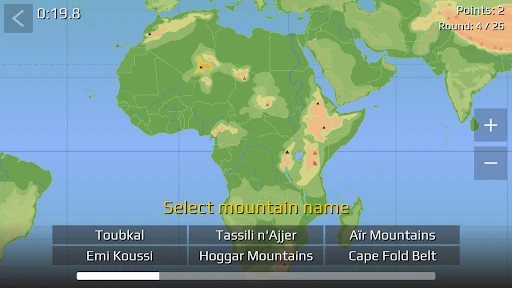
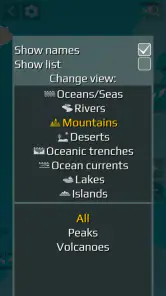
World Map Quiz is an educational app that challenges users to identify countries, capitals, and geographical features on a global map. The app offers various game modes, including timed challenges and practice sessions, allowing users to improve their geographic knowledge in a fun and interactive way. It's a great tool for students, educators, and geography enthusiasts.
Pros
- Interactive learning experience
- Wide range of geographical locations
- User-friendly interface
- Challenging quizzes for all ages
- Regular updates with new content
Cons
- Limited offline functionality
- In-app purchases required for full access
- Occasional bugs in map loading
- Ads can be intrusive
- Requires internet for full features

- Category
- Trivia
- Version
- 3.30