Urban City Stories: World Game
- 3.15K
- 4.4
- Installs
- 50.00M
- Price
- Free

Screenshots
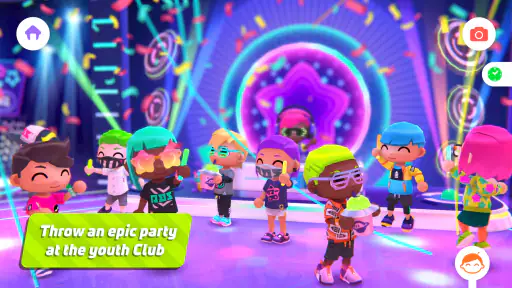
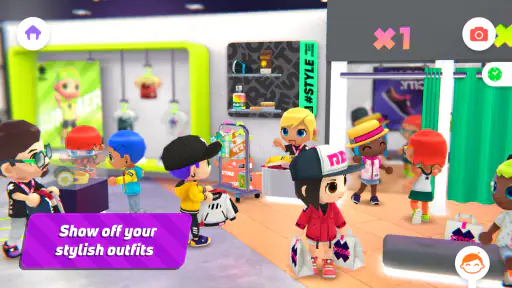
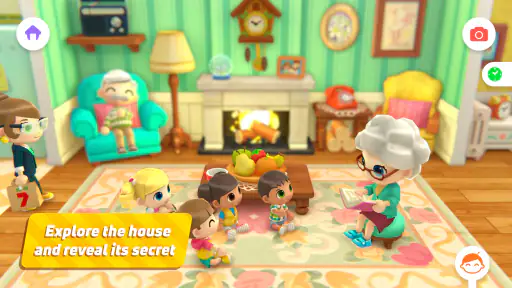
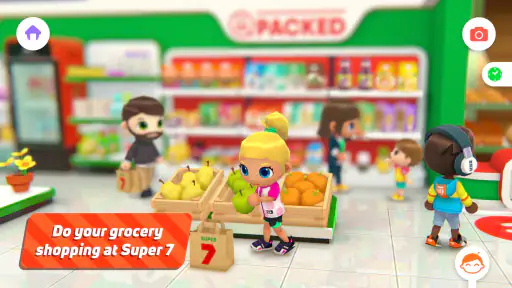
Analysis by Reviewed
I’d approach Urban City Stories: World Game as a place to make up small scenes rather than as a city-management challenge. Its appeal is the freedom to explore and play pretend: a child can decide who lives where, what a character does today, and how one visit to a neighborhood turns into a story. That makes it a better fit for imaginative, low-pressure play than for someone looking for strict missions or a competitive goal to chase.
What gives a new player a starting point
The first useful goal is simply to choose a character and give them somewhere to go. Moving between city spaces, looking around, and trying interactions can turn an initially busy screen into a set of play ideas. I’d suggest starting with one simple scenario—such as a family getting ready to go out—instead of trying to explore everything at once. That keeps the play understandable for younger children and gives them a reason to notice details.
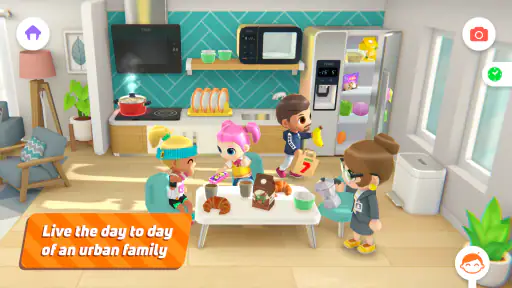
The game’s city-life theme also makes it easy to connect play to ordinary routines. A child can act out visiting a café, choosing clothes, or returning home, then change the roles and invent a different outcome. This is where the educational angle feels most natural: the value is in practicing choices and storytelling, not in treating the game as a formal lesson. Parents who want a quiet activity can let a child narrate what is happening, while joining in briefly can help if the many possible interactions feel overwhelming at first.
How progress feels without a finish line
In a sandbox, progress is less about beating a level and more about finding a new way to use the setting. A new character role or an unexpected interaction can be enough to restart a scene. That freedom is a strength for children who like inventing stories, but it also means players who need clear objectives, visible milestones, or a steadily rising challenge may find the experience loose. I would not choose it as a substitute for a puzzle game with defined answers or a building game focused on planning and optimization.
A practical way to keep sessions fresh is to set a small prompt before playing: give a character an errand, decide who they meet, or imagine a change in their daily plans. It adds direction without turning open-ended play into a checklist. If a child starts repeating the same actions, changing the roles or moving the scene to another part of town is a better first step than expecting the game itself to supply a new campaign-style objective.
Who is likely to enjoy it
SUBARA’s educational game is free to download, rated for Everyone, and has a 4.4 average from around 182,000 ratings, with over 50 million installs. Those figures suggest a broad audience, but the key question is still play style. I’d recommend it to younger players who enjoy pretend play and to adults looking for a gentle, creative activity to share. I’d steer players who want demanding strategy, precise task instructions, or a strong sense of completion toward a more goal-driven alternative.
It is also worth thinking about the setting in which a child will play. The game is described as playable offline, which can make it useful during a journey or in a place with unreliable connectivity; I would still check the device before relying on it for a particular outing. In-app purchases are available at $4.49 per item, so if a child uses the game, it makes sense to review purchase controls together and agree on expectations rather than letting an unexpected prompt interrupt play.
You May Like

Clash of Clans Is Won Between the Battles

Android Auto Makes the Case for Quieter Car Software

MobiOffice: Transforming Mobile Productivity with Seamless Integration

EA SPORTS FC™ Mobile Soccer: Redefining Mobile Sports Gaming

How Microsoft OneDrive Became a Mobile Productivity Giant

How Google Translate Breaks Language Barriers Effortlessly
Welcome to Your City
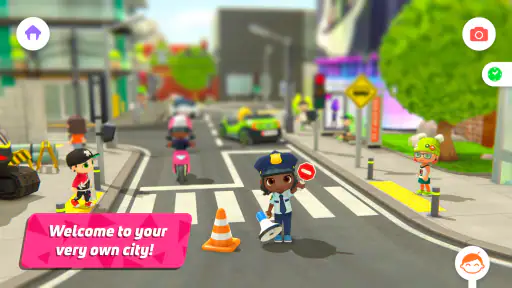
From the moment you open Urban City Stories: World Game, you're greeted with a colorful, animated cityscape that’s ready for exploration. The game doesn’t just stop at being visually appealing; it invites you to interact with virtually every element on the screen. Whether you’re running a café, shopping for new outfits, or simply people-watching from a park bench, there's no shortage of things to do.
Exploring the Neighborhood
The game features several distinct areas, each with its own unique flair and activities. You can explore the high-energy vibes of downtown, with its skyscrapers and bustling streets, or take a leisurely stroll through the residential zones, where you can peek into homes and see how other virtual residents live. Exploration is at the heart of this game, and it rewards players with new interactions and discoveries around every corner.
For a short everyday session, I’d pick one destination and give the visit a purpose: a character could head into town to meet someone, look around, then return home to continue the story. This is a useful way to make a brief play break feel complete without needing a timer, score, or final screen. It also helps a child practice sequencing—what happens before leaving, during the visit, and after coming back—while keeping the activity playful rather than instructional.
Create Your Story
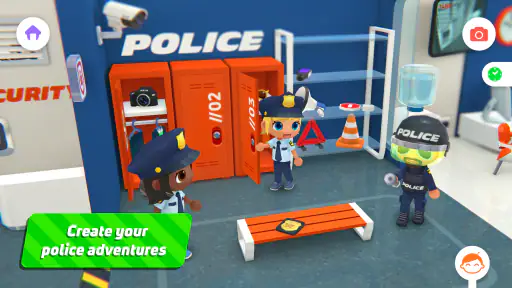
One of the standout features is the ability to craft your own stories. It’s not just about living in the city, but about creating a narrative that’s uniquely yours. You can develop characters, assign them roles, and let your imagination run wild as you script their daily lives. The storytelling aspect is both intuitive and limitless, making it a hit among creative minds.
For parents, a helpful approach is to ask open questions instead of directing every move: “What does this character need today?” or “Who might they meet?” That leaves the child in control while giving the scene a starting point. If several players share the device, taking turns as the storyteller can make the same setting feel different without needing to compete over scores. The trade-off is that the game’s open-ended nature asks players to supply their own ideas; it will not suit every child equally well.
Educational and Fun!
Beyond entertainment, the game subtly integrates educational elements, making it a great choice for younger audiences. Through managing tasks and solving little puzzles, players can learn about responsibility and decision-making. It’s like sneaking vegetables into a tasty dish — they won’t even realize they’re learning!
Compared with educational games built around quizzes, spelling drills, or fixed puzzle stages, this one puts more emphasis on imaginative social situations. That can be a welcome alternative when a child is tired of being tested, but it is not the right pick if you need structured practice in a particular school subject. I’d treat its learning value as a side effect of making choices and building scenes, rather than expecting measurable lessons or a curriculum.
And for the adults? It’s a relaxing escape from the real world. The immersive environment coupled with the freedom to experiment with scenarios provides a delightful break from daily routines.
Availability and practical fit
The game was released on April 25, 2020, and its current version is 1.5.0, with Android 7.0 or later required. I’d check that requirement before installing it on an older device, especially if the game is intended for a child’s tablet. It is free, with in-app purchases priced at $4.49 per item; that makes trying the basic experience straightforward, while purchase settings are worth checking in advance if a child can access the device.
Its 4.4 average and roughly 3,200 written reviews provide a useful snapshot of how widely it has been received, but they cannot tell you whether its open-ended pace suits your household. I would try a short, shared session first: watch whether the child naturally invents a scene or keeps asking what the next objective is. That simple test is more helpful than assuming every young player will enjoy the same kind of freedom.
Making a little playtime work
One realistic use is a quiet stretch before dinner, when a child has enough time to settle into a small pretend scenario but not enough for a long, demanding game. I might suggest a simple beginning and stopping point—get a character ready, make a visit, then bring them home—so the session has shape even though the game does not need to provide a formal ending. That approach is useful for families who want to fit play around everyday routines rather than lose track of time in an open-ended activity.
It can also work as a shared conversation starter. A grown-up can ask a child to explain why a character is going somewhere or what they might do next, then let the child make the decisions. The useful balance is to offer a prompt without taking over the story. If the adult starts directing every action, the experience can become less like imaginative play and more like following instructions, which misses much of the appeal.
For a child who is playing alone, I’d keep the first session modest: choose one familiar situation and let curiosity lead from there. Too many choices at once can make a virtual town feel less like freedom and more like a screen full of possibilities with no obvious starting point. A small role-play idea gives the child a way in, and they can branch out once they understand how they want to use the setting.
What the open format asks of players
The trade-off behind the sandbox approach is that the game’s setting can support a story, but the player has to supply much of its momentum. In a conventional level-based game, the next objective is usually clear; here, the child may need to decide what counts as a satisfying next step. Some children find that empowering, while others may lose interest if they would rather be guided from one task to another. I would watch for whether a child starts inventing scenes after a little exploration or repeatedly asks what they are supposed to do.
That difference also affects how adults can judge progress. There may not be a neat score or completed stage to point to as proof that a session went well. A child who has created a character, changed the plan halfway through, and explained the new story may have had a rewarding time even if nothing was “won.” If your family prefers games with visible achievements and clear stopping points, that is a meaningful limitation, not a problem that needs to be solved by pushing the child to play longer.
When play begins to feel repetitive, I would change the premise before deciding the setting has nothing left to offer. A familiar location can feel different if the characters swap roles or the outing has a new purpose. That is a low-effort way to refresh a scene, but it depends on the player enjoying make-believe; a child who wants the game to introduce fresh goals automatically may still prefer a more directed title.
Choosing between city play and other games
Among children’s games, this sits closer to a pretend-play toy than to a school exercise or a management simulation. Compared with a quiz game, it is less useful for practicing a clearly defined subject, but it gives a child room to invent dialogue and everyday situations. Compared with a strategy or building game, it asks less of the player in planning and optimization, while also offering less of that satisfying challenge for someone who enjoys solving a complex system.
That makes the choice fairly straightforward. I’d reach for this when the goal is relaxed role-play, shared storytelling, or a low-pressure activity that can be shaped around a child’s own ideas. I’d choose a puzzle or mission-based game when the child wants an obvious target, a sense of increasing difficulty, or a clear reward for completing a task. Neither style is automatically better; they serve different moods and different players.
It is also not the best match for an adult who wants a deep city simulator. The setting may suggest a busy urban world, but I would not approach it expecting detailed economic decisions, complex construction planning, or a competitive campaign. Its strength is the small-scale human story: where a character goes, who takes part, and what the player decides happens next.
Progress, pressure, and a sensible stopping point
The progression here is best understood as a growing set of ideas rather than a ladder of increasingly hard tasks. A child can revisit a place with a different plan and treat that as a fresh start. That makes it easy to dip in and out, especially if a family wants play that does not depend on remembering a long sequence of objectives. The counterpoint is that players who need regular unlocks or clearly signposted milestones may not feel the same pull to return.
I would not use repeated play as a measure of whether the game is “working” for a child. A short session that ends with a complete little story can be more satisfying than a longer one spent searching for an objective the game is not built around. If a child asks to stop, there is no need to stretch the session in pursuit of an imagined finish line; the freedom to leave a story unfinished and invent another later is part of this style of play.
Parents may also want to think about purchases as part of the play setup, not only after a prompt appears. Since the game is free to try and offers in-app purchases, agreeing on whether purchases are allowed can prevent a child from confusing an optional purchase with a required next step. I’d explain the boundary in plain language before handing over the device, then stay nearby the first time if the child is young or unfamiliar with in-app purchase prompts.
Final Thoughts
Urban City Stories: World Game is a delightful blend of creativity, education, and entertainment. It’s a game that doesn’t just entertain but also enriches. Whether you're a young player exploring the mechanics of city life or an adult looking for a creative outlet, this game promises to provide hours of fun. So why wait? Dive into the world of urban adventures and let your stories unfold!
Urban City Stories: World Game Frequently Asked Questions
What age rating does Urban City Stories: World Game have?
Urban City Stories: World Game has an Everyone content rating, which makes it a broadly accessible choice for families. Its town-life role-play encourages children to make up stories and explore everyday scenarios at their own pace. As with any game children use, parents may want to review the experience themselves and manage purchase settings on the device.
Who makes Urban City Stories: World Game, and when was it released?
Urban City Stories: World Game is developed by SUBARA. It was released on April 25, 2020, and its current version is 1.5.0. The game’s focus is on creating a town life and playing through family-oriented role-play, so it is aimed at players who enjoy imaginative, open-ended activities rather than a structured campaign.
What kind of game is Urban City Stories: World Game?
Urban City Stories: World Game is an educational game built around creating a town life and playing out everyday role-play scenarios. Its family-focused setting and open-ended approach make it suited to players who enjoy inventing stories rather than following a single fixed objective. The game is developed by SUBARA and is available for Android and iOS devices.
Is Urban City Stories: World Game free, and what devices can run it?
The game is free to download, with optional in-app purchases priced at $4.49 per item. It is available for Android and iOS, and the Android version requires operating system 7.0 or later. Before installing, check that your device meets the platform requirements and consider whether you want to manage in-app purchases, especially if children will be playing.
What is the main objective of Urban City Stories: World Game?
Urban City Stories: World Game invites players to explore a vibrant city environment where they can create their own narratives. The main objective is to immerse oneself in the city's dynamic life, interact with diverse characters, and personalize stories through a variety of locations, such as homes, shops, and parks. This open-ended play encourages creativity and imagination.
Pros
- Interactive world with diverse characters
- Encourages creativity and role-play
- No in-app purchases or ads
- Suitable for all ages
- Offline play available
Cons
- Limited locations compared to competitors
- Graphics could be more detailed
- Lack of multi-player mode
- Repetitive tasks can feel monotonous
- Occasional bugs and glitches

- Category
- Educational
- Version
- 1.5.0