Spider Solitaire - Card Games
- 4.59K
- 4.8
- Installs
- 5.00M
- Price
- Free

Screenshots

Analysis by Reviewed
I often reach for Spider Solitaire - Card Games when I have a few minutes to myself and want a puzzle that feels engaging without taking over my attention. A hand begins with a crowded arrangement of cards; I look for a useful move, see how the columns change, and try to build orderly runs. When the puzzle is done, I can stop or start fresh. That short cycle is the game’s central appeal, and it is also the clearest test of whether its steady pace is right for you.
This solo card game from Bluetile is free to download and rated Everyone. It has a 4.8 average from around 183,000 ratings, but a strong reception does not automatically make its particular style a match for every player. I find it most appealing when I want quiet concentration, not a story, a contest, or a stream of new mechanics.
From the first move to the next deal
When I start a hand, I’m looking for more than a move that clears space: I want to know what that move will reveal and which choices it will leave open. That small pause turns a familiar card layout into a puzzle I can shape, and it sets up the steady feedback that makes each decision matter.
A simple action with a real decision behind it
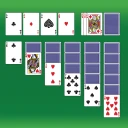
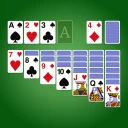
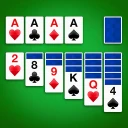
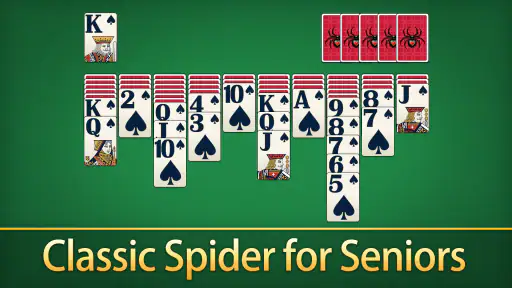
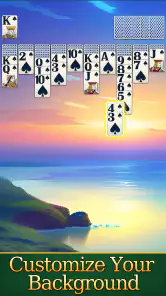
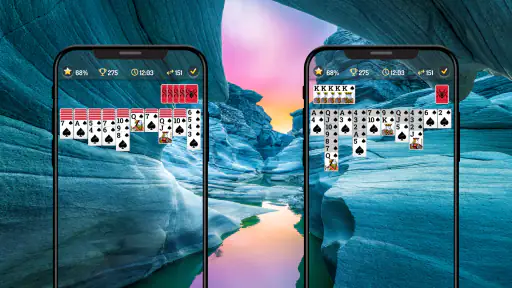
At the start of a hand, I scan the columns for cards I can move and runs that might open up useful space. The basic action is familiar to anyone who has played solitaire: move cards into a better arrangement, reveal what is underneath, and build sequences. The challenge is not remembering a long list of controls. It is deciding which move helps now without making the rest of the layout harder to manage.
That distinction gives Spider Solitaire its quiet strategic pull. A move that looks productive can leave a column awkwardly blocked, while a less obvious choice may uncover a card that makes several later moves possible. I have found it helpful to pause before clearing a short sequence and ask what the resulting empty space will actually do for me. The best move is often the one that creates options, not merely the one that makes the board look tidier.
For a new player, the approachable rules make it possible to start quickly. For someone who already knows the genre, the interest comes from weighing order, access, and risk over a series of small decisions. It is a card game, but it feels more like a compact sorting puzzle than a test of fast reactions.
The rhythm of action and feedback
Each move changes the shape of the puzzle in a way I can read immediately: a card shifts, a hidden part of a column may become available, or a sequence becomes easier to continue. That direct feedback is a strength. I do not need elaborate effects to understand whether a decision helped; the layout itself tells me what has changed.
More From Our News Desk

Weather by Xiaomi Review: Clear at a Glance, Less Clear Up Close

X Under Pressure: Can It Recover When Posting Goes Wrong?

Clash of Clans Is Won Between the Battles

Android Auto Makes the Case for Quieter Car Software

MobiOffice: Transforming Mobile Productivity with Seamless Integration

EA SPORTS FC™ Mobile Soccer: Redefining Mobile Sports Gaming
The rhythm is naturally uneven. Some hands offer a string of useful moves, and the board opens up quickly. Others make me work through blocked columns and reconsider my plan. That variation keeps the familiar rules from feeling completely automatic, although it also means the game can become frustrating if I expect every deal to unfold smoothly.
When I get stuck, I try not to move cards simply because a move is available. I look for a move that reveals something, improves access to a useful sequence, or preserves a flexible column. This small habit makes the game feel more thoughtful, especially when several tempting moves compete for attention. It also helps explain why two people can approach the same layout differently: one may value immediate progress, while another keeps options open for later.
Spider Solitaire works well in short breaks because I can concentrate on the current layout without needing to follow a story or remember a larger objective. On a commute, during a quiet pause, or while waiting for an appointment, I can play at my own pace. The trade-off is that a hand still asks for enough attention to track where cards are going. If I am constantly interrupted, I may lose the thread of a plan and end up making careless moves.
Why finishing a run feels satisfying
The reward is not a dramatic plot twist; it is the visible transformation of a messy board into completed sequences. When a plan finally clears a stubborn column or brings a hand close to completion, the progress feels earned because it came from the decisions I made along the way. That is a modest payoff, but it suits the calm, self-contained nature of the game.
There is also a useful mental distinction between making progress and winning. A move can improve the position even if the hand is not yet solved. I appreciate that because it gives a session smaller milestones: uncover a card, create room to rearrange, or make a sequence more accessible. If you enjoy puzzles where progress is measured in improved choices rather than constant score chasing, this style is likely to land well.
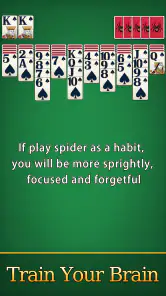
The game’s brain-training appeal is best understood in that everyday sense. It asks me to notice patterns, think a few moves ahead, and adapt when a column changes. I would not treat it as a formal training program, but it can be a pleasant way to keep my attention engaged. For players who prefer fast action, social competition, or a steady stream of new mechanics, the reward may feel too understated.
Resetting without losing the appeal
When a hand ends, the basic pleasure is that another layout offers a fresh problem. The reset is part of the loop: the rules stay familiar, but the arrangement asks for a different approach. I can return for one more attempt because the barrier to starting is low and the next puzzle does not require a lengthy setup.
That same repeatability is also the game’s main limitation. The central activity remains sorting cards into sequences, so players who need substantial variety between sessions may find it samey. It is a focused solitaire game, not a broad collection of modes or a narrative game. I would choose it for a dependable card puzzle, not as a source of changing challenges every time I open my phone.
A practical way to keep a session enjoyable is to set a small personal goal beyond simply finishing: try to expose blocked cards early, avoid filling a useful column without a plan, or make fewer impulsive moves. These are ways to engage more deliberately with the puzzle, not special features. They can make a familiar hand feel more interesting, particularly for someone who has played solitaire for years.
How it compares with other card-game choices
Compared with Klondike solitaire, Spider Solitaire puts more emphasis on managing long sequences across columns. If you prefer a quick, recognizable game with a lighter planning burden, Klondike may be the more comfortable choice. If you like looking for ways to reorganize a crowded layout, Spider offers a more involved puzzle without changing the basic card-game feel.
It also differs from multiplayer card games, where much of the excitement comes from reading opponents or racing to act. Here, the pressure is self-imposed: I am solving the board at my own pace, and nobody else determines how the session goes. That makes it a better fit for quiet solo play than for someone seeking conversation, competition, or a shared game-night experience.
Among mobile solitaire options, the value of this one is its straightforward focus. Bluetile’s game has more than 5 million installs, so it has clearly found a large audience, but popularity alone will not make the loop suit everyone. I would compare it with other solitaire apps by asking whether I want this particular style of layered sequence-building, rather than assuming every card game offers the same kind of challenge.
Making a short session work
One useful everyday approach is to treat a hand as a single, contained break rather than something to play through while multitasking. For example, if I am waiting for a pickup or taking a quiet pause between tasks, I can give the layout a few attentive minutes, then stop at a natural point. That works better than trying to make moves while half-watching something else: the game is relaxed, but remembering which column I was trying to free is part of the puzzle.
If you are new to Spider-style solitaire, I would focus on uncovering cards and preserving room to rearrange before chasing a tidy-looking sequence. If you already know the rules, try setting a constraint for yourself, such as avoiding moves that do not reveal a card or improve access. Those personal goals add a sharper decision-making layer without requiring the game to introduce new systems. They are especially useful on a familiar layout when the obvious moves have run out.
This is also a reasonable choice for someone who wants a solo card game without needing to coordinate with another person. The trade-off is that it cannot provide the surprise of an opponent’s play or the social energy of a shared game. If that interaction is what makes card games enjoyable for you, a multiplayer alternative will be a better fit; if you prefer to think at your own pace, the solitary format is a strength.
Practical details and who should play
The game is free, with optional in-app purchases listed from $2.49 to $22.99 per item. That means you can approach it as a no-cost card game, while keeping in mind that optional purchases are part of the app. The age rating is Everyone, which suits its family-friendly card-puzzle premise. It was released on January 24, 2023, and its current version is 3.1.0, with Android 7.0 as the minimum operating-system requirement.
I would recommend it to anyone who likes solitaire, wants a solo puzzle that can fit into a short pause, or enjoys planning several moves ahead without needing quick reflexes. It is also a reasonable choice for someone returning to card games after a long break, since the central task is easy to understand even when the decisions become more involved.
I would skip it if you need a constantly changing set of activities, dislike repetition, or want a game that rewards rapid play. It may also be a poor match for people who find card sorting dull regardless of the layout. In those cases, a more varied puzzle game or a competitive card game would probably hold attention better.
The loop verdict
What keeps me coming back is the balance between a familiar action and a fresh arrangement: move a card, read the board’s response, work toward a satisfying sequence, then start over with a new puzzle. The cycle is simple, but the choices inside it give the game enough texture for a quiet daily session. It does not disguise repetition, and it should not be mistaken for a feature-heavy game.
My recommendation is for patient players who enjoy making order from a crowded card layout. If that small, deliberate challenge sounds relaxing rather than repetitive, Spider Solitaire - Card Games is an easy one to try. If you need story, competition, or frequent mechanical surprises, I would look elsewhere; its strongest quality is also its boundary: it stays focused on the solitaire puzzle.
Spider Solitaire - Card Games Frequently Asked Questions
What is Spider Solitaire - Card Games?
Spider Solitaire - Card Games is a digital version of the classic single-player card game. The goal is to arrange cards into descending sequences of the same suit, then remove completed King-to-Ace runs from the tableau. The app may offer different difficulty levels, commonly based on playing with one, two, or four suits, so newcomers can learn the rules before trying more challenging games.
How do you play Spider Solitaire, and is it suitable for beginners?
You move cards between columns to uncover hidden cards and build descending sequences. A complete same-suit sequence from King down to Ace is cleared from the board; when no useful moves remain, you can usually deal another row from the stock, provided each column has a card. Beginners can start with one suit, where moves are easier to plan, then progress to more suits as they become familiar with the rules.
Can I play Spider Solitaire - Card Games offline?
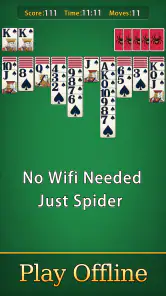
Many solitaire apps allow games to be played without an internet connection, but offline access can depend on the specific version and whether features such as ads, daily challenges, statistics, or cloud saving require connectivity. Check the app’s store listing and test a basic game before relying on it while traveling. If you plan to play offline, open the app once while connected so any necessary resources can load.
Is Spider Solitaire - Card Games free, and does it include ads or in-app purchases?
The price and monetization depend on the particular app published under this name. Some versions are free to download and show advertisements, while others may offer optional purchases to remove ads, unlock themes, or access extra features. Review the current store listing before installing, and check the in-app purchase details if you want an uninterrupted experience. A free download does not necessarily mean every feature is free.
What permissions or personal information might the app require?
A basic card game generally does not need access to sensitive features such as your contacts, microphone, or location to run. However, an individual version may request permissions or collect limited data for advertising, analytics, notifications, or cloud features. Before downloading, review the permissions shown by your device and the developer’s privacy information in the app store. You can also deny optional permissions if they are not needed for gameplay.
Pros
- Familiar rules make it easy to start playing without a lengthy tutorial.
- Multiple difficulty levels suit both casual players and experienced card fans.
- Undo and hint options can help when a move is unclear or a game gets stuck.
- A good choice for short sessions
- since each deal can be played at your own pace.
- Single-player gameplay does not require coordinating with other players.
Cons
- Long games can feel repetitive if you prefer varied objectives or gameplay.
- Higher difficulty settings may frustrate newcomers to solitaire.
- Hints can reveal a move without explaining the strategy behind it.
- A weak deal may leave few useful moves
- even with careful play.
- The app may include ads or optional purchases; check its store listing for details.
- Category
- Card
- Version
- 3.1.0