Spades Plus - Card Game
- 103.80K
- 4.6
- Installs
- 10.00M
- Price
- Free

Screenshots






Analysis by Reviewed
I like card games that let me settle in for a quick hand without needing a table, a deck, or a group of friends in the same room. Spades Plus - Card Game brings the familiar partnership-and-trick-taking challenge to mobile, so it can suit a short break as well as a longer session. The key question for me is whether its play and sense of progress make it worth returning to, not simply whether it puts cards on a screen.
Getting to Know Spades Plus
First things first, Spades Plus - Card Game is a digital rendition of the classic spades card game that has been loved by many for generations. Available on both Android and iOS, it's the perfect companion for those moments when you just need a little bit of competitive fun. The app is designed to be user-friendly, ensuring that even those who are new to the game can quickly get the hang of it.
Zynga’s card game has been available since July 24, 2014, and its current version is 6.52.1878. It is free to download, carries a Teen age rating, and has in-app purchases priced from $0.49 to $219.99 per item. I’d treat the free entry point as a way to try the game, not a reason to spend: the core appeal is deciding how to bid and play each hand, while purchases can make the experience feel more commercially focused. The game has a 4.6 average from around 395,000 ratings, alongside over 10 million installs, so it has clearly found a substantial audience.
Gameplay That Keeps You Hooked
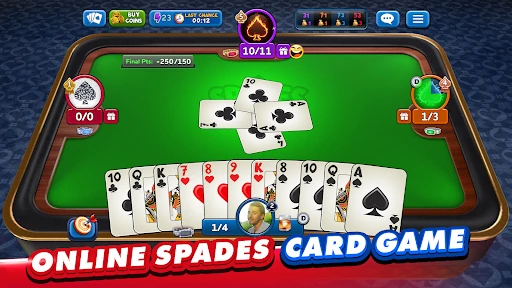
One of the things I absolutely love about Spades Plus is its gameplay. It's smooth and intuitive, making it easy for players to focus on strategy rather than fiddling with controls. The game offers several modes, including Classic, Solo, Mirror, and Whiz, allowing you to choose how you want to play. Whether you're a seasoned spades player or a curious newbie, there's something here for everyone.
Those modes matter because they give you different ways to approach the same central skill: judging what your hand can realistically take. If you’re learning, I’d start with the format whose rules you already understand, then branch out once you can follow the rhythm of bidding and playing tricks without constantly second-guessing the basics. A useful habit is to pay attention to what has already been played rather than focusing only on your own cards; remembering which suits are running short can help you make a more informed choice on later tricks.
For a realistic everyday use, I can see myself opening it during a commute or while waiting for an appointment, playing a hand or two and stopping when I need to move on. Spades is naturally suited to that rhythm because each hand has a clear beginning and finish. Still, I wouldn’t start a match when I have only a minute to spare: online play asks you to stay attentive, and leaving in the middle can be frustrating for both you and the other players.
Community and Competition
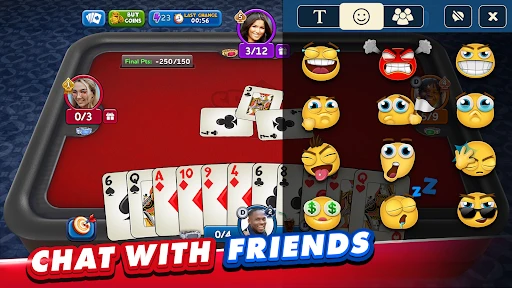
If you're someone who thrives on competition, you'll be thrilled to know that Spades Plus offers a robust online community. You can join tables with players from all over the world or invite your friends to a private game. The app also features tournaments, which add an extra layer of excitement and challenge. There's nothing quite like the thrill of competing against others and climbing up the leaderboard.
More From Our News Desk

Clash of Clans Is Won Between the Battles

Android Auto Makes the Case for Quieter Car Software

MobiOffice: Transforming Mobile Productivity with Seamless Integration

EA SPORTS FC™ Mobile Soccer: Redefining Mobile Sports Gaming

How Microsoft OneDrive Became a Mobile Productivity Giant

How Google Translate Breaks Language Barriers Effortlessly
Playing with strangers adds variety, but it also means your experience depends on the table and the people at it. I’d choose a private game when the point is relaxed time with friends, and a public table when I’m in the mood for unpredictable competition. If you prefer a quiet, solitary puzzle with no social pressure, this is less ideal than a single-player card game: the online community is part of the draw, but it can also make a casual session feel more demanding.
The challenge builds through decisions rather than a story or a sequence of levels. A weak bid can put pressure on your partnership, while an overconfident one can make a promising hand hard to recover. That makes each round a small lesson in risk: note whether you tend to bid too high, then be more conservative next time. I find this a more satisfying kind of progress than simply unlocking a new screen, though players looking for a campaign, character upgrades, or a clearly guided progression path may prefer another genre.
Visuals and User Interface
Now, let's talk about the visuals. The design of Spades Plus is sleek and modern, with crisp graphics that make the game pleasing to the eye. The user interface is straightforward, which I appreciate because it means less time figuring out how to navigate and more time actually playing. The app runs smoothly, with minimal lag, even during intense games.
One practical trade-off with any phone-based card table is that the cards and table have to remain readable on a small display. I’d use a larger screen if I wanted a more comfortable view for a long session, while a phone is perfectly convenient for a quick hand. The minimum operating system is version 7.0, which gives the game a broad device baseline, although the feel of a session can still depend on the screen and connection you use.
Why You Should Download It
So, why should you download Spades Plus? Well, if you're a fan of card games, it's a no-brainer. The app combines traditional gameplay with modern features, creating an experience that's both nostalgic and fresh. Plus, it's free to download, so there's really no reason not to give it a try.
I’d recommend it most to people who already enjoy trick-taking games, want regular opponents, or like comparing their decisions over repeated hands. Compared with a traditional deck at the kitchen table, it is more convenient and offers online competition, but it loses the face-to-face conversation and the ability to set every house rule yourself. Compared with simpler solo card apps, it asks more of your attention because bidding and partnership play make every choice consequential.
If you’re wondering whether you need to pay to enjoy it, I’d begin with the free download and see whether the available play suits you before considering any purchase. The listed purchase range is broad, so it’s sensible to be deliberate and avoid spending just to keep up with a competitive mood. If you dislike in-app purchase prompts or want a completely offline pastime, a physical deck or an offline card game may be a better fit.
In conclusion, Spades Plus - Card Game is a fantastic app that delivers on its promise of providing a fun and engaging card game experience. With its variety of game modes, competitive community, and sleek design, it's sure to keep you entertained for hours on end. Whether you're looking to pass the time or challenge your friends, this app has got you covered. So, what are you waiting for? Get ready to shuffle those cards and dive into the world of Spades Plus.
How Its Progression Feels Over Time
For me, the strongest reason to return is the improving judgement that comes from playing, not a promise that every session will unlock something new. A good early goal is simply to learn how the chosen mode handles bids and tricks, then work on reading the hand more carefully. The clearest progress signal is whether your choices become more consistent: you can explain why you bid a certain number and recognize when the cards on the table have changed your plan.
The pacing can feel brisk when opponents are ready and every player follows the flow of a hand. It can slow down when a table’s pace does not match yours, or when you want to think through a tricky play. That’s a real trade-off of online competition: it offers human unpredictability, but not the complete control of a solo game. I’d pick a casual table when I want to experiment and save tournaments for when I’m ready to focus.
Overall, the game sustains play best through replayable decisions and changing opponents, rather than a guaranteed ladder of rewards. That will suit someone who enjoys sharpening a card skill over time. If you need frequent unlocks, a campaign, or a strong sense of scripted advancement to stay motivated, the underlying Spades itself may not be enough. For players who enjoy the game’s judgement, partnership, and competitive uncertainty, though, that repeatable challenge is precisely the point.
Making Each Session More Useful
A small routine can make the game more satisfying without turning it into homework. After a hand goes badly, I’d identify one decision to review: was my bid too hopeful, did I overlook a suit becoming scarce, or did I change my plan too late? Focusing on one choice is more practical than trying to remember every card and mistake. It also gives a new player a concrete goal beyond simply winning the next round.
Partnership play makes that reflection more nuanced than in a solo card puzzle. A bid is not just a prediction about your own hand; it affects how you and your partner approach the hand together. I try to think in terms of what the cards and the bidding imply, rather than assuming a partner will play exactly as I would. That mindset helps keep an unlucky outcome from becoming a reason to blame someone else at the table.
If you are new to Spades, start with the rules and format you already know, and resist switching modes every few minutes. Consistency makes it easier to tell whether your decisions are improving, because you are not also learning a different variation at the same time. Once the basic rhythm feels comfortable, trying another mode can be a useful change of pace rather than a source of confusion.
Choosing the Right Table for Your Mood
Not every session needs to be competitive. When I have the time and want a serious test, a tournament gives the play a clearer sense of stakes; when I am just looking to unwind, a more casual table is a better match. Private play with friends is the natural choice when conversation matters more than meeting unfamiliar opponents. The important distinction is that the setting changes the social feel, even though the central card decisions remain.
That makes this a better fit for someone who enjoys a little uncertainty than for a player who wants to control every detail. Public games bring opponents whose habits and pace vary, while a physical game among friends can be adjusted to the group’s preferred house rules. If you mainly want to practise alone or play without relying on a connection, a solo or offline card game is likely the more dependable option.
For a short wait between errands, I’d choose a moment when I can give the hand my attention rather than opening the app while walking or juggling another task. The game’s compact rounds are convenient, but bids and partner decisions are easy to misjudge when distracted. A few focused hands can feel more rewarding than a longer session played on autopilot, especially if I want to learn from the results.
Where the Free Entry Point Helps—and Where It Doesn’t
Being free to download lowers the barrier to finding out whether online Spades suits you, but it does not mean every player will enjoy the commercial side of a mobile game. I’d decide in advance whether I’m happy to play without buying anything and treat purchase options as optional rather than as part of the strategy. The wide spread in item prices is a reason to be deliberate, particularly if competition makes spending feel tempting in the moment.
The game also asks for more attention than a basic matching or solitaire-style app. You need to assess a hand, make a bid, follow the action, and adjust as tricks unfold. That mental involvement is its strength when I want an active break, but it can be a drawback when I just want something effortless in the background. A lightweight solo game is better for that kind of low-attention play.
The Teen rating is worth keeping in mind for households choosing games for younger players. The online and competitive setting may not be what every family wants, so I’d consider whether playing with other people is appropriate for the person using it. The card game itself is familiar, but the social context is part of the mobile experience and can shape whether it feels comfortable.
A Last Word on Its Staying Power
What keeps me interested is not a claim that there is always a new reward waiting; it is the fact that a hand can turn on a decision I can learn from. The modes provide ways to vary the challenge, and the mix of public tables, friends, and tournaments gives me choices about how social or serious I want to be. That is a grounded kind of longevity, built around replaying a game I already enjoy.
On the other hand, a player who expects a guided campaign or frequent unlocks may find the loop too dependent on the cards, the people at the table, and their own appetite for improving. There is no need to force it: if online partnership play feels stressful, or if the purchase options and competitive atmosphere are unwelcome, another card game will be a better companion. For someone who likes the judgement and give-and-take of Spades, though, this is an easy way to find a hand when a physical table is not available.
Spades Plus - Card Game Frequently Asked Questions
What should I know about purchases before downloading Spades Plus?
Spades Plus is free to download, and you can play without paying, but optional in-app purchases are available for chips and other in-game items. Prices range from $0.49 to $219.99 per item, so it is worth reviewing purchase settings if you share your device with a child or want to avoid accidental spending. The game is developed by Zynga.
How well reviewed is Spades Plus, and what do players generally get from it?
Spades Plus has an average rating of 4.6 from around 395,000 ratings, with about 104,000 written reviews. Its large player community can make it easier to find online opponents, while the familiar Spades rules give card-game fans a straightforward place to start. Whether it suits you will depend on how much you enjoy multiplayer competition and the game’s available modes.
What kind of game is Spades Plus, and what do I need to play it?
Spades Plus is a card game built around the classic game of Spades and played with a 52-card deck. It is designed for online multiplayer play, so you will need an internet connection to take part. The game is free to download, and its Teen content rating is worth considering when deciding whether it is suitable for younger players.
Which devices can run Spades Plus - Card Game?
Spades Plus is available for Android and iOS. On Android, the minimum operating system requirement is Android 7.0, so check your device’s software version before downloading. The game is developed by Zynga and has been available since July 24, 2014. If your device meets the platform requirements, you can install it and join online Spades games.
What is Spades Plus - Card Game all about?
Spades Plus - Card Game is a popular multiplayer card game app where players can enjoy the classic game of Spades with friends or online opponents. It offers several game modes, including Solo, Pairs, and Joker mode, allowing players to experience Spades in various exciting formats. The app is available on both Android and iOS platforms, providing a user-friendly interface and smooth gameplay experience.
Pros
- Addictive gameplay with engaging challenges.
- Smooth and intuitive user interface.
- Regular updates with new features.
- Multiplayer mode with friends or global players.
- Free to play with optional in-game purchases.
Cons
- Contains ads that can be intrusive.
- Requires stable internet connection.
- In-app purchases can be expensive.
- Occasional bugs and connectivity issues.
- Limited customization options for avatars.
- Category
- Card
- Version
- 6.52.1878