School Party Craft
- 19.03K
- 4.5
- Installs
- 100.00M
- Price
- Free

Screenshots
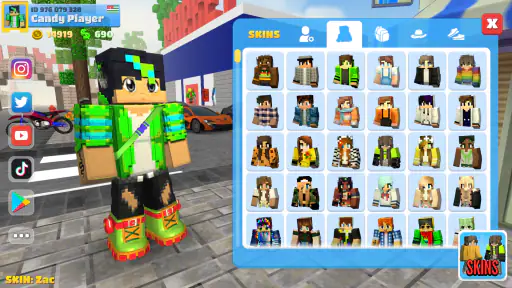
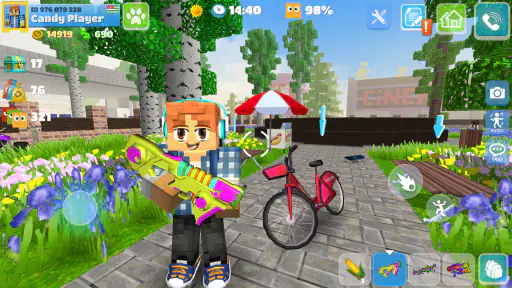
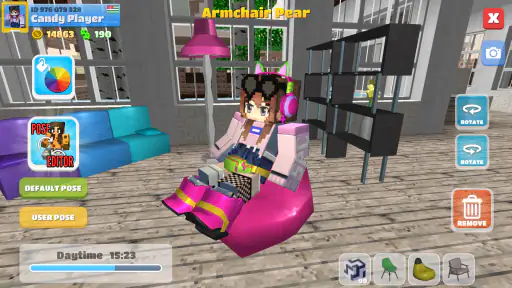
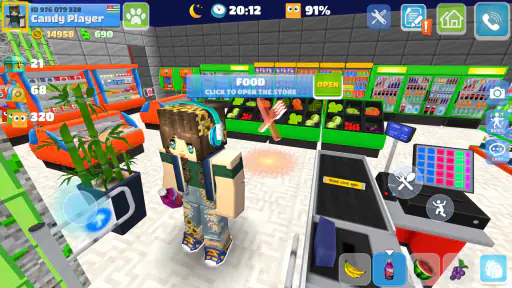
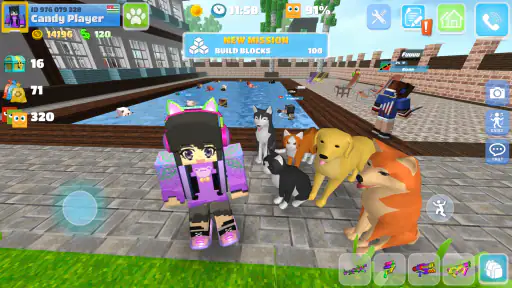
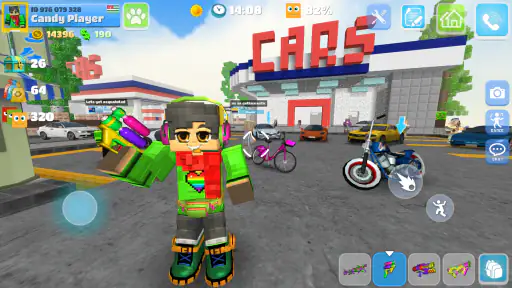
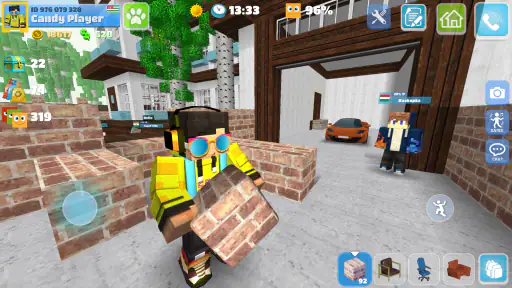
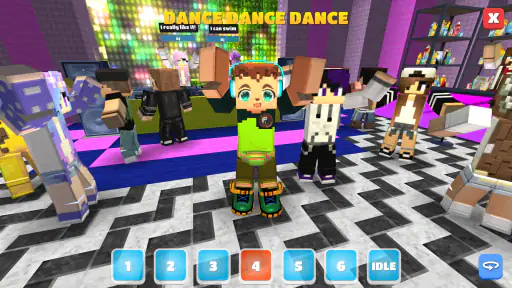
Analysis by Reviewed
When I look at School Party Craft through the lens of accessibility, its appeal is easy to understand: it gives players a playful, block-built setting for making things and exploring at their own pace. That open-ended feel can suit children who enjoy inventing their own goals, but it also means the experience is less guided than a game that leads players through a clear sequence of short tasks. I’d keep that difference in mind when choosing it for a particular player.
Finding a comfortable way to play
The game’s school setting and familiar block-based visuals give a new player an immediate sense of what they might do, even before they settle into a personal project. Building, exploring and preparing a party are distinct ideas, so someone can focus on the activity that feels most inviting rather than having to approach the whole game in one fixed way. That flexibility is a genuine strength for imaginative play.
On the other hand, a broad creative world can ask players to make their own decisions about what to do next. A child who enjoys planning a room or inventing a little story may find that freedom satisfying; someone who prefers precise instructions, a visible checklist or a definite finish line may find it harder to get started. I’d suggest beginning with one small, concrete aim, such as imagining a classroom or party space, instead of expecting a first session to produce a complete school.
Reads About School Party Craft
Controls, pace and sensory comfort
Building games naturally involve repeated movement and selecting or placing objects, so the practical fit depends on how comfortable a player is with the controls on their device. I would try a brief session before assuming that a young player can manage every part independently. If navigating the world or carrying out a building idea feels tiring, taking a break or choosing a simpler activity within the game can make the experience less frustrating.
The blocky, colourful presentation gives the world a playful identity, but visual busyness can still be a personal consideration. Players who are sensitive to lively scenes may prefer shorter sessions and a quiet setting, while a child who enjoys active, imaginative play may find the same energy engaging. I wouldn’t treat the game’s theme or age label as a guarantee that it will suit every sensory preference.
Where it fits into everyday life
For a short after-school break, I’d set a modest goal: design one corner of a room, then stop when that idea feels complete. On a longer free afternoon, a player can move between construction and exploration as interest changes. This is a better match for flexible play than for a quick game that promises a clear round and ending, and it gives families a natural point to check whether the player is still enjoying the activity.
It may also work as a shared conversation starter: a child can describe what they want their school or party space to look like, then show the result. That doesn’t mean every social feature will be right for every family, so I’d check the actual play experience together rather than assume that playing with others is necessary. A solo-minded player can still approach the creative parts as a personal project.
More From Our News Desk

Android Auto Makes the Case for Quieter Car Software

MobiOffice: Transforming Mobile Productivity with Seamless Integration

EA SPORTS FC™ Mobile Soccer: Redefining Mobile Sports Gaming

How Microsoft OneDrive Became a Mobile Productivity Giant

How Google Translate Breaks Language Barriers Effortlessly

Why Google Sheets Is the Ultimate Mobile Productivity Tool
Who will enjoy it, and who may prefer something else
I’d recommend giving it a try to children and teenagers who like making their own settings and are happy to supply some of their own ideas. Candy Room Games & RabbitCo developed this free adventure game, and its broad creative premise has attracted an average rating of 4.5 from around 1.6 million ratings, alongside over 100 million installs. It is rated Everyone 10+, which is useful context for families, though a rating cannot tell you whether the pace, controls or open-ended play will suit one particular child.
If the player mainly wants a tightly directed story, simple one-touch play, or a game with a clear stopping point after each round, I’d look at a more structured alternative in the adventure category. The same goes for anyone who finds extended building or navigating uncomfortable. This game’s freedom is the point, but freedom can feel like effort when a player would rather be told exactly what to do.
Back to School, But Make It Fun!
So, what's the deal with School Party Craft? Imagine a vibrant, blocky world where you can build, explore, and throw the coolest parties in your virtual school. Yep, that's right! It's like Minecraft meets school life, and it's super addicting. The game is designed to let you craft your own adventures. Whether you're into building epic school campuses or decorating party halls, there's something here for everyone.
Building Your Dream School
The first thing that really caught my attention was the building aspect. You start with a blank canvas and a bunch of blocks, and from there, it's all about letting your creativity run wild. Want to create a massive library or a cozy little classroom? Go for it! The game gives you all the tools you need to construct your dream school, and the best part is, there's no right or wrong way to do it.
For a player who gets overwhelmed by large projects, I’d make the plan smaller before starting: choose one room, decide on its purpose, and build only what supports that idea. This turns an open-ended task into a sequence of manageable choices without taking away the freedom that makes construction enjoyable. It’s also a useful way to see whether the player likes designing spaces or would rather spend their time elsewhere in the world.
Throwing Epic Parties
Once you've got your school set up, it's time to party! This is where the fun really kicks in. You can invite your friends over, set up decorations, and even organize some cool events. The social aspect of the game is really engaging, and it feels great to see your creations come to life in a party setting. Trust me, you'll love showing off your school and hanging out with friends in this virtual world.
One practical trade-off is that decorating and arranging a space can take more patience than simply joining a ready-made activity. I’d treat party preparation as its own creative project, not as a shortcut to immediate action. Players who enjoy choosing a theme and making a place feel personal may get more out of this loop than those who want quick rewards for every minute spent.
A World of Exploration
But wait, there's more! School Party Craft isn't just about building and partying. There's a whole world to explore, filled with fun quests and mini-games. Whether you're hunting for hidden treasures or completing challenges, there's always something new to discover. It's like a never-ending adventure that keeps you coming back for more.
That variety can help when a building project loses its spark: switching to exploration gives the player another way to engage without needing to abandon the game altogether. I’d use that as a change of pace rather than pressure to do everything at once. The game is free, runs on Android 4.4 or later, and its current version is 1.7.993; its long-running presence, with a release date of February 2, 2018, is useful context for someone checking compatibility before installing.
In conclusion, if you're looking for a game that combines creativity, social interaction, and endless fun, School Party Craft is definitely worth checking out. It's a refreshing twist on the typical school theme, and it offers a unique experience that's both entertaining and engaging. So grab your virtual backpack and dive into this blocky world of fun. You won't regret it!
My inclusive verdict
I’d try it with a player who likes inventing places and can enjoy a game without a tightly prescribed route, then pay attention to whether the building, movement and busy world feel comfortable in practice. Its creative range is inviting, but it is not automatically the right choice for every ability or situation. A more guided adventure may be a better fit for someone who needs clear next steps, while a child who enjoys setting personal goals may find the freedom here exactly what they want.
Making a first session feel manageable
For a first visit, I would avoid treating the whole world as a checklist. Let the player choose one appealing activity—perhaps making a small classroom, looking around, or getting a party space ready—and regard that as a complete session. This gives you a quick sense of whether the game’s basic rhythm suits them without turning the introduction into a test of every control or activity.
A useful approach is to talk through the goal before play, then let the child decide when it feels finished. For example, “make a room where a character could relax” is more approachable than “build the entire school.” The smaller prompt also leaves room for personal choices: furniture, layout and decoration can become part of the child’s own idea rather than instructions they must follow exactly.
Choosing between creativity and direction
Compared with a level-based adventure, this game puts more responsibility on the player to invent a reason to keep going. That can be a real advantage for a child who enjoys role-play and making up stories around a place. It can also be a disadvantage for someone who expects each action to unlock a clearly explained next step. If that distinction matters, watch what the player does after finishing a small build: do they naturally start another idea, or do they ask what the game wants them to do?
Compared with a pure building sandbox, the school-and-party framing gives imaginative projects a recognizable theme. A player can use that setting to connect construction with a pretend situation, rather than making structures without a story. The trade-off is that someone who wants a serious design tool or a more expansive construction challenge may prefer a game built primarily around those aims. I see this as playful make-believe first, not a substitute for a dedicated creative workspace.
Shared play without pressure
Families may wonder whether a child needs friends to enjoy the game. I wouldn’t make that assumption: the building and exploration ideas can give a solo player plenty to imagine, while sharing a finished room can be a pleasant way to talk about the experience afterward. If a child does want to play socially, stay nearby at first and see how the actual session works for your family rather than relying on the theme to explain how interaction feels.
One low-pressure routine is to ask the child to show one detail they are proud of instead of asking for a tour of everything. That keeps the conversation focused and can help a player explain a creative choice, even if they have not completed a large project. It also makes the game easier to fit into family time: a short show-and-tell can be a natural stopping point when it is time to move on.
Practical checks before installing
The game is aimed at children and teenagers, but I’d still consider the individual player rather than relying on the age category alone. Ask whether they enjoy open-ended making, and whether they are comfortable moving around a virtual space and selecting objects. A short, supervised try is more informative than guessing from the school theme, especially for a child who has particular preferences around visual activity, control effort or independent decision-making.
It is free to play, which lowers the barrier to trying it, but free does not automatically mean it is the best fit for every family. I would make the first session the deciding factor: does the player seem absorbed in making choices, or frustrated by having to create their own next goal? That simple observation can help distinguish a temporary learning curve from a mismatch with the game’s basic style.
When another kind of game is the better fit
If a player is looking for a short, clearly bounded activity, a puzzle or level-based game may be easier to start and stop. If they want a story that moves forward without much self-direction, a narrative adventure is likely to provide a more satisfying structure. And if precise building is the main interest, a construction-focused sandbox may offer a more direct route to that particular kind of play. These alternatives are not necessarily better overall; they serve different preferences.
I would also hesitate to choose this as the only option for a child who finds navigation tiring or dislikes lively visual environments. In that case, the right comparison is not which game has the most activities, but which one lets the child participate comfortably and understand what to do. Trying a brief session together gives families a practical way to notice friction early and stop before play becomes a source of stress.
My recommendation is therefore specific: give it a chance when a young player enjoys inventing spaces and stories, and keep the first goal small enough to finish without pressure. Its combination of school-themed building, party preparation and exploration offers several ways to play, but it asks the player to provide much of the direction. For someone who likes that freedom, it can be an appealing place to make up their own fun; for someone who needs clear steps or a quieter, simpler interaction, a more guided alternative will probably feel better.
School Party Craft Frequently Asked Questions
Does School Party Craft focus on fashion, building, or adventure?
School Party Craft is an adventure game with a fashion-party theme for school children and teenagers. Its appeal is aimed at players looking for a playful school setting, with creative and social elements described as part of the experience. If you are choosing it mainly for fashion-party fun, that theme is a useful guide to the kind of game it presents.
Who develops School Party Craft?
School Party Craft is developed by Candy Room Games & RabbitCo. Knowing the developer can help you identify the game when browsing app stores, especially if several titles have similar school or party themes. It is presented as an adventure game for school children and teenagers, so its central appeal is a light, school-themed play experience rather than a general school utility app.
What devices can run School Party Craft?
School Party Craft is available for Android and iOS, making it an option for players who want to try a school-themed adventure game on a phone or tablet. On Android, the minimum operating system requirement is version 4.4. Checking that your device meets the platform requirements before downloading can help you avoid installation problems.
How much does School Party Craft cost, and is it suitable for younger players?
School Party Craft is free to download, and its content rating is Everyone 10+. That rating can help families decide whether the game is appropriate, but children may still benefit from a parent or guardian reviewing the game and its social features. As with any app, it is sensible to check the current store page before installing.
What is School Party Craft?
School Party Craft is an interactive game that combines elements of school life and social interaction. Players can build and decorate their virtual school environments, interact with other players, and participate in various school-related activities. This game is available on both Android and iOS platforms, providing a fun and creative outlet for users of all ages. It is an adventure game from Candy Room Games & RabbitCo, with a fashion-party theme for school children and teenagers.
Pros
- Vibrant and colorful graphics.
- Engaging mini-games.
- Easy to navigate interface.
- Frequent content updates.
- Multiplayer mode enhances fun.
Cons
- In-app purchases can be pricey.
- Ads might interrupt gameplay.
- Requires stable internet connection.
- Limited character customization.
- Can drain battery quickly.
- Category
- Adventure
- Version
- 1.7.993