Popular Words: Family Game
- 3.18K
- 4.8
- Installs
- 5.00M
- Price
- Free
Screenshots




Analysis by Reviewed
I like trivia games best when they give people something to talk about, not just a score to chase. That is the appeal of Popular Words: Family Game: it asks you to think like a crowd and predict which answers other people are likely to choose. It works particularly well as a quick shared activity, though its guessing format is not a substitute for every kind of quiz or party game.
A quick word on cost and fit
The game is free to download, though it offers in-app purchases priced from $0.99 to $64.99 per item. I’d treat that as a reason to check the purchase options before handing a phone to a child, rather than assuming every part of the experience costs nothing. The age rating is Everyone, and Unico Studio is the developer. Its 4.8 average from around 90,000 ratings and more than 5 million installs suggest that plenty of people have tried it, but popularity alone won’t tell you whether its style suits your household.
It is a trivia game, but not the sort that rewards obscure facts or specialist knowledge. The appeal is trying to anticipate answers other people are likely to give. That makes it approachable for mixed ages and a good fit for a short break, a family visit, or a relaxed evening when nobody wants to learn complicated rules.
What is Popular Words: Family Game All About?
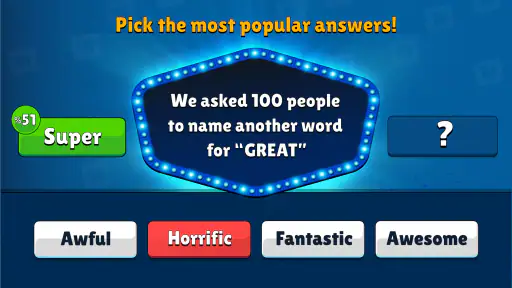
Imagine this: You’re sitting with your family, everyone is laughing, and all eyes are glued to their phones. No, it’s not another social media session; it’s the magic of Popular Words: Family Game. This game is all about guessing the most popular answers to various questions. It's kind of like Family Feud but in the palm of your hand and with a modern twist.
Guessing the crowd instead of recalling facts
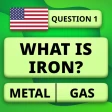
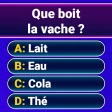
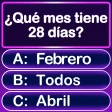
Right off the bat, the game is super easy to get into. You don’t have to be a tech whiz or a gaming guru to start playing. The interface is intuitive, with vibrant colors and fun animations that keep you engaged. Each round presents a question, and everyone scrambles to guess the most common answers within a time limit. The more popular your answer, the more points you score!
The central challenge is reading the room, not simply producing the technically correct response. If a prompt asks about a familiar topic, I’d encourage players to say their first obvious answer before overthinking it; the game’s premise rewards the likely crowd response. For a group, taking turns explaining a surprising guess can make the round more entertaining than silently chasing a score.
A useful way to play is to treat each prompt as a tiny prediction exercise: decide whether you are answering from personal preference or trying to imagine a typical response. Those can be very different. I might love an unusual choice, but if I want points, I should consider the obvious answer that a wider mix of people might name. Talking through that distinction makes the game more interesting for adults without adding any extra rules.
The time limit also changes how I approach a round. There may not be room to debate every possibility, so I’d keep the first response simple and save explanations for after the answer is entered. That small adjustment helps a mixed group avoid letting the quickest talker dominate the whole session. It also makes the game easier to fit into a short pause, because players can enjoy the prompt without turning each one into a long discussion.
Playing together without making the score the point
One of the coolest features is the multiplayer mode. You can challenge your family members or even friends who are miles away. It’s a great way to stay connected and competitive no matter the distance. Plus, there's a leaderboard that keeps track of who's the top dog in your circle, adding an extra layer of rivalry.
That competitive layer is best enjoyed casually. A leaderboard can make a rematch tempting, but I wouldn’t choose this over a dedicated competitive trivia game if your group wants detailed rankings, carefully balanced head-to-head play, or questions based on factual expertise. Here, the fun comes from guessing popular responses, so differences in age, language, and everyday references can affect what feels intuitive. Keeping the score light helps avoid turning a quick family game into an argument over who should have known an answer.
For a remote session, I’d agree on a simple rhythm before starting: let everyone read the prompt, make their guess, and then compare reactions once the round is over. That keeps the conversation moving even when people are not sitting around one phone together. Since the game’s appeal is the discussion as much as the points, the best group is one that is happy to laugh at a mismatch instead of treating every round like a serious contest.
It is also worth deciding what “fair” means for your group. This is not a test of who knows the most facts; it rewards a guess that matches popular answers. Someone who is younger, from a different background, or less familiar with a topic may have a different instinct without being less clever. I’d rotate who chooses when to play and avoid making a single leaderboard result the verdict on who is best. That is a more comfortable fit for a family mix than demanding identical knowledge from everyone.
Who will enjoy the guessing, and who may not
The simple format is useful when a group has mixed levels of gaming experience: a younger player can join without needing to study, while adults can still debate which answer most people would choose. Imagine waiting for dinner at home with relatives and having a few spare minutes. A prompt can give everyone an easy conversation starter, and an unexpected guess may lead to a story rather than just another point.
For a different kind of gathering, remote multiplayer gives friends or relatives a way to compete when they are not in the same room. I’d use it as a low-pressure activity between conversations, not as a replacement for a game built around deep strategy or a long shared session. If you prefer solo puzzles, private trivia against your own knowledge, or questions with a single objectively correct answer, this crowd-guessing format may not be your best match.
A realistic use for it is a family waiting for food at home while everyone has a few minutes to spare. Rather than asking one person to explain a complicated board game, someone can bring up a round and let the question do the work. If the answers spark a story, great; if people are ready to eat, the session can end without leaving a sprawling setup behind. I find that short, flexible role more convincing than expecting the game to carry an entire evening.
It can also suit a long-distance catch-up when conversation has briefly stalled. A shared prompt gives friends a light subject to react to, and the disagreements can be more revealing than the score. I’d skip it when the group wants a quiet individual activity, needs a structured team-building exercise, or expects a carefully moderated competition. The game’s approachable premise is a strength for casual company, but it does not automatically solve the planning or fairness needs of a formal event.
Compared with a standard knowledge quiz, the key difference is that you do not need to know a fact to take part; you need to predict a popular answer. Compared with a word-search or spelling game, it puts less emphasis on finding a precise solution and more on quick judgment. If a group likes arguing over what “most people” would say, this is a distinctive middle ground. If they mainly enjoy proving what they know, a conventional quiz is likely a better fit.
Why the format can click, and where it can stumble
The game is perfect for all ages, making it an ideal choice for family gatherings. Kids especially love the thrill of guessing, and adults can’t help but get caught up in the fun. There’s something about trying to think of the most common answers that gets everyone fired up and laughing.
Another aspect that I appreciate is the variety of questions. The developers have done a fantastic job of keeping the content fresh, so you’re not getting the same questions repeatedly. This keeps the game exciting and unpredictable every time you play.
One practical trade-off is that a prompt’s familiarity can vary from player to player. If a question lands awkwardly with your group, I’d move on rather than letting one round decide whether the game is enjoyable. The game is free to start, but paid items are available; the listed range runs from $0.99 to $64.99 per item. That tells me purchases are part of the offering, but it doesn’t establish what each item contains or whether buying anything is needed to enjoy a session. I’d check the in-app purchase details directly before spending.
For a smoother family session, I’d keep the first play informal and see which prompts get a reaction. That gives you a quick sense of whether your group likes predicting popular answers or would rather return to familiar trivia. If one question does not land, there is little value in arguing over it; the format works best when a prompt is a launchpad for conversation, not a source of tension. This is a small but useful distinction when playing with children or relatives who take points differently.
On spending, the sensible approach is to look at the purchase screen before confirming anything, especially if the device is shared. The free download makes it easy to try the basic idea, while the existence of paid items means I would not promise a child that every option is free. I would also avoid assuming that any purchase improves competitive fairness: the price range alone does not tell me what an item provides. That is why I’d make the decision based on the specific item shown in the app, not on guesses about what might be included.
That same caution applies to deciding whether it is right for a particular household. If you want a fully knowledge-based contest, a game with clearly defined factual answers will feel more satisfying. If you want a fast prompt that lets people of different ages join in without preparation, this one has a stronger case. The distinction is not a flaw so much as the central trade-off: popularity guessing can create lively disagreement, but it will not always feel like an objective measure of skill.
Compatibility and practical expectations
The game was released on December 7, 2022, and its current version is 1.2.2, with Android support listed from OS 7.1. Those details help with basic compatibility planning, but they don’t answer every practical question a player might have. In particular, I wouldn’t assume from the multiplayer description alone how a particular match is arranged, or infer purchase benefits from the price range. For those specifics, the sensible move is to review the current in-app screens and purchase prompts before committing money or planning a group session around a feature.
Compared with conventional quiz games, which often test memory and knowledge, this one is more about predicting what a broad group might say. Compared with word puzzles, it is less focused on spelling or finding a single solution and more suited to talking through guesses together. That distinction is the clearest way to decide: pick it for sociable, quick-fire opinion guessing; choose another trivia style if you want reliable fact-testing or a more substantial solo challenge.
For anyone wondering whether it is suitable for younger players, the age rating is Everyone, but I’d still supervise purchases on a shared device. The rating and the purchase options answer different questions: one concerns the intended audience, while the other concerns spending. I would check the device’s purchase controls as part of a family setup rather than relying on the rating to prevent accidental transactions.
If you are choosing between this and another trivia app, ask what you want the group to do after a question appears. For a fact quiz, people search memory for the right answer; here, they try to anticipate a popular answer. For a solo brain teaser, you may want a puzzle with a definite solution and a personal challenge. For a casual group moment, the open-ended social guessing is the point. That choice is more useful than comparing the games by genre label alone.
The trust question, for me, is less about taking a high average rating as a guarantee and more about whether the game’s premise is clear enough to judge before spending. Its broad audience and free entry make it easy to try the style, while the paid items call for a quick check before purchase. I’d recommend it when you understand that the score reflects crowd prediction, not factual expertise, and when your group is comfortable keeping competition friendly.
My verdict for a casual group game
In a world where we often find ourselves glued to screens in solitude, Popular Words: Family Game is a breath of fresh air. It’s a simple yet effective way to bring people together, spark conversations, and create lasting memories. So, if you’re looking for a game that’s not only fun but also fosters family bonding, give this one a go. I promise you won’t regret it!
Ready to test your guessing skills? Grab your phone, download the app, and let the fun begin!
Popular Words: Family Game Frequently Asked Questions
Is Popular Words: Family Game free to download, and are purchases optional?
Popular Words: Family Game is free to download, so you can try its trivia format without paying upfront. It also offers in-app purchases, with prices ranging from $0.99 to $64.99 per item. These purchases are separate from downloading the game, so it is worth checking purchase prompts and your device’s spending controls if you want to keep play entirely free.
Can I play Popular Words: Family Game with other people, or is it mainly a solo game?
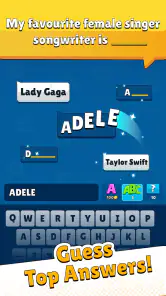
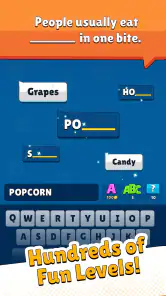
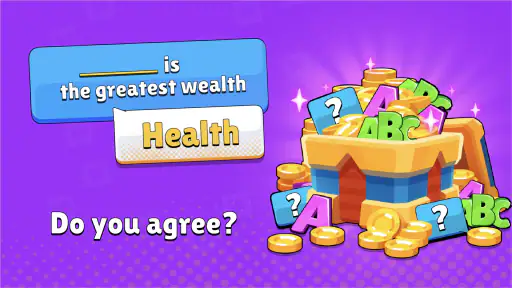
The game’s fill-in-the-blank prompts can work well as a shared activity: players can take turns guessing popular responses or compare what they think other people would say. Its casual trivia style is suited to family gatherings as well as individual play. If you plan to use online features, keep in mind that some options may need an internet connection.
Is Popular Words: Family Game a good choice for players who enjoy word games?
Popular Words: Family Game may appeal to players who enjoy quick word challenges and guessing what answers are most common. Rather than focusing on obscure facts or specialist knowledge, it asks you to supply popular responses to a prompt. That makes it approachable for casual trivia fans, while the challenge comes from predicting likely answers and filling in all the blanks.
Who developed Popular Words: Family Game, and how popular is it?
Popular Words: Family Game is a trivia game from Unico Studio. It has attracted a large player community, with over 5 million installs and an average rating of 4.8 from around 90,000 ratings. Those figures suggest broad interest, though the best way to judge whether its word-guessing style suits you is to try a few rounds yourself.
What is the main objective of Popular Words: Family Game?
The main objective of Popular Words: Family Game is to enhance vocabulary skills in a fun and engaging way. Players are required to guess the most popular words associated with a given topic, encouraging quick thinking and creativity. This game is perfect for family gatherings or casual play, as it promotes learning while ensuring everyone has a great time.
Articles Related to Popular Words: Family Game
Clash of Clans Is Won Between the Battles
Its raids are quick; its community is a long-term project of coordination, teaching, rivalry, and shared responsibility—with all the friction that entails.
Android Auto Makes the Case for Quieter Car Software
The car interface is no longer judged by how much it can do, but by how quietly it helps. Android Auto shows what drivers now expect—and what still gets in the way.
MobiOffice: Transforming Mobile Productivity with Seamless Integration
MobiOffice: Word, Sheets, PDF is redefining mobile productivity with a surprising blend of functionality and innovation.
EA SPORTS FC™ Mobile Soccer: Redefining Mobile Sports Gaming
Dive into EA SPORTS FC™ Mobile Soccer, where immersive gameplay and strategic depth transform mobile sports gaming.
Pros
- Engaging family-friendly gameplay
- Easy to learn and play
- Enhances vocabulary skills
- Interactive and fun challenges
- Suitable for all age groups
Cons
- Limited free content
- In-app purchases can be pricey
- Requires internet connection
- Ads can be intrusive
- Occasional glitches in gameplay
- Category
- Trivia
- Version
- 1.2.2