MONOPOLY Solitaire: Card Games
- 13.73K
- 4.0
- Installs
- 5.00M
- Price
- Free

Screenshots



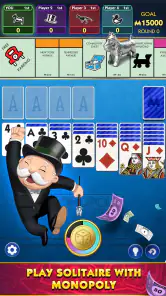
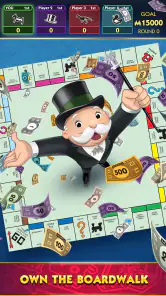
Analysis by Reviewed
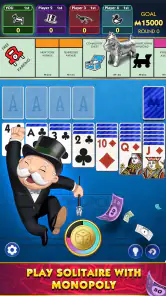
I reach for MONOPOLY Solitaire: Card Games when I want a familiar card puzzle with a reason to keep going after a hand ends. Its central idea is easy to grasp: play solitaire, earn dice rolls, then use those rolls to move around a Monopoly board and develop properties. That pairing gives a short card session a satisfying next step, though it also means the game is best for players who enjoy both parts of the loop rather than wanting a pure solitaire app.
Starting with a hand, then taking a turn
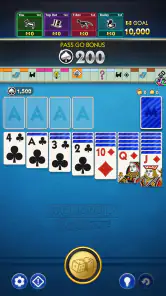
The first action is simple: settle into a solitaire game and work through the cards. Clearing a game earns dice rolls, which carry your progress over to the board. There is a pleasant change of pace in moving from sorting cards to deciding what to do with a property opportunity; neither part has to carry the whole experience by itself.
In an everyday setting, I can see this fitting a coffee break or a quiet wait. I can play a hand, use the resulting rolls, and stop at a natural point instead of committing to a long board-game night. If I have more time, the property-building layer gives me a reason to continue. The practical tip is to treat the card game and board turn as one small session: the reward makes more sense when I follow through and spend the rolls rather than leaving the board step for later.
A Unique Blend: Board Meets Cards
Right off the bat, MONOPOLY Solitaire caught my attention with its ingenious concept. Imagine playing solitaire while simultaneously building your property empire. Sounds wild, right? The game brilliantly combines the strategic property trading of Monopoly with the classic, card-stacking fun of solitaire.
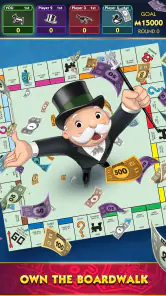
The gameplay is pretty straightforward, which I found refreshing. You start by playing a classic game of solitaire. As you clear cards and complete games, you earn dice rolls. These aren't just any dice rolls; they're your ticket to the Monopoly board, where you can buy properties, build houses and hotels, and, hopefully, bankrupt a few virtual opponents along the way.
The feedback rhythm and its limits
The loop’s feedback arrives in two stages: the card layout tests my next move, then a completed game turns into board progress. That handoff is the distinctive pleasure here. A solitaire win feels less like a finish line and more like a useful resource, while property purchases and upgrades make the reward visible. The pace is intentionally broken up, so players who want uninterrupted card play may find the board layer distracting rather than motivating.
The property decisions add a modest planning question: where to invest, and when to upgrade. I would not mistake that for the deeper negotiation and social reading of a full Monopoly match. The board gives solitaire a strategic aftertaste, but the main play remains a card game with a board-game reward attached. If I want pure, quick solitaire, a traditional solitaire app is the cleaner choice; if I want a full tabletop-style contest with other people, this hybrid is not a substitute.
The Joy of Progression
If there's one thing that kept me glued to the screen, it's the sense of progression. With each solitaire game you conquer, there's a tangible reward waiting on the Monopoly board. I loved how winning solitaire games felt rewarding beyond just the satisfaction of clearing the deck. Plus, watching my Monopoly empire grow with each successful card game was a delightful bonus.
It’s designed to be a relaxing yet engaging experience. The interface is intuitive, and the graphics are vibrant, making it a pleasure to interact with. I particularly appreciated the animations, which added a layer of excitement to each property purchase and building upgrade. It’s clear that a lot of thought went into ensuring that both new and seasoned players would find joy in the gameplay.
Who will enjoy the reward loop?
I’d recommend it to someone who already likes solitaire and enjoys seeing small, persistent-looking goals take shape on a board. It also suits a player who wants an easy entry point: the basic action is familiar, and the Monopoly layer adds direction without requiring a table, pieces, or a group. MobilityWare is the developer, and the game is free to start, with optional in-app purchases ranging from $0.99 to $99.99 per item. That makes it sensible to try at no upfront cost, while worth keeping an eye on purchases if I prefer to play without spending.
It is less suitable if I dislike progression systems, want every session to be a self-contained card puzzle, or expect the board to recreate the give-and-take of the physical game. Its Everyone age rating makes it broadly accessible, but that does not change the basic preference question: the appeal depends on whether rolling dice and building properties feels like a welcome payoff or an interruption.
A Few Words on Strategy
For those who love a bit of strategy, this game doesn’t disappoint. While solitaire provides a steady challenge, the Monopoly aspect requires a bit of planning. Deciding which properties to invest in and when to upgrade buildings can significantly impact your success. It adds a nice layer of complexity, keeping things interesting without being overwhelming.
One useful way to approach that layer is to pause before spending every new opportunity automatically. Think about whether a property purchase or an upgrade better supports the board progress I want; that small decision makes the Monopoly portion feel more intentional. The trade-off is that choices are bounded by the dice-roll reward loop, so this is light planning, not open-ended property trading. Players looking for a deeper economic strategy game will likely want more control than this format offers.
What to expect from a session
A common question is whether I can pick it up for a few minutes or need to settle in. The design supports both: solitaire gives me a clear unit of play, while the board turn provides a natural follow-up. I can stop after a hand if time is short, or continue when I want to see how the next reward changes my property choices. The game has been available since November 8, 2021, and its current version is 2025.3.0.7142; those details matter less in play than the simple fact that the format is built around repeating this hand-to-board rhythm.
Another point worth knowing is that progress is not the same as a direct head-to-head Monopoly match. The competitive element is described around comparing property values and progress with friends, so I’d approach it as a personal collection-and-growth loop rather than downloading it to bargain, trade, or outwit a live opponent. With over 5 million installs and an average rating of 4.0 from around 60,000 ratings, it has found a sizeable audience, though those figures do not guarantee that the hybrid will suit every solitaire fan.
Resetting the loop
What brings me back is the clean reset after a hand: the card puzzle is over, the reward points toward the board, and the next session has an obvious purpose. The game has had around 14,000 written reviews, but I would judge it by whether that repeated rhythm fits my own habits. It works best when I want gentle structure and a little visual progress, not when I am looking for a high-stakes challenge or a new solitaire ruleset.
On Android, the minimum operating system requirement is version 7.0. That makes compatibility a practical check before downloading, especially on an older device. Since it is free with optional purchases, I’d also decide in advance whether I am comfortable with in-app spending; the hybrid’s appeal is the play loop, not a need to buy my way into enjoying the basic idea.
And let's not forget the competitive edge. Although it’s primarily a single-player experience, comparing your property values and progress with friends can add a fun, competitive twist. It’s a game that you can easily pick up for a quick break or dive into for a longer session.
In summary, MONOPOLY Solitaire: Card Games is a delightful fusion of two beloved games, offering a fresh, engaging twist that’s hard to resist. Whether you’re a solitaire aficionado or a Monopoly master, this game offers something for everyone. It’s perfect for those moments when you want a bit of strategy with your card games, or simply want to relax while building a property empire. Give it a try, and you might just find yourself hooked!
Choosing it over other card games
The useful comparison is not simply “solitaire versus Monopoly,” but whether I want a card game to end cleanly or feed into another activity. A conventional solitaire app keeps attention on the layout, card order, and completion of the hand. This one adds a second goal after that finish, which can make a familiar puzzle feel less repetitive. The trade-off is that the board rewards take time and attention too, so someone who opens a solitaire game specifically to avoid extra layers may prefer a focused card-only option.
It also differs from a digital version of a full board-game match. Here, dice rolls are earned through solitaire, and property development is the payoff; I would not choose it for bargaining, player-versus-player tactics, or the unpredictable social moments of a group game. That distinction helps set expectations before installing: the Monopoly theme shapes the reward loop, but it does not turn every card session into a complete recreation of the tabletop experience.
Making short sessions feel complete
For a realistic routine, I’d open it while waiting for a takeaway or sitting through a short break, play a hand, then decide whether I have time to use the rolls on the board. If I’m interrupted, the card round itself gives me a natural stopping point; if I can stay a little longer, the property step provides a clear reason to continue. That flexibility is more useful than trying to force every visit into a long session, especially when the appeal is a string of small actions rather than one extended match.
One practical habit is to avoid treating every board reward as a command to keep playing. I can collect the satisfaction of finishing the hand, take the board turn when convenient, and stop once the session no longer fits my break. The loop is most enjoyable when it stays light. If I begin to feel that I’m playing only to reach the next reward, the card puzzle has stopped being the main attraction, and that is a good point to put the game down.
What the choice comes down to
The key question for a new player is whether a familiar solitaire round becomes more enjoyable when it produces board progress. If yes, the combination gives each hand a purpose beyond clearing cards. If no, the extra step may feel like a detour, and a straightforward solitaire game is likely a better fit. Likewise, people who want a long-form strategy contest should look elsewhere; the planning here is deliberately limited by the sequence of card wins and dice rolls.
I’d try it for the novelty of that hand-to-board handoff, then judge it by how often I enjoy both halves rather than by how quickly the properties accumulate. It is free to begin, but purchases can reach $99.99 per item, so I’d keep spending optional and set my own boundary if I’m prone to buying extras in games. For me, its strongest case is simple: a small card challenge, a visible reward, and a fresh reason to return when I have another spare moment.
MONOPOLY Solitaire: Card Games Frequently Asked Questions
Does MONOPOLY Solitaire: Card Games use the classic Monopoly board game theme?
Yes. MONOPOLY Solitaire: Card Games brings the familiar Monopoly board into a Solitaire-focused mobile game. Its store summary describes rolling classic MONOPOLY dice while playing a timeless Solitaire card game, making the board-game theme part of the experience rather than a separate version of Monopoly. If you enjoy both games, the combination is the main appeal.
What kind of game is MONOPOLY Solitaire: Card Games, and who makes it?
It is a card game developed by MobilityWare, built around a mix of Solitaire challenges and the MONOPOLY theme. The core idea is to play Solitaire while making progress on the familiar board, so it may suit players who want a recognizable setting alongside card-game play. It is available as a free download, with optional purchases inside the game.
Is MONOPOLY Solitaire: Card Games free to download, and what should I know about optional purchases?
MONOPOLY Solitaire: Card Games is free to download, so you can try its blend of Solitaire and Monopoly without paying upfront. The game also offers optional in-app purchases, with prices ranging from $0.99 to $99.99 per item. These purchases are not required to enjoy the core game, but consider them when deciding whether the app fits your preferences.
Is MONOPOLY Solitaire: Card Games suitable for children?
The game has an Everyone content rating, making it suitable for a broad audience. Its familiar Monopoly theme and Solitaire card challenges may appeal to players of different ages. Parents can still review the purchase options with younger players, since optional in-app purchases are available. The game is developed by MobilityWare, a name shown with its app information.
Will MONOPOLY Solitaire: Card Games work on my device, and how can I check compatibility?
The listed minimum operating system is Android 7.0, so check your device’s software version before downloading on Android. Compatibility can also depend on the particular device and its store, so review the app’s download page on your own device before installing. The game is available for Android and iOS, and checking the relevant store page is the best way to confirm it is offered for your device.
Pros
- Combines two classic games into one exciting experience.
- Easy-to-understand rules for all ages.
- Encourages strategic thinking and planning.
- Offers daily challenges and rewards.
- Smooth and intuitive gameplay.
Cons
- In-app purchases can be costly.
- Requires a stable internet connection.
- Limited multiplayer options.
- Occasional ads disrupt gameplay.
- Some features may be paywalled.

- Category
- Card
- Version
- 2025.3.0.7142