Lost Lands 3
- 3.88K
- 4.7
- Installs
- 5.00M
- Price
- Free

Screenshots






Analysis by Reviewed
Lost Lands 3 is the kind of adventure game I open when I want a story to carry me somewhere rather than another round of quick reflex challenges. I play as the last hope against an ancient curse, moving through a fantasy world filled with exploration, puzzles, objects to inspect, and problems that only make sense after I connect several clues. The free entry point makes it easy to try, while the atmosphere gives it more personality than a disposable time-killer.
My first impression is that this is a deliberate game. It expects me to look carefully, remember what I have seen, and accept that progress sometimes comes from returning to an earlier location with a new item or idea. That pace will suit players who enjoy classic point-and-click adventures and hidden-object mysteries. It will not suit someone looking for constant action, competitive play, or a short session with an obvious next move.
The game comes from FIVE-BN GAMES, a developer with a clear focus on narrative adventure experiences. It belongs to the adventure category, carries an Everyone age rating, and is free to start. The store summary frames the central mission as eliminating an ancient curse, but the appeal is in how that goal is broken into smaller discoveries. I am not simply following a straight path from one battle to the next; I am examining spaces, collecting useful objects, and working out how the world fits together.
How I play through the world without losing the thread
A calm baseline workflow works best
My most reliable routine is simple: I inspect the current area completely before rushing to the next one. I tap around the edges of the screen, check objects that look slightly different from their surroundings, and pay attention to anything that appears connected to a later task. This matters because the game often rewards observation more than speed. A decorative-looking object may become important only after another clue has changed the context.
I also try to separate three kinds of information in my head. First are items I can carry. Second are places or mechanisms that are currently blocked. Third are clues that explain a symbol, pattern, or sequence. Treating those as separate notes prevents a common mistake: using every new object immediately just because it is available. Sometimes the right decision is to keep exploring until the purpose becomes clearer.
On an ordinary evening, I might play for a short stretch after dinner, solve one small chain of tasks, and stop at a natural pause. When I return, I begin by checking my inventory and revisiting the last location where I noticed an unresolved detail. That habit is more useful than wandering randomly. It gives each session a starting point and reduces the feeling that I have forgotten everything.
The most valuable habit is to treat every unsolved detail as a reminder, not as a failure. If a door, device, or symbol cannot be handled yet, I mentally label it and continue. Adventure games become frustrating when I repeatedly attack the same obstacle without new information. Lost Lands 3 is more enjoyable when I accept that some answers arrive later.
Exploration has more value than rushing forward
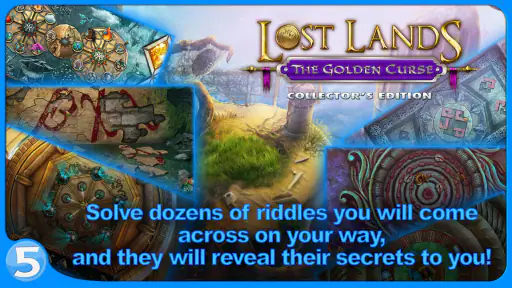
I find the environments strongest when I slow down enough to notice how the visual design guides attention. The game uses scenes as more than backgrounds: they are collections of clues, containers for objects, and stages for small logical problems. I look for changes in shape, color, position, and pattern rather than tapping every point without thinking. That makes successful discoveries feel earned instead of accidental.
When I enter a new area, I usually make one broad pass to understand its layout. On a second pass, I focus on interactive objects and anything that resembles a lock, panel, receptacle, or missing component. This two-pass approach is faster than trying to solve everything during the first few seconds, because I first build a mental map and then decide which details deserve attention.
The game is especially comfortable for players who enjoy playing alone and at their own pace. There is no need to coordinate with teammates or maintain a daily competitive routine. I can pause my thinking, put the device down, and return when I feel ready. That makes it a good companion for travel, quiet evenings, or anyone who prefers a self-contained mystery over a social game.
Inventory discipline prevents unnecessary backtracking
One practical trick is to remember where an item came from. If I pick up something unusual near a specific mechanism, I do not assume it belongs there, but I do keep that location in mind. Later, when I find a matching shape or clue, I can test the connection without revisiting every scene. This small memory aid makes the larger world feel manageable.
I also avoid combining ideas too early. When several objects are available, I first ask what each one physically resembles and what kind of problem it could address. A tool that looks appropriate for a mechanism may still be intended for another location. Taking a moment to compare the item with the environment saves time and makes the puzzle logic easier to follow.
Settings worth checking before a longer session
Before settling into a substantial chapter, I check the available game settings and make the display comfortable for the device I am using. Adventure games depend on noticing small visual details, so screen brightness, text readability, and a clean view of the scene matter more here than they might in a fast arcade game. I prefer to remove distractions around me as well, because a missed visual clue can lead to unnecessary searching.
I also make sure I understand how the game handles progress before I begin experimenting with solutions. My general rule is to finish a small interaction or puzzle sequence before leaving the game, rather than closing it in the middle of an important transition. That is not a dramatic technique, but it gives me a clearer point to resume and reduces confusion when I return later.
The current version is 2.1.4.1597.251, and the game requires Android 7.1 or later. Those details are worth checking before downloading, especially if I am using an older phone or tablet. The experience depends on being able to inspect scenes comfortably, so a device that technically meets the requirement may still feel less pleasant if its screen is cramped or its touch response is unreliable.
Because the game is free, I can test the opening experience without committing money. There are in-app purchases ranging from $0.99 to $14.99 per item, so I would decide in advance whether I am comfortable using optional purchases. My own approach is to play naturally first and treat spending as a convenience choice rather than part of the basic reason to try the game. Anyone who dislikes games with optional paid items should keep that structure in mind.
Small routines make puzzle solving faster
Experienced players often appear fast because they have learned to search consistently, not because they tap more quickly. I use the same scan order in every scene: outer edges, obvious containers, unusual symbols, then objects that seem connected to the current objective. Repeating that order prevents me from overlooking a clue simply because it is not in the center of the screen.
Another useful pattern is to read visual clues as relationships rather than isolated pictures. If I see a sequence, matching marks, or a repeated shape, I look for where that pattern could be applied. I do not immediately guess the answer. Instead, I compare the clue with nearby mechanisms and wait until the game gives me enough context. This reduces random attempts and makes the solution easier to remember.
When I am stuck, I change the question. Rather than asking, “What should I tap next?” I ask, “Which object has not yet found a purpose?” or “Which location contains a problem I cannot currently affect?” Those questions turn a vague block into a short list of possibilities. They are particularly helpful after a long session when my attention has become less precise.
I also recommend stopping before frustration turns into careless tapping. If I have searched the same area repeatedly, a short break is usually more effective than another sweep. When I return, I often notice a detail that was visible all along. This is one of the few adventure games where patience is an actual tool, not just a polite suggestion.
Where it differs from familiar alternatives
Compared with action-focused adventure games, Lost Lands 3 places much less emphasis on reflexes and combat-style momentum. The reward comes from understanding a location and solving its problems. Compared with a pure hidden-object title, it offers a broader sense of progression because the objects are tied to exploration and story rather than existing only as a timed search list.
It also feels different from competitive puzzle games. There are no opponents pressuring me to optimize every move, and I do not need to replay a level to beat another player’s score. That makes it more relaxing, but it also means players who need constant challenge escalation may find the pace gentle. The game asks for attention and memory, not speed or leaderboard ambition.
For someone who normally chooses interactive novels, this game provides more hands-on activity through searching and object-based puzzles. For someone coming from large open-world adventures, however, the environments may feel more guided and focused. I see that as a strength when I want a coherent mystery, but not when I want unrestricted exploration or a large collection of side activities.
Knowing when hints and persistence are better than guessing
My preferred solution method is to exhaust reasonable observations before seeking assistance. I inspect the scene, review what I am carrying, and revisit the last unresolved mechanism. If the answer still does not emerge, I use whatever guidance the game makes available rather than spending a long time testing random combinations. A hint is most useful when it confirms where to look; it is less satisfying when it replaces the entire thought process.
There is a trade-off here. Solving everything without help can make the story feel more personal, but it can also turn one obscure interaction into a barrier that interrupts the whole adventure. I would rather use a limited nudge and continue than abandon a game I was enjoying. Players who want a completely uncompromising puzzle experience may prefer to delay assistance, while casual players should not feel guilty about using it.
I keep a tiny note outside the game when a sequence is complicated. I write down a symbol order, a location that needs revisiting, or the general purpose of an item. This is not necessary for every puzzle, but it is valuable when I play in short sessions. It also prevents the common situation where I solve something, close the game, and then forget the reasoning when I return.
Limits that matter to the right player
The slow, observation-heavy design is the main limitation as well as the main attraction. If I want immediate action, the opening can feel too quiet. Some players may also dislike revisiting areas, especially when they prefer a linear sequence that always points directly toward the next objective. Backtracking is part of the structure, so it is better to view it as investigation rather than wasted movement.
The game can also test my patience when several objects look plausible at once. The pleasure comes from narrowing those possibilities, but the process may feel vague if I am tired or playing on a small screen. This is why I would not choose it for a quick, distracted session in which I expect every interaction to be obvious.
Its free-to-start model is convenient, but the presence of optional purchases means it is not the same as a completely paid, single-purchase adventure. I would recommend it to players who are comfortable trying the main experience first and deciding later whether any purchase is worthwhile. If avoiding in-app purchases is a firm requirement, a paid alternative with a clearly defined upfront cost may be a better match.
The Everyone rating makes it approachable for a broad audience, but that does not mean every child will enjoy it. The challenge depends on reading visual situations, remembering clues, and staying patient. I would see it as a family-friendly adventure to play together or discuss, rather than automatically assuming it is aimed at very young players.
Who should try it, and who should skip it
I recommend Lost Lands 3 to players who like atmospheric mysteries, careful exploration, and puzzles that unfold over time. It is a particularly good fit for someone who wants a story-led game that can be enjoyed without competition, fast reactions, or a permanent online routine. If you enjoy examining a scene and feeling a small click of recognition when two clues connect, this is the type of adventure that can hold your attention.
I would skip it if my ideal game is built around rapid combat, deep character statistics, free-roaming maps, or repeated short matches. I would also hesitate to recommend it to anyone who becomes annoyed by revisiting locations or who wants a completely effortless path from one objective to the next. The game is designed around discovery, and discovery naturally includes moments when the answer is not immediately visible.
The audience response suggests that the game has reached a substantial number of players: it has over five million installs, a 4.7 average from around 152 thousand ratings, and around 3.9 thousand written reviews. I treat those figures as useful signs of broad interest, not as a guarantee that every player will enjoy the pace. My own judgment is that the strongest match is a patient adventure fan, not a player choosing solely by popularity.
My verdict after settling into its rhythm
Lost Lands 3 works best when I give it room to breathe. Its central curse is a reason to move forward, but the real experience is the chain of observations, objects, and connections that gradually makes the world understandable. I like that progress depends on attention rather than grinding, and I appreciate being able to play alone in short, thoughtful sessions.
The game is not frictionless. Backtracking can test my patience, visual details can be easy to miss, and the optional purchase structure may not appeal to everyone. Still, those drawbacks are closely tied to the kind of adventure it wants to be. With a repeatable search routine, a willingness to keep notes, and the discipline to pause when I am guessing, the rough edges become easier to manage.
For a free adventure from FIVE-BN GAMES, it offers a convincing reason to explore beyond the opening moments. I would install it when I want a calm mystery rather than a noisy distraction, and I would recommend it to a friend who enjoys solving problems at their own pace. My final advice is to play slowly, inspect everything once, and let the clues—not random tapping—set the direction.
Pros
- Atmospheric visuals and detailed environments make exploration enjoyable.
- Puzzles offer satisfying variety without becoming overwhelmingly difficult.
- The story provides a strong sense of mystery and adventure.
- Helpful hints are available when you get stuck.
- Works well for relaxed
- offline play sessions.
Cons
- Some puzzles rely on trial and error rather than clear logic.
- The inventory system can feel awkward during item-heavy sections.
- Certain scenes involve repetitive backtracking across locations.
- The free version may limit access to the complete adventure.
- A few animations and transitions feel dated on newer devices.

- Category
- Adventure
- Version
- 2.1.4.1597.251