Lost Lands 2
- 2.33K
- 4.8
- Installs
- 5.00M
- Price
- Free

Screenshots
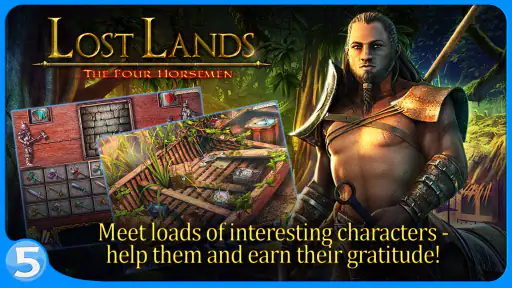
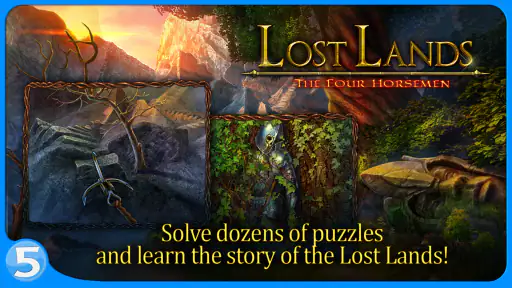
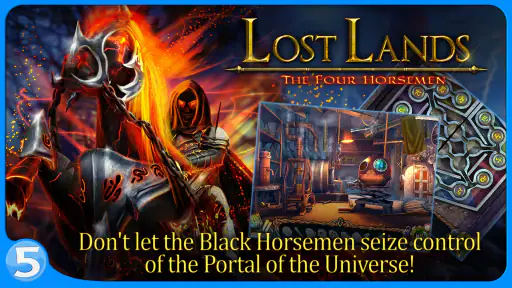
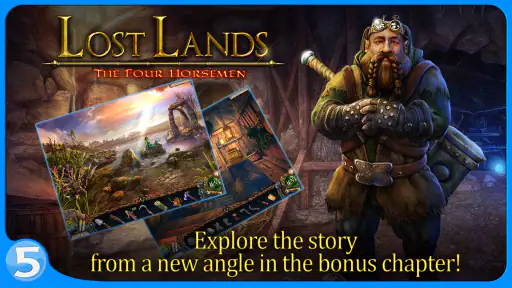
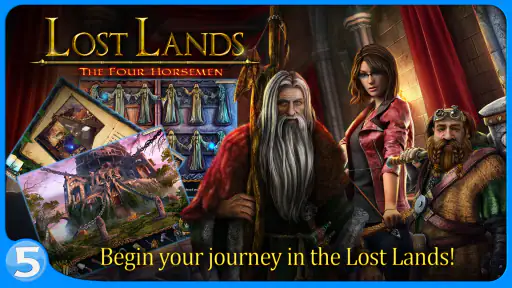
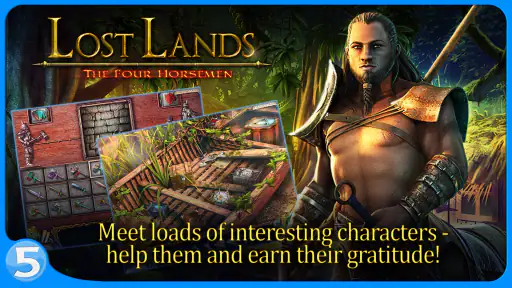
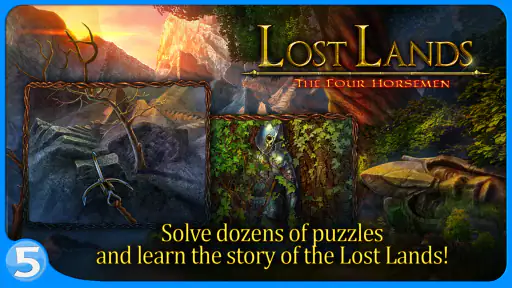
Analysis by Reviewed
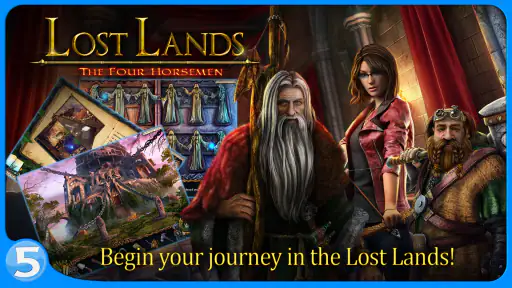
I first approached Lost Lands 2 expecting a fairly traditional adventure game, but it quickly became clear that its appeal depends less on speed and more on curiosity. Developed by FIVE-BN GAMES, it follows a young girl caught in a struggle involving the Four Horsemen. The setup gives the journey a darker, storybook quality, while the game itself asks me to observe carefully, search each scene, solve puzzles, and keep track of clues that are easy to overlook.
That makes it a very different experience from an action-heavy adventure. I am not rushing through combat arenas or building a character through complicated statistics. Instead, I move through a sequence of locations, inspect what is around me, collect useful objects, and work out how separate pieces of the story fit together. The game is free to download, carries an Everyone age rating, and has reached over five million installs. Those details make it easy to try, but the real question is whether its slower puzzle-led format suits the way you like to play.
A story-driven adventure built around observation
The strongest part of the game is its sense of place. The fantasy setting gives each area a reason to exist beyond simply being another level, and I found myself paying attention to visual details because they often help establish both atmosphere and progress. The Four Horsemen provide a clear threat, but the adventure is not presented as a simple race toward a final confrontation. The journey works through discovery, investigation, and the gradual understanding of what has happened to the world around the heroine.
That structure is particularly comfortable on a phone or tablet. I can play for a short stretch, stop after solving a puzzle, and return later without needing to remember a complicated control scheme. The touch interface is naturally suited to this type of game: I tap objects, examine areas, and test possible solutions. It feels more deliberate than a platformer, but that is intentional. The pleasure comes from noticing something I missed rather than reacting faster than an opponent.
The adventure category is a useful description, although it does not tell the whole story. This is best understood as a point-and-click-style fantasy puzzle adventure, with the story and environments doing much of the work. Players who normally enjoy hidden-object challenges, room puzzles, and supernatural mysteries will likely understand its rhythm quickly. Players looking for open-world exploration, direct fighting, or constant movement may find it restrained.
The narrative also benefits from being easy to follow at a broad level. I do not need to memorize a large cast before the central conflict makes sense. The young heroine’s fight against the Four Horsemen gives the game a straightforward emotional direction, while the individual locations and puzzles add smaller questions along the way. That balance helps the story remain approachable, even when the fantasy setting becomes more ominous.
How the free model affects the decision
The basic financial proposition is simple: the game is free, so I can install it and judge the opening experience without paying upfront. That matters for this genre because puzzle adventures are personal. Some players love examining every corner of a scene; others lose patience when progress depends on finding one small interactive detail. A free starting point lowers the risk of discovering that the pace is not for you.
There are in-app purchases ranging from $0.99 to $14.99 per item. I would therefore treat the free download as an opportunity to sample the adventure, not as proof that every part of the experience has no possible cost. The listed purchase range is enough to make me pause before spending: small purchases may be reasonable for a stuck player, while the higher end deserves more consideration against how much of the game I expect to play.
This distinction is important when comparing it with a paid adventure. A paid game can be easier to evaluate as a complete purchase because the cost is clear from the beginning. Here, the free entry is more flexible, but the eventual value depends on how the in-app purchases fit into your own play. I would begin without buying anything, learn how naturally I progress, and only then decide whether a purchase genuinely improves my experience.
The game has an average rating of 4.8 from around 101 thousand ratings, with roughly 2.3 thousand written reviews. That is a strong sign that the format connects with a substantial audience, although a high average cannot tell me whether the game matches my preferred pace. Ratings are especially limited for puzzle adventures because players may be judging atmosphere, story, hint expectations, and difficulty very differently.
What I actually value during play
My favorite moments come from the connection between objects and context. A scene may initially look decorative, but after I understand what the character needs, previously ignored details become meaningful. This creates a satisfying loop: explore, notice a clue, form a theory, test it, and then use the result to open the next part of the journey. The game rewards patience more than reflexes, which makes it a good fit for relaxed evening play.
One practical way I use it is as a short-session game after work. I can play while sitting with a cup of tea, investigate one location, and stop when I reach a natural puzzle break. It does not demand the same uninterrupted attention as a competitive match, and I do not have to coordinate with other players. That makes it easier to fit into an ordinary day, especially when I want something absorbing but not noisy or stressful.
Another strength is the way the fantasy premise gives ordinary puzzle actions a clear purpose. Searching for an item is not merely a checklist task when it relates to the larger conflict. Even when I am moving slowly, I feel that the investigation is contributing to the story. This is where the game offers more value than a collection of disconnected brain teasers: the puzzles are part of a journey with a recognizable threat and a reason to keep going.
The most useful habit is to examine every scene before trying random solutions. I found that rushing creates unnecessary confusion. Instead, I look for unusual shapes, objects that seem out of place, and clues that might connect to something seen earlier. I also try to remember where an item was found rather than collecting it mentally as an isolated object. That small change makes later puzzles feel more logical and reduces the temptation to tap everywhere without thinking.
When I do get stuck, I prefer taking a short break before spending money or searching for outside help. A puzzle that seems impossible after several minutes can become obvious once I return with a fresh view. This is a genuine trade-off in the design: the slower structure can feel rewarding when I solve something myself, but frustrating when my progress depends on a detail I failed to notice.
Where the experience can become frustrating
The same observation-based design that creates satisfaction can also produce friction. If I miss one critical object or misunderstand the intended order of actions, the game may feel as though it has stopped moving. This is not the kind of adventure where trying random taps always feels productive. Players who prefer constant forward motion should know that quiet stretches and careful searching are part of the experience, not signs that something is broken.
Backtracking can also test my patience. Returning to an earlier area can make sense in a mystery, but it is less enjoyable when I have forgotten why that location mattered. I recommend paying attention to the story and mentally grouping objects by the place where they appeared. Even a simple note on paper can help during a longer session, particularly if you play in short bursts and leave the game for several days.
The game is also not the right choice for someone who wants a deep role-playing system. I would not install it expecting extensive character customization, fast combat, or a large world that can be explored in any direction. Its appeal comes from guided discovery. The locations may feel rich, but the overall experience is designed around solving the next mystery rather than creating your own route through a sandbox.
Its Everyone age rating makes it broadly accessible, but that does not mean the atmosphere is cheerful throughout. The Four Horsemen and the fantasy conflict give the story a darker edge than a purely lighthearted family game. I would describe it as approachable rather than relentlessly playful. Parents choosing it for younger players may want to consider whether supernatural danger and ominous storytelling fit the child’s preferences.
There is also a practical device question. The game lists Android 7.1 as the minimum operating system, and the current version is 2.2.2.1597.294. That gives users a useful compatibility reference, but an operating-system requirement alone does not guarantee that every older device will feel equally comfortable. Puzzle games benefit from clear visual detail, so a small or aging screen may make careful inspection less pleasant than playing on a larger display.
Who will get the most from it?
I would recommend it first to players who enjoy atmospheric mysteries and do not mind taking their time. If you like hidden-object games but want a stronger fantasy plot around the searching, this is a natural candidate. It should also suit people who prefer solo play, because the experience is built around personal observation and decision-making rather than competition, teamwork, or reaction speed.
It is a good option for a commuter or casual player who wants a game that can be paused between tasks. A short session can focus on examining one area or solving one problem, while a longer session allows the story to build momentum. The important point is to play with enough attention to notice visual clues. It is less suitable for playing while distracted by television, conversation, or constant notifications.
Families may appreciate the accessible controls and Everyone rating, but I would still choose it based on the child’s reading and puzzle preferences rather than age alone. A young player who enjoys stories and patient problem-solving may find it inviting. Someone who expects immediate rewards or action may abandon it quickly. The same applies to adults: age is not the deciding factor here; tolerance for deliberate exploration is.
Players who are sensitive to in-app spending should approach the free model carefully. I like being able to try the game before paying, but I would not treat every optional purchase as automatically good value. If I am enjoying the puzzles and only need occasional assistance, a small purchase might feel justified. If I am regularly blocked and considering the highest listed item price simply to remove frustration, I would stop and ask whether this particular game is still entertaining me.
How it compares with other adventure choices
Compared with action adventures, this game is calmer and more thoughtful. There is no need to master rapid movement or combat timing, so it works better when I want to concentrate on clues. Compared with pure hidden-object games, it offers a stronger reason to move from one scene to another because the search is tied to the Four Horsemen and the heroine’s larger struggle.
Compared with premium puzzle adventures that charge upfront, the free download is more inviting for uncertain players. I can test the atmosphere and puzzle style without committing immediately. The trade-off is that the cost structure is less straightforward because optional items can range from under a dollar to nearly fifteen dollars. For me, that makes the free entry the main advantage, while the purchase decision requires more restraint than a single fixed-price alternative.
It is also less suitable than a casual match-three or arcade game when I only have a minute to spare. Those games usually provide immediate actions and quick rewards. Lost Lands 2 asks me to remember context, inspect details, and sometimes sit with a problem. I would choose it for an intentional break, not for filling every tiny gap in the day.
The developer, FIVE-BN GAMES, clearly presents this as a story-led adventure rather than a competitive service. That focus is helpful for anyone seeking a self-contained-feeling fantasy journey, but it also means the game’s value depends heavily on whether the narrative mood and puzzle logic work for you. A large install base and strong average rating are encouraging, yet neither replaces trying the opening yourself.
My practical approach before spending anything
I would start by playing the free portion with notifications muted and enough time to inspect scenes properly. I would avoid tapping every object at random, because that makes it harder to understand the game’s logic. When I find an item, I would remember the location and the apparent purpose rather than assuming it must be used immediately. This approach makes the investigation more coherent and helps reveal whether I enjoy the central loop.
If I became stuck, I would first revisit earlier locations and reread the immediate story context. Many puzzle problems feel difficult because I am looking at the right object with the wrong question. I would only consider an in-app purchase after deciding that I am blocked by a specific obstacle rather than simply losing interest. That difference protects the value of the free download: I am paying because I still want to continue, not because I feel pressured to escape a frustrating moment.
I would also play on the largest comfortable screen available. Visual adventure games depend on recognizing small details, and a better display can improve the experience without changing the game itself. If the device is close to the Android 7.1 minimum, I would be especially attentive to comfort and responsiveness before making any purchase. The game may run, but enjoying careful investigation is more important than merely installing it.
My verdict on value
For me, Lost Lands 2 is worth trying because its free access removes the biggest barrier to entry, while the fantasy story gives the puzzles a stronger identity than a generic search game. I like that it can fit into quiet, focused sessions and that the central conflict provides a clear reason to keep investigating. The high average rating and millions of installs support its broad appeal, but I would still judge it by the first few sessions rather than by popularity alone.
I would skip it if I wanted action, open exploration, multiplayer competition, or puzzles that can be solved in seconds. I would also skip it if I know I become irritated by backtracking or by searching a scene for one overlooked clue. Those are not minor details; they are central to how this adventure creates its challenge.
My recommendation is to install the free game, play patiently, and delay purchases until the story and puzzle rhythm have earned your interest. The listed purchase range means the game can remain inexpensive for a cautious player, but spending more should be a deliberate choice rather than an automatic step. Its best value comes from the free opportunity to discover whether thoughtful fantasy investigation is genuinely your kind of game.
Pros
- Atmospheric environments make exploration feel immersive and varied.
- Puzzles offer a satisfying mix of logic
- observation
- and item use.
- The story provides clear motivation without overwhelming the gameplay.
- Hidden-object scenes are well integrated into the adventure.
- Works well for relaxed
- offline play at your own pace.
Cons
- Some puzzles rely on trial and error rather than clear clues.
- Backtracking can become tedious when objectives are not obvious.
- The interface feels dated on newer
- high-resolution screens.
- The full experience may require an additional purchase.
- Certain scenes can feel repetitive after extended play.

- Category
- Adventure
- Version
- 2.2.2.1597.294