Duet Cats: Music & Meow Game
- 6.13K
- 4.4
- Installs
- 50.00M
- Price
- Free

Screenshots
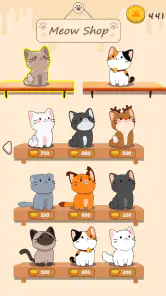

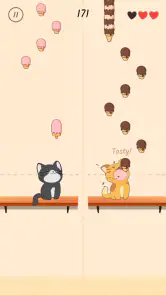
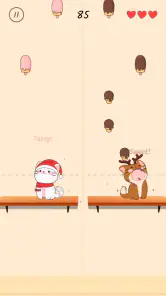
Analysis by Reviewed
I spent time with Duet Cats: Music & Meow Game as a light, music-focused casual game, and its appeal became clear almost immediately: it turns simple tapping into a playful performance led by singing cats. The idea is easy to understand, friendly enough for children, and relaxing enough for a short break, but there is more to judging it than asking whether the cats are cute. The important questions are how satisfying the rhythm interaction feels, whether progress stays enjoyable, and how comfortable the spending model is for different players.
Created by AMANOTES PTE. LTD., this is a free game for Android and iOS-style casual play, with an Everyone age rating. It has reached over 50 million installs and holds a 4.4 average from around 104 thousand ratings, which suggests that the central concept connects with a very broad audience. I can see why: it does not demand a long tutorial, complicated controls, or a large time commitment before the main joke and charm are visible.
How the cat rhythm loop feels in everyday play
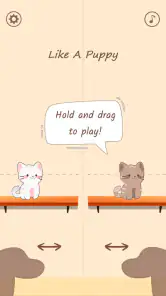
The basic interaction is built around tapping to feed the cats while keeping up with the music. That combination gives each short session a clear rhythm: listen, react, and enjoy the cats’ vocal responses. It is not trying to be a serious instrument simulator, and that is an important distinction. I would describe it as a playful rhythm toy rather than a demanding music-training tool.
That makes it particularly easy to pick up during a small gap in the day. I can imagine opening it while waiting for a drink, playing a few moments before bed, or handing it to a child who wants something interactive without a complicated control scheme. The actions are direct enough that a new player can understand the premise quickly, while the audio and animation provide the feedback that keeps the interaction from feeling like ordinary button pressing.
The cats are the main personality of the experience. Their meows and singing give the game its identity, so the sound should not be treated as background decoration. I found that the appeal depends heavily on whether you enjoy cute animal reactions and deliberately silly presentation. If you prefer a clean, competitive rhythm game with precise musical scoring, this may feel too soft and novelty-driven. If you want a cheerful game that makes tapping feel entertaining, the presentation does much of the work.
A useful way to approach it is to play with headphones when you want to notice the rhythm and vocal details, then switch to a lower-volume session when you are in a public place. The game’s concept is sound-led, so playing silently naturally removes part of its character. At the same time, the vocal style can become repetitive for anyone who is sensitive to recurring sounds. That is not a flaw for every player, but it is a real consideration before treating it as an all-purpose relaxation game.
The current version is 2.0.22, and it runs on Android 7.0 or later. That relatively broad system requirement makes it approachable for people who are not using a recent phone. Still, compatibility is only one part of the experience. A device that handles modern games comfortably should be a safer choice if you want smooth animation and quick responses, especially when several visual elements appear together.
You May Like

Clash of Clans Is Won Between the Battles

Android Auto Makes the Case for Quieter Car Software

MobiOffice: Transforming Mobile Productivity with Seamless Integration

EA SPORTS FC™ Mobile Soccer: Redefining Mobile Sports Gaming

How Microsoft OneDrive Became a Mobile Productivity Giant

How Google Translate Breaks Language Barriers Effortlessly
I also like that the game’s premise gives it a natural shared-play angle. One person can tap while another watches, listens, or reacts to the cats. It is not the same as a traditional multiplayer party game, and I would not buy it expecting a deep competitive mode. Its social value is more immediate: it creates a small performance that is easy to show someone else.
What makes the free entry point comfortable
The game is free to download, so trying the central rhythm idea does not require an upfront purchase. That matters here because the concept is highly personal. Some players will find the singing cats delightful, while others will decide after a short session that the novelty is not for them. A free starting point lets you make that decision without committing to a paid game first.
There are in-app purchases ranging from ten cents to $49.99 per item. I consider that a wide spread, and it means the word “free” should be read as free entry rather than a promise that every optional purchase will feel minor. The sensible approach is to play the initial experience first, then decide whether anything you want is genuinely improving your enjoyment. I would not spend simply because a larger item is presented as the fastest route to more content or a more polished collection unless I already knew I planned to keep playing.
For parents, the purchase range is a reason to check device-level purchase controls before letting a child play unsupervised. That is practical advice rather than a criticism of this particular game. Cute presentation can make optional items feel especially tempting to younger players, and a free download can be mistaken for a completely purchase-free experience. Setting a limit in advance keeps the decision with the adult rather than with an impulsive tap.
I also recommend treating every purchase as entertainment spending, not as an investment in guaranteed progress. A cosmetic or convenience item can be worthwhile if it makes the game more enjoyable for you, but it does not change the fact that the core appeal is a short rhythm interaction with cats. If that loop stops being fun, spending more is unlikely to solve the underlying problem.
Progress, repetition, and the pressure to continue
The strongest part of the design is the immediate feedback, while the biggest potential weakness is repetition. A short, simple loop is excellent when I want a quick distraction, but it can feel thin if I expect a long-term progression system with constant strategic decisions. This is where expectations matter more than the store category. As a casual game, it works best in small portions rather than as the only game on a long journey.
I found it useful to decide what kind of session I was having before opening it. If I wanted a few cheerful minutes, the cats and music were enough. If I wanted a clear achievement target or a serious test of timing, I would choose a more traditional rhythm game instead. That small distinction prevents the game from being judged for failing to become something it never needed to be.
There is also a subtle pressure that can appear in any free casual game: once a player becomes attached to collecting, unlocking, or improving something, optional spending can start to feel like part of the normal route rather than a choice. I would watch my own behavior here. If I began checking the game mainly because I felt I needed to maintain progress, I would take a break. The healthiest use is when I open it because the cats and music sound enjoyable at that moment.
One practical tip is to avoid playing for too long in a single sitting if the repeated sounds begin to lose their charm. Short sessions preserve the novelty and make the game’s strongest quality—the immediate cheerful response—more noticeable. This is a better fit for the design than forcing a long grind and then blaming the game for becoming predictable.
Another useful habit is to separate experimentation from spending. First learn whether you enjoy the timing and audio loop. Then see whether the available optional items add something meaningful to your personal experience. That two-step approach is more reliable than buying early and hoping the purchase will create interest afterward.
Is the experience fair to players who do not spend?
From a fairness perspective, the verified purchase information establishes that optional items are available, but it does not establish a competitive advantage, a required purchase, or a specific progression gate. I therefore would not describe the game as unfair without evidence of those systems. The more accurate conclusion is narrower: players should know that free access and optional spending coexist, and they should make their own boundary before playing.
Competitive fairness is also a limited concern here because the game’s identity is centered on casual rhythm play rather than a clearly defined head-to-head contest. If your main requirement is an even playing field where skill determines every result against other people, this is probably not the best place to look. A dedicated competitive rhythm title will usually be a better choice because its purpose is clearer and its success can be judged through timing and performance.
For a family audience, fairness means something slightly different. A child may see an attractive item and understand it as part of the game rather than as a real-money decision. I would explain that the game can be enjoyed without automatically buying anything, then use platform controls to prevent accidental purchases. That conversation is more useful than simply calling the game fair or unfair, because it gives the player a concrete way to stay in control.
For adults, the trade-off is straightforward. If you only want the free rhythm experience, you can approach it as a small casual diversion and stop there. If you enjoy collecting and are comfortable paying for optional items, the purchase range gives you room to spend a little or much more. The important point is that the upper end is substantial enough to deserve deliberate consideration, not a reflexive tap.
Who should choose it, and who should skip it?
I would recommend it to players who enjoy cute animal characters, simple music interactions, and games that can be understood within moments. It is especially suitable for someone who wants a low-pressure break rather than a complicated strategy system. It can also work for families looking for an approachable game, provided an adult handles purchase settings and explains the difference between free play and optional items.
I would be more cautious recommending it to players who need deep progression, precise competitive scoring, or a large amount of variety in every session. A serious rhythm fan may prefer a game built around mastery, charts, and measurable performance. Someone who dislikes repeated animal vocals may also tire of this one quickly, even if the first few interactions produce a smile.
Compared with ordinary casual puzzle games, this has a stronger personality and a more noticeable audio hook, but it gives up some of the quiet, problem-solving focus those games provide. Compared with conventional rhythm games, it is more welcoming and humorous, but less suited to players who want to practice difficult timing patterns. Compared with passive cat videos, it offers participation rather than simple viewing, although the interaction is intentionally light.
That comparison helped me place it correctly. I would not replace a favorite puzzle game, rhythm challenge, or pet simulator with it. I would keep it as a separate option for moments when I want something cute, musical, and immediately understandable. Its value comes from that specific combination, not from trying to dominate every casual category at once.
Questions worth considering before downloading
A common question is whether it is suitable for children. The age rating is Everyone, and the controls are approachable, so the content positioning is clearly broad. My practical recommendation is still to supervise spending rather than assume that a child will recognize every purchase as optional. The game can be a friendly shared activity, but the payment settings should be treated separately from the age rating.
Another question is whether a newer phone is necessary. The minimum requirement is Android 7.0 or later, so it is not restricted to only the newest Android devices. Even so, the actual smoothness of any game depends on the device, and I would keep other demanding apps closed if performance becomes uneven. That is especially sensible for a rhythm-focused game, where delayed input can make the interaction feel less satisfying.
Players also often want to know whether they can enjoy it without paying. Since the game is free and purchases are optional items, the answer is yes in the basic sense: you can try the central experience without an upfront fee. The more careful answer is that free access does not remove the need to manage purchase temptation. I would play first, set a budget if necessary, and only buy when the game has already proved that it belongs in my regular rotation.
Another consideration is longevity. I would expect the strongest enjoyment to come from short sessions and from the novelty of the cats’ musical reactions. If you need a game that stays strategically fresh for hours every day, choose a deeper alternative. If you want something to revisit briefly, the compact loop is an advantage rather than a limitation.
Finally, ask yourself whether sound is central to your enjoyment. The singing and meowing are not an incidental effect; they are the reason the game feels distinct. With audio available, the experience has a clear personality. Without it, much of the charm is reduced, so this is not my first recommendation for silent commuting or situations where headphones are inconvenient.
My trust verdict after weighing the trade-offs
My overall view is positive but deliberately modest. This is best understood as a cheerful casual rhythm game, not a deep music challenge or a guaranteed long-term hobby. The cats give it a memorable identity, the tapping loop is easy to approach, and the free entry point makes trying it reasonable. The broad audience response, including the 4.4 average and over 50 million installs, supports the idea that the concept has wide appeal, though popularity alone should not decide whether it suits you.
The spending model deserves attention because optional items range from a very small amount to $49.99 per item. I would not call that automatically unfair, especially since the available facts do not establish competitive pay-to-win mechanics or mandatory purchases. I would call it a reason to play with a clear budget and to use parental controls where appropriate. That is enough information to enjoy the game responsibly without making assumptions about systems that are not established.
AMANOTES PTE. LTD. has built something that understands the value of an immediate smile. For me, the game works when I treat it as a short musical cat performance: open it, tap along, enjoy the reactions, and leave before the repetition becomes tiring. It is not the right pick for every player, but for anyone who wants a friendly, low-barrier distraction with a distinctive sound and a playful mood, I think it is worth trying.
My final recommendation is to download it for the free experience, test the rhythm loop with audio, and decide based on how quickly the charm holds your attention. Keep spending optional, keep sessions comfortably short, and compare it with a dedicated rhythm game if precision or competition matters more to you. Used on those terms, Duet Cats: Music & Meow Game earns its place as a lighthearted break rather than pretending to be something bigger.
Duet Cats: Music & Meow Game Frequently Asked Questions
What kind of game is Duet Cats: Music & Meow Game?
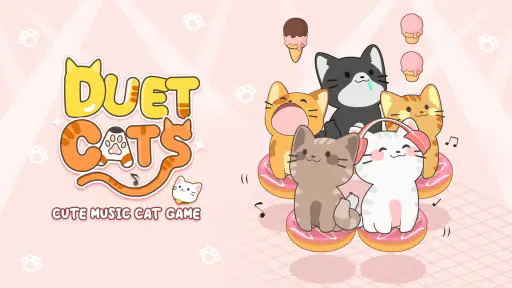
Duet Cats: Music & Meow Game is a casual rhythm game centered on cute cats and musical timing. Its store summary describes cats singing and meowing, with players tapping to feed them. The colorful cat theme and straightforward premise make it easy to understand before starting, while the rhythm focus gives each song a simple goal: keep up with the music.
Who developed Duet Cats: Music & Meow Game, and when was it released?
Duet Cats: Music & Meow Game was developed by AMANOTES PTE. LTD. and released on November 16, 2022. It is a casual game built around musical interactions with cats, making it a good fit for players who enjoy light, approachable games. Its appeal comes from the combination of a cute theme and rhythm-based play rather than a complex story or elaborate controls.
What devices can run Duet Cats: Music & Meow Game?
Duet Cats: Music & Meow Game is available for Android and iOS devices, and the Android version requires Android 7.0 or later. Before downloading, check that your device meets the operating-system requirement and has enough available storage for the game. Keeping your device’s software up to date can also help the app run smoothly.
Who developed Duet Cats: Music & Meow Game, and how popular is it?
The game is developed by AMANOTES PTE. LTD. It has an average rating of 4.4 from around 104,000 ratings, with over 50 million installs. That broad audience makes it a familiar choice for people looking for a light music game, though individual enjoyment will depend on whether you like timing-based play, cute cat characters, and short song challenges.
What is Duet Cats: Music & Meow Game?
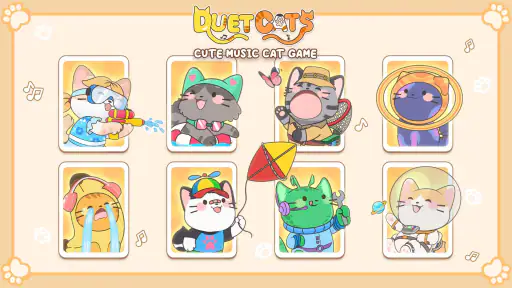
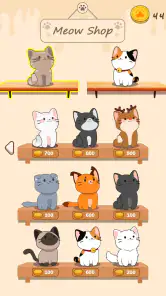
Duet Cats: Music & Meow Game is a casual rhythm game in which players control two adorable cats singing along to popular-style songs. You tap or hold the screen in time with the notes to keep the performance going. The game combines simple musical gameplay with collectible cats, colorful visuals, humorous animations, and a relaxing, easy-to-learn design suitable for short play sessions.
Pros
- Simple tap-based gameplay that is easy for children and beginners to learn.
- Cute cat animations and expressive meows make each performance entertaining.
- Song library offers a relaxing way to play during short breaks.
- Progression encourages replaying tracks to improve timing and accuracy.
- Works well as a casual game for friends or family to enjoy together.
Cons
- Some songs and cat content may require in-app purchases to unlock.
- Timing challenges can become repetitive after extended play sessions.
- Frequent rewards or promotional prompts may interrupt the experience.
- A stable internet connection may be needed for certain content and features.
- Younger players may be encouraged to request purchases without supervision.

- Category
- Casual
- Version
- 2.0.22