Homescapes
- 362.23K
- 4.7
- Installs
- 100.00M
- Price
- Free

Screenshots







Analysis by Reviewed
I find Homescapes easiest to enjoy when I treat it as two connected pastimes: working through match-3 puzzles and deciding how Austin’s home should look. The puzzle board gives each session a clear goal, while the renovation tasks provide a visible reason to keep going. That combination makes it a natural fit for short breaks, though it also means progress through the house depends on puzzle progress.
Who will enjoy this mix
I’d recommend it to someone who likes familiar tile-matching rules but wants more of a sense of continuity than a string of unrelated levels. If choosing between room decorations appeals to you, the renovation gives the wins a personal payoff. On an ordinary commute or while waiting for dinner, I can see the appeal of playing a level, earning progress, and returning to the house later. It also suits players who enjoy following a light character story between puzzles.
If you mainly want an open-ended interior-design tool, this is not that: the puzzle challenges are central to moving forward. And if you prefer a match-3 game with no story or decorating interruptions, a straightforward puzzle-only alternative may suit you better. I also wouldn’t pick it for a player who dislikes retrying a level when a particular board proves stubborn.
Spending, pace, and fairness
The game is free to start, and its in-app purchases range from $0.29 to $199.99 per item. I’d keep that broad range in mind before making a purchase, especially if a difficult level makes an optional purchase feel urgent. A useful personal rule is to pause before paying, then come back to the board with fresh eyes; a short break can be more satisfying than spending in frustration. The game is rated Everyone, and its casual format is approachable, but that doesn’t mean every level will feel effortless.
For fairness, I look at the distinction between progress earned by playing and convenience someone might choose to buy. The purchase range is clear, but it doesn’t by itself establish how purchases affect competition or whether players compete directly. I wouldn’t assume either that spending is required to enjoy the game or that it creates a particular competitive advantage. If your main concern is a level playing field, this is a sensible point to consider before treating any optional purchase as part of the experience.
Practical ways to play
A small habit that helps with any puzzle game is to inspect the whole board before making the first move, rather than matching the first obvious group. I try to look for moves that can create follow-up matches or clear useful space, then reassess after each move instead of committing to a plan that the board no longer supports. That approach won’t guarantee a win, but it makes retries feel more deliberate.
I’d also think of the house choices as a reason to enjoy progress, not as a task to rush through. If a decoration option matters to you, take a moment to choose what you actually like; the appeal is partly in making the home feel personal. For someone who wants immediate design freedom, though, tying renovation to puzzle wins may feel like a restriction rather than a reward.
You May Like

Clash of Clans Is Won Between the Battles

Android Auto Makes the Case for Quieter Car Software

MobiOffice: Transforming Mobile Productivity with Seamless Integration

EA SPORTS FC™ Mobile Soccer: Redefining Mobile Sports Gaming

How Microsoft OneDrive Became a Mobile Productivity Giant

How Google Translate Breaks Language Barriers Effortlessly
A better fit for some breaks than others
For an everyday routine, I’d use it as a small, self-contained diversion rather than something to fill every spare minute. A single puzzle can suit the gap before a meeting or the few minutes while a meal is in the oven; if I get stuck, I can stop there and return later instead of letting one level take over the whole break. The house gives that return a sense of continuity, but it doesn’t remove the chance that a session ends on a frustrating board.
This setup also makes the game different from a dedicated decorating app. Those tools are the better choice if you want to experiment freely with layouts without first clearing puzzles. Compared with a bare match-3 game, Homescapes adds a story and a longer-term visual goal, but that extra context comes with a trade-off: you cannot separate renovation progress from the puzzle loop. I’d choose based on whether that connection feels motivating or like an extra gate.
Making retries more useful
When a board feels difficult, I try not to repeat the same opening automatically. I pause to notice which parts of the board are actually blocking progress, then use the next attempt to test a different first move. This is a modest change, not a guaranteed shortcut, but it helps me learn from a failed run instead of treating every retry as a reset with no takeaway.
It also helps to separate the feeling of being close from a reason to spend. If I am annoyed or rushing, I stop and return later; if I still want to play, I can judge the purchase on its own terms rather than as a way out of a moment of frustration. Since the listed purchase prices span a wide range, I would check the amount carefully and avoid assuming that every purchase is a small one.
Bring Out Your Inner Designer
Right from the get-go, Austin, the butler, is on a mission to restore his childhood home to its former glory. The game kicks off with a charming storyline that pulls you in immediately. You’re not just playing a game; you’re part of Austin’s life, helping him fix up his family home room by room.
Match-3 Puzzles – A Fun Challenge
The core of Homescapes is its match-3 puzzles. Every level you beat earns you stars, which you can use to renovate different parts of the house. The puzzles start off easy, but don’t let that fool you. As you progress, they become more challenging, making you plan your moves carefully. Some levels had me scratching my head, trying different strategies to get through. And that’s part of the fun!
The key trade-off is that the puzzle and renovation sides cannot really be played as separate modes. If you enjoy seeing a room change after tackling a board, that link makes each win feel useful. If you came for decorating alone, it can make the design element feel gated. I’d treat a difficult puzzle as a natural stopping point rather than assuming I need to push through immediately to see the next change.
Home Renovation – A Visual Treat
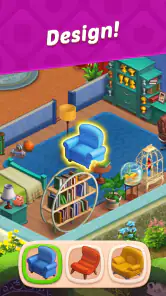
One of the best parts of the game is the home renovation aspect. The graphics are vibrant and detailed, making the process of choosing new furniture, wallpapers, and decorations incredibly satisfying. It’s like having a mini interior design project on your phone. Plus, seeing the house transform with every task completed gives a real sense of accomplishment.
My practical tip is to make each choice for the look you prefer, rather than selecting quickly just to clear a task. The satisfaction comes from watching the home take shape, so pausing over a choice makes the renovation feel more personal. Still, this is a guided project, not a blank canvas: anyone who wants full control over room planning will likely be happier with a dedicated design game.
Characters and Storyline
The characters in Homescapes are endearing. Austin is a lovable protagonist, and the supporting cast adds depth to the storyline. Each character has a unique personality that makes the story more engaging. You’ll find yourself invested in their lives, rooting for their happiness as you progress through the game.
The story works best as a gentle thread between levels, rather than the main reason to install the game. I’d recommend it to someone who likes a little character context alongside familiar puzzle play. If you want a narrative game with long stretches of dialogue or choices that drive the plot, this is a different kind of experience: the match-3 loop remains the main route forward.
In-Game Purchases – A Word of Caution
Now, like many free-to-play games, Homescapes offers in-game purchases. While they’re not necessary to enjoy the game, they can be tempting, especially when you’re stuck on a particularly tricky level. My advice? Try to rely on strategy and patience before reaching for your wallet. It’s entirely possible to progress without spending, though it might take a bit longer.
For a cautious first session, I’d decide in advance whether I’m willing to spend at all and keep that boundary in mind when a level becomes frustrating. The price range runs from $0.29 to $199.99 per item, so checking the exact amount at the point of purchase matters. I wouldn’t infer from those prices what any particular item does, or how it changes a player’s progress; the sensible choice is to evaluate the displayed purchase before confirming it.
What to know before installing
Playrix develops this casual game, which is free to download and rated Everyone. It was released on September 19, 2017, and version 7.5.5 requires Android 5.0 or later. Its 4.7 average comes from around 13 million ratings, and it has passed 100 million installs. Those figures suggest it has reached a broad audience, but they don’t tell me whether its particular mix of puzzles, story, and decorating will suit your taste.
One practical question is whether it works for a quick session. The level-based puzzle structure makes it easy to pick up for a short break, while the house story gives you a reason to return. Another is whether you need to pay to continue: I’d approach it as a free game with optional purchases, and decide for myself whether the slower pace of playing without spending feels acceptable. If you know you dislike purchase prompts or feel pressured by them, that is a good reason to be cautious with any free-to-play game.
For me, the trust question is less about assuming that every purchase changes the outcome and more about keeping the choice deliberate. The purchase range tells me to pay attention at checkout, but it does not answer how purchases affect competition or establish a particular competitive advantage. I would not treat a popular rating or a large audience as proof that the game’s spending approach will suit me personally. I’d install it for the puzzle-and-renovation combination, set my own spending boundary, and stop if the pace or purchase pressure no longer feels enjoyable.
To wrap it up, Homescapes is a charming blend of puzzle-solving and home design that can keep you entertained for hours. Whether you’re a fan of match-3 games or looking for a relaxing way to unwind, this game offers a delightful experience. So go ahead, give it a whirl and unleash your inner designer!
Homescapes Frequently Asked Questions
Can I play Homescapes without spending money?
Yes. Homescapes is free to download and play, and purchases are optional, so you can progress without paying. In-app purchases can provide extras, but they are not required to enjoy the match-3 puzzles and renovation theme. If you prefer not to spend, you can simply play at your own pace and use your device’s purchase controls to help prevent accidental transactions.
Will Homescapes run on my Android phone?
Homescapes requires Android 5.0 or later. Before downloading, check your phone’s operating system version and make sure you have enough available storage for the installation. Compatibility and performance can vary between devices, so meeting the minimum system requirement is a useful first check, especially if you use an older phone or tablet.
Is Homescapes a good choice if I enjoy casual mobile games?
Homescapes is a casual game from Playrix that pairs match-3 puzzles with a home-renovation theme. Its basic idea is easy to understand: solve puzzles and help Austin improve his home. That combination may suit players looking for a relaxed mobile game with a continuing goal, though the puzzle challenges remain central to the experience.
Can I choose how Austin’s home is renovated?
Renovation is an important part of Homescapes, and completing match-3 puzzles helps move Austin’s home-improvement story forward. The game includes decorative items and choices as part of that experience, giving the renovation theme a role beyond simply serving as a backdrop. If you are downloading mainly for interior design, remember that puzzle play is what drives progress.
Does Homescapes offer events or other connected features?
Homescapes includes connected features such as events and online progress syncing, which need an internet connection. These features can add activities alongside the core match-3 and renovation experience. If you play without a network, expect connected options to be unavailable until you reconnect; the game’s internet-dependent elements are worth considering if you often play while travelling or away from Wi-Fi.
Pros
- Engaging storyline keeps players hooked.
- Variety of levels and challenges.
- Impressive graphics and animations.
- Regular updates with new content.
- Interactive and customizable home design.
Cons
- In-app purchases can be costly.
- Some levels are very challenging.
- Requires a stable internet connection.
- Advertisements can be intrusive.
- Progress can be slow without purchases.

- Category
- Casual
- Version
- 7.5.5