Criminal Case
- 108.64K
- 4.6
- Installs
- 100.00M
- Price
- Free

Screenshots
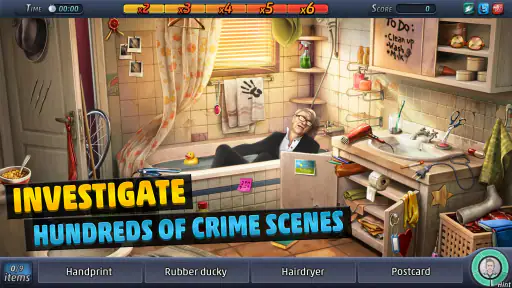
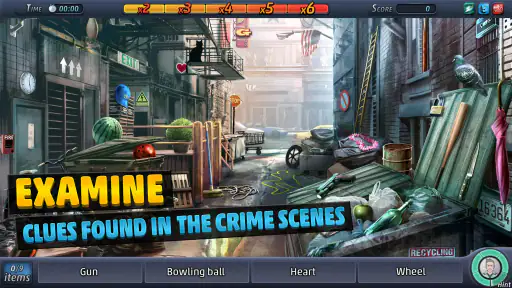
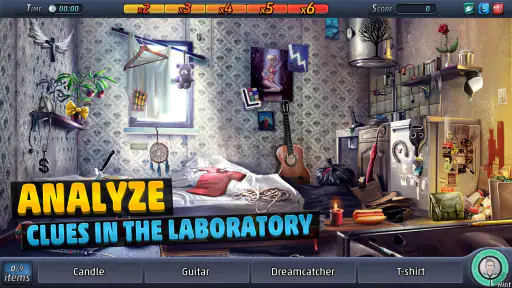
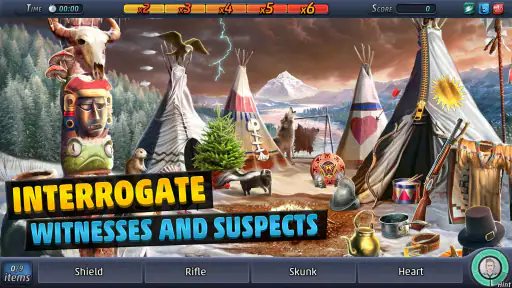
Analysis by Reviewed
I like crime games most when they give me a clear job to do, rather than asking me to keep track of a sprawling cast and a pile of clues all at once. Criminal Case builds its mystery around searching crime scenes, then uses those finds to move the investigation forward. That simple loop makes it easy to pick up for a short break, though the energy limits mean it may not suit anyone hoping to play without interruption.
A detective story built around observation
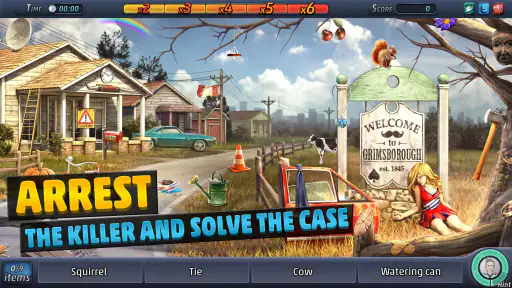
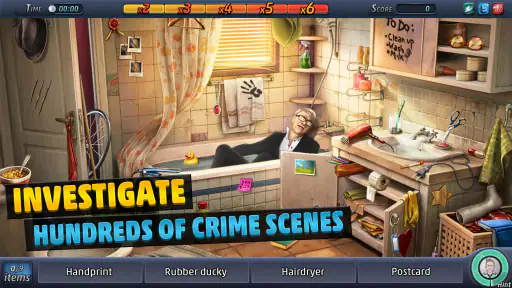
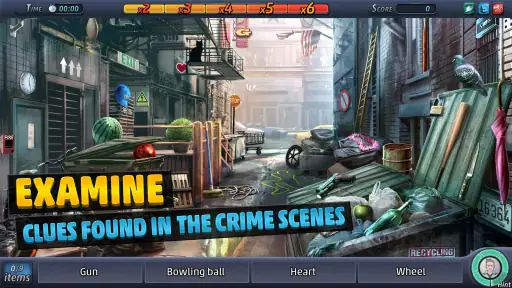
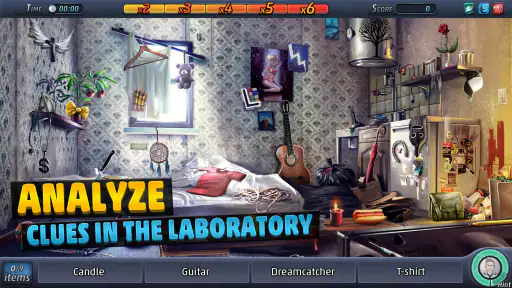
The central appeal is the hidden-object investigation: you scan a detailed scene for specific items, then use what you uncover as part of the case. It feels different from a conventional adventure game in which exploration and movement do most of the work. Here, progress depends more on noticing small details and choosing which investigative step to take next.
That focus gives each scene a useful rhythm. I tend to look over the whole image first, then search in sections instead of darting around randomly. If I get stuck, slowing down and checking crowded areas carefully is more helpful than tapping quickly. It also makes the searches feel like observation rather than a race, even when a scene contains plenty to distract the eye.
How the case loop feels in practice
After searching, the game lets you spend earned stars on actions such as examining evidence or questioning witnesses. That creates a small planning choice: finishing a scene is not the only thing to consider; you also need to decide which investigation task to advance. I find that the story gives those actions context, so the searches feel connected to a case instead of like unrelated picture puzzles.
The narrative arrives in manageable pieces, with new developments giving me a reason to continue. Still, the game is better for players who enjoy a steady sequence of searches and story beats than for people who want a single uninterrupted, hands-on detective simulation. It presents crime-solving through a casual puzzle structure, not through open-ended evidence analysis.
Unraveling the Mystery
When I first downloaded Criminal Case, I was immediately immersed in its storyline. The game starts with a bang—quite literally—as you find yourself at the scene of a crime. Your task? To uncover clues, interrogate suspects, and piece together evidence to solve the case. It’s like being the protagonist of your favorite detective show.
Gameplay Mechanics
The core of the game revolves around finding hidden objects in various crime scenes. These scenes are beautifully designed, with intricate details that make spotting clues both challenging and rewarding. As you progress, you earn stars, which you can use to perform tasks like examining evidence or questioning witnesses.
More From Our News Desk

Weather by Xiaomi Review: Clear at a Glance, Less Clear Up Close

X Under Pressure: Can It Recover When Posting Goes Wrong?

Clash of Clans Is Won Between the Battles

Android Auto Makes the Case for Quieter Car Software

MobiOffice: Transforming Mobile Productivity with Seamless Integration

EA SPORTS FC™ Mobile Soccer: Redefining Mobile Sports Gaming
One of the things I appreciate about this app is its balance between story and gameplay. The narrative unfolds at a nice pace, keeping you engaged without overwhelming you with too much information at once. Plus, Criminal Case throws in plot twists that keep you guessing and eager to move on to the next chapter.
The Social Element
What’s interesting about this game is its social feature. You can connect with friends, share your progress, and even get help with energy boosts. This aspect adds a layer of competition—and cooperation—that makes the game more interactive and fun.
I see the social side as optional support rather than a reason you must recruit a group before playing. If friends are already interested, sharing progress can make the cases a pleasant topic between sessions; if not, I would still approach it as a solo hidden-object game. For a low-pressure routine, it is better to regard help as a bonus than to make your enjoyment depend on someone else being available.
Visuals and Sound
Visually, the game is quite impressive. The artwork is detailed and contributes significantly to the atmosphere. You can almost feel the tension in the air as you search for clues. The sound effects and background music also add to the immersive experience, making each case feel like a mini-movie.
The detail has a practical downside: a scene that looks rich can also make an object blend into nearby shapes. When I am searching on a small screen or in bright surroundings, I find it more comfortable to pause and scan one area at a time instead of trying to spot everything in a single sweep. That is a useful distinction from a mystery built around reading dialogue; here, visual attention is the main effort, so the setting in which you play can affect how relaxing it feels.
Energy System
Like many free-to-play games, Criminal Case uses an energy system that limits how long you can play in one sitting. While this might be a bit frustrating if you're on a roll, it does encourage you to take breaks, and you can always purchase more energy if you're really hooked. Personally, I found it to be a good way to stretch out the content and keep the anticipation alive.
A practical way to work with that limit is to treat a visit as one small investigative step: search a scene, use a star if you have a clear next task in mind, then leave the next part for later. That makes the pacing feel intentional instead of turning every pause into a reason to spend. If you prefer long sessions, the energy mechanic is a real drawback; the game’s free entry does not mean every stretch of play is unlimited.
That makes it worth deciding what kind of break you want before opening the game. If I have only a moment, I can focus on a short search and accept that the broader case will wait. If I have a longer window, I avoid treating an energy limit as a challenge to overcome with a purchase. This approach keeps the game in the role of a casual pastime rather than letting its pacing dictate how I spend or schedule my time.
Why It’s Worth Your Time
What sets Criminal Case apart from other games in its genre is its intricate storytelling and engaging gameplay. The combination of hidden object puzzles and detective work makes it more than just a game; it’s an experience. Whether you’re playing in short bursts or settling in for a longer session, the game is designed to keep you entertained.
I also love how the game challenges your attention to detail and critical thinking skills. It’s not just about finding objects; it’s about connecting the dots and solving the mystery. This makes each case feel fresh and exciting.
There is a small but important distinction in what “connecting the dots” means here. The game gives the searches a narrative purpose and follows them with investigation steps, but it does not ask me to invent a theory from a blank page or freely combine every clue I have found. I would choose it for the satisfaction of uncovering items and following a plotted case, not as a substitute for a deduction game where the player must independently solve a logic puzzle.
Designed for small pockets of free time
A realistic fit is a commute break or a quiet few minutes while waiting for an appointment. I can finish a search, put the phone away, and return later with the story still giving me a reason to continue. The useful habit is to stop after a complete scene or task rather than halfway through a decision, so I can remember where the investigation stands without needing to keep the game open.
For example, if I am waiting for a delayed appointment, I can use the time to inspect a scene and decide which case task I want to take next. If the wait ends before I have much energy left, I can put the phone away without losing the point of the session: I have made one visible step and know what I would do on returning. That is a better fit than opening it when I need a self-contained story with a definite ending in a single sitting.
Compared with a classic adventure game, this is more guided and puzzle-led: there is less emphasis on freely exploring a world and more on inspecting a fixed crime scene. Compared with other hidden-object games, its case narrative and witness interactions provide a stronger sense of purpose. That distinction is also its main limitation. If you want to test your own theories freely or control a detective through environments, a more exploratory mystery game will likely be a better match.
Against a casual match-three or word puzzle, the appeal is also different. Those games often make each round feel like a discrete challenge; here, the searches are tied to an ongoing investigation, so the reward is partly the next story development. That continuity is satisfying if I want a thread to return to over several breaks, but less convenient if I want every session to feel complete. I would pick this for a serialized mystery mood, and a quick standalone puzzle when I have no appetite for following a case.
Who will enjoy the routine—and who may not
I’d recommend it to people who like visual searches, serialized crime stories, and progress that can be made in short sessions. It can also work well for someone who wants a light mystery to share conversationally with friends, since the social element offers ways to connect and exchange help. The Teen content rating is worth keeping in mind for families choosing a game, as the crime setting is not aimed at very young children.
It is especially suited to someone who enjoys looking carefully but does not need every clue to become a demanding logic test. A player who likes to notice details, follow a story in pieces, and make modest progress during spare moments gets a clear use case. Someone who wants complex controls, a large world to roam, or a realistic procedural investigation should look elsewhere; those preferences ask for a different kind of adventure than this game offers.
I would skip it if energy timers quickly spoil your enjoyment, if you dislike repeating searches to earn progress, or if you expect realistic investigative tools and unscripted deductions. Its detective fantasy is delivered through scenes, stars, and story steps rather than a simulation of police work. That is a clear design choice, but it narrows the audience.
Another trade-off is that repeated searching can feel less fresh when I am not in the mood to concentrate on a busy image. In that moment, the plot alone may not be enough to make the next scene enjoyable, because the investigation advances through the search activity rather than around it. I would not start a session expecting a mostly passive crime drama; the story gives the activity a reason, but the player still needs to do the looking.
Practical details before you install
Pretty Simple’s free adventure game has been available since April 15, 2015, and its current version is 2.44.3, with Android 6.0 or later required. It has a 4.6 average from around 4.3 million ratings, while over 100 million installs show how widely it has been tried. Those figures suggest a well-established casual game, but they do not guarantee that its pacing will fit your tastes.
The store also shows around 109,000 written reviews, another sign that this is a familiar title for many players. I would still use my own tolerance for hidden-object repetition and energy-based pauses as the deciding test. Popularity can tell me that the game has found an audience; it cannot tell me whether I personally want a guided story or a more hands-on mystery.
You can begin without paying, though optional in-app purchases range from $0.99 to $99.99 per item. I’d treat purchases as a convenience rather than a requirement: first see whether the scene-search loop and energy pauses work for you. If the waiting is part of what makes the game manageable, spending to shorten it may actually remove a useful boundary.
If you are deciding whether to pay, I would first play long enough to learn whether you enjoy the ordinary pace. Spending is most defensible when a specific pause is interrupting a session you are already enjoying, not when you are still unsure about the core search loop. Since the game can be started for free, there is little reason to make that decision before you know whether its particular mix of scenes and story suits you.
One question I’d ask before starting is whether I need friends to enjoy it. I don’t think so: the social feature can add help and a shared angle, but the core case loop remains the main draw. Another is whether it is suitable for quick play; yes, provided you are comfortable stopping when energy runs low. For someone who wants a long, continuous evening of solving, that same design can feel restrictive.
For a family choosing a game, I would also consider the Teen rating alongside the crime theme, rather than judging suitability only by the fact that the hidden-object format looks casual. And for someone on an older Android device, the minimum requirement is Android 6.0; checking that before installation is a straightforward way to avoid an unnecessary download attempt.
Final Thoughts
In conclusion, if you enjoy mysteries, puzzles, and a good storyline, Criminal Case is definitely worth checking out. It’s a game that doesn’t just entertain but also engages your mind, making it a perfect pick for anyone looking to unleash their inner detective. So grab your magnifying glass, put on your thinking cap, and dive into the world of Criminal Case. Happy sleuthing!
My recommendation comes with one clear condition: enjoy the act of searching, not just the promise of solving a crime. The game is at its best when I treat each scene as a focused visual task and let its case story provide the thread between visits. If that sounds like the kind of small, repeatable mystery you want on your phone, its free start makes it easy to try; if you need uninterrupted play or independent deduction, another adventure will serve you better.
Criminal Case Frequently Asked Questions
Is Criminal Case free to download, and what can cost money?
Criminal Case is free to download, so you can start playing without paying upfront. Optional in-app purchases are available, and they can be useful if you want extra resources or a quicker route through parts of the game. Purchases are not required to begin playing, but it is worth checking purchase settings if you share your device with someone else.
What kind of game is Criminal Case, and who makes it?
Criminal Case is an adventure game developed by Pretty Simple. It centers on crime investigations and hidden-object puzzles, giving players a detective role as they work through murder mysteries. The game is free to download, with optional in-app purchases for players who want to buy additional resources or speed up parts of their progress.
Will Criminal Case work on my Android device?
Criminal Case requires Android 6.0 or later, so check your device’s operating system before downloading. The game is free to install, and its current version is 2.44.3. If your device meets the minimum requirement, you can try the game without paying upfront; optional in-app purchases are available, but they are not required to begin playing.
What is the main objective of Criminal Case?
Criminal Case is a hidden object game that tasks players with solving a series of murder mysteries. Players take on the role of a detective, investigating crime scenes, collecting evidence, and interviewing suspects to uncover the truth behind each case. It's a mix of puzzle-solving and story-driven gameplay.
Are there any in-game purchases in Criminal Case?
Yes, Criminal Case offers in-game purchases. Players can buy energy packs, hints, and other items that can help solve cases faster. While the game is free to play, these purchases can enhance the experience by speeding up progress and providing additional resources.
Pros
- Engaging storyline with intriguing cases.
- High-quality graphics enhance immersion.
- Variety of crime scenes keeps gameplay fresh.
- Interactive puzzles challenge the mind.
- Frequent updates with new content.
Cons
- Energy system limits playtime.
- In-app purchases can be pricey.
- Ads can interrupt gameplay.
- Requires internet connection.
- Repetitive tasks may feel tedious.
- Category
- Adventure
- Version
- 2.44.3