Criminal Case: Mysteries
- 4.84K
- 4.6
- Installs
- 5.00M
- Price
- Free

Screenshots
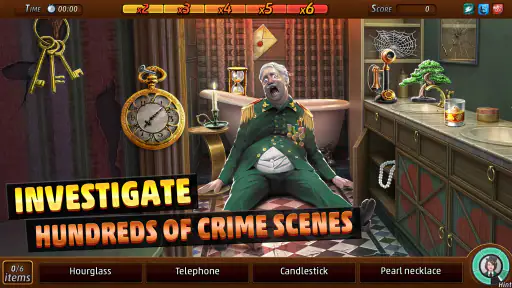
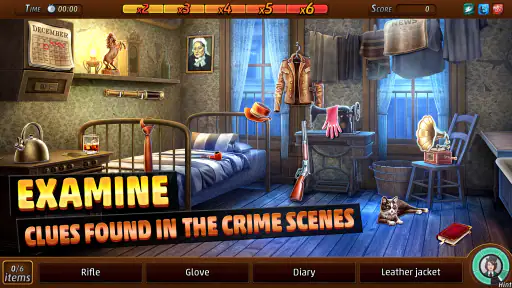

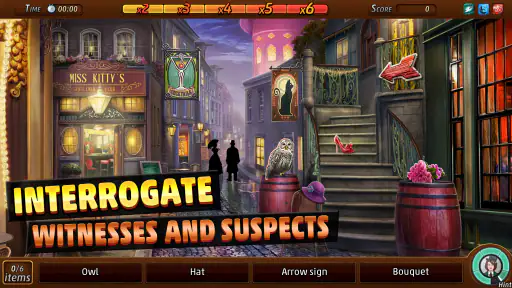
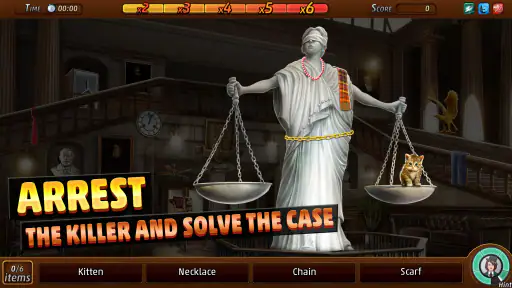
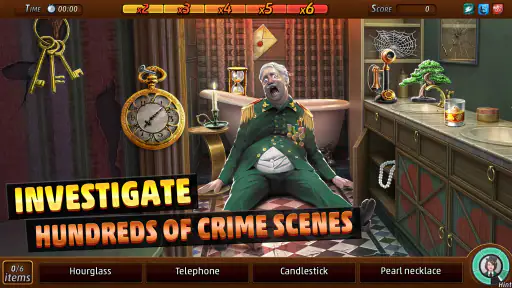
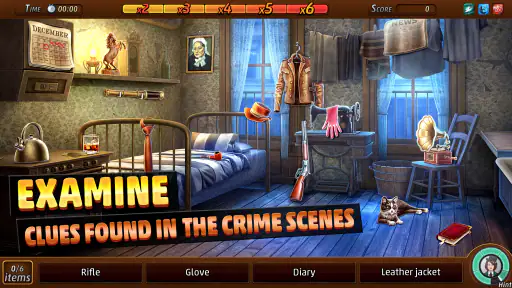

Analysis by Reviewed
I went into Criminal Case: Mysteries of the Past! expecting a light detective game, but its strongest quality is how quickly it establishes a playable mood. The presentation points toward investigation, danger, and old-fashioned mystery, while the actual routine stays approachable: examine a scene, notice useful details, follow the case, and decide whether the next clue is worth your attention. It is not trying to be a demanding simulation of police work. Instead, it turns the familiar murder-investigation formula into a compact adventure suited to short sessions.
The game is free to download, with optional in-app purchases ranging from $0.99 to $99.99 per item. That distinction matters because the basic experience is easy to start, but players who want to move through cases faster may feel pressure around the game’s pacing. I found it most enjoyable when I treated it as a gradual mystery rather than something to rush through. If you like searching scenes for evidence and following a case over several visits, this is a comfortable choice. If you want constant action, deep dialogue choices, or a completely uninterrupted campaign, its structure may test your patience.
A detective game that makes its first impression through mood
My first impression was shaped less by complexity than by clarity. The game immediately communicates that I am stepping into a murder case, not a broad open-world adventure. The scenes, characters, and evidence all serve that central idea. I never had to wonder what kind of experience the developer, Pretty Simple, was aiming for: this is a casual adventure built around observation and case progression.
That focus is useful on a phone. A session can begin with a quick search rather than a long tutorial or a large map to memorize. I can play while waiting for an appointment, during a commute, or at the end of the day when I want something interactive but not exhausting. The game’s Teen content rating also fits the premise. The subject is crime and murder, but the presentation is designed around investigation and stylized scenes rather than an attempt to create a harshly realistic crime drama.
The title’s historical mystery framing gives the cases a different flavor from a modern police procedural. I noticed that the setting encourages me to look at objects and surroundings as parts of a story, not merely as obstacles between dialogue scenes. A room can suggest who lived there, what happened, and which detail has been deliberately placed for the player to find. That makes the act of searching feel connected to the narrative, even when the underlying activity is simple.
There is also a useful contrast between the seriousness of the cases and the accessibility of the controls. I do not need specialist knowledge to begin. The important skill is patience: scanning carefully, remembering where an object appeared, and resisting the urge to tap randomly. That makes the game friendly to people who enjoy mystery fiction but do not usually play adventure games.
What the opening hours communicate well
The early experience does a good job of teaching the game’s basic language without making every moment feel like a lecture. I learn to inspect a scene, identify relevant objects, and connect discoveries to the broader investigation. The loop is easy to understand, which is important because the pleasure comes from noticing and interpreting rather than wrestling with the interface.
More From Our News Desk

Weather by Xiaomi Review: Clear at a Glance, Less Clear Up Close

X Under Pressure: Can It Recover When Posting Goes Wrong?

Clash of Clans Is Won Between the Battles

Android Auto Makes the Case for Quieter Car Software

MobiOffice: Transforming Mobile Productivity with Seamless Integration

EA SPORTS FC™ Mobile Soccer: Redefining Mobile Sports Gaming
One practical tip is to slow down before touching the screen. I found that a quick sweep can make a scene feel like a guessing game, while a deliberate scan turns it into a small visual puzzle. I look first at the edges, then at unusual shapes, then at details that seem out of place. This approach is more satisfying than tapping everywhere, and it helps preserve the detective feeling even when I already know that a scene contains several required discoveries.
The game is also a better fit for players who enjoy incremental progress. Each visit to the case tends to feel like one step in a larger chain rather than a complete standalone investigation. That design creates a reason to return, but it also means the experience may feel fragmented if I want a full mystery solved in one sitting. I would recommend it to someone who enjoys checking in regularly, not to someone looking for a single uninterrupted cinematic story.
How the visual language supports the setting
The art direction does much of the work in making the past feel coherent. The environments are arranged as places to investigate, but they also communicate the period through their overall look and the kinds of objects placed within them. I do not need a long historical explanation to understand that the game is reaching for an earlier era. Its visual choices establish that context quickly.
What I appreciate is that the art remains functional. A scene has to be attractive enough to invite inspection, but it also has to contain readable targets. When the composition works, the setting becomes part of the puzzle: furniture, personal belongings, and background details can all contribute to the impression of a lived-in place. The best moments are when I notice something because it looks narratively meaningful, then discover that it is also useful evidence.
There is a trade-off here. Stylized artwork can make the game welcoming, but it can also blur the line between a genuinely important clue and decorative clutter. I sometimes had to examine a scene again because an object did not immediately stand out. That is not necessarily a flaw; observation games need some visual resistance. Still, anyone with poor patience for hidden-object searching should know that the art direction occasionally asks for careful attention rather than instant recognition.
I also found the setting more effective when I allowed myself to read the environment instead of treating it as a checklist. Before searching, I take a moment to look at the room as a whole. That gives me a mental picture of the location and makes later discoveries easier to remember. It is a small habit, but it changes the experience from repeated tapping into a more thoughtful investigation.
Sound, silence, and the rhythm of investigation
The sound design supports the game’s mood without overpowering the visual clues. In a mystery game, audio should create tension and continuity while leaving room for concentration, and that balance is important here. The setting feels more complete when the sound reinforces the seriousness of the case, but the game does not need constant dramatic noise to keep me engaged.
I prefer playing with the audio on when I want the full atmosphere, especially during the transition between searching and moving the case forward. Sound helps separate the investigative moments from the more routine parts of the session. When I am playing in a quiet public place, I can reduce or mute it and still understand the main activity, although the experience feels flatter without that extra layer.
The rhythm is deliberately uneven. Searching a scene can be focused and repetitive, while story progress provides a change of pace. That alternation is one of the reasons the game works well on mobile: I can complete a small task, pause, and return later without needing to remember a complicated control scheme. At the same time, the pauses between meaningful developments can make the investigation feel slower than the premise suggests.
This is where expectations matter. The game creates the mood of a detective story, but it does not maintain the intensity of a thriller from beginning to end. Its rhythm is closer to a serialized investigation, with evidence gathering and progression arriving in measured portions. I think that is a strength for relaxed play, but a weakness for anyone who wants every minute to deliver a major revelation.
A useful way to approach the pacing is to stop after a natural investigation beat instead of forcing a long session. I usually play until I have finished a search or reached a clear story transition. That prevents the repeated structure from becoming tiring and makes the next return feel like a continuation rather than another identical task. The game rewards that kind of rhythm more than marathon play.
Where the mechanics fit the atmosphere
The central mechanics are straightforward, and that simplicity is intentional. I inspect locations, locate evidence, and use the results to keep the case moving. The game does not bury the mystery under complicated inventory management or demanding action controls. Its main challenge is attention, supported by the atmosphere created through art, sound, and the historical setting.
That mechanical fit is strongest when the scene itself makes me curious. If I am wondering what happened in a location, searching for evidence feels like investigation. If I am only completing a required list of objects, the same activity can feel more mechanical. The difference often comes from how much attention I give to the story around the search.
One non-obvious strength is that the game can work as a visual concentration exercise. I use it when I want something more active than scrolling but less demanding than a traditional puzzle game. Looking for small details encourages me to slow down and compare shapes, colors, and positions. It is not a substitute for a complex deduction game, but it does provide a focused form of casual play.
Another practical insight is to separate evidence collection from story interpretation. I first concentrate on completing the scene carefully, then think about what the discoveries might mean once the game presents the next narrative step. Trying to invent a complete theory while still searching can distract me from obvious details. The game is more enjoyable when I let its stages do different jobs: observation first, interpretation second.
The main limitation is that the investigation can sometimes feel guided rather than truly open-ended. I am participating in a prepared case, not building my own path through a network of suspects and evidence. Players who love branching dialogue, multiple solutions, or unrestricted deduction may prefer a more traditional narrative adventure. Here, the satisfaction comes from uncovering the intended sequence and seeing the case advance.
The free-to-play structure also affects the mechanical rhythm. Optional purchases are present, and the listed price range reaches from $0.99 to $99.99 per item. I would not approach the game assuming that every progression moment will be equally fast. My advice is to decide early whether I am comfortable with a slower, return-based routine. If I am, the free entry point is appealing. If I dislike waiting or any form of purchase pressure, a paid premium mystery game may be a better match.
For a fair comparison, the usual alternatives divide into two groups. Hidden-object adventures often offer a similar search loop, but may emphasize decoration, collecting, or fantasy settings more than crime investigation. Story-heavy detective games usually provide deeper conversations and deductions, but may demand longer sessions and more reading. This game sits between those options: it gives me a recognizable murder-case framework with accessible searching, while sacrificing some freedom and analytical depth for convenience.
Who will enjoy it, and who should skip it
I would recommend it to players who like crime fiction, visual searches, serialized stories, and short mobile sessions. It is particularly suitable for someone who wants a gentle introduction to adventure games. The controls are approachable, the objective is easy to understand, and the historical setting gives the routine more identity than a generic search game.
It is also a good choice for casual players who enjoy returning to the same case over time. The game does not require me to master a complex system before I can make progress. I can play carefully for a few minutes, put the phone away, and come back when I have more attention available. That flexibility is one of its clearest everyday strengths.
I would skip it if I wanted fast combat, free exploration, or a detective story where every decision changes the outcome. I would also hesitate to recommend it to someone who becomes frustrated by repeated searches or prefers to finish a complete narrative in one sitting. The atmosphere may suggest a darker, more intense experience than the mechanics actually provide, so expectations should stay grounded.
For families, the Teen rating is an important part of the decision. The game’s focus is investigation, but the subject matter still involves murder cases. I would check whether that tone is suitable for the person who will play it rather than assuming that its casual presentation makes it appropriate for everyone.
Device details and long-term practicality
The game was released on February 21, 2018, and the current version is 2.45.1. It supports devices running Android 7.0 or later. Those details make it accessible to many older Android phones, although the actual comfort of play will still depend on screen size, responsiveness, and available storage. On a smaller display, careful searching can be less comfortable because useful objects may be harder to distinguish.
Its audience is substantial: the game has passed 5 million installs, with an average rating of 4.6 from around 119 thousand ratings and roughly 4.8 thousand written reviews. I take that as a sign that the format has broad appeal, not as proof that every player will enjoy the pacing. The numbers suggest a well-established casual adventure, while the written experience still depends heavily on how much I enjoy repeated investigation routines.
Before installing, I would ask myself three practical questions. Do I enjoy finding small visual details? Am I comfortable with a story that progresses in stages? Can I accept optional purchases without feeling tempted to speed everything up? If the answer to all three is yes, the game has a good chance of fitting my habits. If the answer to the first is no, its polished mood will not rescue the core loop.
I would also keep notifications and session length in mind as part of my own routine. A game built around returning to a case can become pleasant background entertainment, but it can also become distracting if I treat every available moment as a reason to check in. I get more from it when I choose a short, intentional session and stop after completing a clear objective.
My atmosphere verdict after playing
The most convincing part of this adventure is the way its visual direction, sound, historical setting, and measured pacing cooperate. None of those elements alone would make the game exceptional, but together they give the search mechanics a recognizable identity. I am not simply locating objects on unrelated screens; I am moving through a sequence of crime scenes that aims to feel like one continuing investigation.
Its weaknesses are equally clear. The evidence work can become repetitive, the narrative path is more controlled than open-ended, and the free-to-play pacing may not suit players who want immediate, uninterrupted progress. The game also asks me to supply some of the detective excitement myself. If I approach every scene as a checklist, the mood fades. If I observe the setting and let the case unfold gradually, the experience becomes much more engaging.
For me, Criminal Case: Mysteries of the Past! is best understood as a relaxed mobile mystery with a strong sense of presentation rather than a demanding detective simulator. Pretty Simple has built an inviting adventure for players who enjoy looking closely, following a case, and returning for another small piece of the story. I would recommend it to a friend who wants atmospheric casual play and does not mind a guided structure. I would point a more serious deduction fan toward a deeper narrative mystery instead.
My final recommendation: try it if the combination of historical crime scenes, visual searching, and short serialized sessions sounds appealing. Play slowly, inspect scenes before tapping, and treat the free structure as a gradual journey rather than a race. With those expectations, the game’s mood has room to work, and its simple mechanics become a comfortable way to spend a few focused minutes.
Criminal Case: Mysteries Frequently Asked Questions
Can I play Criminal Case: Mysteries in short sessions?
Yes. Its hidden-object searches and investigative sequences make it easy to play in brief bursts, whether you have time for one scene or want to continue through a case. Progress is story-driven, so longer sessions can make it easier to follow each development, but the casual format does not depend on fast action or demanding reflexes.
Does Criminal Case: Mysteries have a story, or is it only about finding objects?
There is a story alongside the object-finding. You examine crime scenes and collect clues, then follow investigative developments that reveal evidence, motives, and twists. The narrative gives the searches a purpose, though the main activity remains looking for objects and working through cases. It is a good fit if you enjoy a light mystery thread with casual puzzle-style play.
Who developed Criminal Case: Mysteries, and what kind of game is it?
Criminal Case: Mysteries is an adventure game developed by Pretty Simple. It is built around casual detective play, with hidden-object searches and a mystery-solving theme. If you enjoy games that let you investigate at your own pace rather than focus on fast action, its format may suit you. The central appeal is following a case through clues and story developments.
What is Criminal Case: Mysteries about?
Criminal Case: Mysteries is a hidden-object investigation game in which you examine crime scenes, search for clues, question suspects, and help solve mysterious cases. The gameplay combines object-finding challenges with short investigative sequences and story-driven progression. Each case gradually reveals new evidence, motives, and twists, making it suitable for players who enjoy casual detective games with a light narrative focus.
Is Criminal Case: Mysteries free to download and play?
Yes, Criminal Case: Mysteries is free to download and play on supported Android and iOS devices. However, the game includes optional in-app purchases, with prices ranging from $0.99 to $99.99 per item. You can complete many investigations without paying, although waiting for energy to recharge or replaying scenes may be part of the free experience. Consider purchase settings if you share your device with a child.
Pros
- Engaging hidden-object scenes with varied locations and clues.
- Short cases make it easy to play during brief breaks.
- Distinctive cast adds personality to each investigation.
- Regular events and challenges provide extra objectives.
- Free-to-play progression is accessible for casual players.
Cons
- Energy limits can interrupt investigations at inconvenient moments.
- Some evidence searches feel repetitive after extended play.
- Premium currency may be tempting when progress slows.
- Story pacing can become predictable in later cases.
- Requires a stable connection for several game features.
- Category
- Adventure
- Version
- 2.45.1