Criminal Case: Save the World!
- 6.28K
- 4.7
- Installs
- 10.00M
- Price
- Free

Screenshots





Analysis by Reviewed
I expected a light hidden-object game when I first opened Criminal Case: Save the World!, but its appeal is more specific than that. It turns murder investigations into short, repeatable routines: inspect a scene, collect clues, question the evidence, and return later when the next case is ready. That structure makes it easy to play in small gaps during the day, although it also means the game can feel deliberately paced when I want a faster adventure.
Developed by Pretty Simple, this free adventure game places the familiar Criminal Case formula on a global scale. The central idea is simple: follow cases, examine locations, and use the information you uncover to move the investigation forward. It is aimed at Teen players, and the crime theme gives the otherwise colorful presentation a slightly darker edge. I would not describe it as a realistic police simulator; it is closer to a casual detective puzzle with a steady stream of small tasks.
How the investigation loop feels in actual play
I find the investigation loop easiest to enjoy when I treat each scene as a focused visual puzzle rather than a test of speed. A steady scan and a brief pause when my attention slips can make the search feel less frustrating, especially during a short session. That practical rhythm also makes it easier to notice where the game’s pacing—not the puzzle itself—may be shaping the experience.
The first action is usually the easiest decision
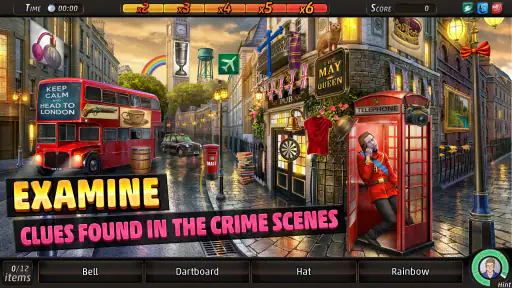
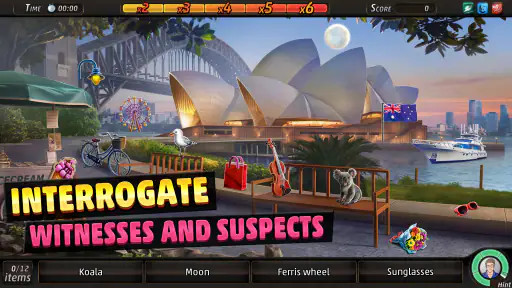
Most sessions begin with a clear instruction rather than an open-ended mystery. I enter a crime scene and look for objects that fit the investigation. The first few taps establish the rhythm immediately: scan the picture, notice an item, tap it, and watch the game confirm whether it belongs to the case. That direct feedback is important because the scenes can be visually busy, and I rarely want to spend a long time wondering what the game expects me to do.
The best way to approach a scene is not to tap randomly. I start by checking the edges, corners, and areas where colors or shapes contrast with the background. Then I move toward the center and revisit places that contain clutter. This sounds basic, but it makes a real difference when a clue blends into furniture, pavement, papers, or other background details. I also try to remember the general shape of objects I have already found, because a quick second pass is more efficient than repeatedly sweeping the entire image.
That search process is the strongest part of the game for me. It gives the investigation a physical feeling without requiring complicated controls. I am not controlling a character through a large world or solving a free-form deduction board. Instead, I am training my attention and making small visual judgments. Players who enjoy hidden-object puzzles will understand the attraction immediately, while people looking for a fully interactive detective adventure may find the investigation narrower than expected.
The worldwide setting helps the cases feel varied in presentation, even though the basic action remains familiar. Moving from one investigation to another provides a sense of travel and progression, but the real variety comes from the different scenes and the clues placed inside them. I appreciate that the game does not bury its main activity under a complicated interface. The next useful action is normally visible, which makes it approachable for someone who has not played the series before.
More From Our News Desk

Weather by Xiaomi Review: Clear at a Glance, Less Clear Up Close

X Under Pressure: Can It Recover When Posting Goes Wrong?

Clash of Clans Is Won Between the Battles

Android Auto Makes the Case for Quieter Car Software

MobiOffice: Transforming Mobile Productivity with Seamless Integration

EA SPORTS FC™ Mobile Soccer: Redefining Mobile Sports Gaming
Feedback creates a dependable rhythm
Every correct discovery produces a small moment of confirmation, and those moments build the game's feedback rhythm. I tap an object, receive acknowledgment, and immediately know whether I am closer to completing the scene. That response prevents the search from becoming completely vague. Even when I miss something, the remaining-object count and the layout itself give me a practical reason to keep scanning instead of abandoning the attempt.
The rhythm is satisfying because it alternates concentration with release. I focus on a crowded image, find a clue, and get a brief reward before looking again. The process is not demanding in the way a timed action game can be, but it still gives my attention a job. A short session can therefore feel productive without requiring a large uninterrupted block of time.
One useful habit is to stop tapping when I am unsure and change the way I inspect the scene. I zoom my attention rather than expecting the game to solve the image for me: first I look for unusual colors, then repeated shapes, then objects that seem out of place. If I spend too long staring at one area, I move to another and return later. This reset of visual focus is more helpful than frantic tapping, especially when the scene contains several similar-looking details.
The investigation feedback also makes the game accessible to casual players. There is no need to memorize a complex control scheme, and the objective is usually understandable from the current case. That makes it a reasonable choice for a commute, a waiting room, or a few minutes before bed. Still, the same clarity can reduce surprise. If you prefer games where clues must be combined in unexpected ways, this experience may feel more like guided evidence collection than genuine deduction.
The store rating is a 4.7 average from around 167 thousand ratings, and the game has passed 10 million installs. Those figures fit my impression of its broad accessibility: the core loop is easy to understand, the sessions are compact, and the visual search does not demand specialist gaming skills. They should not be mistaken for proof that every player will enjoy the pacing, though. Popularity explains why the format works for many people; it does not remove the repetition that some players will notice after longer sessions.
Rewards give each completed scene a purpose
Finding objects would become tiring if the scene ended without a larger reason to continue. Here, each completed investigation step feeds into the wider case. I get the satisfaction of finishing a search, then the game gives me another reason to examine evidence, follow the story, or prepare for the next task. The reward is not only a visual acknowledgment; it is the feeling that my attention has moved the case forward.
That progression works best when I treat each scene as one part of a chain rather than as a standalone puzzle. I do not expect every screen to deliver a major revelation. Instead, I look for incremental progress: another piece of the investigation, another opportunity to inspect a location, or another step toward the next case. This makes the game suitable for players who like gradual advancement and less suitable for anyone who wants a complete mystery solved in one sitting.
The free entry point is helpful here. I can try the main style of play without paying at the start, which makes it easier to decide whether the search-and-progress loop suits me. The game includes in-app purchases ranging from $0.99 to $99.99 per item, so I would approach optional spending carefully. My advice is to play long enough to understand the natural pace before buying anything. If the basic loop already feels repetitive, spending money is unlikely to change that underlying preference.
Rewards also create a useful stopping point. When I finish a scene or reach the next clear objective, I can put the game down without feeling that I have left a complicated control sequence unfinished. That is one of its practical strengths compared with larger adventure games, which often ask for more time before delivering a satisfying pause. The trade-off is that the reward structure encourages another small task, and those tasks can accumulate into a longer session than I originally planned.
I would recommend it to someone who enjoys visual searches, light crime stories, and progress that arrives in manageable pieces. I would be more cautious with it for a player who dislikes energy-style pacing, repeated scene work, or purchases appearing alongside free progression. The game is most enjoyable when I accept its casual design instead of expecting a deep forensic system.
The session reset is part of the design
After a case step ends, the game gives me a natural reset. I leave the completed scene, collect the sense of progress, and decide whether to begin the next available activity or return later. That reset is not an interruption to overcome; it is the reason the game works well in short bursts. Each session has a beginning, a focused search, a result, and a clean point at which I can stop.
In an everyday situation, I might open it while waiting for an appointment. I can inspect a scene, finish a small objective, and close the app before my name is called. Later, I can return without needing to remember a complicated route or rebuild a strategy from scratch. This makes it more convenient than a traditional adventure game that expects me to reserve an evening for exploration and dialogue.
The reset can also expose the game's main limitation. Once I understand the pattern, the surprise shifts away from the controls and toward the case content. The action itself remains familiar: search, confirm, progress, repeat. I find that relaxing when I want a predictable distraction, but monotonous when I am in the mood for constant novelty. Players should decide whether repetition feels comforting or restrictive before committing to long sessions.
Another practical question is device compatibility. The game runs on Android versions starting with 7.0, and its current version is 2.45.1. That gives it a fairly broad place among mobile players using older supported devices. I would still keep the application updated through the normal store process, particularly if I rely on it regularly, but the listed minimum makes it more approachable than games that require a newer operating system.
The Teen content rating is worth taking seriously even though the presentation is casual. The subject matter revolves around murder investigations, so this is not simply a cheerful object-finding game for young children. I would choose it for older players who are comfortable with crime themes and avoid treating the bright interface as a sign that the subject matter is completely harmless.
Where it stands beside other adventure games
Compared with a traditional point-and-click adventure, this game is easier to enter and less dependent on free exploration. I do not need to test every object in a room or remember a long chain of inventory combinations. That simplicity is a strength when I want immediate play, but it also means there is less room for unusual solutions. A classic adventure is the better option for players who value dialogue choices, environmental experimentation, and puzzles that can be solved in several ways.
Compared with a pure hidden-object title, the crime-case framing gives my searches more context. I am not merely clearing pictures; I am working through investigations that connect the scenes. The case structure adds motivation, even when the actual interaction remains focused on finding items. If I wanted only relaxing image searches with no story pressure, a simpler hidden-object game might be calmer. If I wanted action, stealth, or direct character control, this would not be the right category of experience.
It also differs from larger narrative detective games that deliver their drama through extended conversations and detailed evidence systems. Here, the emphasis is on a repeatable mobile loop rather than on role-playing as an investigator. That makes it less intimidating and more suitable for fragmented play, but it limits the sense that my personal reasoning changes the outcome. I am following a designed investigation path, not building my own theory from a completely open set of clues.
Who will enjoy the loop, and who should skip it
I think the game is a good match for players who like short sessions, visual attention tests, and a steady feeling of completion. It is especially convenient for someone who wants an adventure game that can be paused between ordinary responsibilities. The global case setup provides enough framing to make each search feel purposeful, while the straightforward controls keep the learning curve low.
I would skip it if I were looking for fast action, realistic police work, or a mystery where every conclusion depends on my own deductions. I would also be careful if repeated searches quickly frustrate me. The game can make a small amount of free time feel pleasantly occupied, but it does not transform its central activity into something radically different from one case to the next.
My most useful playing tip is to separate “finding everything” from “playing quickly.” Rushing encourages random taps and makes the scene feel harder. I get better results by scanning in a fixed pattern, pausing when my eyes become tired, and using the next session as a fresh visual start. That approach turns the reset into an advantage rather than a sign that the game is unfinished.
I also recommend treating purchases as a convenience decision, not as a requirement for enjoying the concept. Since the game is free to start but offers paid items, I would first see whether the normal progression and session length fit my habits. Someone who enjoys the loop may find optional spending convenient; someone who dislikes waiting or repetition should not assume that buying items will make the investigation deeper.
My verdict on the action-feedback-reward cycle
Criminal Case: Save the World! succeeds because its loop is easy to feel: I take an action by searching a scene, receive immediate feedback when I identify a clue, earn progress that points toward the next case step, and reach a reset that makes another short session inviting. That cycle is clear, approachable, and well suited to mobile play.
Its weakness is the same feature that makes it accessible. The investigation remains guided and repetitive, so the game cannot replace a deeper detective adventure or a more flexible point-and-click experience. I enjoy it most as a compact crime-themed puzzle to pick up and put down, not as a serious simulation or a single, uninterrupted story.
For a free adventure game from Pretty Simple, it offers a polished-feeling routine with a strong reason to return after each completed search. I would recommend it to casual mystery fans who want manageable progress and do not mind repeating the visual-search formula. If that sounds like your kind of downtime, it is worth trying; if you need constant action or genuinely open-ended deduction, another adventure game will serve you better.
Criminal Case: Save the World! Frequently Asked Questions
Can I play Criminal Case: Save the World! without spending money?
Yes. Criminal Case: Save the World! is free to download and play, so you can begin investigating without making a purchase. Optional in-app purchases are available, including items that may help with energy, hints, or progress. You can decide whether those extras are worthwhile as you play; if you prefer not to spend, review your device’s purchase settings and be prepared for energy limits or waits to affect your pace.
What kind of gameplay should I expect from Criminal Case: Save the World!?
Expect a mix of hidden-object searches, evidence examination, suspect questioning, short puzzles, and story scenes. The main loop is to investigate a crime scene, find objects that may serve as clues, and use the results to move a case forward. Its international setting gives the investigations a broad scope, while the familiar Criminal Case structure makes the basic tasks straightforward to learn.
Can I play Criminal Case: Save the World! on my device?
The game is available for Android and iOS, and the Android release requires version 7.0 or later. Before downloading, check that your device meets the operating-system requirement and has enough free space for the installation. Criminal Case: Save the World! is an adventure game from Pretty Simple, built around investigating cases and finding hidden objects.
What is Criminal Case: Save the World!?
Criminal Case: Save the World! is a hidden-object adventure game in which you investigate international crimes, examine evidence, question suspects, and solve cases across different locations. It follows the familiar Criminal Case formula, combining object-finding scenes with short puzzles, dialogue, and story-driven investigations. Each completed case gradually reveals clues and helps move the larger campaign forward.
Is Criminal Case: Save the World! free to download and play?
Yes, the game can generally be downloaded and played for free on supported Android and iOS devices. However, it includes optional in-app purchases, with items priced from $0.99 to $99.99, that may provide extra energy, hints, premium items, or faster progress. The free experience is playable, but energy limitations and waiting periods can affect how quickly you complete investigations, especially during longer play sessions.
Pros
- Engaging hidden-object investigations with varied crime scenes.
- Lighthearted dialogue makes the dark crime theme approachable.
- Large case selection provides plenty of content to explore.
- Simple controls work well on both phones and tablets.
- Regular events can add extra objectives and rewards.
Cons
- Energy limits can interrupt investigations during longer play sessions.
- Some clues and upgrades may require patience or premium currency.
- Repeated searches can feel familiar after extended play.
- Progress may depend on an internet connection in some situations.
- Graphics and animations look dated compared with newer mystery games.
- Category
- Adventure
- Version
- 2.45.1