Criminal Case: The Conspiracy
- 4.16K
- 4.7
- Installs
- 5.00M
- Price
- Free

Screenshots



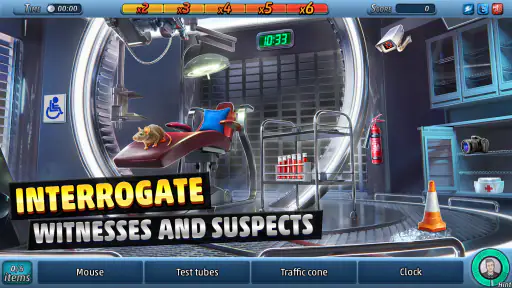
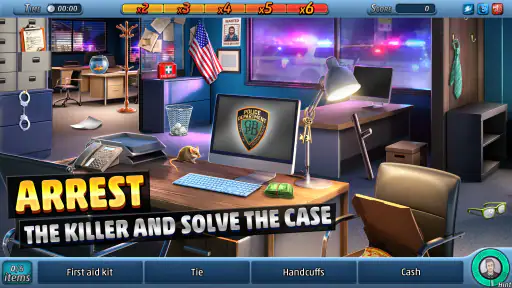



Analysis by Reviewed
I went into Criminal Case: The Conspiracy expecting a light hidden-object game with a crime theme, and that is broadly what it delivers. You investigate murder cases by examining scenes, looking for useful objects, and following the evidence toward the next piece of the story. The important thing is that its appeal does not come from one complicated mechanic. It comes from the steady sequence of action, feedback, reward, and reset: inspect a scene, receive clues or progress, unlock the next step, then feel curious enough to begin another investigation.
That makes it an easy game to pick up when I have a short break. It is free to start, aimed at a Teen audience, and developed by Pretty Simple. The game sits in the adventure category, but its moment-to-moment play is closer to a story-led hidden-object investigation than to an action adventure. I would recommend it to someone who enjoys visual searches, simple detective fiction, and progress that arrives in small, regular pieces rather than through long, demanding sessions.
It is also worth setting expectations early. This is not a realistic police simulator, a deep deduction system, or a fast-paced crime thriller. The cases are presented as accessible mobile puzzles, and the challenge usually comes from noticing details and managing your progress rather than building a completely original theory from conflicting evidence. For the right player, that simplicity is comforting. For someone looking for open-ended investigations, it may feel restrictive.
How the investigation loop feels in practice
I focus here on how the scene-search rhythm works once the initial novelty wears off: what helps me stay observant, where repetition can creep in, and how each completed task feeds the case. A small, consistent search routine can make short sessions feel more deliberate rather than rushed. From there, it is worth looking at the practical checks that can prevent avoidable friction before settling in to play.
The first action: searching a scene with a purpose
The clearest way to understand the game is to look at what happens when a case gives you a crime scene. I start by scanning the image instead of tapping randomly. Objects can blend into the background, and the pressure comes from identifying what belongs to the requested list while keeping the whole scene in mind. A magnifying-glass mindset helps: I check corners, shelves, surfaces, shadows, and areas where the color or shape of an object is easy to overlook.
That first search is more satisfying when I treat it as an investigation rather than a simple item hunt. I look for visual patterns, remember where I have already checked, and avoid repeatedly tapping the same area. This is one of the game’s less obvious strengths: it rewards a small change in attention. The better I become at reading its scenes, the less I rely on frantic tapping and the more deliberate each search feels.
The scenes are designed for a phone screen, so I can play with one hand and understand the objective quickly. That convenience makes the game suitable for a commute, a waiting room, or a quiet few minutes before bed. At the same time, the small display can make similar-looking details harder to distinguish. On a tablet or a larger phone, the visual search is generally more comfortable, especially when a scene contains several objects with muted colors.
More From Our News Desk

Weather by Xiaomi Review: Clear at a Glance, Less Clear Up Close

X Under Pressure: Can It Recover When Posting Goes Wrong?

Clash of Clans Is Won Between the Battles

Android Auto Makes the Case for Quieter Car Software

MobiOffice: Transforming Mobile Productivity with Seamless Integration

EA SPORTS FC™ Mobile Soccer: Redefining Mobile Sports Gaming
I would not call the opening action difficult in the traditional gaming sense. The challenge is concentration. If I am tired or distracted, I miss obvious objects, then spend longer searching for something that was visible from the beginning. That creates a useful distinction between the game and many casual match-three alternatives: the obstacle is not primarily planning a chain or reacting quickly, but maintaining visual focus.
Feedback that keeps the search moving
Every correct discovery gives the search a clear response. The object disappears from the task, the list becomes more manageable, and the scene gradually loses its clutter. That feedback is simple, but it matters. I always know whether I am moving forward, and the shrinking list creates a natural sense of momentum without requiring a complicated interface.
The rhythm is especially effective when I find several items close together. One discovery reminds me where I have already looked, another reveals a new area of interest, and the remaining objects become easier to prioritize. When I get stuck, I can change my approach rather than assuming the case is impossible. I might stop looking for the object as a whole and instead search for a distinctive color, outline, or unusual placement.
This is where the game’s accessible design can be both a benefit and a limitation. The feedback is friendly and readable, so new players are unlikely to feel lost. However, experienced hidden-object players may find the loop familiar after a while. There is not always a dramatic mental leap between one search and the next. The satisfaction comes from completion and story progression more than from solving a complex visual riddle.
I also appreciate that the investigation does not ask me to remember every detail of a scene indefinitely. The immediate objective is visible, and the game guides me through the case in manageable steps. That makes it a good choice for interrupted play. If I put the phone down to answer a message or handle an everyday task, I can return without needing to reconstruct a large strategy from memory.
Rewards that turn clues into another reason to play
Finishing a search is not the end of the experience. The result feeds into the wider case, giving the investigation a sense of direction and making the collected evidence feel useful. I am not simply clearing pictures for their own sake; each completed task supports the next part of the crime story. That connection between a small visual win and a larger narrative goal is the main reason I keep going.
The reward structure works best for players who enjoy gradual progress. I can complete one activity, see the case advance, and stop without feeling that I have abandoned a huge objective. Then, when I return, the unresolved mystery provides an immediate reason to continue. This is a clever fit for mobile play because the game does not need a long uninterrupted evening to feel worthwhile.
There is also a practical trade-off in this design. The game’s progress is divided into repeated investigations, so the reward is often incremental rather than spectacular. If I want a story to deliver a major twist every few minutes, the pacing may feel slow. If I enjoy collecting clues, finishing small objectives, and watching a case take shape, the same pacing feels relaxing.
For an everyday example, I could play after dinner while waiting for a television program to start. I search a scene, complete the immediate objective, read the next piece of the case, and then decide whether I have time for another step. The game gives me a clean stopping point, but the unresolved investigation makes restarting later feel natural. That is the loop at its most effective: the reward closes one task while opening the next.
Why another session begins after the reset
The reset is not a failure state in the way it is in a difficult action game. Instead, it is the moment when one completed search gives way to a new task. The scene changes, the requested objects change, and my attention has to reset. I am back at the beginning of a small investigation, but I carry forward the broader context of the case.
This structure keeps the game from becoming one long, exhausting puzzle. Each scene has a beginning, middle, and end, even though all of them belong to a larger mystery. I can approach the next scene with a fresh visual scan rather than carrying too much mental clutter from the previous one. That separation is useful on mobile, where interruptions are normal and sessions rarely follow the uninterrupted pattern of a console game.
The downside is repetition. Searching for objects remains the central activity, so players who need constant mechanical variety may eventually want something more demanding. The story changes the context, but it does not completely transform the way I interact with each scene. I see that as the key decision point: the game is strongest when repetition feels like a calming routine, and weakest when repetition starts to feel like a chore.
Another consideration is the free-to-play structure. The game costs nothing to begin, but optional in-app purchases range from $0.99 to $99.99 per item. I would approach those purchases carefully. The core attraction is the investigation loop, so I would first decide whether the normal pace suits me before spending anything. Players who dislike timers, waiting, or any pressure to accelerate progress should be especially cautious with optional purchases and should keep their play focused on the free experience.
Story, atmosphere, and the limits of deduction
The crime setting gives the searches a stronger purpose than a collection of unrelated pictures. I am looking at evidence because a murder case needs to move forward, not merely because the game has placed objects on a background. That framing makes ordinary actions—checking a room, finding a tool, examining a detail—feel connected to a larger investigation.
Still, I would not buy this expecting the freedom of a traditional detective adventure. The game leads me through its cases, and the clues support a prepared narrative rather than allowing unlimited interpretations. My role is mainly to uncover the next piece of information through the available tasks. That can be satisfying if I prefer guided stories, but disappointing if I want to interrogate suspects in many different ways or reach radically different conclusions.
The Teen content rating is a useful signal for families deciding whether the tone fits their household. The subject matter centers on murder investigations, so it is not aimed at very young children, even though the controls are straightforward. I would consider it more appropriate for teenagers and adults who are comfortable with fictional crime themes than for children seeking a purely cheerful puzzle game.
The atmosphere also works better when I play in short, focused bursts. A quick session lets the case feel like a compact mystery. A very long session can expose the repeated structure more clearly, because I may move through several searches without enough variation between them. My personal approach is to stop after a satisfying case step rather than forcing a long marathon.
Practical details before downloading
The game is available free of charge, and its current version is 2.45.1. It runs on devices using Android 7.0 or later, which makes it accessible to people who are not using the newest phone. The listing shows over five million installs, a 4.7 average from around eighty-three thousand ratings, and roughly four thousand reviews. Those figures suggest that the format has found a substantial audience, although popularity does not remove the need to decide whether hidden-object repetition suits your taste.
I would choose it over a more demanding adventure game when I want clear objectives and low control complexity. I do not need to learn a combat system, memorize a large map, or commit to a long mission. I would choose a traditional narrative adventure instead if I wanted richer exploration, more dialogue choices, or puzzles that depend on combining clues in unexpected ways. I would choose a match-three crime game if I preferred quick tactile combinations over careful visual searching.
It is also a different proposition from a pure hidden-object collection without a continuing case. The investigation theme gives my actions context, while the case progression gives me a reason to return. On the other hand, players who dislike crime stories or want a completely relaxing setting may prefer a nature, decoration, or word-puzzle game. The murder-case framing is not just decoration; it determines much of the game’s mood.
One useful habit is to play with the sound and distractions under control, even if I am only spending a few minutes in the game. The visual search is easier when notifications are not pulling my attention away, and I make fewer careless taps. Another is to use a consistent scan pattern—left to right, top to bottom, or by object groups—rather than jumping randomly. That small workflow change noticeably improves the experience because it turns a vague search into a repeatable method.
Who will enjoy the loop, and who should skip it
I think this game is a strong match for someone who likes detective themes but wants gentle mechanics. It works for casual players, fans of hidden-object puzzles, and anyone who enjoys seeing a story advance through short tasks. It is particularly suitable for people who play on a phone in fragments and appreciate a clear point at which they can pause.
I would also suggest it to a friend who enjoys routine progression. The action is easy to understand, the feedback is immediate, and the reward is tied to a visible case. There is a quiet satisfaction in clearing a scene and seeing the investigation become more complete. You do not need specialist gaming skills to begin, and the game gives enough structure to make the next step obvious.
I would skip it if I wanted fast reflexes, deep strategy, or a large world to explore freely. I would also hesitate to recommend it to anyone who becomes frustrated by repeated searches or by optional purchase systems in free games. The crime theme may be another reason to pass if murder investigations are not enjoyable for you. No amount of polished progression can make the central activity appealing when visual item hunting itself is not your kind of play.
For me, the most important trade-off is between comfort and variety. The same predictable structure that makes it easy to play also limits its surprise. I can settle into the rhythm quickly, but I should not expect every new scene to reinvent the game. That is an honest strength for short sessions and an equally honest weakness for long-term players who need constant novelty.
My verdict on the action-feedback-reward cycle
Criminal Case: The Conspiracy succeeds because its loop is easy to feel. I take the first action by searching a crime scene. The game responds clearly when I identify an object. The reward is progress through the case and another piece of the story. Then the session resets with a fresh scene, and the unresolved mystery gives me a reason to begin again.
That cycle is not revolutionary, but it is well suited to mobile play. I can make progress without mastering complicated controls, and I can stop without losing the sense that the investigation is moving forward. The developer, Pretty Simple, has built the experience around accessible searches and steady narrative motivation rather than demanding difficulty.
My recommendation is therefore specific: try it if you want a free adventure game built around hidden-object investigations and short, repeatable sessions. Keep your expectations realistic about the depth of deduction and the repetition of the core activity. I would not treat optional purchases as necessary to understand the appeal; first see whether the basic rhythm feels enjoyable to you.
After playing it, I see the game as a dependable casual mystery rather than a full detective simulation. Its best moments come when I settle into a scene, notice a detail I initially missed, and watch that small discovery push the case forward. If you enjoy the feeling of solving one manageable clue at a time, the loop gives you a convincing reason to return. If you need freedom, complexity, or constant mechanical change, another adventure game will probably serve you better.
Criminal Case: The Conspiracy Frequently Asked Questions
Can I play Criminal Case: The Conspiracy in short sessions?
Yes. The investigation format is suited to brief sessions: you can search a crime scene, collect clues, and return to the case later. Energy limits how many searches you can complete in a short period, so progress may pause while it refills. This makes the game easy to pick up casually, though players who want to continue without breaks may find the pacing restrictive.
How much storage space does Criminal Case: The Conspiracy need?
Before installing, check the download size and available storage shown on your device’s app store, then leave some room for the game to install and receive updates. The amount of space an app needs can vary by device and version. If your storage is nearly full, clearing unused files or apps first can help avoid installation problems.
Can I play Criminal Case: The Conspiracy with friends?
The game’s main focus is solving investigations through hidden-object searches, evidence examination, and story missions. Social features may offer ways to connect with other players or receive game-related benefits, depending on the version. If playing together is important to you, check the current in-game options after installation; the core experience is still a solo detective adventure.
Does Criminal Case: The Conspiracy receive updates?
The game has a current version of 2.45.1, and keeping it updated can help you use the latest available version and maintain compatibility with your device. Updates are managed through the app store, where you can review what is available before installing. It is sensible to use a stable connection and have enough storage when updating.
What devices can run Criminal Case: The Conspiracy?
Criminal Case: The Conspiracy is available for Android and iOS, and its listed minimum Android requirement is version 7.0. Check your device’s operating system and the current app-store compatibility details before downloading. The game is an adventure title from Pretty Simple, and choosing a supported device helps ensure you can install it and play as intended.
Pros
- Engaging hidden-object investigations with varied crime scenes.
- Story-driven cases provide clear motivation to keep playing.
- Short levels work well for quick gaming sessions.
- Distinctive characters add personality to each investigation.
- Free entry lets players try the main gameplay without paying.
Cons
- Energy limits can interrupt progress during longer play sessions.
- Some clues are difficult to spot on smaller phone screens.
- Progress may feel slow without optional in-app purchases.
- Repeated searches can become predictable after extended play.
- An internet connection may be required for some features.
- Category
- Adventure
- Version
- 2.45.1