Criminal Case: Pacific Bay
- 9.63K
- 4.7
- Installs
- 10.00M
- Price
- Free

Screenshots

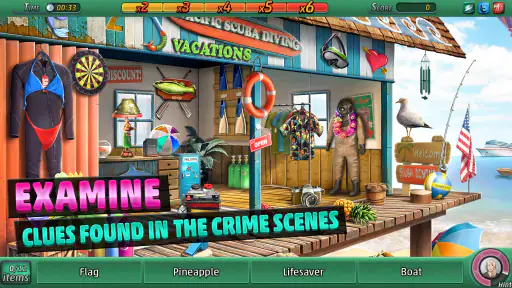

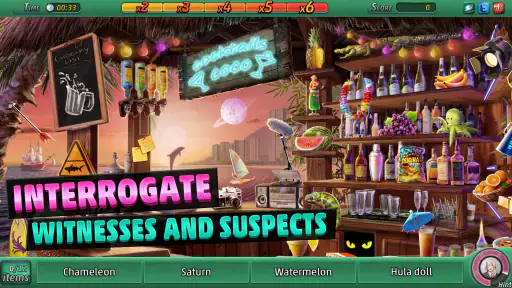



Analysis by Reviewed
Criminal Case: Pacific Bay is the kind of adventure game I open when I want a mystery that is easy to follow, visually busy, and divided into short investigations. I would not describe it as a deep detective simulator, but I do think it succeeds at making ordinary hidden-object searches feel connected to a continuing case. The strongest reason to try it is the way it combines scene scanning with questioning, evidence, and story progression rather than leaving each puzzle as an isolated picture.
Developed by Pretty Simple, the game is free to start and aimed at Teen players. It has been available since February 15, 2017, and its current version is 2.45.1 for devices running Android 7.0 or later. The large audience is easy to understand: the store shows a 4.7 average from around 251 thousand ratings, with more than 10 million installs. Those figures do not make it perfect, but they do reflect how well its straightforward investigation loop works for casual players.
Why the Pacific Bay investigation loop works
The central activity is searching crime scenes for objects that help move a case forward. I like that the game gives this familiar hidden-object format a reason to exist. Instead of simply finding items for a score, I am looking for clues that support an investigation, then using the results to make the next part of the story possible. That small narrative connection makes the repeated searching feel more purposeful than a collection of unrelated visual puzzles.
The Pacific Bay setting also gives the game a recognizable identity. It is not trying to imitate a realistic police workstation or bury the player in technical procedure. The tone is closer to a colorful, accessible crime adventure, where each scene is designed to be read quickly on a phone. That makes it a comfortable choice when I have a few spare minutes and want a clear objective instead of a large world that demands a long uninterrupted session.
What impressed me most is the way the game turns attention into a resource. A scene may look familiar after several visits, but the objects do not become completely automatic to spot. I have to slow down, separate foreground details from background decoration, and resist tapping randomly. That creates a gentle form of concentration: not stressful enough to feel like an exam, but active enough to keep the experience from becoming passive scrolling.
There is also a useful rhythm between searching and following the case. When I move from a crowded scene to the story material that comes afterward, the change prevents the game from feeling like one endless visual checklist. The investigation structure gives me a reason to finish the current task, while the next conversation or discovery provides a small payoff. Players who enjoy episodic television mysteries will probably recognize that “one more case” feeling.
A practical tip is to treat each scene as a visual inventory rather than hunting for one object at a time. I scan broad areas first, then check corners, shelves, tables, and unusual color changes. This is more reliable than tapping wherever something looks vaguely suspicious. It also helps when the scene becomes harder to read on a smaller phone display, where tiny objects can blend into the artwork.
More From Our News Desk

Weather by Xiaomi Review: Clear at a Glance, Less Clear Up Close

X Under Pressure: Can It Recover When Posting Goes Wrong?

Clash of Clans Is Won Between the Battles

Android Auto Makes the Case for Quieter Car Software

MobiOffice: Transforming Mobile Productivity with Seamless Integration

EA SPORTS FC™ Mobile Soccer: Redefining Mobile Sports Gaming
The game is especially approachable because its basic purpose is immediately clear. I do not need to learn a complicated control scheme, memorize a large map, or understand a dense character system before making progress. That simplicity is a genuine strength for players who want an adventure game that can be picked up between errands, during a commute, or while taking a short break.
Small-session play with a real sense of progress
In everyday use, I can imagine playing it after dinner while waiting for something to finish, completing a scene, reading the next story beat, and putting the phone down without losing track of the case. The game suits that pattern better than a traditional adventure title that expects me to remember a complicated chain of clues across several hours. Its short-task structure makes it forgiving when I only have limited attention.
That same structure is useful for families who share a tablet, although the Teen content rating means I would still choose it with the intended age group in mind. A younger player may enjoy the object-finding activity, but the crime setting and investigative themes are not the same as a purely cheerful puzzle game. For an adult or teenager, the tone is generally easy to approach without requiring a taste for graphic realism.
Another non-obvious strength is that the game rewards observation more than fast reflexes. Someone who struggles with action games can still engage with it because the challenge comes from recognizing shapes, colors, and context. I would recommend it to a player who likes mysteries but does not want combat, platforming, or complicated timing. It is also a reasonable introduction to hidden-object games for someone who has only played match-three or word puzzles.
Compared with a conventional point-and-click adventure, this is more immediate but less open-ended. I am not usually combining a large inventory of objects in unexpected ways or wandering through locations to discover my own solution. The game guides me toward its intended next step. That reduces frustration and keeps the pace moving, but it also means players who love solving obscure logic chains may find the experience too directed.
Compared with a pure hidden-object title, the criminal-case framing gives the searches more context. I am not simply completing a picture because the level says so; I am working through an investigation with recurring story momentum. The trade-off is that the search scenes can feel repetitive if I am looking for a completely different puzzle type each time. The game’s identity depends on enjoying that repeated loop.
The friction that becomes clearer over time
The biggest limitation is repetition. At first, finding objects in a detailed crime scene feels satisfying because every discovery seems to unlock something. After several sessions, the pattern becomes familiar: inspect a scene, collect what is requested, and continue the case. The narrative helps, but it cannot completely disguise the fact that the core interaction remains largely the same.
This matters most for players who prefer constant mechanical variety. If you need new controls, changing puzzle rules, or a steadily expanding set of investigative tools, this may feel narrow. I would not choose it over a richer story adventure when my priority is exploration or complex deduction. Its appeal comes from refinement of one accessible activity, not from offering a broad menu of genres.
The free-to-play design is another point to consider. The game costs nothing to begin, but optional in-app purchases range from $0.99 to $99.99 per item. I would approach that range carefully, especially if I were handing the device to a child or using the game as a regular daily habit. The best way to enjoy it is to decide in advance whether I am willing to wait through its natural pacing rather than treating every delay as a reason to spend.
That spending question changes how I would recommend it. For a casual player who is happy to play in short bursts, the free entry is attractive. For someone who wants uninterrupted progress and dislikes any pressure around resources or waiting, a paid adventure with a fixed price may be a better fit. The difference is not about the quality of the hidden-object scenes; it is about whether the game’s ongoing structure matches the way I prefer to play.
I also would not install it expecting a fully realistic crime investigation. The game uses the language of cases, clues, and detectives to create an adventure framework, but the experience is designed for accessibility rather than professional accuracy. That is fine for me when I want a light mystery, yet it would disappoint anyone looking for forensic detail, procedural authenticity, or the freedom to reach conclusions independently.
One useful habit is to stop playing before the search loop becomes tiring. Because the game is built around compact tasks, I do not need to force a long session. Completing one investigation step and returning later can preserve the pleasant feeling of discovery. Trying to rush through many similar scenes in one sitting makes the repetition more noticeable and can turn a relaxing game into a chore.
Who should install it and who should skip it
I think it is a strong match for casual adventure players who enjoy crime stories, visual searches, and clear objectives. It works particularly well for people who want something they can play with one hand, in short sessions, without learning complicated systems. The Teen rating makes the intended audience clearer, while the approachable controls make it suitable for players who are more interested in story atmosphere than reflex-based challenge.
It is also a good choice for hidden-object fans who want more context around their searches. The case structure gives each scene a stronger reason to exist, and the continuing Pacific Bay setting helps the individual tasks feel like parts of a larger journey. If I were recommending a phone game to a friend who likes mystery shows but does not want a demanding console-style adventure, this would be near the top of my list.
I would skip it if my ideal detective game involves free investigation, detailed evidence analysis, or multiple solutions. I would also look elsewhere if I become bored by repeating a familiar scene-search routine, or if I strongly prefer games with a one-time purchase and no optional spending. Players seeking action, competitive play, or a large explorable environment will find that this title is focused on a much smaller experience.
Device age is worth checking before downloading. The minimum operating system is Android 7.0, so it is not aimed at extremely old Android hardware. On a compatible phone, the main practical concern is screen size: a larger display makes small objects easier to distinguish, while a compact screen may require more patience. I would use headphones only if I wanted extra atmosphere; the game’s core appeal comes from what I see and how carefully I search.
For someone worried about whether the game is worth trying without paying, my answer is yes, provided the player accepts its pace. The free starting point makes it easy to test the visual style, story tone, and repetition level before deciding whether it deserves regular play. I would not recommend buying anything immediately. First, I would play long enough to learn whether the case progression feels motivating or whether the search cycle already feels repetitive.
The high average rating and broad install base suggest that the formula has connected with many players, but I would interpret that popularity in context. It is popular because it is accessible, familiar, and easy to return to, not because it replaces every other kind of adventure game. The right question is not whether it is the most sophisticated detective experience available; it is whether its particular blend of hidden-object scenes and case storytelling fits my preferred downtime.
My verdict after weighing the whole experience
Criminal Case: Pacific Bay is a focused adventure game with a clear thesis of its own: make crime-solving feel approachable by turning observation into a sequence of manageable searches. Pretty Simple keeps the controls understandable and uses the Pacific Bay setting to give those searches continuity. I appreciate that it respects short play sessions and offers enough story motivation to make finding another object feel more meaningful than a disconnected puzzle.
Its weaknesses are equally clear. The core loop can become repetitive, the investigation is more guided than analytical, and the optional purchase range means careful spending habits are sensible. None of those issues makes the game a poor choice, but they do define the audience. I would not present it as a deep simulation or as a substitute for a premium, story-heavy adventure.
For me, the final recommendation is positive with conditions: try it if you want a free hidden-object mystery that fits neatly into small breaks, and keep your expectations centered on casual case progression. Approach it slowly, use deliberate scanning instead of random tapping, and treat purchases as optional rather than necessary. If your ideal phone game is a light detective story built around careful observation, this is an easy recommendation; if you need variety, freedom, or a fixed-price experience, choose a different adventure instead.
Criminal Case: Pacific Bay Frequently Asked Questions
Can I play Criminal Case: Pacific Bay on my device?
Criminal Case: Pacific Bay is available for Android and iOS, and its minimum operating system requirement is Android 7.0. Before downloading, check that your device runs a compatible system version and has enough available storage for the game. It is an adventure game developed by Pretty Simple, with a Teen content rating.
How much space should I have available before downloading?
It is sensible to make sure your device has some free storage before installing Criminal Case: Pacific Bay, and to leave room for the game to run smoothly. The exact amount you need can vary by device and may change as the app is updated. If storage is tight, remove or move files you no longer need before downloading, then check that the installation completes successfully.
What is Criminal Case: Pacific Bay about?
Criminal Case: Pacific Bay is a hidden-object adventure game in which you investigate crimes in a fictional tropical setting. You visit different locations, search for clues, examine evidence, question suspects, and solve cases through a mixture of point-and-click investigation and puzzle gameplay. The story is presented as a sequence of episodes, each gradually revealing more about the mystery.
What kind of gameplay should I expect, and is it suitable for short sessions?
The main activity is examining crime scenes for hidden objects, then using the clues and evidence you collect to move an investigation forward. You also question suspects and work through episodes that develop the mystery. The straightforward controls and scene-searching format make it approachable, while energy limits and waiting periods can affect how much you accomplish in one sitting. It is a good fit if you enjoy casual detective gameplay rather than constant action.
Is Criminal Case: Pacific Bay free to download and play?
Yes, Criminal Case: Pacific Bay can generally be downloaded and played for free on supported Android and iOS devices. However, it includes optional in-app purchases for items such as energy, boosts, or other gameplay advantages. Progress can also be limited by energy and waiting periods, so players who want to move faster may encounter offers to spend real money. In-app purchases range from $0.99 to $99.99 per item, so it is worth reviewing purchase settings if children will be playing.
Pros
- Engaging hidden-object investigations with varied crime scenes.
- Pacific Bay setting adds a colorful change from typical detective games.
- Simple controls make it easy to play on phones and tablets.
- Regular tasks and cases provide clear short-term objectives.
- Playable in brief sessions when you have limited free time.
Cons
- Energy limits can interrupt investigations at inconvenient moments.
- Some evidence searches become repetitive after extended play.
- Progress may feel slow without spending premium currency.
- Frequent ads can affect the flow between cases.
- An internet connection may be required for several game features.
- Category
- Adventure
- Version
- 2.45.1