Charades Guess Game — Guessly
- 155.00
- 4.7
- Installs
- 1.00M
- Price
- Free

Screenshots

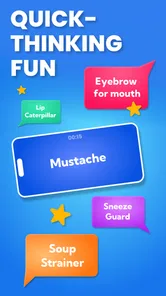

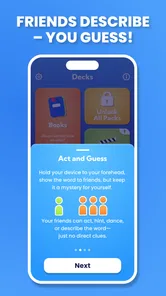
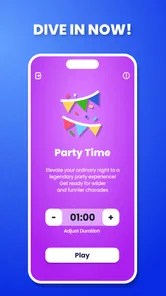
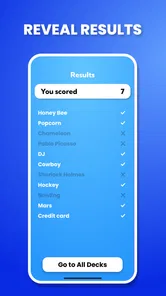
Analysis by Reviewed
Before I pick a game for a gathering, I try to match it to the group’s mood, not just its genre. Are people ready to perform, happy to guess aloud, and willing to share one device? Those small details matter more here than a complicated setup. Charades Guess Game — Guessly is designed for a room that wants a playful group activity, so I’d consider it when the goal is to get people interacting rather than to keep everyone quietly occupied.
That makes it a different choice from a solo word puzzle or a game built around a long campaign. I’d ask whether the group wants a quick shared diversion, whether someone can comfortably guide the first round, and whether the activity will fit naturally into the evening. If those answers are yes, the format has a clear role; if not, another kind of word game may be easier to enjoy.
A quick test for whether it fits your gathering
I find it helpful to think about the least confident person in the room, not just the most enthusiastic player. Would they be comfortable guessing while others watch, or would they rather join a team and contribute without being the focus? Making room for both styles can decide whether the activity feels welcoming. It’s a small adjustment, but it can turn a potentially awkward first turn into an easy invitation.
Guessly is a free game from smak apps in the word-game category. It has a 4.7 average from around 58,000 ratings and has been installed over a million times. That gives me a sense of its broad appeal, but popularity alone can’t tell me whether it matches a particular group. The better test is whether your friends or family enjoy acting, guessing, and being a little silly together.
Choosing the right kind of group game
I find the best group game is the one that suits the people in the room, not merely the occasion. In this section, I look at how comfort with performing, attention, and a shared phone can shape the choice, then turn to what makes a charades-style word game a good fit.
It works best when the room is ready to participate
A charades-style game has a different social rhythm from a crossword, a trivia quiz, or a word search. It asks players to look up from their screens and communicate with the group. That can make it a good pick for a party night, a family visit, or a casual get-together where people want an activity that doesn’t require much explanation.
I’d be more cautious about choosing it for a quiet commute, a solo break, or a group where several people would rather watch than perform. The fun comes from the interaction, not from a deep individual challenge. If your gathering has a mix of outgoing and reserved players, make participation low-pressure: let people guess first, team up, or take turns at their own pace rather than putting someone on the spot.
More From Our News Desk

 Gmail
Gmail in a Busy Inbox: Who Benefits Most?
From first account to crowded workday, Gmail earns its place through dependable search and flexible sorting—but its best fit depends on how much inbox maintenance you can tolerate.

 Prime Video
Switching to Prime Video: What Changes in Your Viewing Routine
Prime Video can make a compelling second home for streaming, but switching means learning a different catalog, rental layer, and route from browsing to playback.

 Universal TV Remote Control
 Works Best as a Reliable Backup
A phone remote earns its place through quick setup and reliable habits. Here is how to get more from Universal TV Remote Control—and where its limits show.

 Weather - By Xiaomi
Weather by Xiaomi Review: Clear at a Glance, Less Clear Up Close
Xiaomi’s weather app makes everyday forecasts quick to scan, but its calm surface can leave useful details and recovery paths harder to find than they should be.

 X
X Under Pressure: Can It Recover When Posting Goes Wrong?
A resilience-focused review of X, examining setup, mistaken posts, interruptions, weak connections, and the gaps that matter when recovery needs to be dependable.

 Clash of Clans
 Is Won Between the Battles
Its raids are quick; its community is a long-term project of coordination, teaching, rivalry, and shared responsibility—with all the friction that entails.
Latest News



One useful way to decide is to picture the first minute. Can someone explain the basic idea, pass the device around, and get a round moving without interrupting the conversation? That’s the kind of game Guessly is suited to. If your group needs detailed rules, a host, or a competitive structure to stay engaged, a dedicated trivia or board-game option may be a better match.
Where Guessly has an advantage
The main strength is its low barrier to entry. Word-guessing is familiar enough that a group can understand the premise without a tutorial-heavy introduction. That matters at a gathering, where people may arrive at different times or be chatting over the game. Rather than asking everyone to focus on a screen for a long stretch, it offers a reason to interact with the people in the room.
It can also fill an awkward gap well. I’d consider using it while guests are arriving, after a meal when conversation slows, or when a family group needs an activity that doesn’t depend on one person being an expert. In those situations, a short round is useful because it gives people a shared task without asking them to commit to a full evening of structured play.
A practical tip is to agree on the social rules before starting. Decide whether players can give broad clues, whether gestures are welcome, and how you’ll handle someone who doesn’t want a turn. The game’s premise invites performance, but a group’s comfort level determines whether that feels funny or uncomfortable. Setting expectations makes the activity easier to include across ages and personalities.
Another good use is as a break between more demanding activities. Unlike a strategy game that asks everyone to remember a board state, a quick word-guessing round can help reset the mood. I wouldn’t treat it as a substitute for a full party-game collection, but it can be the spontaneous option you reach for when the group wants something active and nobody wants to set up a complicated game.
Making a round flow smoothly
In a real evening, I’d use Guessly as a flexible interlude rather than announcing it as the main event. Imagine friends arriving at different times: one person can keep chatting while another suggests a round once enough people are settled. Anyone who comes in late can watch first and join when ready, which is less disruptive than pausing a game that depends on everyone following a long sequence.
It also helps to keep the phone handoff simple. Choose one person to manage the device and make sure the rest of the group knows whose turn it is. That avoids the small but familiar slowdown of passing a phone back and forth while people debate what to do next. If the room is noisy, keep the group close enough to hear clues; if people are spread out, bring chairs together before beginning rather than expecting the game to overcome a poor setup.
For a mixed group, I’d offer a choice between acting and guessing instead of assuming everyone wants the same role. Pairing a shy guest with a more relaxed friend can make participation easier, while letting someone sit out a turn keeps the mood friendly. These aren’t complicated house rules; they’re ways to make the game’s social premise work for the actual people present.
When another category is the better choice
Compared with solo word games, Guessly trades personal concentration for group energy. If you usually play in short bursts on your own, a word puzzle is likely to be more convenient: it doesn’t depend on other people being available, and you can stop whenever you like. Guessly makes more sense when the point is to share the activity, not simply to solve words.
Compared with trivia games, it shifts the focus away from recalling facts and toward communicating an idea. That can be more welcoming for players who don’t enjoy being tested on knowledge, though it may be less satisfying for a group that wants clear questions, scorekeeping, and a sense of who knows the most. A board game can offer more deliberate strategy and structure; Guessly is the lighter choice when speed and conversation matter more.
There’s also a real limitation in the social format: the group itself is part of the game’s content. If people are tired, distracted, uncomfortable acting, or gathered remotely without a convenient way to participate together, the premise loses much of its appeal. I wouldn’t choose it as the only entertainment for a long event. It is better treated as one flexible activity in a wider evening.
The Teen content rating is worth keeping in mind when deciding whether it belongs at a mixed-age family gathering. I’d check the game’s content and the group’s expectations before handing it to younger players, rather than assuming that every word game is automatically suitable for every age. That is a sensible step for any group activity, especially when adults and teens will be sharing the same device.
Questions I’d settle before game night
Would I need to buy anything before trying it? I’d begin with the free download and see whether the group enjoys the format before considering an in-app purchase. The available purchases range from $7.99 to $49.99 per item, so I’d look over the options carefully and make any spending decision away from the excitement of a live gathering. A paid option only makes sense if it addresses something your group actually wants.
Can it replace a full party-game collection? I wouldn’t count on that. It suits a particular kind of moment—informal, social, and comfortable with a little performance. A broader collection gives a host more ways to respond if guests prefer trivia, strategy, or quieter play. I’d treat Guessly as one accessible option in the evening, not as the sole plan for every personality.
Is it a good fit for a family with younger children? The Teen rating means I wouldn’t assume that it is appropriate for every age. An adult should check the game’s content and decide whether it fits the children who will be playing. For a group spanning generations, I’d also make sure younger players can participate comfortably and that nobody is pressured into acting.
What if the group doesn’t click with it? There’s no need to force another round. Switch to conversation, a more structured game, or a solo word activity if people would rather play independently. The most useful measure is whether the game makes the gathering easier and more enjoyable; if it becomes a negotiation over turns, roles, or attention, it has served its purpose and it’s time to move on.
What to consider before committing
Because the game is free to download and includes in-app purchases priced from $7.99 to $49.99 per item, I’d start with the free experience and decide whether it earns a regular place in your gatherings before spending anything. The listed purchase range is broad, so it’s sensible to review the purchase options carefully and avoid buying anything simply because a group is eager to start playing. The core decision is whether your circle actually enjoys this style of game.
There is little practical switching cost if you try it and later decide it isn’t for you: you can return to conversation, use a different party game, or choose a solo word game next time. The more meaningful cost is attention. At a gathering, passing a phone around can interrupt the flow, so I’d keep the device with the person managing the round and make sure everyone can see or hear what they need. If the group spends more time negotiating turns than playing, switch to an activity that fits the room better.
Version 1.7.0 is the current release, and the game runs on Android 7.0 or later. That makes device compatibility a straightforward check before planning to use it on an older phone. For a group, it also helps to choose a device with enough battery and a screen people can comfortably share; those simple preparations can prevent a promising round from turning into a scramble.
My recommendation for the right group
I’d recommend Guessly to people who want an easy-to-start word game for a room full of friends or family, especially when the goal is laughter and participation rather than serious competition. It’s most convincing as a spontaneous group activity: try it when guests are together, keep the first round relaxed, and see whether the group naturally wants another turn.
I’d skip it if you mainly want a solo challenge, if your group dislikes acting or guessing aloud, or if you need a game with a more substantial ruleset and long-term progression. In those cases, a standalone puzzle, trivia game, or structured board game will likely suit you better. My view is that Guessly’s value comes from matching the right people and moment, not from trying to be every kind of word game at once.
Overall, smak apps has made a clear choice with this word-game concept: prioritize face-to-face fun over solitary play. The game’s 4.7 average and more than a million installs make it a popular option to consider, but the deciding factor for me is simpler—will your group enjoy taking part? If the answer is yes, it’s a practical free starting point for a casual game night. If not, there are better alternatives for the way you prefer to play.
Charades Guess Game — Guessly Frequently Asked Questions
What is Charades Guess Game — Guessly?
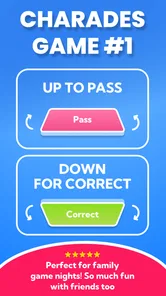
Charades Guess Game — Guessly is a party game built around guessing words or phrases from clues, gestures, and hints from other players. One person typically holds the phone while the group acts out or describes the prompt, depending on the chosen round. It is designed for casual social play, so it works best when everyone is ready to join in and take turns.
How do you play Guessly with friends?
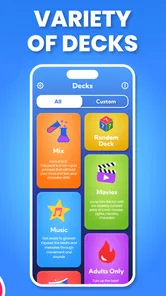
Start a game, choose a category or set of prompts if those options are available, and pass the phone to the player who will guess. Other players give clues without simply saying the answer, while the guesser responds within the round’s time limit. Since party-game rules and controls can vary by version, check the in-app instructions before playing, especially if you are using a custom mode.
Can Charades Guess Game — Guessly be played alone?
Guessly is primarily intended for group play because its main appeal is the interaction between the person guessing and the people providing clues. You may be able to browse prompts or explore the interface on your own, but a solo session is unlikely to provide the same experience as a round with friends or family. For the most enjoyable game, gather a group before starting.
Does Guessly require an internet connection, and is it free?
Availability, pricing, and online requirements can depend on the app version, platform, and region. Check the Google Play Store or Apple App Store listing for the current price, in-app purchases, ads, and any stated connection requirements before downloading. If you plan to play somewhere without reliable internet, open the app beforehand and confirm that its prompts and game modes remain accessible offline.
Is Charades Guess Game — Guessly suitable for children?
The game can be suitable for family play, but the appropriateness of its prompts depends on the categories included and how they are presented. A parent or organizer should review available categories and the store’s age rating before handing the device to a child. Also consider whether the app requests permissions or offers social features, and supervise younger players where appropriate.
Pros
- Quick rounds make it easy to play during short breaks or at gatherings.
- The head-up display keeps the clue visible to other players.
- Simple rules make the game accessible to newcomers.
- Guessing prompts can encourage lively group interaction.
- A hands-free style of play lets players focus on acting and guessing.
Cons
- The game is best enjoyed with other people
- limiting its appeal for solo play.
- Some prompts may feel repetitive after extended play.
- Noisy settings can make spoken guesses difficult to hear.
- Players may need to agree on rules for skipped or disputed clues.
- The experience depends on having enough space to act out clues.