Fakeit: Imposter Game
- 670.00
- 4.5
- Installs
- 5.00M
- Price
- Free

Screenshots



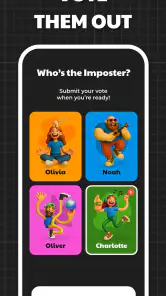
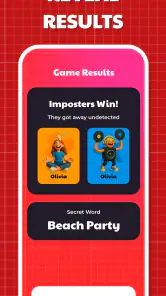
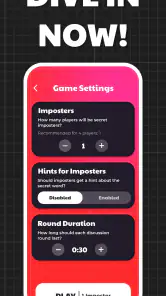
Analysis by Reviewed
I’d consider Fakeit: Imposter Game when I wanted a word game that gets people talking rather than one that keeps everyone quietly solving a puzzle on a screen. Its appeal is the social guessing premise: players try to work out who is pretending, so observation and conversation matter as much as vocabulary. That makes it a very different choice from a solo word search or a conventional quiz.
In practice, I’d judge it less by how much content it appears to offer and more by whether the people around me are willing to join in. It is designed for a group, and the fun depends on players enjoying a little bluffing and suspicion. If that sounds like your kind of evening, it is an easy game to consider; if you mainly want a word game for a quiet commute, it may not be the right fit.
What to consider before starting a round
The important question is whether you have a group ready to play. A social deduction game needs people who will pay attention, make guesses, and take turns speaking. It can be a good choice for a casual get-together, a break between other activities, or a family game session where the group wants something more interactive than passing around a phone to take turns on a crossword.
It is also worth thinking about the group’s comfort with bluffing. Some players love trying to sound convincing; others would rather solve a clear word clue without having to read anyone’s reactions. The impostor idea naturally puts attention on what people say and how they say it. That can make a round lively, but it may feel awkward if your group dislikes being put on the spot.
The basic premise is straightforward enough to explain: identify the person who is pretending. That clarity is a strength when you are introducing a game to friends who do not want a long rules briefing. A useful way to start is to agree that everyone should keep their comments brief and give each person a chance to speak. That keeps a confident player from dominating the discussion and gives quieter players room to contribute.
Why the group matters more than the phone
Fakeit is a word party game from smak apps, not a deep solo vocabulary trainer. The phone provides the setting for a shared guessing activity, while the people playing supply much of the energy. I would bring it out when the group is already together, rather than expecting the app itself to create a social occasion.
A realistic use case is a small group waiting for food or sitting around after a meal. Instead of asking everyone to install themselves into a long, screen-focused game, one person can introduce a quick round and let the conversation do the work. The game suits a group that enjoys teasing out clues, but it is less useful if people are scattered across a room or frequently distracted by other activities.
One practical tip is to set expectations before the first round: keep the discussion friendly, avoid treating a wrong guess as a failure, and let the group settle on a fair way to take turns. These small choices matter because social deduction can become less fun when one person turns every accusation into an argument. The best atmosphere is playful suspicion, not an attempt to prove who is the best liar.
Where Fakeit has an advantage
Compared with standard word puzzles, Fakeit’s strongest difference is that it asks players to interpret one another rather than simply find an answer. A word search rewards scanning and patience; a crossword rewards knowledge and deduction. This game instead gives the group a shared reason to talk, listen, and decide whom to trust. That makes it more memorable for a gathering than a puzzle that each person completes separately.
It can also work as a low-pressure alternative to a full-length board game. If the group wants a little structure but does not want to commit to setting up a large game, the impostor premise gives the conversation a clear focus. I would use it as a short social activity between other plans, not as a substitute for a long strategy game when everyone is looking for sustained, complex play.
Another non-obvious strength is how much the same premise can depend on the mix of people. A group that knows each other well may notice familiar habits, while newer friends may have to rely more on the clues and discussion in the moment. That changes the feel without requiring players to approach it like a vocabulary test. If your group tends to replay the same social games, changing who plays together can make the experience feel different.
Fakeit has attracted an average rating of 4.5 from around 132,000 ratings, and it has passed 5 million installs. Those figures suggest that the concept has broad appeal, but they do not tell me whether a particular group will enjoy bluffing. I’d treat them as a sign that the game has found an audience, then make the decision based on whether the people I’m inviting actually like conversational party games.
When another kind of game is a better choice
If you want to improve spelling, learn new vocabulary, or work through puzzles at your own pace, a dedicated word puzzle game is a better match. Fakeit’s social premise puts the emphasis on identifying a pretender, not on building a personal score through steady practice. It is also not the choice I’d make for a single player looking for something to do offline from other people; the central appeal is the group dynamic.
For a group that prefers direct questions and clear answers, a trivia game may feel more comfortable. Trivia lets players focus on what they know, whereas an impostor game asks them to consider whether another person’s contribution seems convincing. Conversely, if your friends enjoy bluffing but dislike complicated rules, Fakeit may be a more approachable starting point than a heavier social deduction game.
There is a trade-off in relying on conversation: the experience can be uneven. A lively group can turn a simple prompt into a funny exchange, while a reserved group may struggle to get the discussion going. If you know your guests do not like speaking in front of others, I would choose a cooperative word puzzle or a turn-based quiz instead. The app cannot make an unwilling group feel at ease.
It is also worth being realistic about the phone’s role. This is a shared social activity, so someone needs to make the game part of the gathering rather than leave it sitting unnoticed on a device. I’d introduce it when people have a little time and attention to spare. Starting while everyone is rushing, eating, or splitting into separate conversations is likely to weaken the very interaction the game depends on.
Cost, access, and the version to expect
The game is free to download, with in-app purchases listed from $5.99 to $59.99 per item. I would begin with the free experience and see whether my group asks to play again before considering any purchase. That is a sensible approach for a party game, since its lasting value depends more on whether your friends enjoy the format than on how often you personally open it.
Because purchases are available, it is sensible to check the purchase screen before confirming anything, especially if the phone will be passed among family members. The listed price range is broad, so I would not assume every item is a small add-on. This is not a reason to avoid the game, but it is a good reason to keep spending deliberate rather than treating every optional purchase as necessary.
Fakeit is rated Everyone, which makes it broadly suitable by content rating, though that does not mean every group will enjoy the social pressure of guessing. The current version is 1.26.0, and the minimum operating system listed is 7.0. For someone deciding whether an older device can run it, that operating-system requirement is the useful detail to check before planning a group session.
The game was released on October 22, 2025. I would not make a decision based on the release date alone; what matters more is whether the current version runs on the devices your group expects to use and whether the social format suits them. The developer is smak apps, and the free entry point makes trying the basic idea a more reasonable first step than paying before you know how your friends respond.
Making the first session work
For a smoother first round, I’d explain the goal in one sentence, then let the group learn by playing rather than overloading everyone with instructions. Keep attention on the shared conversation and give each player a moment to contribute. This is especially helpful when some people are naturally quick to accuse and others need time to think. A fair pace makes it easier to judge the group’s actual interest.
If the first round feels flat, I would not immediately assume the game is the problem. Try it with a smaller, more engaged group or choose a moment when nobody is distracted. On the other hand, if your friends dislike bluffing even in a relaxed setting, repeating the game is unlikely to change that preference. Switching to a cooperative word game or a straightforward quiz is the better call in that case.
There is little personal learning curve to switching from another casual word game, but the social expectations do change. Players who are used to competing on correct answers may need to adjust to a round where persuasion and group judgment matter. I’d explain that distinction upfront so nobody expects a vocabulary challenge. That simple framing can prevent the common mismatch between people looking for a brainteaser and people ready for a party game.
My recommendation
Fakeit is worth trying if your group likes conversation, light bluffing, and judging a story together. It gives a word-game setting a social twist, making it a more natural fit for friends or family in the same room than for someone seeking a private daily puzzle. I’d start with the free version, introduce it when people have time to focus, and let one round decide whether it earns a place in your regular rotation.
I would skip it if you want a solo word challenge, if your group dislikes being put on the spot, or if you need a game whose enjoyment does not depend on conversation. For those situations, a conventional word puzzle or a direct-answer quiz is a safer choice. But when the group is willing to play along, Fakeit: Imposter Game offers a simple way to turn a few minutes together into a guessing game—and its success rests, refreshingly, on the people around the phone as much as the app itself.
Fakeit: Imposter Game Frequently Asked Questions
What is Fakeit: Imposter Game, and how do you play?
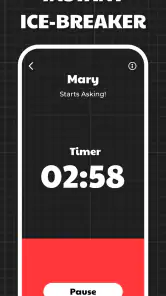
Fakeit: Imposter Game is a social party game built around guessing, bluffing, and reading the other players. A round typically gives players a shared prompt or secret information, while one player takes the role of the imposter and tries to avoid being discovered. Players exchange clues or answers, then decide who seems suspicious. The exact setup and available modes may vary by version, so check the in-game instructions before starting.
Can I play Fakeit: Imposter Game with friends, or is it a solo game?
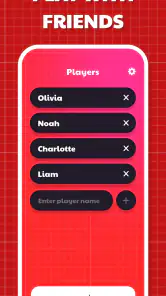
The game is primarily suited to playing with a group, since much of the fun comes from hearing different answers, questioning one another, and voting on who the imposter might be. Before downloading, check the store listing for the current multiplayer options, including whether players can join remotely or need to share one device or location. A solo mode, if available, may not offer the same social experience.
Does everyone need to download Fakeit: Imposter Game to play together?
Whether each person needs the app depends on how the current version handles a game session. Some party games let everyone participate on one shared phone, while others require each player to install the app or join through an online room. Review the app’s setup instructions and store description before arranging a game, especially if your group is meeting remotely or using different Android and iOS devices.
Is Fakeit: Imposter Game free, and does it include ads or in-app purchases?
The price and monetization can change by platform, region, or update, so check the Google Play or Apple App Store listing for the latest details before downloading. Look for whether the game is free to install, whether it contains advertisements, and whether optional purchases unlock features or remove ads. If you are playing with children, reviewing the purchase settings and privacy information is also a sensible precaution.
What should I check before downloading Fakeit: Imposter Game on Android or iOS?
Confirm that the app is compatible with your device and operating-system version, and review its latest update date, permissions, privacy information, and user ratings in the official store. Also consider whether your group has enough players and whether the game’s language and session format suit everyone. Downloading from Google Play or Apple’s App Store helps ensure you get the official release rather than an unofficial copy.
Pros
- Quick rounds make it easy to play during short breaks.
- Simple rules are easy for new players to pick up.
- Imposter roles encourage bluffing and lively group discussions.
- Works well as a social party game for friends and family.
- A different secret word each round helps keep play fresh.
Cons
- Best enjoyed with a group
- so solo play may feel limited.
- Players need to avoid sharing the secret word too openly.
- Round quality depends on everyone taking part and paying attention.
- Some players may find bluffing or being put on the spot uncomfortable.
- Repeated sessions with the same group can become predictable.

- Category
- Word
- Version
- 1.26.0