Bus Simulator : 3D Bus Games
- 406.00
- 4.7
- Installs
- 50.00M
- Price
- Free
Screenshots


Analysis by Reviewed
I’d treat Bus Simulator: 3D Bus Games as an easy shared-device game: one person can take a short driving mission, then hand the phone or tablet to someone else. That makes it a natural fit for a quiet break at home, especially when players enjoy vehicles and simple, hands-on challenges more than lengthy strategy sessions. The appeal is in taking a route and trying to complete it cleanly, not in needing a group to play together.
Taking turns without taking over
On a shared device, I’d agree on turns before starting rather than passing the phone around mid-mission. Driving depends on steady steering and timing, so an abrupt handoff can turn a manageable route into a frustrating one. A useful routine is for one player to finish a mission, then let the next person choose whether to continue or stop. That keeps progress and expectations clearer without assuming the game has separate household profiles or turn-taking tools.
It also suits different attention spans reasonably well. Someone can focus on a single route, while another player can watch and pick up the controls before trying. I would not make it the main choice for a group looking for direct competition or coordinated multiplayer; its bus-driving focus is better suited to taking turns than trying to coordinate several players at once.
Setting expectations on a household device
Before handing it to a child, I’d check the device’s usual app and purchase settings with them and explain that the game is free to download, but that does not automatically answer every question about interruptions or optional spending. The game’s listed age guidance is Teen, so it is worth considering that rating rather than treating the bus theme as a sign that it is aimed at very young children. I’d also keep play to a supervised, shared-device session if that is how your household normally handles games.
One practical trade-off is that the original review notes advertising interruptions. On a device used by several people, that can disrupt a handoff or break concentration during a drive. I’d avoid starting a mission when someone has only a moment before they need the device back; finishing a route first makes sharing less awkward. If uninterrupted play is essential, a game with fewer interruptions may be a better household fit.
Who will enjoy this kind of driving
The game is aimed at players who like the small decisions involved in driving a large vehicle: keeping control, making stops, and completing a route. That gives it a different feel from racing games, where speed and overtaking are usually the main attraction, and from deeper management or strategy games, where planning menus and long-term systems may take up more time than driving. Here, the satisfaction comes from handling the vehicle and getting through a mission.
For a realistic everyday use, I can see it working during a short wait at home: one person completes a route while dinner is being prepared, then passes the device along once the mission ends. The missions give that brief session a clear goal. If you prefer open-ended exploration, realistic professional simulation, or a competitive race, this may feel too mission-focused and simplified; I’d choose a game built around that specific preference instead.
More From Our News Desk

Weather by Xiaomi Review: Clear at a Glance, Less Clear Up Close

X Under Pressure: Can It Recover When Posting Goes Wrong?

Clash of Clans Is Won Between the Battles

Android Auto Makes the Case for Quieter Car Software

MobiOffice: Transforming Mobile Productivity with Seamless Integration

EA SPORTS FC™ Mobile Soccer: Redefining Mobile Sports Gaming
One tip is to treat early missions as practice rather than rushing to finish them. Learning how steering and stopping feel on the screen can make later tight spaces less irritating. Another is to pay attention to the route objective before driving off: the game’s appeal is tied to completing tasks, so casual wandering may not deliver the same sense of progress. Upgrades and new buses provide a reason to keep playing, but I’d judge them by whether they make the next drive enjoyable, not just by the urge to collect everything.
Making a short session work
For a shared phone, I’d settle one small question before play: whose turn is it to choose the next route? That avoids turning a quick break into a debate over who gets to keep driving. If one player is new, letting them observe the first few turns can help them understand the rhythm of steering, stopping, and passenger tasks without needing a long tutorial from another person. It also gives a more experienced player a chance to explain the controls while the device stays in one pair of hands.
A useful stopping point is the end of a mission, not an arbitrary timer in the middle of a drive. That makes it easier to return the device on time and reduces the chance that someone else inherits a difficult manoeuvre. If the next player wants to continue, they can start fresh rather than feeling obliged to rescue the previous person’s route. This is a simple household routine, not a feature I’d expect the game to enforce.
There is a trade-off if several people care about progression. Taking turns on one device may mean that everyone shares the same play context, so I’d agree whether the goal is a common run or simply passing time. If each person wants a separate sense of ownership and progress, a shared-device arrangement may be awkward; I would not choose this as a substitute for individual profiles or a game designed around family accounts.
Hey there, fellow gaming enthusiasts! Today, I’m diving into the world of virtual transportation with Bus Simulator: 3D Bus Games. If you’ve ever dreamt of taking the wheel of a big, bustling bus and navigating through city streets, this app might just be your ticket to ride.
Welcome Aboard the Bus Simulator Experience
First things first, Bus Simulator: 3D Bus Games offers a surprisingly immersive experience. From the moment you start the game, you’re greeted with a fleet of impressive buses, each one just begging to hit the road. The graphics are pretty decent, especially for a mobile game, and they do a solid job of bringing the cityscapes to life. You’ll find yourself driving through various environments, from bustling urban centers to quaint suburban areas, each with its own unique charm.
Getting Behind the Wheel
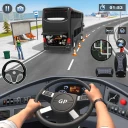
What’s really cool about this game is the detail that’s gone into the driving mechanics. You’re not just steering and accelerating; you’ve got to manage things like opening doors, picking up passengers, and sticking to your route schedule. It’s like a crash course in bus driving, minus the actual crashing (hopefully!). The controls are pretty intuitive, which is great because no one wants to fumble around with tricky controls while trying to keep their passengers happy.
That combination of steering, stops, and schedule pressure makes the game more interesting than simply driving from one end of a map to another. I’d give myself a moment at the start of a route to get comfortable with the controls, then focus on smooth braking and positioning near stops. Small corrections are easier than trying to recover after a sharp turn, especially when the road is crowded. The bus is larger than a car, so leaving room for turns is part of the challenge rather than a detail to ignore.
For someone new to this style of game, the door and passenger steps are also a useful reminder that a mission is a sequence of tasks, not just a drive. I’d avoid treating the schedule as a reason to rush every movement: a hurried approach can make a tight manoeuvre harder, while steady driving lets the route objectives guide what to do next. That balance is where I found the basic controls most satisfying.
Challenges and Missions
The game isn’t just about driving aimlessly; it offers a variety of missions and challenges to keep things interesting. Whether it’s navigating through tight spots, dealing with traffic, or racing against the clock, there’s always something to keep you on your toes. Completing missions rewards you with in-game currency, which you can use to upgrade your bus or buy new ones. It’s a nice touch that adds a layer of progression to the game, making you feel like you’re actually improving as a virtual bus driver.
The progression gives a practical reason to repeat routes, but I wouldn’t assume every upgrade will matter equally to every player. If you enjoy careful driving, choose improvements that make your next session feel worthwhile rather than chasing purchases as an end in themselves. Missions with traffic or tighter manoeuvres are also a better test of control than a route you can complete on autopilot, so they help reveal whether the game’s driving style is holding your attention.
Bus Simulator: 3D Bus Games is a free strategy game from GamePark, with a 4.7 average from around 91,000 ratings and over 50 million installs. It is rated Teen, and version 2.1.0 lists Android 5.1 as its minimum operating system. Those details make it easy to see why it has broad reach, but popularity alone does not make it the right fit: I’d choose it for accessible route-based driving, not for a highly realistic simulator or a social game that depends on playing together.
A Few Bumps in the Road
While there’s a lot to love about Bus Simulator: 3D Bus Games, it’s not without its quirks. Some players might find the ads a bit intrusive, popping up at less-than-ideal times. Also, while the graphics are generally good, there can be occasional glitches or lag, especially on older devices. But hey, no game is perfect, right?
Those interruptions and performance hiccups matter more when a mission needs concentration, or when the device is being passed between people. I’d keep sessions flexible and avoid promising a child or another player that every drive will run without interruption. If a phone struggles with other 3D games, this may not be the best one to rely on for a smooth shared session; trying it on the device you intend to use is the sensible way to judge.
For household use, I’d keep expectations simple: the game can offer a common activity and a clear turn-taking point, but it should not be treated as a tool for managing accounts, setting family boundaries, or coordinating players. The Teen rating is a helpful starting point for an age conversation, not a substitute for deciding what fits your own household. If you need distinct personal progress or dependable, interruption-free access on a shared device, another option may suit you better.
Choosing it over another driving game
Compared with a racing game, the bus missions ask me to think about route handling and passenger stops rather than chasing the fastest lap. That gives the driving a slower, task-based rhythm. It is a better fit when I want a clear objective and a reason to brake carefully; a racing title is the stronger pick when speed, head-to-head competition, or repeated track times are the point.
It also sits apart from a more involved transport or management game. Those alternatives can be rewarding if I want to plan networks, budgets, or longer-term operations, but they can put menus and decisions ahead of actually driving. Here, I can get straight to the hands-on part. The compromise is that anyone looking for a detailed professional simulation may find the experience too simplified, while someone who mainly wants relaxed driving may find the mission structure restrictive.
If I were deciding whether to keep playing after the first session, I’d ask whether the route tasks themselves feel satisfying. The bus collection and upgrades give progression a visible shape, but they are not a reason to continue if steering and stops feel like chores. For a casual player, one enjoyable mission is a better test than trying to unlock everything quickly.
Age, trust, and practical boundaries
The Teen content rating matters even though the central idea is familiar and approachable. I’d use it as a prompt for a parent or caregiver to check whether the game suits the player, rather than assuming that a vehicle theme makes it suitable for every age. On a family tablet, I’d also make the household’s normal expectations clear before handing it over, especially around optional purchases and what to do if an advertisement interrupts play.
Because the game is free, it is easy to try without making a purchase just to begin. Still, free does not mean every part of the experience is automatically a good match for every family. I’d keep purchase decisions with the device owner and avoid letting a child treat in-game currency as permission to spend real money. That distinction is useful on any shared device, where one person may not know what settings or payment methods are in place.
For adults sharing a phone, the same practical care applies in a less formal way: don’t assume someone else wants to continue a route or make choices on their behalf. A quick agreement about whose turn it is and when the device needs to be returned prevents most avoidable friction. The game offers a convenient activity, but household coordination still comes from the people sharing the screen.
Who should give it a try
I’d recommend it to someone who wants a mobile driving game with approachable controls, clear route goals, and a little progression through new buses and upgrades. It can work for a short break, a relaxed solo session, or an informal turn-taking activity when two people share a device. Its strongest appeal is that the driving tasks are easy to understand while still asking for some care around turning, stops, and timing.
I’d skip it if I wanted realistic vehicle handling above all else, uninterrupted play, deep transport planning, or direct multiplayer competition. It may also frustrate players who dislike advertisements or who want every session to be entirely open-ended. Those preferences do not make the game poor; they simply point toward a different kind of driving or strategy game.
Overall, if you’re looking for a laid-back yet engaging simulation game, Bus Simulator: 3D Bus Games is worth a spin. It’s one of those games where you can lose track of time, just driving around, picking up passengers, and enjoying the ride. So, if you’re ready to hit the road and take on the challenges of a bus driver’s life, hop on board and give it a go!
Happy driving, and remember, keep those virtual passengers smiling!
Bus Simulator : 3D Bus Games Frequently Asked Questions
Is Bus Simulator: 3D Bus Games suitable for younger children?
The game has a Teen age rating, which can help parents and guardians judge whether it is appropriate for a younger player. Its focus is bus driving, parking, and completing missions, rather than a story-led experience. Families should consider the rating alongside a child’s age and preferences before deciding whether to download it.
What is Bus Simulator: 3D Bus Games, and what does it focus on?
Bus Simulator: 3D Bus Games is a strategy game built around bus driving, parking, and mission-based challenges. The basic idea is to take on driving tasks and handle the vehicle carefully as you work toward each objective. It may appeal to players who enjoy vehicle simulators with goals beyond simply staying on the road.
What should I know about the game’s current version before downloading?
The current version is 2.1.0, and the game is listed as released on July 6, 2019. If you are comparing it with other bus games, those details can help you identify the title and its release history. Check that the version shown on your device’s app store is compatible with your device before installing.
What operating system does Bus Simulator: 3D Bus Games need?
On Android, the minimum operating system requirement is version 5.1. Check your device’s Android version before downloading, since a device running an older system may not meet that requirement. Keeping your operating system current can also help with compatibility, but the key point is that Android 5.1 is the stated minimum for this game.
Does Bus Simulator: 3D Bus Games have a Teen age rating, and what does that mean for players?
Bus Simulator: 3D Bus Games is rated Teen, so it may be more suitable for teenage players than for younger children. Parents and guardians can use that rating as a guide when deciding whether the game is appropriate. The game focuses on bus driving, parking, and completing missions, making it a strategy game built around vehicle handling and route challenges.
Pros
- Realistic driving experience
- Variety of bus models
- Challenging routes
- Customizable settings
- Frequent updates
Cons
- Occasional game bugs
- In-app purchases
- Ads can be intrusive
- Some routes are repetitive
- High battery consumption
- Category
- Strategy
- Version
- 2.1.0