Zing - Jewish Music Streaming
- 472.00
- 3.8
- Installs
- 100.00K
- Price
- Free

Screenshots
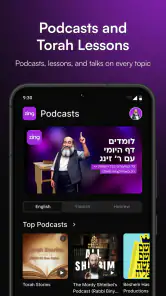
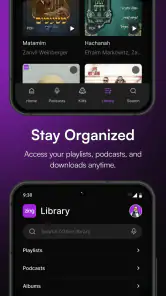
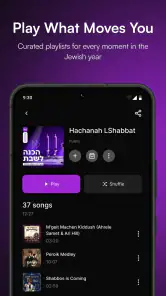
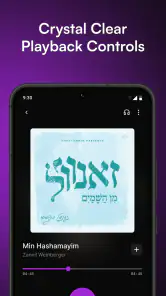
Analysis by Reviewed
I approached Zing - Jewish Music Streaming as a listener who wanted a more focused way to explore Jewish music rather than sorting through the enormous general catalogs offered by mainstream services. Developed by ZING MUSIC INC, this free Music & Audio app is built around a clear identity: it puts Jewish music at the center instead of treating it as a small corner of a much broader platform.
That focus is the reason to try it, and also the reason it will not suit everyone. If your listening is mostly Jewish music, the narrower purpose can make discovery feel more relevant. If you want one app for every genre, artist, podcast, playlist, and listening habit, a conventional streaming service may still be more convenient. After spending time with the app, my view is that its value comes less from trying to replace every audio service and more from giving a particular musical community its own destination.
How the app feels in everyday listening
The first thing I noticed is that Zing is easy to understand conceptually. You are not opening it to browse an endless general-purpose entertainment catalog. You are opening it because Jewish music is the reason you are there. That makes the app especially suitable for listeners who regularly play this kind of music at home, during commutes, while preparing for a gathering, or as part of religious and cultural routines.
A realistic use case would be getting ready for a family event and wanting music that fits the occasion without repeatedly searching through unrelated recommendations. The focused identity saves mental effort. Instead of starting with a broad genre menu, I can begin from the expectation that the service is designed around Jewish listening. For someone already familiar with the artists and styles they enjoy, that can make the experience feel more purposeful than a general streaming app.
At the same time, I would not describe it as a universal replacement for services such as Spotify, Apple Music, or YouTube Music. Those alternatives are usually stronger choices when I want a mixed library containing Jewish music alongside pop, jazz, classical recordings, podcasts, spoken-word programs, and international releases. Zing makes more sense as a specialist tool, particularly for listeners who would rather have relevance than sheer breadth.
The app is free to install and carries an Everyone content rating, so it is approachable for households with different ages and listening habits. Its audience is not limited to one narrow age group: a younger listener may use it for personal discovery, while a family may use the same service for shared listening. The free entry point also makes it practical to test the experience before deciding whether it deserves a regular place on a phone.
There is a useful distinction between being free to download and being completely free of commercial friction. In-app purchases range from $9.99 to $179.99 per item, so I would encourage anyone considering extended use to pay attention to what appears inside the app before committing to a purchase. The right approach is to explore first, understand which functions require payment, and only then decide whether the listening benefits justify spending money.
More From Our News Desk

Clash of Clans Is Won Between the Battles

Android Auto Makes the Case for Quieter Car Software

MobiOffice: Transforming Mobile Productivity with Seamless Integration

EA SPORTS FC™ Mobile Soccer: Redefining Mobile Sports Gaming

How Microsoft OneDrive Became a Mobile Productivity Giant

How Google Translate Breaks Language Barriers Effortlessly
Who gets the most from the focused catalog
I think the strongest audience is someone who already searches for Jewish music by default. That listener does not need to be an expert or belong to a particular musical scene. The important point is that the app’s central subject matches the listener’s regular needs. It can be useful for discovering performers, keeping culturally relevant music close at hand, and creating a more direct route to the songs that matter in a family or community setting.
It may also appeal to people who feel that general streaming recommendations miss the context they care about. Broad algorithms often learn from a listener’s most obvious habits, but a specialist service starts with a more meaningful assumption. When the musical category itself is important, a dedicated app can reduce the amount of filtering required before finding something appropriate.
I would be more hesitant to recommend it to a listener who wants a highly polished all-purpose audio ecosystem. If your priorities are a huge cross-genre library, deep podcast support, extensive device integration, or a single account covering every kind of audio, Zing may feel too limited. The decision is not really about whether specialist or general streaming is better in the abstract; it is about whether Jewish music is a primary need or an occasional interest.
Small workflow choices that improve the experience
My first practical tip is to treat the app as a discovery and listening destination rather than assuming it must replace your existing service immediately. Keep your usual platform for broad listening and use Zing when you want a concentrated Jewish music session. This two-app approach avoids forcing one service to do two very different jobs.
My second tip is to use it around specific listening moments. A focused session before a celebration, during family time, or while working through a personal playlist can reveal its strengths more clearly than casually opening it for random background audio. Specialist apps often make the most sense when the listener begins with a clear cultural or musical intention.
Third, I would pay attention to how the app fits into your personal organization. If you already have carefully maintained playlists elsewhere, moving everything over may not be worth the effort. If, however, your current method involves repeated searches for Jewish artists and songs, the dedicated focus could reduce that repetition. The trade-off is convenience now versus the time required to establish a new listening routine.
Another useful habit is to evaluate the service over several different situations rather than judging it after one short session. Try relaxed home listening, a family-oriented setting, and a moment when you want something specific. A specialist catalog can feel excellent when the context matches its purpose and less compelling when you ask it to behave like a general entertainment platform.
What the current version tells existing users
The current version is 3.6.5, which gives the app a more established feel than a newly launched experiment. Zing first appeared on March 29, 2016, so existing users have had a long-running product rather than a temporary novelty. I see that history as important because a music app depends on continued relevance: listeners want to know that the service has had time to develop an identity and settle into its role.
That does not automatically mean every part of the experience will feel modern or equally refined. A version number and a long presence can show ongoing product evolution, but they do not tell me that every interface decision is perfect or that the catalog will match every listener’s expectations. I would still judge the app by how quickly I can get to music, how comfortable the browsing feels, and whether the available selection supports my actual routines.
For someone already using an earlier release, the practical benefit of staying current is straightforward: the installed app remains aligned with the present version rather than being frozen in an older state. I would update through the normal platform process and then spend a little time checking the parts of the app I use most. That is especially sensible for a streaming service, where small changes in navigation can affect how quickly I find familiar music.
New users should not interpret the version history as a promise that the app will work identically on every device. The minimum operating system is Android 7.0, so compatibility is broad for many Android phones, but anyone using an older device should check the operating-system requirement before planning around it. This is a simple step, yet it avoids the frustration of choosing an app and only discovering later that the phone cannot run the current release.
The app has passed the threshold of 100K+ installs and holds an average rating of 3.8 from around 2.7K ratings, with 472 written reviews. I read those figures as evidence of a real user base, not as proof that every listener will be satisfied. The rating suggests a mixed but workable reception: enough people find value in the service, while others likely encounter limitations that matter to their own expectations.
That middle-ground rating actually makes me more cautious in a useful way. I would not install it expecting universal approval or the same level of polish as the largest global platforms. I would install it because the subject matter is unusually relevant to me, then decide whether the app’s actual workflow earns regular use. For a niche music service, personal fit matters more than a headline score.
Where the specialist approach can create friction
The biggest possible limitation is scope. A dedicated Jewish music service can be valuable precisely because it is selective, but selectivity can become frustrating when I want to move outside that musical world. If my listening changes throughout the day, switching between apps may feel less convenient than staying inside a broad service with one universal search box.
Another trade-off concerns existing collections. Listeners who have spent years building playlists, saving albums, and training recommendations on another platform may not want to recreate that structure. Zing is easier to justify when the user is starting a focused listening habit or feels underserved by current options. It is harder to justify if the main goal is to consolidate everything into one established library.
Payment also deserves a careful look. Because the app is free but includes purchases from $9.99 to $179.99 per item, I would avoid assuming that every part of the experience has the same access model. Before spending, I would identify exactly what the purchase provides and whether it solves a recurring problem for me. A one-time impulse purchase is less convincing than a clearly understood benefit that supports regular listening.
I would also be realistic about the difference between a specialist identity and personalized discovery. The fact that an app centers Jewish music does not guarantee that its recommendations will immediately match my preferred performers, arrangements, languages, or levels of religious and cultural familiarity. I would give it time to explore, but I would not confuse the right category with a perfect personal match.
For listeners who mainly want podcasts, audiobooks, radio, or unrelated music, I would choose a broader alternative first. Zing’s appeal depends on the category being central rather than incidental. It is not a weakness that the app has a clear purpose, but it becomes a weakness when that purpose is not part of the listener’s everyday audio life.
Questions I would consider before installing
Can a family use it? The Everyone rating makes it suitable to consider for shared household use, and the focused musical subject can work well when several people want culturally relevant listening. I would still let each household decide whether the available material fits its own preferences, because “Jewish music” covers a wide range of tastes and occasions.
Is it worth trying if I already use a major streaming service? Yes, if you frequently search for Jewish music and feel that your current service makes discovery unnecessarily difficult. I would not replace the broader platform immediately. I would compare how much effort each app requires for the listening situations that matter to me, then keep both only if the specialist focus genuinely saves time or improves enjoyment.
Will the free price be enough? It is enough to begin evaluating the app, but the presence of in-app purchases means I would inspect the available options rather than assume the free download tells the whole story. Start with ordinary listening, identify what you can do comfortably, and make a purchase only when the value is clear.
Is the app suitable for an older Android phone? The minimum requirement of Android 7.0 makes it accessible to a broad range of devices, though the phone still needs to handle streaming comfortably. If the device is very old or storage and connectivity are already concerns, I would test the app before relying on it for an important event.
How should a new user begin? I would start with a short, intentional session instead of trying to assess the entire service at once. Search for familiar music, explore beyond the first obvious choices, and then return on a different day or for a different occasion. That process reveals whether Zing can become a dependable part of your routine rather than merely an interesting installation.
What I would watch as the app continues
For future use, I would watch how well the app balances its specialist identity with everyday convenience. The best evolution would preserve the direct focus on Jewish music while making discovery, organization, and returning to favorite listening feel effortless. A niche service does not need to imitate every feature of a global platform, but it does need to remove unnecessary steps between opening the app and enjoying music.
I would also pay attention to how existing users respond to changes in the current version. Long-term listeners value familiarity, especially when they use an app for recurring family or cultural routines. Improvements are welcome when they clarify the experience, but changes that make familiar actions harder can weaken the very loyalty a focused service depends on.
My final impression is favorable, with clear boundaries. Zing is most convincing when Jewish music is not a side interest but the main reason you are opening a streaming app. Its free starting point, Everyone rating, established history, and dedicated purpose make it worth testing for that audience. The 3.8 average from around 2.7K ratings also encourages a measured expectation rather than blind enthusiasm.
I would recommend it to a friend who regularly wants Jewish music and is tired of filtering a general catalog to find it. I would not recommend it as the only audio app for someone whose tastes move constantly across unrelated genres and formats. In my experience, the smartest way to use it is as a focused companion: let broad services handle breadth, and let Zing - Jewish Music Streaming handle the moments when cultural relevance and musical focus matter most.
Zing - Jewish Music Streaming Frequently Asked Questions
Who develops Zing, and what devices can run it?
Zing - Jewish Music Streaming is developed by ZING MUSIC INC and is a music and audio app. Its current version is 3.6.5, and the listed minimum operating-system requirement is 7.0. Before installing, check that your device meets that requirement and has enough available storage for the app and any music you may save for offline listening.
Is Zing free to download, and are there in-app purchases?
Zing is free to download, so you can try the app without paying an upfront price. It also offers in-app purchases, with items ranging from $9.99 to $179.99. These may relate to subscriptions or other paid access, so review the purchase details shown in the app before confirming anything. Keep in mind that the price and available options can vary by platform or location.
What is Zing - Jewish Music Streaming?
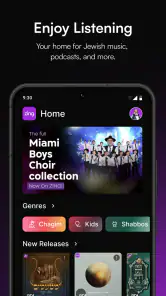
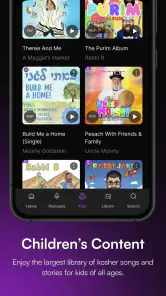
Zing - Jewish Music Streaming is a music app focused on Jewish and Israeli audio content. It is designed for listeners who want convenient access to Jewish songs, religious music, cultural recordings, and related playlists in one place. The catalog, available artists, and exact content categories may vary by region and can change as the service adds or removes material.
Does Zing require a subscription or payment?
The app may provide some content at no cost, but access to the complete catalog or certain listening features can depend on the subscription plan offered in your country. Before downloading, check the current pricing, trial conditions, renewal terms, and whether payment is handled through Google Play or the App Store. Canceling a trial usually requires action before the renewal date.
Can I listen to Jewish music offline with Zing?
Offline listening depends on the version of the app and the account plan available to you. If downloads are supported, tracks generally need to be saved while you are connected to the internet and may remain playable only inside Zing. Downloaded music can also be protected by licensing restrictions, so it should not be treated as permanent ownership of the audio files.
Pros
- Curated Jewish music makes discovering cultural and religious artists easier.
- Useful for listeners seeking Hebrew
- Yiddish
- klezmer
- or Israeli music in one place.
- Simple streaming experience with an interface focused on music playback.
- Supports independent and lesser-known Jewish musicians and performers.
- A convenient option for community events
- holidays
- and Jewish celebrations.
Cons
- The catalog may feel limited compared with mainstream music streaming services.
- Some tracks or artists may be difficult to find without precise search terms.
- Availability of certain songs can vary by region or licensing agreements.
- Listeners outside the target audience may find the selection too specialized.
- Streaming may use significant mobile data when listening without Wi-Fi.
- Category
- Music & Audio
- Version
- 3.6.5