Zendiac Live Astrology, Guruji
- 9.00
- 4.7
- Installs
- 50.00K
- Price
- Free

Screenshots


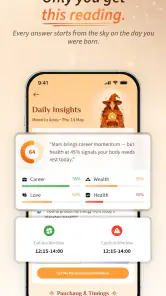

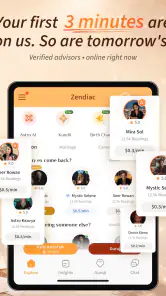
Analysis by Reviewed
I approached Zendiac Live Astrology as a lifestyle app for people who want astrology to feel more personal than reading a short daily horoscope. Its focus is live access to expert astrologers and readings shaped around the user’s own journey, so the experience is closer to seeking guidance for a particular question than casually scrolling through a general prediction.
That distinction matters. A broad horoscope can be entertaining, but it rarely speaks to the details that made me open an astrology app in the first place. Zendiac Live Astrology is aimed at the moment when I want to reflect on a decision, relationship, mood, or upcoming change and would rather explore it through a personalized conversation. I would describe it as a lightweight, approachable entry point into live astrology, not as a replacement for careful personal judgment.
How Zendiac Live Astrology fits into everyday use
The app comes from Lightweight Technology Co., Ltd and sits in the lifestyle category. It is free to install, carries an Everyone age rating, and runs on Android devices using Android 7.0 or later. The current release is version 3.1.0, and the app has attracted over 50 thousand installs, with an average rating of 4.7 from around 273 ratings. Those figures suggest that it has found a small but clearly interested audience rather than being an obscure experiment.
My first useful takeaway is that the app works best when I treat it as a guided reflection tool. The phrase “personalized readings” can sound broad, but the practical value depends on how clearly I frame what I want to understand. Opening the app with a vague thought such as “What will happen?” is less useful than arriving with a focused subject, like whether I should give a new project more time or how to approach a difficult conversation.
That preparation is one of the simplest ways to get more from the experience. Before starting a reading, I would write down the question in one sentence, separate facts from feelings, and decide whether I am looking for reassurance, another perspective, or a prompt for self-reflection. This prevents the session from becoming a stream of disconnected questions and makes the paid time, if I choose to use it, easier to evaluate.
Free access gives you a low-risk starting point
The app is free, which makes trying it straightforward for someone who is curious about astrology but does not want to commit immediately. That free entry is important because live guidance is a more personal format than a static horoscope. I can first decide whether the tone, presentation, and overall approach suit me before spending anything.
At the same time, “free” should not be confused with unlimited access to every possible part of the experience. Zendiac Live Astrology includes in-app purchases ranging from $0.49 to $119.99 per item. That is a very wide span, so I would check the exact purchase screen carefully before confirming anything. The listed prices establish the available purchase range, but they do not by themselves tell me which option is best value for a particular reading or how much guidance each purchase provides.
More From Our News Desk

Clash of Clans Is Won Between the Battles

Android Auto Makes the Case for Quieter Car Software

MobiOffice: Transforming Mobile Productivity with Seamless Integration

EA SPORTS FC™ Mobile Soccer: Redefining Mobile Sports Gaming

How Microsoft OneDrive Became a Mobile Productivity Giant

How Google Translate Breaks Language Barriers Effortlessly
This is where the app asks for a little discipline from the user. I would not buy the largest option simply because it appears to offer more access. I would begin with the smallest suitable purchase, note what I actually receive, and only then decide whether a larger spend makes sense. For an occasional user, free exploration plus a limited paid session may be enough. For someone who wants frequent consultations, the value calculation becomes much more personal.
What the paid model changes in the decision
The purchase range means the app can serve two very different audiences. One person may use it casually, opening it when a question comes up and spending very little. Another may view ongoing access to astrologers as a regular lifestyle expense. Neither approach is automatically right or wrong, but I would not judge the app’s value from the free download alone.
My rule would be to connect every purchase to a specific purpose. If I am dealing with a single decision, I should define what a useful answer would look like before paying. If I cannot explain what I hope to gain beyond general comfort, the purchase may not be worthwhile. This is especially important because astrology is interpretive: a reading can offer a perspective without producing a verifiable solution.
I also like the fact that the free starting point lowers the pressure to decide immediately. I can explore the app’s style first, then consider whether direct access to an astrologer adds something that a regular horoscope, journal, or conversation with a trusted friend cannot. That comparison is essential. The paid value is not simply “more astrology”; it is the possibility of a more focused and personal exchange.
A realistic way to use it during a busy week
Imagine I have received an unexpected work opportunity and feel torn between accepting it and protecting my current routine. I could open the app with that exact situation in mind, ask for a reading centered on the choice, and use the response as a structured prompt. Afterward, I would write down the practical issues that still need evidence: schedule, money, responsibilities, and the people affected.
In that scenario, the app’s strongest role is not making the decision for me. It gives me a different lens through which to examine my hesitation. I might notice that my concern is less about the opportunity itself and more about fear of change. That insight could be useful even if I ultimately decide based on ordinary planning. The app becomes more valuable when I use it alongside reflection rather than handing over responsibility for the outcome.
A similar workflow could help with personal questions. I might prepare a short description of a relationship concern, request a reading, and then compare the emotional reaction it brings up with the observable behavior of the people involved. That final step is vital. A personalized reading can help me articulate feelings, but it should not override consent, communication, safety, or clear evidence.
Where it differs from a normal horoscope app
The usual alternative is a general daily horoscope: quick, easy to scan, and often free, but written for a broad audience. That format is convenient when I want a small moment of entertainment or a prompt for the day. Zendiac Live Astrology is more appealing when I want to put a particular question at the center of the experience and explore it through an astrologer rather than a generic paragraph.
The trade-off is speed and predictability. A standard horoscope can be read in seconds and costs nothing in the moment. A live consultation requires more attention, and the paid options introduce a financial decision. If I only want a light daily ritual, a conventional horoscope may be the better choice. If I want a conversation that feels tailored to my circumstances, this app has a clearer reason to exist.
It also differs from a journaling app. Journaling keeps the interpretation entirely in my hands and creates a record of how my thinking changes. Zendiac Live Astrology adds an outside voice, which can be helpful when I am stuck in a loop. However, that outside voice may also influence me more strongly than I expect. I would keep notes separately rather than relying on memory, especially when the subject is emotionally important.
Strengths that become clearer with thoughtful use
The first less-obvious strength is the app’s usefulness as a question-shaping tool. Many people think they need a prediction when they actually need help naming the real issue. Preparing for a reading forces me to turn a broad worry into something discussable. That alone can make the session feel more productive than passively consuming horoscope content.
The second is the possibility of using different levels of engagement. Because the app is free to start and has paid items across a broad price range, I can approach it casually or more deliberately. The sensible path is to match spending to the importance and complexity of the question, not to use the most expensive option by default.
The third is that the app can fit into a reflective routine without requiring astrology to dominate my day. I could use a reading as the starting point for a short journal entry, a list of practical next steps, or a conversation with someone I trust. In that workflow, the app adds perspective while the actual decision remains grounded in my own values and real-world information.
There is also a useful emotional boundary to establish. I would avoid opening the app repeatedly for the same question in search of a more comforting answer. That habit can turn reflection into reassurance-seeking and make the experience less healthy. A better approach is to set one question, take notes, pause, and decide what action is sensible without endlessly consulting another reading.
Limitations and points of friction
The biggest limitation is inherent to the format: personalized astrology can feel meaningful, but it is not a substitute for professional advice in areas such as health, legal matters, finances, or personal safety. I would be particularly careful about treating a reading as a prediction that must come true. The app is better used for reflection than certainty.
The purchase structure is another point that deserves attention. A free app with items from $0.49 to $119.99 per item can be approachable for one user and expensive for another. The lower entry price does not automatically make the whole service inexpensive, while the higher listed option does not automatically make it worthwhile. I would review the exact item, understand what I am buying, and set a personal spending limit before using live guidance regularly.
There is also a difference between wanting an answer and wanting a conversation. If I am looking for a fast, objective checklist, this is not the right tool. A calendar, budgeting app, therapist, qualified adviser, or direct conversation may serve that need better. Zendiac Live Astrology is most comfortable in the space between entertainment and personal reflection, where interpretation matters more than measurable certainty.
Another practical limitation is that the experience depends heavily on how open I am to the app’s style of guidance. Someone who dislikes astrology or prefers strictly evidence-based tools will probably find more value in journaling, meditation, or a conventional planning app. The high average rating shows that many users enjoy the experience, but a rating cannot predict whether its approach will fit my own expectations.
Who is most likely to get value from it?
I would recommend trying it to someone who enjoys astrology, wants a more personal alternative to generic horoscopes, and is willing to treat readings as prompts rather than commands. It may also suit people who find it easier to reflect when another voice helps organize the question. The free installation makes that experiment relatively easy, provided I remain careful with optional purchases.
It is particularly suitable for occasional moments of uncertainty: a change in work, a relationship crossroads, a new personal goal, or a period when I want to examine my feelings from a different angle. The best users will arrive with a focused question, listen openly, and then return to practical evidence before acting.
I would suggest skipping it if I need guaranteed predictions, professional diagnosis, or a completely free experience with no purchase decisions. I would also skip it if I know I tend to repeat consultations until I receive the answer I want. In that case, a private journal or a conversation with a trusted person may offer reflection without encouraging dependence on repeated readings.
My verdict on free access and paid value
For me, Zendiac Live Astrology is worth trying because the free starting point makes it easy to judge the experience on its own terms. Its strongest idea is the move from broad horoscope content toward a question-led interaction with an astrologer. That makes it more personal than the usual daily horoscope, but also more demanding of my time, attention, and judgment.
I would keep spending modest until I understood exactly how the paid options fit my needs. The listed purchase range is broad enough that casual users should be especially cautious, while committed astrology users may appreciate having different levels of access to consider. The app delivers the most value when a reading helps me clarify what I already feel and identify a constructive next step, not when I expect it to remove uncertainty completely.
Overall, I see this as a focused lifestyle app for reflective astrology fans rather than an all-purpose advice service. Lightweight Technology Co., Ltd has made the entry point approachable, and the current release presents a clear reason to try it: personalized access to astrology instead of only general daily content. My recommendation is a qualified yes—start free, prepare one clear question, treat the reading as perspective, and only pay when the specific session has a purpose you can explain.
Zendiac Live Astrology, Guruji Frequently Asked Questions
Is Zendiac Live Astrology, Guruji available for my device?
Zendiac Live Astrology, Guruji is an app in the Lifestyle category, and its current version is 3.1.0. It requires Android 7.0 or later, so check your device’s operating system before downloading. If your phone meets that requirement, you can install it and explore its astrology and consultation features; the app is free to download, though some services may cost extra.
Who makes Zendiac Live Astrology, Guruji, and what is it rated for?
The app is developed by Lightweight Technology Co., Ltd and is rated for Everyone. It has a 4.7 average from around 270 ratings, offering a useful snapshot of how users have responded, though individual experiences can differ. Its focus is daily astrology conversations with expert astrologers and personalized readings, so consider whether that kind of spiritual guidance is what you want before installing.
What is Zendiac Live Astrology, Guruji?
Zendiac Live Astrology, Guruji is an astrology and spiritual guidance app designed to connect users with astrologers or advisors for personalized consultations. Depending on the available services, you may be able to discuss birth charts, relationships, career decisions, finances, compatibility, horoscope readings, and other personal concerns through live chat, calls, or related consultation features.
How does a consultation with a Guruji or astrologer work?
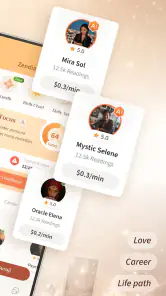
After opening the app, you can generally browse available astrologers, review their profiles, and check information such as expertise, language, experience, ratings, or consultation charges. You then select a preferred advisor and choose an available communication method. Before starting, carefully review the session price, duration, and any applicable credits or payment requirements.
Is Zendiac Live Astrology, Guruji free to use?
The app may be free to download, but personalized consultations, live calls, chat sessions, reports, or premium spiritual services can require payment. In-app purchases range from $0.49 to $119.99 per item, while pricing and payment methods may vary by astrologer, service, location, and promotional offer. Check the in-app wallet, subscription details, or checkout screen before beginning a session so you understand the total potential cost.
Pros
- Personalized astrology guidance in a convenient mobile format.
- Live access to astrologers can make sessions feel more interactive.
- Useful for users interested in spiritual and horoscope-based advice.
- Multiple consultation options may suit different questions and budgets.
- Simple concept for exploring astrology without visiting a local advisor.
Cons
- Advice quality may vary depending on the astrologer you choose.
- Live consultations can become expensive with repeated use.
- Predictions are subjective and should not replace professional advice.
- Availability and response times may differ between astrologers.
- Some features may require account registration or in-app purchases.
- Category
- Lifestyle
- Version
- 3.1.0