Pocket Insight Psychic Reading
- 533.00
- 4.6
- Installs
- 100.00K
- Price
- Free

Screenshots




Analysis by Reviewed
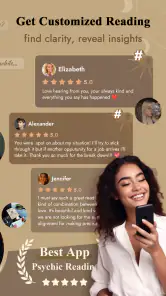
I approached Pocket Insight Psychic Reading as a reflective lifestyle app rather than a source of guaranteed answers. Its central appeal is easy to understand: when I have a personal question, I can turn to tarot-style guidance or a psychic reading instead of searching through scattered websites. That makes the app feel more personal than a general horoscope page, while still being casual enough to open during a quiet moment.
My overall view is positive, with an important condition: it works best when I treat the reading as a prompt for self-reflection, not as a substitute for practical judgment, professional advice, or a serious conversation. The combination of psychic content, tarot reading, and live chat gives the experience more variety than a single daily prediction. At the same time, the emotional nature of the subject means I need to use some discipline, especially before spending money or making a major decision.
What the reading experience is really like
The app sits in the Lifestyle category and is developed by Lightweight Technology Co., Ltd. It is free to install, which makes it straightforward to explore before deciding whether the format suits me. The store summary presents it as a place for psychic and tarot reading with free live chat, while the short description calls it Pocket Insight. Those phrases describe the direction of the product, but the useful question is how I should fit it into everyday life.
I see it as a private pause button. If I am worried about a relationship, uncertain about a choice, or simply curious about what a tarot-style reading might highlight, the app gives that thought a structure. Instead of keeping the concern vague, I can frame a question and consider the interpretation. That small change is valuable because it encourages me to name what is actually bothering me.
The strongest part of this kind of app is not whether a prediction comes true. It is the way a reading can expose the assumptions behind a question. For example, asking whether a relationship will last may reveal that I am really concerned about trust, communication, or my own hesitation. A thoughtful reading can help me examine those concerns. I would not use it to prove what another person thinks or to decide something that affects health, safety, money, or legal matters.
The free entry point also matters for newcomers. I do not have to understand tarot vocabulary before trying it, and I can approach the app with curiosity rather than commitment. That makes it more welcoming than visiting a specialist reader immediately. However, free access should not be confused with unlimited access to every possible interaction. The app includes in-app purchases ranging from $0.99 to $199.99 per item, so I would pay close attention before confirming anything.
Why the combination of tarot and chat is useful
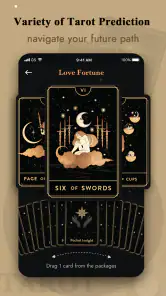
Tarot and psychic content can serve different moods. A card-based reading feels more symbolic and gives me something to interpret. A chat-based experience feels more conversational and may be appealing when I want to express a question in ordinary language. Having both directions available is more flexible than an app built around only a repeating daily message.
More From Our News Desk

Clash of Clans Is Won Between the Battles

Android Auto Makes the Case for Quieter Car Software

MobiOffice: Transforming Mobile Productivity with Seamless Integration

EA SPORTS FC™ Mobile Soccer: Redefining Mobile Sports Gaming

How Microsoft OneDrive Became a Mobile Productivity Giant

How Google Translate Breaks Language Barriers Effortlessly
In practice, I would begin with a narrow question rather than a broad request for my entire future. “What should I consider before accepting this opportunity?” is more useful to me than “What will happen to my life?” A focused question produces a reading I can connect to a real decision without handing over responsibility for the decision itself.
One of my favorite ways to use an app like this is as a journaling companion. I can read the interpretation, write down the parts that feel relevant, and then separate emotional reactions from observable facts. If the reading makes me feel hopeful, I can ask what practical action would support that hope. If it makes me anxious, I can ask whether the anxiety existed before I opened the app. This simple two-step check prevents the reading from controlling the rest of my day.
Another useful workflow is to avoid repeating the same question immediately. When I do not like an answer, it is tempting to keep requesting another reading until something sounds better. That does not create clarity; it creates noise. I get more value by taking the first reading as one perspective, stepping away, and returning later only if I have a genuinely different question.
Where it fits better than ordinary alternatives
The usual alternatives are general horoscope pages, automated tarot generators, social media videos, or booking a human reader outside an app. Pocket Insight has a middle position between those options. It can feel more interactive than a static horoscope, but it may not offer the depth or personal relationship of a reader I know and trust. Compared with short social media readings, an app is also less dependent on whatever appears in a public feed at that moment.
That middle position is both its strength and its limitation. I like the convenience of opening the app when a question occurs to me, without arranging a session in advance. For a quick reflective exercise, that is enough. If I want a detailed conversation about a complicated personal history, however, a carefully chosen human practitioner may be a better fit. The app is most convincing as an accessible tool for reflection, not as a replacement for every form of guidance.
It is also a better choice for someone who enjoys symbolic systems and understands that interpretation is subjective. A person who wants measurable, evidence-based answers will probably find the experience frustrating. That is not a defect unique to this app; it is a basic mismatch between the app’s purpose and the user’s expectations.
Strengths, friction, and sensible ways to use it
The most convincing strengths
The first strength is accessibility. Because the app is free to start, I can test the tone and presentation without arranging an appointment or buying a physical tarot deck. That makes it approachable for someone who is curious but unsure whether psychic or tarot content belongs in their routine.
The second is emotional immediacy. A reading can meet me at the exact moment I am thinking about a question. I do not need to prepare a formal session. I can use a few minutes to slow down, identify the issue, and consider a different angle. That is particularly useful during ordinary moments such as commuting, taking a break, or winding down before sleep, provided I am not using it to intensify worry.
The third is variety. The blend of tarot reading and live-chat-oriented guidance gives me more than a single repeating format. Some days I may prefer a symbolic reading; on another day, I may want a conversational approach. This makes the app easier to revisit than a product that gives me the same type of short prediction every time.
The app also has enough public traction to suggest that it is not an obscure experiment. It holds a 4.6 average from around 3.4 thousand ratings, with over 100 thousand installs and 533 written reviews. I do not treat those figures as proof that every reading will be meaningful, but they do make the app seem established enough to merit a fair trial.
Its age classification is Teen, which is a useful reminder that younger users may encounter emotionally charged topics and should still approach readings thoughtfully. A teen wondering about friendships or school pressure may use the app as a reflective prompt, but parents and users alike should remember that a mystical interpretation should not replace support from a trusted adult or qualified professional.
The limitations I would want to know first
The biggest limitation is the uncertain boundary between entertainment, reflection, and advice. The more personal a chat feels, the easier it is to treat a response as authoritative. I have to maintain that boundary myself. The app can help me formulate questions, but it cannot verify another person’s intentions or guarantee an outcome.
Cost is the second point requiring attention. The app is free, yet optional purchases can reach $199.99 per item. That is a wide range, and it changes how carefully I would use live or personalized elements. Before paying, I would check exactly what the purchase unlocks, whether I am buying a single interaction or something broader, and whether the price feels reasonable for a reflective experience. I would never make a purchase while upset or under pressure to obtain a more reassuring answer.
A third limitation is that symbolic readings can be interpreted almost any way I want. That flexibility can be comforting, but it can also make the experience feel vague. If I am looking for a clear action plan, the app may leave me with more questions than answers. I can improve the usefulness by writing down one concrete action after each session, but that action comes from my own reasoning rather than from a prediction.
I would also avoid using repeated readings as a form of reassurance-seeking. If I keep checking the same romantic or financial question, the app may become part of the anxiety cycle instead of helping me step out of it. In that situation, a journal, a direct conversation, or professional support would be a healthier alternative.
A realistic everyday scenario
Imagine I have received a vague message from a friend and am tempted to assume the worst. I could open the app and ask a focused question about how to approach the conversation. A reading might encourage patience, honesty, or attention to my own assumptions. I would then put the phone down, reread the actual message, and decide whether to ask my friend directly what they meant. The app has helped me pause, but the real solution still comes from communication.
That scenario shows where Pocket Insight is at its best. It gives an emotional moment a framework without requiring me to expose the issue publicly. It can help me identify what I feel before I react. It is much less suitable if I use a reading to accuse someone, end a relationship without discussion, or make a financial commitment.
Who should try it and who should skip it
I would recommend trying it to adults and teens who enjoy tarot symbolism, want a private reflective routine, or are curious about conversational psychic content. It is especially suitable for someone who likes journaling and can hold two ideas at once: a reading may feel personally meaningful, while still being interpretive rather than factual.
I would steer cautious users toward the free experience first and suggest setting a spending limit before exploring any paid option. That is not because paid content is automatically poor value; it is because emotional curiosity can make it easy to spend more than intended. The broad purchase range makes that boundary particularly important.
I would skip it if I need reliable answers, dislike mystical language, or know that predictions make me more anxious. I would also choose another route for medical symptoms, urgent safety concerns, legal choices, serious financial decisions, or relationship situations that require direct evidence. In those cases, a qualified professional or an honest conversation is more appropriate than any tarot or psychic app.
Device details and long-term value
The current version is 3.5.6 and it runs on Android 7.0 or later. That makes it accessible on many older Android devices, although the experience will still depend on the phone, connection, and how smoothly the interactive parts load. I would keep the app updated when possible, especially if I plan to use chat features regularly.
For long-term use, I would not open it automatically every morning just to receive a prediction. I get more value when I use it intentionally: one question, one reading, and a short note about what I can actually do. That approach keeps the app from becoming a source of passive scrolling and turns it into a small reflective ritual.
After spending time with it, my verdict is that Pocket Insight is a convenient and approachable lifestyle app with a clear emotional use case. Its strongest qualities are the low barrier to entry, the mix of tarot and chat-style guidance, and the ability to give a vague concern a more focused shape. Its weakest points are the subjective nature of the readings and the need to watch spending carefully when optional purchases enter the experience.
I would recommend Pocket Insight Psychic Reading to someone who wants a moment of reflection and already understands the difference between personal insight and prediction. I would not recommend relying on it as an authority. Used with that boundary, it can be an enjoyable way to pause, name a concern, and consider a fresh perspective. Used without that boundary, it may encourage repeated reassurance-seeking or expensive attempts to obtain a preferred answer.
In short, this is not the app I would choose for certainty, evidence, or urgent decisions. It is the app I would choose when I want a private symbolic prompt before returning to real-world facts and conversations. That is a narrower promise, but it is also the reason the experience can be worthwhile.
Pocket Insight Psychic Reading Frequently Asked Questions
Is Pocket Insight Psychic Reading free to download, and what should I know about purchases?
Pocket Insight Psychic Reading is free to download, but some services inside the app may cost extra. Its in-app purchases range from $0.99 to $199.99 per item, so the total cost depends on what you choose. Check the price and payment terms shown before confirming a purchase, and keep track of any credits or packages you buy.
What devices can run Pocket Insight Psychic Reading, and is it suitable for younger users?
The app requires Android 7.0 or later and carries a Teen age rating. Before downloading, check that your device meets the operating-system requirement and consider whether the app’s psychic-reading content is appropriate for the intended user. Pocket Insight Psychic Reading is a lifestyle app developed by Lightweight Technology Co., Ltd, and its current version is 3.5.6.
What is Pocket Insight Psychic Reading, and how does it work?
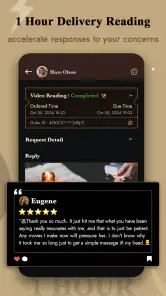
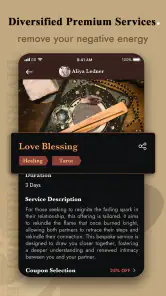
Pocket Insight Psychic Reading is a mobile app that connects users with psychic readers for guidance on topics such as relationships, career decisions, personal growth, and everyday concerns. After creating an account, you can typically browse available advisors, review their profiles and specialties, and choose a reading through chat or another supported format. The experience depends on the reader you select.
Are the psychic readings accurate or guaranteed to predict the future?
No psychic reading can guarantee an accurate prediction or provide scientifically verified certainty about future events. Pocket Insight Psychic Reading should be viewed as an entertainment and personal-reflection service rather than a replacement for professional advice. Readers may offer interpretations based on the information you share, but important medical, legal, financial, or safety decisions should always be discussed with a qualified professional.
How much does Pocket Insight Psychic Reading cost?
The cost can vary depending on the selected psychic, reading format, duration, and any credits or packages offered inside the app. Before starting a session, carefully check the displayed price, billing method, and whether the charge is one-time or recurring. In-app purchases may be processed through Google Play or the App Store, so review the store confirmation and subscription settings as well.
Pros
- Offers quick psychic readings directly from a mobile device.
- Multiple reading options suit different questions and interests.
- Simple interface makes browsing advisors and services easy.
- Useful for entertainment and personal reflection on everyday concerns.
- Convenient alternative to scheduling an in-person consultation.
Cons
- Readings can become expensive
- especially with frequent purchases.
- Accuracy depends heavily on the individual advisor’s interpretation.
- Some features may require credits or additional in-app payments.
- Emotional users may rely too heavily on non-scientific guidance.
- Advisor availability and response quality may vary over time.
- Category
- Lifestyle
- Version
- 3.5.6