WUSA9 News
- 526.00
- 4.5
- Installs
- 100.00K
- Price
- Free

Screenshots
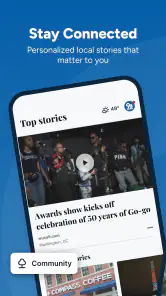
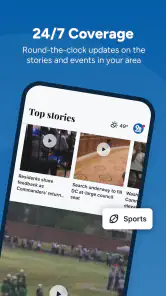
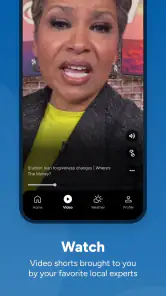
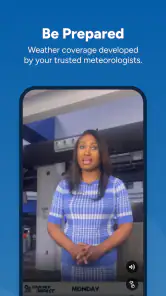
Analysis by Reviewed
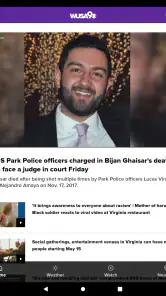
When I want a quick local update rather than a broad national news feed, I find WUSA9 News much easier to approach. It is a free News & Magazines app from TEGNA, focused on Washington, DC, Maryland, and Virginia. That regional focus is its main reason to exist: instead of making me sort through stories from everywhere, it gives local news and weather a more prominent place.
My first impression is that it is aimed at people who want practical awareness during an ordinary day. I can imagine checking it before leaving for work, during a lunch break, or when weather conditions begin changing. It is not the kind of app I would choose for deep national analysis or a huge international news archive. I would choose it when the question is closer to, “What is happening around my area right now?”
What to expect from the local news experience
The app belongs to the local broadcast-news style of mobile application. Its coverage area gives the experience a useful boundary, but that boundary is also important to understand before installing it. Someone living in the Washington, DC, Maryland, or Virginia region can reasonably expect the content to feel relevant to daily life. Someone looking for local reporting in another state will probably find the focus too narrow.
The store summary centers on the latest news and weather for those three locations, and that is the right way to think about the app. I would not treat it as a replacement for every source I read. Instead, I see it as a convenient local layer that can sit beside a national news app, a newspaper subscription, or the weather tools already on a phone.
Its audience is broad because the content rating is Everyone. That makes it approachable for households where several people want the same local source, although the subject matter can still include serious events because it is a news application. The app has been available since Apr 25, 2012, so it is not a new experiment in the category. TEGNA’s long presence in broadcast news also helps explain why the product feels centered on a specific regional newsroom rather than on user-generated posts.
The public response is encouraging without being a reason to install blindly: it carries a 4.5 average from around 1.8 thousand ratings, with over 500 reviews. It has also passed 100 thousand installs. I read those figures as signs that the app has found a real audience, not as proof that every person will enjoy its layout or coverage choices.
Installing it without overthinking the decision
There is no purchase barrier because the app is free. That makes it simple to test for a few days and decide whether its local coverage fits your routine. The current version is 50.21.1, and the minimum operating-system requirement is 7.1, so it is accessible to many older Android devices as well as newer ones.
More From Our News Desk

Clash of Clans Is Won Between the Battles

Android Auto Makes the Case for Quieter Car Software

MobiOffice: Transforming Mobile Productivity with Seamless Integration

EA SPORTS FC™ Mobile Soccer: Redefining Mobile Sports Gaming

How Microsoft OneDrive Became a Mobile Productivity Giant

How Google Translate Breaks Language Barriers Effortlessly
For a first-time user, my advice is to install it with one specific purpose in mind. Do you want morning headlines, weather awareness, breaking local updates, or a way to check what happened while you were away? Choosing that purpose makes the first session more useful than opening the app and scrolling without a plan.
I would also avoid judging it from a single quiet visit. Local news apps naturally change depending on the time of day and what is happening in the region. A calm afternoon may show less urgent material than a weekday morning or a day with active weather. The better test is whether the app repeatedly helps you answer local questions over several ordinary days.
Setting up a useful first session
My preferred setup is deliberately small. I would open the app, scan the first screen, and identify how it separates general local news from weather-related information. I would not immediately try to read everything. The goal is to learn where the information I actually need appears, so future visits take seconds rather than minutes.
If the app presents prompts for notifications or location-related access, I would make that decision based on my habits instead of accepting automatically. A person who wants timely local alerts may value a more active setup. Someone who checks news only at breakfast may prefer a quieter phone and can simply open the app manually. This is one of the first meaningful trade-offs: convenience can bring more interruptions.
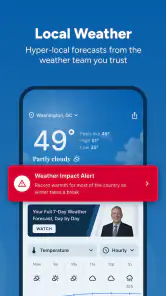
For weather, I would pay attention to whether the displayed information matches the place I care about most. The coverage spans a large and varied region, and conditions can differ considerably between Washington, DC, Maryland, and Virginia. If I were commuting across the area, I would use the app as a regional overview rather than assume one location describes the entire trip.
A useful habit is to decide which information deserves a second source. For example, I might use WUSA9 News to notice that weather is changing, then check a more specialized weather service for detailed timing before planning a long drive. That is not a criticism of this app; it is a sensible division of labor. A local news app is valuable for context and awareness, while a dedicated weather tool may be better for granular forecasting.
Getting to the first useful result
The first successful action should be simple: open the app, find one local story or weather update that affects your day, and use it to make a decision. That could mean leaving earlier, changing an outdoor plan, checking a developing local story, or simply learning what happened nearby while you were offline.
I like this approach because it tests usefulness rather than appearance. If I can answer a real question within a short visit, the app has earned a place on my phone. If I only encounter headlines that do not connect with my location or interests, I know the regional focus is not a good match for me.
For a commuter, a realistic routine might look like this: check the local news section before leaving home, glance at weather coverage before heading out, and return later only if a story affects the evening plan. The app does not need to become a constant companion. Its value can come from two or three focused checks that keep me informed without turning news consumption into a full-time activity.
Another useful workflow is to read the headline first, then decide whether the story deserves a full visit. Local news feeds can contain many items, but not all of them have the same personal importance. I find it more efficient to separate “need to know now” from “interesting to read later.” That small distinction helps keep a regional news app practical instead of overwhelming.
Where first-time users may get confused
The biggest possible source of confusion is the difference between local relevance and personal location. The app covers Washington, DC, Maryland, and Virginia, but that does not mean every item will apply equally to every town or neighborhood. A story can be important to the wider region while being irrelevant to my immediate route. I would treat the feed as a starting point and read the location details before assuming an update affects me directly.
Weather can create a similar misunderstanding. Regional coverage is helpful for seeing the broad picture, but a forecast for one part of the area should not automatically be treated as the forecast for another. If I am planning a trip that crosses state lines or moves from the city into a rural area, I would verify the conditions at both ends rather than rely on one general impression.
Another point is the difference between a news application and a social feed. I would not expect the same kind of personal customization or endless recommendation loop found in large national platforms. The benefit is a clearer local purpose; the trade-off is that the range of subjects may feel smaller. People who want a constant stream of national politics, technology, entertainment, and international reporting may prefer a broader app.
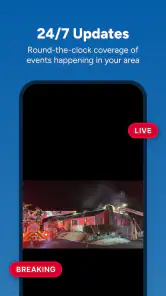
Breaking-news expectations also deserve a little realism. A local app can be excellent for awareness, but I would not use any single source as the only basis for an urgent safety decision. When an event is serious, I would compare the report with official local instructions or another reliable source. This is especially important when weather or public safety is involved.
Small habits that make the app more useful
- Use the regional focus as a filter: begin with the stories that affect your commute, neighborhood, school, or plans instead of trying to read every headline.
- Separate awareness from confirmation: let the app alert you to a developing issue, then look for more specific official guidance when a decision has real consequences.
- Compare locations within the coverage area: if your day involves Washington, DC, Maryland, and Virginia, avoid assuming that one weather update represents the whole journey.
- Keep notifications purposeful: choose an active alert style only if immediate updates genuinely help you; otherwise, manual checks may be less distracting.
These habits are more valuable than simply scrolling faster. They turn the app from a passive headline list into a small part of a daily information routine. In my experience, local news works best when I already know what decision or question I want it to support.
How it compares with familiar alternatives
Compared with a national news aggregator, WUSA9 News offers a narrower lens. That is its strength when I want regional context and its weakness when I want variety. An aggregator may expose me to more subjects and viewpoints, but it also makes me work harder to find genuinely local information. Here, the geographic focus does some of that filtering for me.
Compared with a newspaper app, the experience is likely to appeal more to readers who want quick updates than to people seeking long-form reporting. A newspaper may be the better choice for investigations, archives, opinion columns, or a publication-specific reading experience. I would use this app when speed and local awareness matter more than building a deep reading list.
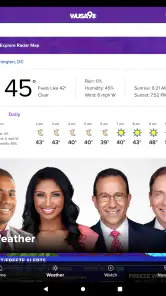
Compared with a dedicated weather app, WUSA9 News makes more sense when weather is part of a wider local-news visit. If I need highly detailed forecasting tools, maps, or specialized planning information, I would look elsewhere. If I want to understand weather alongside other regional developments, keeping both news and weather in one local destination is more convenient.
Compared with social media, the app should be less dependent on whatever happens to be trending among people I follow. That can make it calmer and more focused, but social platforms may surface eyewitness discussion or niche community concerns more quickly. I would rather use social posts as supplementary context than as my only source, and I would apply the same caution in reverse when reading any fast-moving report here.
Who should use it, and who should skip it
I would recommend it to residents of Washington, DC, Maryland, and Virginia who want a straightforward way to check local news and weather. It also suits people who dislike building a complicated collection of separate sources. A parent planning the school run, a commuter watching regional conditions, or a resident trying to keep up with nearby developments can all find a practical role for it.
It may also work well for someone who has recently moved into the area. A new resident does not need to know which local sources to follow immediately; a focused regional app can provide a starting point for learning what subjects and locations matter locally. I would still add more specialized sources over time, but this is a reasonable first layer.
I would skip it if my main interest is news outside the region. Someone living far from the coverage area may open the app and find that its most important stories do not connect with daily life. I would also choose another primary source if I need extensive investigative journalism, a highly customized international feed, or advanced weather planning tools.
People who are easily distracted by frequent updates should think carefully about notification choices. The free price removes financial risk, but attention is still a cost. I would rather keep the app quiet and check it at planned times than allow every update to interrupt work, study, or family time.
My final take after using it as a daily local check
What I appreciate most is the clear regional purpose. WUSA9 News does not need to compete with every news source on my phone to be useful. It only needs to help me understand what is happening around Washington, DC, Maryland, and Virginia quickly enough to make better everyday decisions. When I use it that way, the focused coverage feels more helpful than limiting.
The main compromise is equally clear: local focus means less breadth, and regional weather information may need a more precise companion when plans depend on exact conditions. I would not install it expecting a complete replacement for national news, a newspaper, social discussion, or a dedicated forecast service.
Still, for a free app with an Everyone rating and support for Android devices running version 7.1 or later, it is easy to try without making a major commitment. My recommendation is to install it, keep the first setup simple, and judge it by one practical test: can it help you make sense of your local day faster than your current collection of sources?
My honest recommendation: choose it if regional news and weather are your priority, especially if you want one familiar place to begin each morning. Skip it if your interests are primarily national or international, or if you need specialist tools rather than a local newsroom’s broader view. For the right audience, WUSA9 News is a useful first stop—not the only source I would use, but a sensible one to keep close.
WUSA9 News Frequently Asked Questions
Can I use WUSA9 News to follow coverage outside the Washington, D.C., Maryland, and Virginia area?
WUSA9 News is focused on the Washington, D.C., Maryland, and Virginia region, so its main value is local reporting and weather coverage for that area. You may still be able to open the app while traveling elsewhere, but its regional stories and forecasts are most relevant to people who live in, visit, or follow events in the DMV.
Who develops WUSA9 News, and what devices is it intended for?
WUSA9 News is developed by TEGNA and is a mobile news app for Android and iOS devices. It is intended for readers who want to follow local reporting and weather updates from Washington, D.C., Maryland, and Virginia on a phone or tablet. Before downloading, check that your device meets the app’s operating-system requirements.
What is the WUSA9 News app?
WUSA9 News is the mobile application for the Washington, D.C., Maryland, and Virginia CBS affiliate WUSA9. It brings together local news, breaking stories, weather forecasts, live updates, video reports, traffic information, and community coverage in one place. The app is designed for users who want quick access to regional reporting without relying only on television broadcasts or a desktop website.
What type of news and content can I find in WUSA9 News?
The app typically covers local and regional headlines, politics, crime, education, health, consumer issues, sports, entertainment, and community events across the DMV area. Users can also find weather forecasts, severe-weather alerts, traffic reports, photo galleries, and video clips from WUSA9 journalists. Content availability may change throughout the day as new reports are published or live coverage develops.
Does WUSA9 News provide weather alerts and forecasts?
Yes, weather is one of the app’s most useful features for people living in or traveling around the Washington, D.C., Maryland, and Virginia region. You can generally view current conditions, hourly and extended forecasts, radar information, and severe-weather updates. Depending on your settings and location permissions, the app may also send notifications about storms, flooding, extreme temperatures, or other important weather threats.
Pros
- Fast access to breaking news and local updates in the Washington
- D.C. area.
- Useful weather forecasts
- radar maps
- and severe weather alerts.
- Live newscasts help users follow major events as they happen.
- Video reports make stories easier to understand on mobile devices.
- Covers traffic
- sports
- politics
- and community stories in one app.
Cons
- Coverage is mainly focused on the D.C.
- Maryland
- and Virginia region.
- Frequent breaking-news alerts may feel excessive without notification controls.
- Some content may require a stable internet connection to load properly.
- Advertising can interrupt browsing and reduce the reading experience.
- App performance and video playback may vary across older devices.
- Category
- News & Magazines
- Version
- 50.21.1