Volume Booster-Sound Amplifier
- 11.00
- 4.4
- Installs
- 100.00K
- Price
- Free
Screenshots
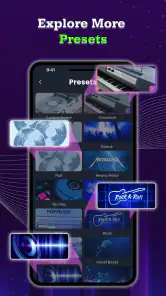
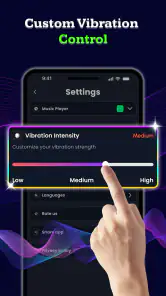
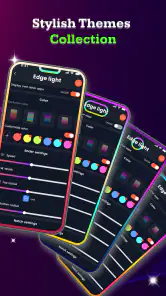
Analysis by Reviewed
I spent time using Volume Booster-Sound Amplifier as a straightforward music and audio utility, and my overall impression is that it aims to solve one very specific problem: making audio feel louder when a phone’s normal volume level is not enough. It is developed by PLHGlobal, available for free, and intended for everyone. That combination makes it easy to try without turning the decision into a purchase commitment, but it also means the real question is not whether it costs money. The useful question is whether its extra volume control improves the situations in which you actually listen.
The app’s appeal is immediately understandable. A phone can sound underpowered in a kitchen, beside a noisy road, during a casual gathering, or when the built-in speaker simply does not project well. Instead of opening a full music player with a large library, account system, or editing tools, I found the concept much narrower: open the utility, adjust the amplification, and return to whatever audio I want to hear. That simplicity is its strongest selling point, although it also creates limits that matter once you expect more than basic loudness assistance.
How Volume Booster-Sound Amplifier fits into everyday listening
A focused tool rather than a complete music player
One useful way to understand this app is to separate volume from audio content. It does not need to replace the music service, podcast player, video app, or local playback tool already on a phone. Its role is closer to an extra control layer for listening. I can keep using my preferred source while treating the amplifier as a companion utility, which is more convenient than moving an entire music collection into another application just to get a stronger output.
That narrow purpose makes the interface easier to approach than many audio apps that combine equalizers, presets, visual effects, streaming catalogs, and recording options. If my only complaint is that speech or music feels too quiet, I do not need a complicated workspace. The experience is more appealing when I think of it as a quick adjustment tool rather than as a new destination for all my audio.
The store summary presents it as a way to boost volume and enhance sound, and I think the distinction is important. Louder is not automatically clearer. A higher output level can make a quiet podcast easier to follow, but it can also make harsh treble, compressed music, or distorted phone-speaker playback more noticeable. I therefore treat the amplifier as a situational aid, not as a guarantee that every recording will suddenly sound richer.
What the free price means in practical terms
The app is free, so trying it does not require a paid upgrade or a purchase decision. That gives it a clear advantage over tools that ask for money before I can judge whether the phone’s speaker responds well to amplification. It also makes the app suitable for occasional use: someone who only needs extra loudness during a particular activity can install it, test it, and keep it available without treating it as a major investment.
Free access changes how I evaluate the product. I am not looking for studio-grade processing or a complete replacement for dedicated audio hardware. I am asking whether the app saves time and provides a useful extra step over the phone’s normal volume buttons. For many users, that is a reasonable standard. If the phone already sounds loud enough, however, the fact that the app costs nothing does not automatically make it worthwhile. An unused utility still adds another icon and another step to the listening routine.
More From Our News Desk

Clash of Clans Is Won Between the Battles

Android Auto Makes the Case for Quieter Car Software

MobiOffice: Transforming Mobile Productivity with Seamless Integration

EA SPORTS FC™ Mobile Soccer: Redefining Mobile Sports Gaming

How Microsoft OneDrive Became a Mobile Productivity Giant

How Google Translate Breaks Language Barriers Effortlessly
I would also avoid assuming that free means every listening situation will be improved equally. The result depends on the phone, the source audio, the speaker, and the environment. A device with weak physical speakers may reach its limits quickly, while headphones or an external speaker may offer a cleaner solution. The sensible approach is to test the app at a moderate setting first, compare the result with the phone’s regular maximum, and decide whether the improvement is audible without making the sound unpleasant.
A realistic evening and daytime workflow
Imagine I am cooking while following a spoken recipe from a video. The phone is on a counter, water is running, and the ordinary volume level is easy to miss. In that situation, a volume amplifier can be useful because I do not need a new player or a different subscription. I can start the content in the app I already use, adjust the sound with the booster, and lower it again when the kitchen becomes quiet.
The same workflow can help with a short video shared in a group, a voice recording that was captured softly, or background music during a small room gathering. The benefit is not that the app changes the recording itself. The benefit is that it gives me another attempt at making the existing output audible in a difficult environment. That is a modest use case, but it is much more realistic than expecting a basic amplifier to turn a phone into a professional speaker.
There is also a practical habit I recommend: return the setting to a conservative level before switching to headphones or handing the phone to someone else. A level that seems acceptable through a weak external speaker may be unexpectedly intense through earbuds. This is one of the most important trade-offs with any volume-boosting tool, and it is easy to overlook when moving quickly between audio sources.
Where it sits beside the usual alternatives
The most obvious alternative is the phone’s built-in volume control, which remains the simplest option. If the normal maximum is already sufficient, using the system buttons is faster and avoids an additional utility. The app becomes more interesting when those controls stop short of what I need, especially for quiet spoken content or casual listening in a noisy room.
Another alternative is an equalizer or a full audio-enhancement suite. Those tools can be better for someone who wants to shape bass, treble, balance, or genre-specific sound. They may offer more control, but they also demand more attention and can encourage unnecessary tweaking. I prefer the focused approach here when the problem is primarily loudness rather than tone. If I want detailed sound design, this app is not the right category of tool.
Physical solutions remain important. Moving the phone closer, placing it on a surface that projects sound, using headphones, or connecting a speaker can improve listening without pushing the phone’s internal output as hard. A hardware option may be better for long sessions or for anyone who values clean sound at a higher level. The app is most convincing as a convenient first step before buying or carrying extra equipment.
How much confidence I place in its current standing
The app has a 4.4 average from around 355 ratings, with 11 written reviews, and it has passed 100K+ installs. Those figures suggest that it has attracted a meaningful audience and that the general response is positive, but I would not treat them as proof that the same result will appear on every phone. Audio behavior is particularly dependent on hardware and playback conditions, so personal testing still matters more than a rating when deciding whether the amplifier suits my device.
It is currently at version 1.0.3, which tells me I should judge it as a focused utility rather than as a mature audio platform with a long list of established tools. I like that the app has a clear job, but I would keep expectations controlled. A version number alone does not tell me how broad the feature set is, and I would not assume that a simple volume booster includes advanced equalization, recording, file management, or streaming functions.
Small habits that make the app more useful
My first tip is to compare three things instead of simply dragging the control upward: the phone at its ordinary maximum, the boosted output at a restrained level, and the same content through the headphones or speaker I normally use. This quick comparison reveals whether the app is solving a genuine volume problem or merely adding harshness. It also prevents me from confusing louder playback with better playback.
My second tip is to test with several kinds of content. A spoken podcast, a quiet video, and a dense music track place different demands on amplification. Speech may benefit immediately because intelligibility improves when the room is noisy, while a heavily compressed song may become tiring sooner. Testing across sources gives me a better basis for deciding when to activate the tool and when to leave the regular volume control alone.
My third tip is to treat the amplifier as a temporary setting rather than a permanent default. I would use it for a specific environment, then reduce the level when the room gets quieter. This workflow is especially useful if the phone is shared or if I move between its speaker and headphones. The extra step takes less time than dealing with an unexpectedly loud playback session.
A fourth practical insight is that placement can matter as much as amplification. Before increasing the output substantially, I try putting the phone on a stable surface with the speaker unobstructed. If the sound becomes easier to hear through positioning alone, I can use less amplification and preserve a more comfortable result. The app is most effective when it complements sensible placement instead of being asked to overcome every physical limitation.
Important trade-offs before relying on it
The main weakness is inherent to the purpose: more volume can expose distortion. If the source recording is poor or the phone’s speaker is already struggling, amplification may make the problem louder rather than solve it. I would be particularly cautious with music that has aggressive bass or sharp high frequencies, because those elements can become tiring when pushed through small hardware.
There is also a listening-comfort trade-off. A level that helps me hear a voice over background noise may be excessive once the noise stops. I would not use the app as a reason to ignore a comfortable listening level, and I would avoid leaving strong amplification active while switching between different sources. The safest benefit comes from using only as much extra output as the situation requires.
Another limitation is that a volume utility cannot replace a better recording. If a lecture is muffled, a conversation is buried under background noise, or a song has been mixed poorly, louder playback may not restore missing detail. In those cases, a player with tone controls, a cleaner source, subtitles, or headphones may be more effective. This app has value when the signal is basically usable but too quiet, not when the underlying audio needs repair.
I also see a trade-off in simplicity. A focused app is easier to understand, but users who expect a full sound laboratory may find it too limited. There is no reason to choose it over a sophisticated audio tool if the real goal is to create custom profiles, edit tracks, manage a library, or fine-tune frequency ranges. Its usefulness comes from restraint, and that same restraint will disappoint anyone searching for a broad audio workstation.
Who is likely to get real value from it
I think this app is a good fit for people who regularly find their phone’s speaker just short of comfortable volume. It can suit someone who listens to spoken content while doing household tasks, checks videos in places with background noise, or wants a quick boost without replacing the playback app they already know. The free price makes experimentation easy, particularly when the need is occasional rather than constant.
It may also help users who dislike the complexity of equalizers. Instead of learning what every audio band does, they can focus on the immediate problem of audibility. That does not make the output universally better, but it makes the decision process simpler. For a friend who says, “I can hear this, but only barely,” I would suggest trying this kind of focused amplifier before installing a much larger audio suite.
I would skip it if my phone already reaches a comfortable level, if I mainly listen through quality headphones, or if I need precise tonal control. I would also look elsewhere if my priority is cleaner bass, detailed music production, recording, or repairing noisy audio. In those cases, hardware, a dedicated player, or an equalizer is likely to deliver more meaningful improvement than extra loudness alone.
The age rating of Everyone makes the app broadly approachable, but that does not remove the need for sensible listening habits. The responsible use case is controlled amplification, not permanently forcing every source to its highest possible output. I would introduce it to a less technical user with that advice attached: start low, compare carefully, and reduce the level when changing from a phone speaker to headphones.
My buy-or-skip verdict
Because Volume Booster-Sound Amplifier is free, my verdict is an easy “try it” rather than a purchase recommendation. There is no paid value to weigh here; the value comes from whether the utility solves a recurring volume problem on a particular device. I would install it when ordinary controls are not enough, test it with speech and music, and keep it only if the result is audibly more useful without becoming harsh.
I would not recommend it as a universal audio upgrade. It is not a substitute for good speakers, comfortable headphones, a clean recording, or a full equalizer. Its best role is smaller and more practical: a quick companion for moments when the phone’s normal output is slightly too quiet. That focus is exactly why it can be handy, but also why many people will have no reason to use it every day.
My final view is positive but measured. PLHGlobal has positioned this free Music & Audio app around a clear everyday need, and the current 1.0.3 release is easy to evaluate because the benefit is immediately personal: either the sound becomes more usable or it does not. I would recommend it to anyone who wants a simple extra volume option and understands the trade-off between loudness and clarity. If your priority is refined sound rather than stronger output, I would skip it and choose a more specialized alternative instead.
The best reason to keep it is convenience, not magic: it can make quiet content easier to hear when the phone’s normal controls fall short, while still letting me continue using the apps and audio sources I already prefer.
Volume Booster-Sound Amplifier Frequently Asked Questions
Is Volume Booster-Sound Amplifier free, and what devices is it available for?
Volume Booster-Sound Amplifier is a free app in the Music & Audio category, developed by PLHGlobal. It is described as a volume booster, and its store summary highlights boosting volume and enhancing sound for more powerful audio. The app is intended for Android, so check that your device is compatible in Google Play before downloading. It has an Everyone content rating.
What is Volume Booster-Sound Amplifier and how does it work?
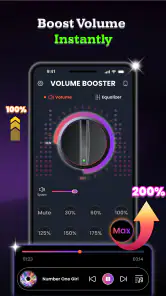
Volume Booster-Sound Amplifier is an Android audio utility designed to make music, videos, games, calls, and other media sound louder than the device’s standard volume level. After opening the app, you typically adjust a boost slider or preset and apply it to the current audio output. Its effectiveness can vary depending on the phone, Android version, headphones, speaker, and the media player being used.
Can Volume Booster-Sound Amplifier make every sound on my phone louder?
The app may improve the loudness of supported media, but it cannot guarantee the same result in every situation. Some phones limit maximum output through hardware or system settings, while certain apps manage their own audio independently. Notifications, phone calls, alarms, Bluetooth devices, and streaming applications may respond differently. Testing the booster with your preferred speaker or headphones is recommended before relying on it.
Is Volume Booster-Sound Amplifier safe for my phone and hearing?
Using a volume booster at a moderate level is generally preferable, but increasing audio beyond the manufacturer’s recommended limit can cause distortion, unpleasant sound, or extra strain on the phone speaker. More importantly, very loud audio may damage your hearing, especially when using earbuds or headphones. Start with a low boost, raise it gradually, and reduce the volume immediately if the sound becomes harsh.
Does Volume Booster-Sound Amplifier work with Bluetooth headphones and external speakers?
Compatibility with Bluetooth headphones, wireless earbuds, car audio systems, and external speakers depends on how the phone routes and processes sound. In many cases, the app can affect media output, but some Bluetooth devices apply their own volume controls or restrictions. Pair the accessory first, then adjust both its physical or touch controls and the booster carefully to avoid sudden, excessively loud playback.
Pros
- Quickly increases volume for music
- videos
- and calls.
- Simple controls make it easy to adjust sound levels.
- Useful for devices with weak built-in speakers.
- Works well with headphones and external audio devices.
- Compact interface uses minimal storage and system resources.
Cons
- Excessive amplification can cause distortion or crackling.
- May reduce audio quality at higher volume levels.
- Some features may require in-app purchases or ads.
- Results vary depending on the phone and connected speakers.
- Prolonged loud playback may damage hearing or headphones.
- Category
- Music & Audio
- Version
- 1.0.3