Ventura County Star
- 130.00
- 3.2
- Installs
- 10.00K
- Price
- Free

Screenshots






Analysis by Reviewed
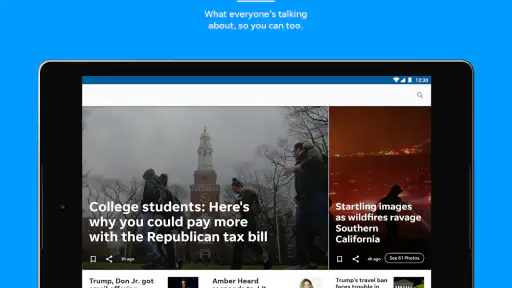
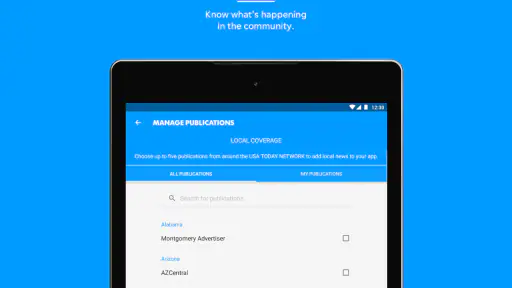
When I want a quick view of what is happening around Ventura County, I do not always want to open a broad national news app and dig through stories that have little to do with my day. That is the situation where I found Ventura County Star most useful. It is a news and magazine app from USA TODAY Co. that puts local reporting in the same place as wider news, photography, and video. My impression is that it works best as a focused local-news companion rather than as the only news source on a phone.
The app is free to install, which makes trying it straightforward, although some content can lead into in-app purchases ranging from $9.99 to $69.99 per item. Its audience rating is Everyone 10+, and the application supports devices running Android 8.0 or later. The current release is 8.10.3, so compatibility is worth checking before installing it on an older phone. I also noticed that its average rating sits at 3.2 from around 344 ratings, with around 130 written reviews. That is not a reason to dismiss it, but it does suggest that the experience may feel uneven depending on what a reader expects from a local newspaper app.
From a local question to a useful news routine
My usual starting point was simple: I had a local question and wanted an answer without spending ten minutes searching several websites. It might be a developing community story, a regional issue, or something that affects the way I plan the day. Ventura County Star makes sense in that moment because its identity is clearly tied to Ventura County rather than to a general stream of headlines from everywhere.
The first useful decision is to treat the app as a place to begin, not as an endless feed to scroll without a purpose. I would open it when I wanted local context, scan the available headlines, and choose the story that matched the question in my mind. That small change in habit matters. Instead of asking the app to entertain me with random updates, I used it as a starting point for a specific piece of information.
The local focus is its strongest reason to exist. Large national news applications are usually better at giving a fast overview of major events, but they can make regional developments feel like an afterthought. Here, the local angle is more central to the experience. For someone who lives in the area, works there, follows local institutions, or has family nearby, that focus can save time and make the news feel more relevant.
At the same time, I would not describe the app as limited to neighborhood headlines. The store summary highlights local and national news, photography, and video, and that combination gives the app a broader role than a simple bulletin board. I could move from a local report to a wider story without immediately switching to another application. That is convenient when I want a regional perspective on an issue that also has national importance.
How I move through a typical reading session
My practical workflow begins with a headline scan. I look for the story that answers the immediate need, then I read enough to understand the main event, the people involved, and why it matters locally. After that, I decide whether the story is complete enough for my purpose or whether I need to compare it with another source.
More From Our News Desk

Clash of Clans Is Won Between the Battles

Android Auto Makes the Case for Quieter Car Software

MobiOffice: Transforming Mobile Productivity with Seamless Integration

EA SPORTS FC™ Mobile Soccer: Redefining Mobile Sports Gaming

How Microsoft OneDrive Became a Mobile Productivity Giant

How Google Translate Breaks Language Barriers Effortlessly
This is where the app’s photography and video can change the rhythm. A written article may give me the basic sequence of events, while visual material can make a location, public gathering, or community situation easier to understand. I do not treat video as automatically better than text, though. When I am in a hurry, a clear article is more useful than waiting through a visual segment. When the setting or atmosphere matters, the richer media becomes more worthwhile.
A helpful habit is to separate fast checking from deeper reading. For fast checking, I use the headline and opening information to decide whether the item deserves attention. For deeper reading, I slow down and consider the local details rather than jumping immediately to a national interpretation. This keeps the app from becoming another source of headline fatigue.
The handoff from one story to the next is where I formed a mixed opinion. The app is useful when the next item naturally extends the first one, such as moving from a local event to its wider implications. But if I am searching for one precise detail, browsing can become less efficient than using a normal web search or a dedicated news aggregator. The application is designed around reading its coverage, not around acting like a universal research tool.
Using the app during an ordinary day
Imagine a weekday morning when I need to know whether a local development could affect my plans. I open the app before leaving home, scan the local coverage, and read the most relevant report. If the story includes video or photography, I use that material to understand the scene rather than relying only on a short headline. I then close the app with a clearer sense of what deserves attention and what can wait.
Later, I might return during a break to see whether the story has developed. This second visit is more useful when I remember the original question and look for new information instead of rereading everything. The app fits this pattern well because local news often has practical value: it can help me follow a community issue, understand a regional conversation, or decide whether a subject deserves more research.
There is also a useful handoff between the app and real-life conversation. I might read a report, explain the basic situation to a friend or colleague, and return to the article when a detail needs checking. That makes the application feel less like a passive feed and more like a reference point for local discussion. I still prefer to verify important claims through additional reporting, especially when the subject is controversial or changing quickly.
For families, the Everyone 10+ rating makes the app broadly approachable, but that does not mean every news item will be comfortable for every reader. News can involve difficult events, serious disputes, or upsetting images. I would let younger readers use it with normal parental judgment rather than assuming the age label removes the need for supervision.
Where the content fits compared with other news choices
Compared with a large national news app, Ventura County Star offers a more concentrated local identity. A national service is usually better when I want many viewpoints, international coverage, breaking headlines from across the country, or a highly personalized stream. This app is better when the question begins with Ventura County and I want that location to remain central.
Compared with reading a newspaper website in a mobile browser, the dedicated app can feel more direct because it gives me a repeatable place to return to. I do not have to begin every session by remembering a web address or sorting through unrelated browser tabs. The trade-off is that a browser is more flexible for comparing several publications, searching across the wider web, and opening links in separate tabs.
Compared with social media, the app gives me a calmer starting point for news. Social platforms can surface local information quickly, but they also mix reports with comments, speculation, reposts, and unrelated material. I prefer using the app to establish the basic facts before checking public reactions elsewhere. That two-step process reduces the chance that a dramatic post becomes my entire understanding of an event.
Compared with a general RSS reader or news aggregator, the application has less value for readers who want to build a highly customized collection of many publishers. Those tools are better for combining sources and comparing coverage. Ventura County Star is more suitable for someone who wants a recognizable local publication in the foreground and national material as supporting context.
What happens when a story moves beyond the app
The most important handoff is from reading to judgment. An article can tell me what has been reported, but I still need to decide what action, if any, follows. For a routine update, the result may simply be awareness. For a developing issue, I may need to check an official announcement, compare another report, or wait for additional context.
I found the app more useful when I gave each story a job. One story might help me understand a local event. Another might provide visual context. A third might show how a regional subject connects to national news. Thinking this way prevents me from expecting every article to deliver a complete investigation, immediate practical instructions, and a broad national explanation all at once.
The photography and video are especially helpful at this stage because they can bridge the gap between an abstract report and a real place. They can also create a risk: visual material may make a story feel more complete than it actually is. My advice is to use images and clips to understand context, but rely on the written reporting and additional sources before making an important decision.
Another practical point is the cost boundary. The app is free to download, but the presence of purchases means I would pay attention when a story or section asks for access. The listed purchase range extends from $9.99 to $69.99 per item, so I would not assume that every part of the experience remains free simply because installation costs nothing. If I only need occasional local headlines, I would first decide whether the available free material meets that need. If I expect regular, deeper reading, I would consider the payment carefully rather than subscribing automatically.
That distinction answers a common question: is this a good choice for casual readers? Yes, if casual means checking local coverage from time to time and accepting that some access may involve payment. It is less compelling for someone who wants every article, broad source comparison, and a completely free reading routine.
Where the workflow becomes less comfortable
The clearest friction is the gap between the app’s focused purpose and the expectations people bring from larger news platforms. A reader may install it expecting a perfectly personalized feed, instant coverage of every subject, and a smooth path from headline to complete background. That is not the role I would assign to it. Its value depends on caring about Ventura County coverage in the first place.
The average rating of 3.2 is another reason to approach it with realistic expectations. Ratings do not explain every individual experience, but they are a useful signal that the application may not satisfy everyone. I would pay attention to practical behavior on my own device: how quickly the content opens, whether the reading flow suits me, and whether the available coverage matches the topics I actually follow.
Older hardware may also be a decision point. Since the current version requires Android 8.0 or later, anyone using an older operating system will need to upgrade the device or choose another way to read the publication. This is not a problem for modern phones, but it matters for people keeping an older handset for occasional news use.
The app can also be the wrong choice when I need a neutral, multi-source research workflow. If I am comparing how several outlets frame the same event, I would use a browser or aggregator alongside it. If I want international news first thing in the morning, I would choose a broader service. If I dislike content that may lead to paid access, I would look for a source with a clearer free-reading model.
There is a subtler limitation in the local focus itself. Local relevance is powerful when the subject matters to me, but it can feel narrow when I am looking for variety. The national material helps widen the scope, yet it does not turn the app into a complete replacement for a general news service. I see that as a trade-off rather than a flaw: concentration improves usefulness for local readers while reducing its appeal as an all-purpose news hub.
Who will get the most from it
I would recommend Ventura County Star to residents who want a regular local-news starting point, people with family or work connections in the area, and readers who prefer a publication-centered experience over a social-media feed. It is also a sensible option for someone who values local photography and video alongside written reports, especially when visual context helps explain a community story.
I would be more cautious about recommending it to readers who rarely follow Ventura County, want a large international news mix, or need a fully customizable collection of sources. Those readers will probably get more from a national news app, a browser-based routine, or an aggregator. The same is true for anyone who wants to avoid any possibility of paid content after installation.
For the best experience, I would use it as one layer in a small news routine. Start with the local coverage, read the relevant report, use visual material for context, and then hand important questions to a second source. That workflow preserves the app’s main strength without asking it to do a job it was not designed to handle.
My final take after following the full flow
Ventura County Star succeeds when the starting condition is local curiosity and the desired result is a clearer understanding of what is happening nearby. Its combination of regional and national reporting, photography, and video gives the reading experience more depth than a simple headline list. I also like that it can become a dependable first stop before a conversation, a commute, or a deeper search.
My reservations are equally practical. The modest average rating suggests that the experience may not be universally smooth, the app requires Android 8.0 or later, and in-app purchases can change the value calculation for readers who expect unrestricted access. It also cannot replace a broad, multi-source news system for every situation.
My recommendation is therefore specific: install it if Ventura County coverage is genuinely part of your daily information needs, and judge it as a local publication app rather than as a complete news universe. Its best outcome is focused local awareness, not unlimited national coverage. Used with that expectation, it is a worthwhile free starting point; used as the only source for every kind of news, it is likely to feel too narrow.
Ventura County Star Frequently Asked Questions
Can I read Ventura County Star news on both Android and iOS?
Ventura County Star is a mobile news app for readers who prefer following local coverage on a phone or tablet. The app is listed for Android and iOS, making it possible to check for a compatible version in the relevant app store. Before downloading, review the operating-system requirement and make sure your device meets it; the app requires version 8.0 or later.
Who publishes the Ventura County Star app, and what is it intended for?
The Ventura County Star app is published by USA TODAY Co. and belongs to the news and magazines category. Its focus is bringing local and national news together with photography and video, offering a mobile way to follow coverage rather than visiting a newspaper website. It is designed for readers interested in Ventura County news as well as broader stories.
What is the Ventura County Star app?
The Ventura County Star app is a digital news platform for keeping up with local stories from Ventura County, California. After exploring it, I found coverage across areas such as breaking news, local government, education, crime, business, sports, entertainment, and community events. It is designed for readers who want a convenient mobile alternative to visiting the newspaper’s website.
Is the Ventura County Star app free to download and use?
The app can generally be downloaded at no cost, allowing users to install it and browse available content. However, access to all articles and premium features may depend on the current subscription policy. Some stories can be limited for non-subscribers, while subscribers may receive broader access, fewer restrictions, and additional digital benefits. Check the in-app terms before subscribing. In-app purchases are available, with prices ranging from $9.99 to $69.99 per item.
Does Ventura County Star require a subscription?
A subscription may be required to read beyond a certain number of articles or to access subscriber-only content. The exact limits, pricing, and available plans can change, so they should be reviewed directly in the app or on the official Ventura County Star website. If you mainly read occasional headlines, the free access may be sufficient, but frequent readers may benefit from subscribing.
Pros
- Clear local coverage focused on Ventura County communities and events.
- Breaking news alerts help readers stay updated on important developments.
- Includes opinion
- sports
- lifestyle
- and entertainment sections.
- Articles are generally easy to browse on a mobile screen.
- Digital access supports reading news while traveling or away from home.
Cons
- Some premium stories may require a subscription to read in full.
- Advertising can make parts of the app feel visually busy.
- Coverage may feel limited for readers outside Ventura County.
- Push notifications may become frequent unless carefully customized.
- App performance can vary with slow connections or older devices.
- Category
- News & Magazines
- Version
- 8.10.3