The Providence Journal, R.I.
- 85.00
- 3.0
- Installs
- 10.00K
- Price
- Free

Screenshots




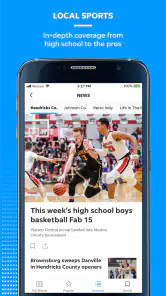



Analysis by Reviewed
When a local story affects my day, I want more than a headline copied from a national feed. I want enough context to understand what is happening nearby, while still having a quick way to scan wider news. That is the role The Providence Journal, R.I. tries to fill. It is a free news and magazines app from USA TODAY Co., centered on Providence-area coverage alongside national reporting, photography, and video.
I tested it with a household-style routine in mind rather than treating it as a private reading tool. One person might open it over breakfast, another might check a local update during a commute, and someone else might use it on a shared tablet in the evening. In that setting, the app is useful because it keeps local reporting close at hand, but it also raises practical questions about account boundaries, paid access, and whether every member of a household will find the same level of value.
My overall impression is mixed but fairly clear: this is worth considering if Providence-area news is genuinely important to you. It is less convincing as a general-purpose replacement for a broad news reader, especially if you mainly want a customizable stream from many publishers. The local focus is the reason to install it, not the surrounding features alone.
How it fits into a shared household routine
A useful local-news stop during the day
The most natural use is a short check-in. I can imagine opening the app before leaving home to see whether a local development might affect plans, then returning later for a fuller article or video. That rhythm suits a regional newspaper app better than endlessly scrolling through unrelated national stories. The local angle gives the visit a purpose.
On a shared device, the app can also become a common reference point. A parent may read a local report at breakfast, a partner may look at the same publication later, and another household member may use the photography or video coverage to get a quicker sense of an event. The advantage is not that everyone receives an identical experience; it is that the app can support conversations about what is happening in the community.
That said, I would not assume that one person’s reading habits automatically suit everyone else. A person who wants local government, neighborhood, or regional reporting may appreciate the focus. Someone who only wants international headlines, technology news, or a highly personalized list of topics may find the app narrower than expected. The Providence Journal is best approached as a local publication with broader material, not as a universal news dashboard.
Photography and video change the pace
The visual side is one of the more appealing parts of the experience. News photography can communicate the atmosphere of a local event faster than several paragraphs, while video gives another way to follow a developing story. I like having those formats available because not every household reader wants to sit down for a long article.
More From Our News Desk

Clash of Clans Is Won Between the Battles

Android Auto Makes the Case for Quieter Car Software

MobiOffice: Transforming Mobile Productivity with Seamless Integration

EA SPORTS FC™ Mobile Soccer: Redefining Mobile Sports Gaming

How Microsoft OneDrive Became a Mobile Productivity Giant

How Google Translate Breaks Language Barriers Effortlessly
There is a trade-off, though. Visual content is more demanding of attention than a simple text list, and it can make a quick news check turn into a longer session. On a shared tablet, that may be fine in the evening but less convenient during a rushed morning. I would use the app’s visual coverage selectively rather than treating every item as something that needs to be watched immediately.
A practical habit is to separate “need to know” from “want to explore.” I would first scan the local headlines, open the stories that affect my plans, and save the richer photo or video coverage for a quieter moment. That makes the app feel more purposeful and prevents the multimedia elements from taking over the routine.
What happens when several people use it
Shared-device use works best when each person understands whose reading session is active. If the app offers a signed-in experience, I would avoid casually switching between household members without checking the account first. News preferences and access arrangements can become confusing when several people assume the device is showing their own setup.
I would also keep expectations modest about coordination. The app is a publication reader, not a household planning tool. It can help people notice the same local story, but it should not be treated as a built-in system for assigning articles, sharing a family reading list, or managing separate profiles unless those options are clearly visible in the current app experience. For a family that simply wants one local news source on a tablet, that limitation is manageable. For a household expecting detailed personalization for every reader, it may be frustrating.
Setting boundaries before anyone subscribes
The app is free to install, which makes trying it on a shared device straightforward. The important boundary is financial rather than technical: in-app purchases range from $19.99 to $69.99 per item. I would make sure every adult using the device understands that free installation does not necessarily mean every part of the newspaper experience is free.
This is especially important when a child or guest uses a family tablet. The content rating is Everyone, so the app is positioned for a broad audience, but an Everyone rating does not answer questions about payment approval or who may access a paid account. I would handle those decisions outside the reading session: agree on who controls purchases, whether a subscription is worthwhile, and which account should be used for paid access.
That separation is one of my strongest recommendations. Keep the reading decision and the payment decision distinct. Let household members browse and decide whether the local coverage is valuable before committing money, then have one clearly designated adult handle any purchase. It avoids the common problem of someone tapping through an offer simply because they wanted to finish an article.
I would also review the purchase screen carefully before confirming anything. The available price range is wide enough that a household should not treat every offer as interchangeable. Compare the cost with how often the app will actually be used, who benefits from it, and whether the same household already pays for another local or national news source.
Account boundaries matter more than people expect
For private devices, account decisions are usually invisible. On a shared tablet, they become part of the experience. If one person signs in and another later reads without noticing, the second reader may assume the displayed access or preferences belong to them. That is not a problem unique to this app, but it is particularly relevant when a newspaper application combines free reading with paid options.
My preferred arrangement would be simple: one adult decides whether the household needs paid access, everyone knows which device or account is associated with that decision, and casual readers use the app without changing account details. If the household does not need shared access, keeping the app on each person’s own phone may be cleaner than maintaining a communal tablet setup.
I would not install it for a child merely because the age label is broad. The content itself may be suitable for general audiences, but news can still include upsetting events, crime reporting, disasters, or difficult images. A parent should decide whether the child is ready for that material and whether the child should browse independently. The rating is a useful starting point, not a substitute for judgment.
Trusting the app without losing editorial judgment
A local news app earns trust through relevance and consistency, not just through the presence of a familiar publication name. I would pay attention to whether the stories answer the questions that matter locally: what happened, where it happened, why it matters, and what residents should do next. A short alert can be useful, but I still want the article behind it when the subject affects school, travel, work, or community decisions.
The Providence Journal benefits from being tied to a recognizable regional newspaper, yet I would still compare important stories with official notices and other reputable reporting. That is not a criticism of this app alone. News readers are most useful when they help me find information, while final decisions about safety, transportation, health, or public services should rely on the responsible authority as well.
For a household, this creates a healthy division of responsibility. One person can discover a story in the app, another can read the full report, and everyone can verify practical details before acting. The app supports coordination, but it should not become the only source used for urgent decisions.
Where it beats the usual alternatives
Compared with a large news aggregator, this app has a clearer local identity. Aggregators are excellent when I want many viewpoints in one place, but their feeds can bury regional coverage beneath national stories. The Providence Journal gives local reporting a more central role, which is valuable if the community around Providence is part of daily life.
Compared with reading the publication only in a mobile browser, a dedicated app can feel more direct. I do not have to begin with a general browser session, and the combination of articles, photography, and video is organized around the publication rather than mixed with unrelated tabs. That convenience matters on a shared tablet used for quick household check-ins.
Compared with a national newspaper app, the choice depends on what “useful” means to you. A national service may offer deeper international coverage or a larger range of sections. This app makes more sense when local relevance is the deciding factor. I would choose it alongside a broader source if the household wants both community reporting and a wider view of the world, rather than expecting one application to do everything equally well.
Compared with social media, the app is a calmer starting point for local information. Social platforms can surface eyewitness material quickly, but they also mix commentary, repetition, and uncertain claims. A newspaper app gives me a more structured place to begin. I still would not treat any single feed as complete, but the editorial setting is more useful for understanding a story than a stream of disconnected posts.
Small workflow changes that improve the experience
My first tip is to use the app in two passes. The first pass should be a quick scan for local developments that affect the household. The second should be reserved for stories worth understanding in detail. This prevents the app from becoming background noise and makes the local emphasis more valuable.
My second tip is to agree on a shared-device rule before installing it. Decide whether the tablet is for casual reading only or whether it will be connected to a household purchase. That one conversation prevents confusion later, particularly when one person sees a paid option and another assumes the app is entirely free.
My third tip is to use different formats for different moments. Text is better when I need precise details, photography is useful when the setting or people involved matter, and video is better when movement or a spoken explanation adds something. Choosing the format intentionally makes the app feel less like a stream to consume and more like a tool for getting the right amount of information.
My fourth tip is to make the local focus do the work. If a story is not relevant to Providence or to the wider interests of the household, I would not force myself to read it simply because it appears in the app. The strongest reason to keep this app installed is the local connection; using it as a generic entertainment feed weakens that advantage.
Who should install it, and who should skip it
I would recommend it to Providence-area residents, people with family or work connections in the region, and households that want one recognizable local source on a shared device. It is also a sensible option for readers who prefer a publication-based experience over a constantly changing aggregator and who enjoy having photography and video alongside written reporting.
I would be more cautious if you live far from the area and only want broad national coverage. The local identity may not justify another app on your phone. I would also skip it if you need advanced feed customization across many subjects, a highly collaborative family reading system, or a single subscription that covers several publications. Those needs point toward a broader news platform or a different newspaper arrangement.
People who are very price-sensitive should try the free experience carefully and decide how often they would use it before considering an in-app purchase. The app’s free entry is helpful, but the paid range means the household should evaluate the value for itself rather than assuming that installation settles the cost question.
Performance context and long-term expectations
The app launched on August 4, 2015, and its current version is 8.10.3, with Android support beginning at version 8.0. That makes compatibility worth checking on older household devices before planning to use a shared tablet as the main news screen. A newer phone may be the smoother choice if the tablet is no longer receiving current system support.
Its reach is modest, with over 10 thousand installs, and the average rating is 3.0 from 214 ratings, including 85 written reviews. I read those figures as a signal to keep expectations realistic rather than as a final verdict. The app may be a good fit because of its local reporting even if it does not satisfy every reader as a polished all-purpose news product.
I would judge it over several ordinary sessions instead of one quick launch. Check whether the local stories are useful to your household, whether the visual content adds value, and whether the access model feels comfortable on the device you plan to share. Those answers matter more than a single rating because the app’s main benefit is highly dependent on location and reading habits.
My household verdict
The Providence Journal, R.I. works best when a household has a real connection to Providence and wants local reporting to sit alongside national news. I like its focused identity, and I can see the value of combining written coverage with strong visual material during a short morning scan or a slower evening read.
I would install it for a shared device only after setting clear account and purchase boundaries. The Everyone rating makes it broadly approachable, but adults still need to guide younger readers through difficult news and control financial decisions. The app can help a household notice the same stories, yet it does not replace a family coordination system or a broad news service.
My final recommendation is therefore specific: try the free app if local Providence coverage is part of your everyday life, and keep it if the reporting becomes a dependable part of your routine. If your priority is worldwide breadth, deep personalization, or a completely frictionless shared account, choose a broader alternative instead. For the right household, The Providence Journal, R.I. is a practical local-news companion; for everyone else, its regional focus may not be enough to earn a permanent place on the device.
The Providence Journal, R.I. Frequently Asked Questions
Who publishes The Providence Journal app, and what kind of app is it?
The Providence Journal is a news and magazines app published by USA TODAY Co. It is designed for readers who want to follow the newspaper on a mobile device, with a mix of local and national news, photography, and video. Its audience rating is Everyone, so it is intended for general audiences rather than a narrowly age-restricted group.
What is The Providence Journal app?
The Providence Journal app is the mobile edition of the Rhode Island newspaper, providing access to local reporting, breaking news, politics, business, sports, entertainment, weather, and community coverage. After installing it, readers can browse a digital news feed, open individual stories, and keep up with developments in Providence and surrounding areas from an Android or iOS device.
Is The Providence Journal app free to download and use?
The app is free to download, but access to all articles and premium features may require a subscription or an active digital account. Some stories can be available without payment, while frequent reading may trigger a subscription prompt. In-app purchases range from $19.99 to $69.99 per item, so review the available terms before committing to a plan.
What content can I read in The Providence Journal?
The app focuses on news and information relevant to Rhode Island and the Providence area. Depending on the current edition and publishing schedule, you may find local investigations, state and city news, sports coverage, opinion articles, obituaries, lifestyle stories, weather updates, and national or international news selected for the newspaper’s audience. Its presentation also includes photography and video alongside written reporting.
Does the app send breaking-news notifications?
The Providence Journal app may support push notifications for breaking news, important local developments, sports results, weather alerts, and other editorial updates. Notifications can be useful when you want immediate information, but they may become frequent during major events. You can normally manage notification categories through the app settings or your device’s system settings.
Pros
- Local coverage focused on Rhode Island communities and events.
- Includes breaking news
- politics
- sports
- and regional features.
- Digital access makes articles available on phones and tablets.
- Useful source for local obituaries
- announcements
- and public notices.
- Offers reporting from journalists familiar with Rhode Island issues.
Cons
- Many full articles may require a subscription or account.
- Some content can feel heavily focused on Providence and nearby areas.
- Frequent notifications may be distracting unless carefully customized.
- App performance and loading speed can vary with connection quality.
- Advertising and subscription prompts may reduce reading convenience.
- Category
- News & Magazines
- Version
- 8.10.3