SurveyStreak - Earn Money
- 10.05K
- 4.5
- Installs
- 100.00K
- Price
- Free

Screenshots
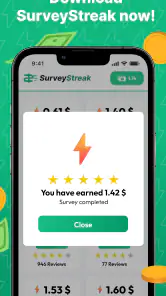
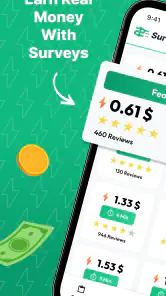
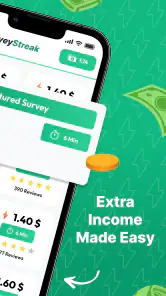
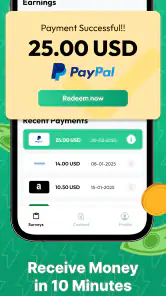
Analysis by Reviewed
I approached SurveyStreak - Earn Money as a small habit-building tool rather than a serious income replacement. The idea is simple: spend some time answering surveys and receive payment for sharing your opinions. That makes it immediately understandable, especially for anyone who wants something productive to do during short breaks. After using it with that expectation, I found the app most appealing when treated as occasional pocket-money entertainment, not as a dependable job.
It belongs to the lifestyle side of the app world and comes from Make Opinion GmbH. The application is free to use, carries a Mature 17+ rating, and runs on Android 7.0 or later. Its current version is 1.0.3, and it has already passed 100K installs. Those details make it accessible to a broad Android audience, although the age rating is an important reminder that this is not intended for younger users.
What the first week feels like
The first attraction is the low barrier to entry. There is no complicated skill to learn, no long setup process to understand, and no need to build a public profile or sell anything. I can open the app, look for an available survey, answer questions, and then move on with my day. That straightforward loop is the reason the concept works better than many “make money” apps that bury the main activity under unrelated tasks.
During the first few days, the novelty comes from checking whether a new questionnaire is waiting. I found myself naturally connecting the app with idle moments: while waiting for an appointment, sitting on public transport, or taking a short break from work. That is the right scale for SurveyStreak. It fits around existing routines instead of demanding a dedicated session, and the free entry makes trying it feel relatively easy.
The important mental adjustment is to view each survey as a small exchange of time for a reward. The app does not turn an ordinary phone into a reliable salary source. If someone installs it expecting meaningful monthly earnings, disappointment is likely. If the goal is to make otherwise empty minutes feel slightly more useful, the experience is more reasonable.
I also noticed that the quality of the experience depends heavily on whether the available questionnaires match my interests and profile. A survey app can feel active one day and quiet the next, so the first-week excitement should not be mistaken for a guaranteed routine. The strongest early habit is simply opening the app at sensible moments rather than repeatedly refreshing it throughout the day.
How I would use it during an ordinary day
A realistic scenario is a commuter with ten minutes before a train arrives. Instead of opening a social feed and losing track of time, that person can check SurveyStreak and complete a questionnaire if one is available. The activity has a clear endpoint, which is useful for people who prefer a small task over endless scrolling. The same approach works during a lunch break, although I would avoid starting anything that looks longer than the time available.
More From Our News Desk

Clash of Clans Is Won Between the Battles

Android Auto Makes the Case for Quieter Car Software

MobiOffice: Transforming Mobile Productivity with Seamless Integration

EA SPORTS FC™ Mobile Soccer: Redefining Mobile Sports Gaming

How Microsoft OneDrive Became a Mobile Productivity Giant

How Google Translate Breaks Language Barriers Effortlessly
My practical tip is to reserve surveys for gaps that would otherwise be wasted. I would not interrupt focused work, skip exercise, or stay awake late just to chase another questionnaire. The reward needs to remain secondary to the day itself. Once the app begins dictating your schedule, its value drops quickly.
Another useful habit is to read each question carefully instead of rushing. Survey answers are opinions, but careless or inconsistent responses can make the process frustrating and may reduce the usefulness of the feedback being collected. I treated each questionnaire as a short form that deserved honest answers, not as a speed contest. That made the sessions feel less repetitive and helped me decide sooner whether a survey was worth continuing.
Where it differs from familiar alternatives
Compared with regular cashback services, this app is centered on answering surveys rather than shopping through tracked offers. That distinction matters. Cashback is usually most useful when you were already planning to buy something, while SurveyStreak asks you to spend time directly. Compared with microtask platforms, it is also less about completing varied digital jobs and more about sharing views through questionnaires.
That focus is both its strength and its limitation. People who dislike shopping portals, referrals, or complicated task menus may appreciate the cleaner purpose. On the other hand, anyone who wants several ways to earn will probably prefer a broader rewards platform. SurveyStreak makes more sense for someone comfortable with opinion-based tasks than for a user searching for the highest possible return per minute.
The app’s public reception suggests that the basic idea has connected with a substantial audience: it holds a 4.5 average from around 37K ratings, alongside roughly 10K written reviews. I see that as encouraging for first-time users, but not as a promise that every survey will suit every person. Ratings describe the overall experience across many users; they cannot remove the personal factor of survey availability.
What remains useful after the novelty fades
The second phase is where a survey app has to prove itself. Opening it once is easy. Remembering it occasionally without feeling that it is demanding attention is harder. For me, the lasting value comes from its ability to turn brief, predictable gaps into a modest earning routine. That value is real, but it is limited and depends on keeping expectations under control.
I would not classify it as a monthly financial plan. The app is better understood as a low-commitment supplement: something that may provide a little extra value from spare time. That distinction affects whether the app earns permanent space on a phone. If you need money for a bill, a regular shift, freelance work, or a more established side-income method is a better choice. If you simply enjoy answering questions and do not mind variable opportunities, this app can remain useful.
The most sustainable routine is not daily pressure. I would check it at a couple of natural points in the week, complete surveys that fit my available time, and stop when the task no longer feels worthwhile. A short scheduled check is more sensible than constant notifications or repeated manual checking. This approach protects the app from becoming another source of digital clutter.
There is also a subtle trade-off between convenience and patience. A survey may be easy to start but less attractive if it takes longer than expected. I learned to judge the commitment before settling in: glance at the opening questions, consider whether I can finish without interruption, and leave it for later if the timing is poor. That small decision prevents the common frustration of beginning a task during a five-minute gap and discovering that it needs much more attention.
Who is likely to get recurring value
The best fit is an adult Android user who has spare moments, enjoys giving opinions, and is comfortable with modest rewards rather than dramatic returns. Students with gaps between classes, commuters, remote workers waiting for meetings, and people who like structured phone activities may all find a place for it. The free price also makes experimentation straightforward, provided the user understands that time is the real cost.
It is less suitable for anyone who dislikes questionnaires, wants a predictable payout, or becomes annoyed when opportunities are not constantly available. It is also a poor match for users who need a transparent hourly rate before beginning a task. Survey work naturally varies, and the app’s central appeal depends on accepting that uncertainty.
Because the content rating is Mature 17+, I would not recommend treating it as a family activity for children. Parents looking for a supervised educational rewards app should choose something designed for younger users instead. The age guidance is part of the product’s identity, not a detail to ignore when deciding who should install it.
The maintenance cost of keeping it installed
SurveyStreak is not demanding in the way a large game can be. There is no elaborate progress system that requires daily practice, and there is no creative project to maintain. The burden is mostly behavioral: remembering to check for worthwhile surveys, deciding whether a task fits the moment, and resisting the temptation to spend too much time hunting for a small return.
That makes the app easy to keep but also easy to forget. If I stop checking for several weeks, it does not occupy my thoughts or create a meaningful loss in my routine. This is different from a budgeting app, fitness tracker, or calendar tool whose value grows through continuous records. SurveyStreak’s usefulness is more immediate and transactional: it helps when I use it, but it does not necessarily build a valuable personal history.
My maintenance advice is simple. Keep notifications and checking habits restrained, review the app only when you have genuine free time, and remove it if the activity repeatedly feels like work without a satisfying return. A free app should not be allowed to consume attention merely because it promises payment. The best long-term users will probably be selective rather than constantly active.
It is also worth protecting the quality of your answers. I would avoid multitasking, guessing through questions, or giving contradictory opinions just to finish quickly. Thoughtful responses make the activity more honest, while a calm pace makes it easier to notice when a survey is no longer a good use of time. This is one of the few ways a user can improve the experience without pretending the app can control survey supply.
Where fatigue starts to appear
Repetition is the obvious danger. Even when the questions change, the format can begin to feel similar after enough sessions. Rating products, choosing preferences, and describing habits are not difficult, but they can become mentally flat. I would expect the first-week curiosity to fade unless the user genuinely likes expressing opinions.
Another source of fatigue is uncertainty. A person may open the app ready to participate and find nothing that fits the moment. That is not necessarily a technical problem, but it affects the habit. Repeatedly checking without finding a worthwhile task can make the app feel less rewarding than its simple concept suggests.
There is also an opportunity-cost issue. A survey might be a better choice than aimless scrolling, but it is not automatically better than reading, resting, learning a skill, or finishing a task that matters more. I would compare the expected reward with the attention required, not just with the fact that the alternative is free time. Once the activity becomes a reflex, its small benefit can be outweighed by the time spent deciding whether to participate.
For that reason, I would skip this app if I were already overloaded with side hustles. Adding another low-return task can create the feeling of progress without making a meaningful difference. SurveyStreak is strongest as a light option on the edge of a routine, not as the foundation of one.
My long-term verdict
After the initial novelty, SurveyStreak - Earn Money earns a place only for a specific kind of user: someone who enjoys surveys, has recurring idle moments, and is satisfied with occasional extra value. Its clear purpose and free access make it easy to try, while its lifestyle positioning suits casual use better than intense money-making plans.
I like the fact that the app does not need to become a major commitment to be useful. A ten-minute gap can become a small, structured task, and the process is more intentional than passive scrolling. The trade-off is that the app cannot guarantee that every check will produce an appealing opportunity, and the repetitive nature of questionnaires may eventually test your patience.
The developer, Make Opinion GmbH, presents a focused concept rather than an all-purpose rewards toolbox. That focus helps the experience stay understandable, but it also means users should not expect the variety offered by cashback, freelance, or broader microtask alternatives. Choose those alternatives when flexibility, predictable work, or a wider range of earning methods matters more than simplicity.
With a current version of 1.0.3 and a release date of October 1, 2025, the app is still a relatively recent option in its category. I would judge it by how comfortably it fits into my routine rather than by the excitement of the first few completed surveys. The real test is whether it remains a sensible use of spare minutes without turning into another obligation.
My recommendation is therefore cautious but positive. Install it if you are an adult who wants to try paid opinion surveys at no upfront cost and can keep the rewards in perspective. Skip it if you need dependable income, dislike repetitive forms, or prefer earning tools that offer more control over the work available. Used selectively, it can stay useful after the novelty fades; used obsessively, it is unlikely to justify the attention it demands.
SurveyStreak - Earn Money Frequently Asked Questions
Who develops SurveyStreak - Earn Money?
SurveyStreak - Earn Money is a lifestyle app developed by Make Opinion GmbH. If you are considering installing it, knowing who is behind the app can help you identify it in the app store and distinguish it from similarly named services. The app’s focus is sharing your opinion through surveys, so it is best suited to people comfortable taking part in that kind of activity.
Will SurveyStreak work on my phone?
SurveyStreak requires Android 7.0 or later, so check your phone’s operating system before downloading it. If your device meets that requirement, you can consider whether the app’s survey-based approach suits you. SurveyStreak is designed around answering surveys and sharing opinions, and your access to opportunities can depend on your profile and location rather than the phone alone.
Is SurveyStreak - Earn Money free to download?
SurveyStreak - Earn Money is a free lifestyle app from Make Opinion GmbH. You can install it without paying for the download, but that does not mean every activity or reward is guaranteed. Before spending time on surveys, review the terms inside the app and check how its reward and redemption options work for your location.
What age is SurveyStreak - Earn Money intended for?
SurveyStreak - Earn Money is marked Mature 17+, so it is intended for users aged 17 and older. Consider this rating before downloading, particularly if the app will be used on a family device or by a younger person. Age restrictions and account requirements can affect whether someone is able to register and participate.
What is SurveyStreak - Earn Money, and how does it work?
SurveyStreak - Earn Money is a rewards app that lets users complete available surveys and other qualifying activities in exchange for points or cash rewards. After installing the app, you typically create an account, answer profile questions, and receive survey invitations based on your demographic information. Availability, reward values, and the number of surveys can vary considerably between users and regions.
Pros
- Simple surveys are easy to complete during spare time.
- Clear progress tracking helps monitor points and rewards.
- New survey opportunities may appear throughout the day.
- The app is lightweight and works well on most modern phones.
- Useful for earning small rewards without special skills.
Cons
- Survey availability can vary greatly by location and profile.
- Some surveys may screen you out after answering several questions.
- Rewards may require reaching a minimum withdrawal threshold.
- Earnings are modest and should not be viewed as regular income.
- Frequent notifications can become distracting if not adjusted.
- Category
- Lifestyle
- Version
- 1.0.3