Survey Pop: Make money fast!
- 7.92K
- 4.6
- Installs
- 500.00K
- Price
- Free

Screenshots
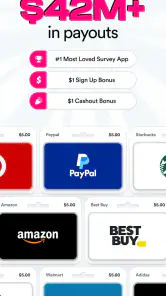
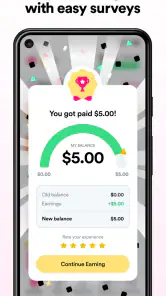
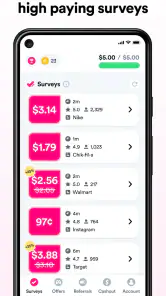
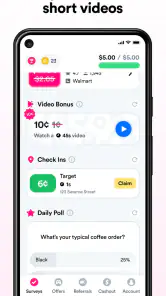
Analysis by Reviewed
I tried Survey Pop as a lightweight way to turn spare phone time into small rewards, and my first impression was straightforward: it is a free lifestyle app from SocialLoop built around answering surveys rather than shopping, playing games, or committing to a long-term money-making plan. That focus is useful because I always know what I am opening the app to do, but it also sets a clear limit. This is better understood as occasional pocket-money entertainment than as a dependable income source.
The app has a 4.6 average from around 57 thousand ratings, with more than 500 thousand installs. Those figures suggest that the basic idea has found a sizable audience, although popularity alone does not guarantee that every survey will suit every user. My experience with this kind of app is that the real question is not whether surveys exist, but whether the available invitations match your profile, your patience, and the amount of time you are willing to spend.
How Survey Pop fits into everyday use
Survey Pop is a free survey app in the lifestyle category, and its appeal comes from its low barrier to entry. There is no purchase price to justify and no paid tier that I need to weigh against the rewards. The app is marked for Everyone, runs on devices using OS version 11 or later, and its current version is 26.8.21. It was released on June 13, 2022, so it is not a brand-new experiment, but it still feels designed for quick, repeat visits rather than long sessions.
I found the best way to approach it was to treat each opening as a short task. Instead of sitting down expecting a fixed return, I would check what was available, read the estimated effort carefully, and decide whether it made sense at that moment. That small change in mindset matters. If you view every survey as guaranteed pay, screening questions and unavailable opportunities can feel frustrating. If you view the app as something to check during otherwise empty minutes, the experience becomes more manageable.
A realistic use case is a commute, a waiting room, or the few minutes before an appointment. I would not replace a planned activity with it, because the value of a survey depends on whether the available task is relevant and worth the time. It works best when the phone is already in my hand and I have no better use for the next few minutes.
What the free price really means
The most important cost detail is simple: Survey Pop is free to use. That makes the decision easy at the beginning, because there is no upfront payment and no need to buy access before testing the experience. The absence of an entry fee is a genuine advantage over services that ask users to subscribe before unlocking their main features.
Free access does not mean the app is costless in practice. Your time, attention, and personal answers are the real tradeoff. I would never start a survey casually if I had only a minute available, because being interrupted partway through can make the effort feel wasted. I also recommend checking the reward conditions inside each opportunity rather than assuming that all surveys have the same length or value.
More From Our News Desk

Clash of Clans Is Won Between the Battles

Android Auto Makes the Case for Quieter Car Software

MobiOffice: Transforming Mobile Productivity with Seamless Integration

EA SPORTS FC™ Mobile Soccer: Redefining Mobile Sports Gaming

How Microsoft OneDrive Became a Mobile Productivity Giant

How Google Translate Breaks Language Barriers Effortlessly
That distinction is important for anyone comparing apps by price. Survey Pop offers free access, but the value you receive comes from successfully completing suitable surveys, not from simply installing it. I would therefore judge it by the quality and consistency of its opportunities, not by the fact that the download costs nothing.
What the app is good at
The strongest part of the experience is its clear purpose. Survey Pop does not try to be a full budgeting tool, a shopping portal, or a complicated side-business platform. I can open it with one goal in mind: see whether there is a survey I am willing to complete. That simplicity makes it approachable for someone who has never used a rewards app before.
Another practical strength is flexibility. I do not need to reserve a particular hour for it, and I can skip an opportunity that does not fit my interests or available time. This makes it more convenient than activities that require a scheduled commitment. For a person who wants occasional rewards from short periods of downtime, that freedom is more valuable than a large feature list.
The app also benefits from being easy to understand at a glance. A survey-based interface naturally encourages a quick decision: open the opportunity, consider the effort, and continue or leave it for later. That is a better fit for casual users than an app filled with multiple earning categories competing for attention.
Still, the value is conditional. The app cannot make every minute equally productive, because surveys depend on eligibility and availability. I would not describe it as a predictable hourly earning tool. It is closer to a flexible rewards inbox, where the useful opportunities are the ones that happen to appear when you have time.
Small workflow choices that improve the experience
My first tip is to decide on a personal time limit before starting. If I have only a short break, I choose an opportunity that appears compatible with that window rather than beginning the longest-looking task. This prevents the common mistake of turning a quick check into an unfinished session. The app is more pleasant when I use it on my terms instead of chasing every available survey.
My second tip is to read the opening questions carefully. Screening is not merely a hurdle; it tells you whether the survey is aimed at people with a particular background, purchase history, or interest. Answering quickly without paying attention can lead to disappointment later. I found that treating these questions as a suitability check helps me abandon poor matches early.
A third useful habit is to keep expectations separate from ordinary income. I would record the rewards mentally as a bonus for idle time, not as money needed for bills. That makes the occasional low-value opportunity easier to reject and protects the experience from becoming stressful. If I need reliable earnings, I would choose a job, freelance assignment, or established paid task instead.
There is also a privacy and attention tradeoff that deserves a realistic mention. Surveys ask for opinions and personal context because that information is what makes the activity possible. Before answering, I would consider whether the questions feel comfortable and whether the reward justifies the time. Anyone who dislikes sharing preferences, habits, or demographic details should be especially selective rather than assuming that every survey will feel equally acceptable.
Where the tradeoffs become noticeable
The main weakness is uncertainty. I cannot open the app and assume that a suitable survey will always be waiting. Even when something is available, it may not match my profile or may take longer than I want. That unpredictability is normal for survey platforms, but it limits how seriously I can treat the app as a money-making method.
There is also a psychological trap: the promise of quick rewards can encourage users to continue after the activity has stopped being worthwhile. I found it helpful to ask a simple question before starting: would I still choose this if there were no expectation that the next survey would be better? If the answer is no, closing the app is probably the smarter decision.
Survey Pop is less suitable for people who want a clear, guaranteed exchange between time and money. A conventional part-time task gives you a defined rate and responsibility. A cashback service may be better for someone who already plans to shop. A budgeting app may provide more lasting financial value by helping control spending. Survey Pop occupies a narrower space: it monetizes spare attention, but it does not replace those alternatives.
I would also skip it if I dislike repetitive question formats. Even a well-designed survey app can feel routine because the central activity is answering similar types of prompts. The straightforward design helps with navigation, but it cannot remove the basic repetition built into the category.
Who is most likely to get value
I think Survey Pop suits adults and older children who understand that rewards are occasional and who want a simple activity for idle moments. The Everyone rating makes it broadly accessible, but younger users should still have a parent or guardian involved when deciding what information to share. The app is not something I would hand to a child without discussing privacy and spending expectations first.
It is a reasonable fit for someone who already checks their phone during short breaks and would rather answer a few questions than scroll aimlessly. It can also suit users who want to test the survey-rewards category without paying for access. Because the price is free, trying it does not require a financial commitment; the real test is whether the available tasks feel worthwhile to you.
It is a poor fit for anyone seeking a stable side income, a guaranteed return for every minute, or a professional research workflow. Researchers, marketers, and businesses need specialized tools with controlled sampling and reporting, not a consumer rewards experience. Likewise, people who need money urgently should not rely on an app whose opportunities can vary.
How it compares with familiar alternatives
Compared with cashback apps, Survey Pop asks for opinions rather than requiring a purchase. That is useful if I do not want to spend money just to unlock a reward, but cashback can be more efficient when I was already planning to buy something. The better choice depends on whether the starting point is spare time or an existing shopping trip.
Compared with microtask platforms, the survey format is usually easier to understand. I am not searching for a complicated assignment or learning a new workflow; I am responding to questions. Microtask services can be preferable for users who want more varied work, especially if they are comfortable with categorization, transcription, or other task types. Survey Pop is more approachable, but its narrow focus also gives me fewer kinds of activity.
Compared with a budgeting app, Survey Pop offers an immediate activity rather than a long-term financial system. A budget can improve decisions every day, while survey rewards are smaller and more dependent on availability. I would use the two for different purposes: one to manage money, the other to make occasional use of otherwise empty time.
That comparison leads to a practical rule. Choose Survey Pop when convenience and free entry matter more than predictability. Choose another option when you have a specific purchase, a defined work skill, or a financial goal that requires dependable progress.
My verdict on downloading it
After using it, I see Survey Pop as a low-risk app to try, provided you keep the expectations realistic. SocialLoop has packaged the idea in a way that is easy to approach, and the free price removes the most obvious barrier. The app’s strongest value is not that it transforms spare time into a salary; it is that it gives casual users a simple way to explore survey rewards without committing money first.
I would recommend it to a friend who wants something to check during waiting time and who is comfortable deciding which surveys deserve attention. I would tell that friend to set a time boundary, read the conditions before starting, and treat personal information as part of the exchange. Those habits make the experience more controlled and help prevent small rewards from costing more attention than they are worth.
I would skip it for someone who needs reliable earnings, dislikes answering personal questions, or becomes frustrated when an opportunity does not match their profile. For that person, a paid task with a defined rate or a budgeting tool would be a better use of time. The free download is easy to justify, but the real value must be earned through selective use.
Overall, Survey Pop is worth a trial for the right user, not a promise of fast financial change. Its 4.6 average and large audience show that many people find the concept appealing, while the limits of survey work remain important. I like it most as a small, optional extra: open it when I have spare minutes, complete only the opportunities that make sense, and close it without feeling obliged to keep going.
Survey Pop: Make money fast! Frequently Asked Questions
Does Survey Pop require an account, and what information should I expect to provide?
Survey Pop’s survey-matching approach uses details such as your profile and location, so expect to create an account and provide information that helps determine which research opportunities may suit you. Share only what is needed to use the app, and read its privacy policy before completing your profile. Survey questions can request additional personal details, so consider each request carefully.
Can anyone use Survey Pop, or are there eligibility restrictions?
Survey Pop is rated for everyone, but that does not mean every survey is available to every user. Eligibility may depend on factors such as your age, location, demographic profile, and the needs of a particular research study. You may see different opportunities from other users, and some surveys may screen you out after you begin answering.
Is Survey Pop free, and what devices can run it?
Survey Pop is free to download and is rated for everyone. It requires a device running iOS 11 or later, so check your device’s operating system before installing. The app is a lifestyle rewards app from SocialLoop, and its current version is 26.8.21. As with any app, use the official app store to find the download and review its permissions before getting started.
What is Survey Pop: Make Money Fast!?
Survey Pop is a rewards app that lets users complete surveys and other available tasks in exchange for points or cash rewards. After creating an account, the app matches you with surveys based on your profile and location. Availability, survey length, and reward amounts can vary considerably, so it is best viewed as a way to earn occasional extra money rather than a full-time income source.
How do you earn money with Survey Pop?
You generally earn rewards by answering market-research surveys through the app. Some users may also see additional opportunities, such as promotional activities or referral-related bonuses, depending on their account and region. Before starting a survey, check its estimated time and reward value. Surveys can sometimes screen you out after a few questions, and the reward rules may differ between offers.
Pros
- Short surveys can be completed during spare moments.
- The interface is simple and easy to navigate.
- Available surveys cover a variety of everyday topics.
- Rewards can be redeemed through several payout options.
- The app may offer location-based surveys for extra opportunities.
Cons
- Survey availability can vary significantly by location and profile.
- Some surveys screen you out after answering several questions.
- Rewards may take time to process after reaching the payout threshold.
- Frequent notifications can become distracting.
- Personal and demographic information is required for survey matching.

- Category
- Lifestyle
- Version
- 26.8.21