Eureka: Earn money for surveys
- 33.34K
- 4.6
- Installs
- 1.00M
- Price
- Free

Screenshots
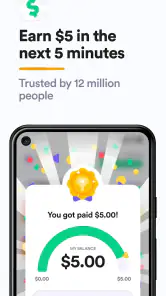

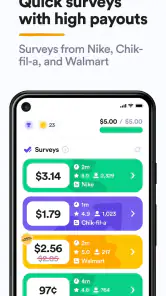

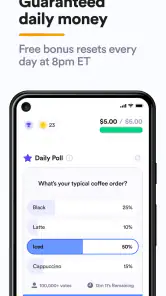
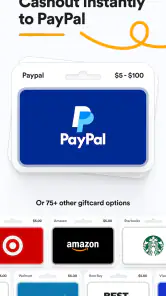
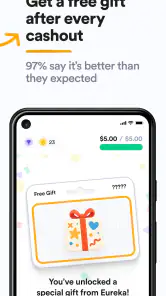

Analysis by Reviewed
I approached Eureka: Earn money for surveys as a small, practical way to turn spare minutes into rewards rather than as a serious income source. That distinction matters. The app, developed by SocialLoop, sits in the lifestyle category and focuses on paid surveys, with rewards presented as cash or gift cards. In my experience, its appeal is strongest when I treat it like a quick task to check during an otherwise unproductive moment.
The central capability is simple: Eureka gives me surveys to complete, then connects that activity with rewards. The idea is easy to understand, but the real experience depends on how well the available questionnaires fit my profile, how much time I have, and whether the reward feels worthwhile for the effort. I would recommend it to someone who enjoys answering opinion questions and wants an uncomplicated rewards app, while I would steer away anyone expecting dependable earnings or an hourly wage.
Turning spare minutes into survey rewards
The app is free and rated for Everyone, so the basic invitation is accessible to a broad audience. It has been available since September 2020, and its current version is 26.8.21. On the store, it has built a 4.6 average from around 235 thousand ratings, alongside more than 1 million installs. Those figures suggest that the concept has found a substantial audience, but they do not change the main rule I kept in mind: survey rewards are best viewed as occasional extras.
What makes Eureka different from a general cashback app is the direct focus on questionnaires. I am not browsing a shopping portal or waiting for a purchase to qualify. The activity itself is answering questions. That makes the app easier to understand than reward services with several unrelated earning methods, but it also means the usefulness rises and falls with the survey supply available to me.
The most important practical effect of this design is that the app can fit around short gaps in the day. A few minutes before an appointment, during a quiet break, or while waiting for a meal can become a chance to complete a questionnaire. I do not need to plan a full session in advance. At the same time, I should not open it expecting every visit to produce a worthwhile task. The value is in checking casually, not in forcing the app into a rigid work schedule.
The key trade-off is convenience versus predictability. Eureka is convenient because the task is familiar and the reward goal is clear. It is less predictable than paid freelance work because I cannot control which surveys appear, how long they take, or whether a questionnaire will suit me. That is the point I would explain to a friend before recommending it.
What using the survey model feels like
In practical terms, I would begin by opening the app and looking at the available survey opportunities. Before starting, I would read the expected task information carefully rather than tapping through automatically. A survey that appears short may still require attention, and rushing through answers is a poor strategy for any questionnaire service. Thoughtful, consistent responses are more sensible than trying to finish as quickly as possible.
More From Our News Desk

Clash of Clans Is Won Between the Battles

Android Auto Makes the Case for Quieter Car Software

MobiOffice: Transforming Mobile Productivity with Seamless Integration

EA SPORTS FC™ Mobile Soccer: Redefining Mobile Sports Gaming

How Microsoft OneDrive Became a Mobile Productivity Giant

How Google Translate Breaks Language Barriers Effortlessly
The first useful habit is to decide whether I genuinely have enough uninterrupted time. If I only have a minute, starting a longer questionnaire can be frustrating. I prefer to reserve the app for moments when I can concentrate, because distractions make it easier to misread a question or abandon the task halfway through. This is a small change, but it makes the experience feel less like wasted tapping.
A second habit is to treat personal information questions with care. Surveys often need background details to decide whether someone fits a target audience, so I would answer honestly and consistently. I would also pause whenever a question feels unclear instead of guessing. The app is built around feedback, and careless answers reduce the quality of the experience for both the user and the survey process.
Another useful workflow is to keep a modest goal. Rather than checking repeatedly throughout the day, I would open Eureka at a couple of natural points, such as during a commute break or after finishing routine tasks. This prevents the app from becoming a distraction. The reward system works better as a background activity than as something I constantly monitor.
Because the app offers cash rewards and gift cards, the choice of reward matters to the way I judge progress. A gift card can feel more useful if I already shop with that retailer, while cash is more flexible when available for the relevant redemption option. I would think about what I actually want before spending time on surveys. A reward that fits my habits feels more valuable than one I would struggle to use.
A realistic everyday use case
Imagine I have a twenty-minute wait between errands. I open Eureka, review the survey choices, and select one that appears suitable for the time available. I answer carefully, put the phone away when the appointment begins, and return later only if another convenient opportunity appears. In that situation, the app adds a little value to time I was already going to lose. I am not rearranging my day around it, and that keeps the experience positive.
Now compare that with opening the app during a busy morning, starting a questionnaire, and leaving it repeatedly to answer messages or handle work. The same app can feel irritating because the task competes with everything else. My advice is to use Eureka when I have a quiet pocket, not when I am already multitasking. Survey apps reward patience more than frantic checking.
This also explains why it is not a substitute for a part-time job. Even if I use it consistently, the available questionnaires are not under my control, and the reward is tied to completion rather than guaranteed time spent. Someone who needs predictable monthly income should look at employment, freelancing, or a more dependable side-income option instead. Eureka is better suited to turning idle time into a small bonus.
Where it fits among other reward apps
Compared with cashback services, Eureka asks for attention instead of purchases. That is an advantage for someone who does not shop frequently or does not want to change buying habits. Cashback can be more valuable for a planned purchase, but it is irrelevant when I am not spending money. Surveys give me another route to rewards, although they require more active participation.
Compared with microtask platforms, the experience is more focused. A broad microtask service may offer different kinds of digital work, while Eureka keeps the central activity around surveys. That narrower scope makes it easier to understand, but it also reduces flexibility. If I dislike questionnaires, a wider task platform may suit me better even if its interface is less straightforward.
Compared with opinion panels that concentrate on long-term research participation, Eureka feels more suitable for casual checking. I would not choose it when I want a structured research commitment or a predictable schedule. I would choose it when I want a simple lifestyle app that may offer a reward for answering questions during downtime.
The important comparison is not which service promises the largest reward. It is which activity fits my existing routine. If I already make online purchases, cashback may require less effort. If I have professional skills, freelance work can produce a better return on time. If I have short idle periods and do not mind sharing opinions through surveys, Eureka becomes more compelling.
Small decisions that improve the experience
My first recommendation is to judge each survey by the time I can realistically give it, not by the reward alone. A higher reward is not automatically better if I am likely to be interrupted. I would rather complete a suitable task calmly than begin something ambitious and leave it unfinished.
Second, I would avoid treating every notification or new opportunity as urgent. The app is most useful when it stays in the background. Checking constantly can make a small reward feel like a large time commitment. Setting a personal rhythm helps preserve the convenience that makes the app attractive in the first place.
Third, I would keep expectations grounded around redemption. Before spending a lot of time, I would make sure I understand the available reward choices and the amount needed for the option I want. This is not a criticism of Eureka specifically; it is sensible behavior with any rewards app. The final usefulness depends on whether I can turn the accumulated balance into something I genuinely value.
Fourth, I would use a stable answer style based on my real circumstances. Changing answers simply to qualify for more questionnaires can create confusion and make later questions harder to answer consistently. Honest responses are also less mentally tiring because I do not have to remember an invented profile.
Finally, I would protect my attention. If I notice that I am opening the app repeatedly without finding a suitable task, I would close it and return later. The opportunity cost of checking is small once, but repeated checking can quietly consume more time than the rewards justify. This is one of the less obvious trade-offs of survey apps: the main cost is often attention rather than money.
The friction I would not ignore
The biggest limitation is uncertainty. I cannot assume that every visit will offer a survey that matches my interests or available time. Even when a task appears, I may discover that it is not a good fit after reading the questions. That makes the app less reliable than a conventional paid task with a clearly defined scope.
There is also a mental cost to repetitive questionnaires. Some people enjoy giving opinions, while others find the format dull after a few sessions. Eureka’s focused design is helpful for the first group and limiting for the second. If I need variety to stay motivated, a platform with multiple task types may hold my attention better.
The reward itself should be judged as a bonus, not as compensation for every minute I spend using the phone. A survey can be worthwhile when it fills dead time, but the same activity may feel poor value if I interrupt important work or family time. I would never let the possibility of a small reward dictate my schedule.
Privacy is another personal consideration. Anyone answering surveys should be comfortable providing the information requested within the app’s normal process. I would read the relevant explanations and make deliberate choices rather than assuming that every questionnaire is appropriate for me. If I am uncomfortable with the subject of a survey, skipping it is the sensible response.
Finally, the free price removes a financial barrier, but it does not remove the need to evaluate effort. “Free” means I do not pay to install or use the app; it does not mean every available survey is automatically worth completing. My own time remains the resource being exchanged.
Who is most likely to enjoy it
I think Eureka is a good match for students, commuters, occasional travelers, and anyone who regularly has short periods of waiting. It can also suit people who prefer simple, question-based activities over shopping offers or complicated task marketplaces. The Everyone age rating makes the app broadly approachable, although each person should still decide whether the survey topics and information requests feel comfortable.
It is particularly useful for someone who already has a realistic reward goal. For example, I might use it to build toward a gift card I know I will use, rather than collecting rewards without a plan. That goal gives the activity a clear endpoint and makes it easier to stop when the effort no longer feels worthwhile.
I would recommend skipping it if I needed guaranteed earnings, disliked answering personal-opinion questions, or had very little patience for tasks that may not fit my profile. I would also choose another option if I had a marketable skill that could earn more through freelance work. Eureka is not competing with a job; it is competing with empty minutes.
The developer, SocialLoop, has kept the proposition focused enough that I can understand what I am opening the app for. Its popularity, reflected in more than 33 thousand written reviews and a rating average of 4.6, makes it feel established among survey-reward users. Still, popularity should not be confused with a promise that my own survey supply will match someone else’s experience.
My verdict after using it as a spare-time tool
I see Eureka as a reasonable choice for casual survey participation, especially when I want the possibility of cash rewards or gift cards without paying an entry fee. The app’s strength is its clear purpose: I know that I am there to answer surveys, and I can fit that activity into otherwise unused time. The weakness is equally clear: the opportunity is variable, and the return depends heavily on patience and personal circumstances.
My best advice is to install it with a small, practical expectation. Use it during waiting periods, read each task before committing, answer consistently, and keep the reward goal realistic. Do not replace reliable income with it, and do not allow repeated checking to take over your day. Used that way, Eureka can be a pleasant little addition to a lifestyle-app collection rather than an overpromised money-making solution.
For me, the deciding question is simple: do I have spare minutes and a genuine willingness to share opinions? If the answer is yes, the app is worth trying because the financial risk is low and the process is easy to understand. If the answer is no, a cashback service, a broader microtask platform, or paid work based on a specific skill will probably offer a better match.
Eureka: Earn money for surveys Frequently Asked Questions
Can I use Eureka without completing surveys?
Eureka is built around survey participation, so completing eligible questionnaires is the main way to earn rewards. You can install the app and explore its features, but meaningful progress toward rewards depends on receiving surveys that fit your profile and finishing them according to the app’s requirements. If you prefer not to answer questions about yourself or your opinions, a survey-rewards app may not be a good fit.
Will Eureka provide a steady source of income?
It is best to treat Eureka as a way to earn occasional extra rewards, not as a replacement for a job or a dependable source of income. Survey invitations vary with your location, profile, and current research demand, and some surveys screen participants out before completion. Your results can therefore change over time, even if you use the app regularly.
Is Eureka free to download, and what devices can run it?
Eureka is a free lifestyle app from SocialLoop. It is intended for devices running iOS 11 or later, so check your device’s operating-system version before downloading. The app is rated for Everyone. As with any rewards app, consider whether you are comfortable creating an account and sharing the information needed to match you with survey opportunities.
Does Eureka work in every country?
Survey and reward availability can vary by location, so Eureka may not offer the same experience everywhere. Before investing time in setting up a profile, check whether the app is available and whether surveys and redemption options are offered in your country. Even where the app works, the number of surveys and the rewards available may depend on local research demand and your profile.
What is Eureka: Earn money for surveys?
Eureka is a mobile survey-rewards app that lets users answer questionnaires in exchange for points or cash rewards. After creating an account, the app presents available surveys based on your profile and location. The number of invitations can vary, and not every survey will be available to every user. Before downloading, check whether the service operates in your country and review its current reward and eligibility rules.
Pros
- Simple surveys can be completed in just a few minutes.
- Clear reward tracking makes earnings easy to monitor.
- Works well for filling spare time during commutes or breaks.
- Survey topics vary
- so tasks rarely feel completely repetitive.
- Available on both Android and iOS devices.
Cons
- Survey availability may depend heavily on your location.
- Some surveys screen you out after answering several questions.
- Rewards can take time to accumulate before cashing out.
- Profile information is required to receive suitable survey invites.
- Earnings are modest and should not be treated as regular income.

- Category
- Lifestyle
- Version
- 26.8.21