Stck Reader – Stories Your Way
- 1.00
- 4.8
- Installs
- 100.00K
- Price
- Free

Screenshots
Analysis by Reviewed
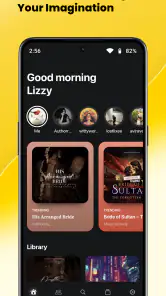
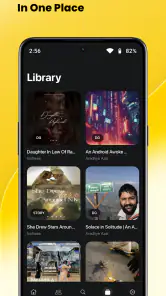
I opened Stck Reader expecting a straightforward reading app, but its format feels closer to following a television series one installment at a time. It is a free Books & Reference app from Stck.me for readers who enjoy serial fiction and do not mind making small, deliberate purchases when a story earns their attention. The main idea is simple: discover fiction, read it in chapters, and use optional payments to support the writers behind it.
That model makes the app interesting, but it also means you should understand what kind of reading experience you are choosing before you begin. This is not the best fit for someone looking for a conventional ebook library with one large purchase and a clearly finished book. I found it more appealing as a place to sample ongoing stories, return regularly, and decide chapter by chapter whether I want to continue.
What reading on Stck Reader feels like
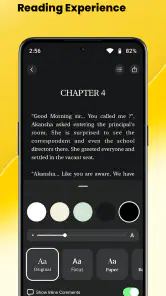
The strongest part of the experience is the sense of progress that comes from short, serialized reading. Instead of committing an entire evening to a long novel, I can open a story, read a manageable section, and stop at a natural pause. That works especially well during a commute, a lunch break, or the few minutes before bed when I want fiction without having to remember a complicated setup.
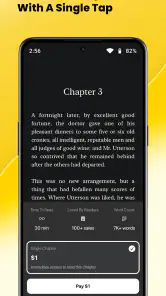
The app’s store summary describes a pay-per-chapter approach, and that detail shapes the whole experience. A reader is not simply browsing a shelf of free books. The practical rhythm is closer to sampling a story, deciding whether its writing and pacing suit me, and then choosing whether to unlock more. That can feel fairer than paying for an entire title before knowing whether I will enjoy it, although it can also make the final cost harder to judge when a story has many chapters.
I would describe the audience as readers who like discovery and momentum. If you enjoy cliffhangers, recurring characters, and checking back for the next part of a story, the format has a natural appeal. If you prefer a complete novel downloaded once for uninterrupted reading, a traditional ebook store or library app will probably feel more comfortable.
Stck Reader is rated for Teen audiences, so I would not treat it as a general children’s reading app. That does not tell me that every story has the same tone, but it is a useful signal for parents choosing an app for younger readers. I would still look at individual story descriptions and use my own judgement rather than assuming every piece of fiction will suit every teenager.
The app has reached over one hundred thousand installs and carries an average rating of 4.8 from roughly one thousand ratings. Those figures suggest that the basic concept is connecting with a meaningful group of readers, though a high average rating should not replace checking whether the chapter-payment model matches your habits.
More From Our News Desk

Clash of Clans Is Won Between the Battles

Android Auto Makes the Case for Quieter Car Software

MobiOffice: Transforming Mobile Productivity with Seamless Integration

EA SPORTS FC™ Mobile Soccer: Redefining Mobile Sports Gaming

How Microsoft OneDrive Became a Mobile Productivity Giant

How Google Translate Breaks Language Barriers Effortlessly
My first setup and what I would decide early
My advice to a first-time user is to begin with a clear purpose. Do you want a quick story for spare moments, a new writer to follow, or a longer serial to make part of your routine? Knowing that before browsing helps prevent the app from turning into an endless scroll through possibilities.
Because the app is free to install, the initial decision is not whether to buy the whole experience immediately. The more important decision comes later, when a story asks you to continue through an in-app purchase. The listed purchase range runs from $0.99 to $16.00 per item, so I would pause before unlocking several chapters in a row. A small individual purchase may feel inexpensive, but repeated chapter payments can add up faster than expected.
This is one of the first useful habits I would recommend: treat each story as a separate reading project. Before paying, note how much of the story you have already read, whether the plot has genuinely held your attention, and whether you are comfortable supporting that writer at the displayed cost. That simple pause makes the payment system feel like a considered choice rather than an automatic continuation.
I also think it is worth starting with one story instead of several. Serial fiction can create a strong temptation to open multiple titles, especially when each one offers a quick sample. Following too many at once makes it harder to remember characters and may make the app feel scattered. One active story gives you a better sense of the reading flow and the value of the chapter format.
The current version is 1.1.47, and it runs on Android 9 or later. That makes the compatibility requirement reasonably approachable for people using older supported Android phones, but I would still check the operating system before planning a download on an ageing device. The app is developed by Stck.me, so that is the name I would look for when distinguishing the official app from similarly named reading tools.
The first meaningful success is finishing a chapter
For me, the first real test is not installing the app or opening a catalogue. It is reaching the end of one chapter and deciding, with some confidence, whether I want the next one. That gives the app a fair trial without forcing an immediate commitment to a long story or a large purchase.
When I read a new serial, I pay attention to three things. First, does the opening establish a reason to continue rather than relying only on a dramatic tease? Second, does the chapter feel complete enough to be satisfying while still creating forward movement? Third, do I understand what I would be paying for if I choose to continue? These questions are more useful here than judging the app like a conventional book reader.
A realistic everyday use case would be a reader with a short train journey. I would open one story before leaving, read the available chapter during the ride, and stop there if the ending gives me a sensible break. Later, I could return when I have time instead of carrying a full novel or trying to recover my place in a lengthy audiobook. The app’s chapter-based structure is particularly suited to this kind of fragmented schedule.
Another good use is discovering writers outside your usual reading routine. A complete ebook can feel like a gamble when the author is unfamiliar. Serial reading lowers the emotional commitment at the beginning: I can judge the voice, pacing, and characters in smaller steps. The trade-off is that a short chapter may not reveal enough about the eventual direction of the story, so I would avoid making a large purchase based only on an exciting opening.
My practical tip is to stop after the first successful reading session and reflect before browsing again. Ask yourself whether you wanted the next chapter because the story was genuinely engaging or simply because the ending was designed to create urgency. That distinction matters in any serialized format, and it helps keep the app enjoyable rather than impulsive.
Where new users may misunderstand the payment model
The biggest point of confusion is likely to be the difference between a free app and free reading. Stck Reader costs nothing to install, but it includes in-app purchases, and the reading model may ask you to pay for individual chapters. In other words, “free” describes access to the app, not necessarily every part of every story.
I would approach the first locked chapter as an information point, not as a surprise. Look at the displayed price, consider how much you have already enjoyed the story, and decide whether you want to support that writer. If you are reading several serials, keep a mental or written budget for them. This is especially important for readers who prefer predictable monthly spending.
There is also a difference between supporting a writer and buying a traditional book. A chapter payment may give you access to the next piece of a story, but it does not automatically provide the same sense of ownership as purchasing a finished ebook. Readers who value permanent, consolidated libraries may find a standard ebook platform easier to manage. Stck Reader makes more sense when the act of following a writer is part of the appeal.
Another possible misunderstanding concerns completion. Serial fiction can be ongoing, released in stages, or structured around continuing episodes. I would not begin a story assuming that it will provide the same immediate closure as a completed novel. If you dislike waiting between installments or prefer to read an entire plot in one sitting, this format may test your patience.
The Teen rating is another reason to browse thoughtfully. I would not hand the app to a younger reader without discussing what they are reading and how purchases work. For an older teenager or adult who understands optional spending, the format can be a useful way to explore fiction. For a child using a shared device, payment awareness becomes just as important as content suitability.
Small habits that make the app easier to use
My first habit would be to keep a single “current story” in focus until I know how the app fits my routine. This reduces the chance of paying for several beginnings and finishing none of them. Once I have found a story that holds my attention, returning to it consistently is more rewarding than treating the catalogue like a queue of unrelated samples.
My second habit would be to read chapter endings carefully before deciding to unlock the next part. A cliffhanger can be effective, but it can also make a chapter feel shorter than it really is. I would judge the quality of the writing, the development of the characters, and the amount of meaningful movement in the plot—not just the desire to see what happens next.
My third tip is to use the app as a discovery tool rather than automatically replacing every other reading service. I can imagine reading serial fiction here while keeping finished ebooks, reference books, and long-form novels elsewhere. That division of roles makes sense: Stck Reader is built around episodic engagement, while a conventional reader may be better for books I already know I want to own or read offline in one uninterrupted stretch.
I would also avoid comparing a short chapter directly with a full novel. The pacing goals are different. A serial chapter needs to encourage a return visit, which can mean sharper hooks and more frequent turning points. That may be exciting for some readers but tiring for others, particularly if they prefer slow atmosphere, long reflective passages, or a plot that unfolds without regular pauses.
One useful test is to read at two different times of day. A story that works during a quick break may not suit a longer evening session, and vice versa. This helps identify whether the app is useful as a small daily reading ritual or whether you would rather use it only for occasional discovery.
How it compares with ordinary ebook and reading apps
Compared with a standard ebook store, Stck Reader places more emphasis on gradual commitment. A conventional store usually makes the purchase decision around a complete title. Here, the chapter is a more important unit. That can reduce the risk of buying a book I abandon after a few pages, but it can also make the overall spending and ownership experience less straightforward.
Compared with a library app, the difference is even clearer. Library borrowing is attractive to readers who want broad access without paying for each chapter, while Stck Reader is designed around supporting favourite writers through purchases. If my priority is maximum variety at the lowest personal cost, I would investigate library options first. If my priority is discovering serial writers and paying for the parts I choose to continue, Stck Reader has a more focused purpose.
Compared with a subscription reading service, the app offers a different kind of control. A subscription can be convenient for heavy readers who want a predictable recurring payment, but it may include a large catalogue that I never explore. Chapter payments can feel more direct because I am choosing where my money goes. The downside is that readers who consume many chapters across many stories may prefer the predictability of a subscription.
It is also not simply a notes or reference application despite belonging to Books & Reference. Its value comes from reading fiction, following serialized narratives, and deciding which writers to support. Someone searching for dictionaries, academic references, document annotation, or a broad personal library should choose a different tool. The category label should not create expectations that the app is a general-purpose reading workspace.
Who will enjoy it, and who should skip it
I would recommend Stck Reader to someone who likes episodic storytelling, wants a low-commitment way to sample writers, and has enough self-control to monitor optional purchases. It is particularly suitable for readers with broken-up schedules, because a chapter can provide a clear reading goal without requiring a long uninterrupted session.
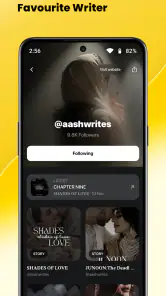
I would also suggest it to people who enjoy feeling connected to a writer’s continuing work. The payment model gives the act of reading a supportive dimension: instead of only consuming a finished product, you can choose whether a particular story has earned another chapter from you.
I would skip it if I mainly want free access to complete books, a single predictable payment, or a library organized around titles I already own. I would also hesitate if cliffhangers frustrate me, if I dislike stories that may unfold gradually, or if chapter-by-chapter spending would make me anxious. In those cases, a library service, a conventional ebook purchase, or a subscription reader is likely to be a better match.
Parents should make a separate decision based on both the Teen content rating and purchase supervision. The app may be appropriate for a teenager who understands the format, but I would not assume that installing a free reading app removes the need to discuss spending or story selection.
My recommendation after settling into the format
After using it as a serial-fiction reader rather than expecting a complete ebook replacement, I found the concept easy to understand and potentially rewarding. The first meaningful step is small: choose one story, read enough to judge its voice and pacing, and treat the first paid chapter as a deliberate decision. That approach keeps the experience clear for a newcomer.
The app’s best quality is the way it turns reading into a sequence of manageable choices. I can discover a writer without buying an entire book in advance, return to a story when I have a few spare minutes, and support the chapters that genuinely hold my attention. Its main weakness is the same feature viewed from another angle: repeated small purchases can become less predictable than a finished-book price, and the format will not satisfy readers who want immediate closure.
Stck Reader is free to start, aimed at Teen audiences, and maintained by Stck.me, with Android support beginning at version 9. Its current version is 1.1.47, and the strong average rating indicates that many users enjoy the direction it takes. I would still make the choice based on reading style rather than rating alone.
My honest advice is to try it as a focused serial-fiction companion, not as a replacement for every reading app on your phone. Begin with one story, finish a chapter, understand the next payment before approving it, and decide whether the rhythm suits you. If you enjoy that steady return-and-continue pattern, Stck Reader can become a pleasant way to find new voices. If you want complete books with no chapter-by-chapter decisions, another reading option will serve you better.
Stck Reader – Stories Your Way Frequently Asked Questions
What is Stck Reader – Stories Your Way?
Stck Reader – Stories Your Way is a reading app designed to let users explore digital stories in a flexible, personalized format. It focuses on making written content easier to follow on a mobile screen, with a presentation intended for comfortable reading sessions. Depending on the available catalog and supported content, it may appeal to readers who enjoy discovering stories, organizing reading material, and consuming fiction or other serialized content on a phone or tablet.
Is Stck Reader – Stories Your Way free to download and use?
The application may be available to download without an upfront charge, but users should check its current store listing for the exact pricing model before installing it. Some reading apps offer free access to selected content while reserving certain stories, features, or reading options for purchases or subscriptions. Always review the in-app purchase section, trial terms, and renewal conditions so there are no surprises after downloading.
What kind of stories can I read in Stck Reader – Stories Your Way?
The available selection can vary according to the app’s catalog, region, and current content partnerships. Users should expect the platform to focus on digital storytelling rather than general-purpose document reading, although the exact genres and formats may differ over time. Before downloading, it is worth checking the app screenshots, description, and recent user reviews to confirm that the available stories match your preferred genres and reading habits.
Does Stck Reader support offline reading?
Offline availability is an important detail for anyone who reads while traveling or with limited mobile data. Whether Stck Reader allows stories to be downloaded for offline access may depend on the specific title, account status, or version of the app. We recommend checking the story screen and the official store description for a download option. If offline reading is not supported, an internet connection may be required whenever you want to continue reading.
Is Stck Reader – Stories Your Way available for Android and iOS?
Availability can differ between Android and iOS, as well as by country or region. Before downloading, search for the official Stck Reader – Stories Your Way listing in the Google Play Store or Apple App Store and verify the developer name, supported operating system, age rating, and latest update date. Using the official store page is the safest way to confirm compatibility and avoid downloading an unofficial or unrelated application.
Pros
- Clean
- distraction-free interface for comfortable reading sessions.
- Personalized story selection helps users discover content matching their interests.
- Flexible reading experience suits different schedules and attention spans.
- Stories are easy to browse
- save
- and return to later.
- Lightweight design should run smoothly on most modern mobile devices.
Cons
- The available story catalog may feel limited for frequent readers.
- Some features or content may require an account or subscription.
- Reading preferences may take time to adjust to your exact tastes.
- Offline access may not be available for every story or feature.
- Users may encounter occasional formatting differences between stories.
- Category
- Books & Reference
- Version
- 1.1.47