Sivi AI Learn English Speaking
- 36.00
- 4.4
- Installs
- 5.00M
- Price
- Free

Screenshots
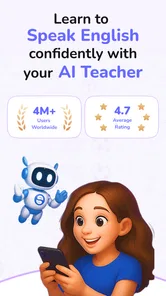
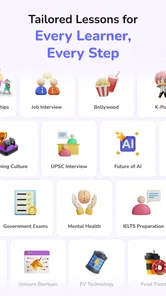
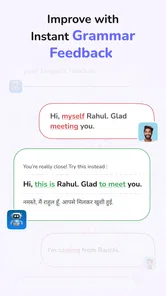

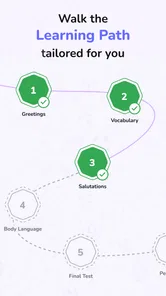
Analysis by Reviewed
I look for an English-learning app to solve a practical problem: getting enough speaking practice when there isn’t a patient conversation partner nearby. Sivi AI Learn English Speaking is aimed at that gap, with AI-supported spoken practice alongside vocabulary and game-like activities. My view is that it makes the most sense as a low-pressure daily practice tool, rather than a complete replacement for a teacher or real conversation.
What the cost does—and doesn’t—tell you
The app is free to download, and it offers in-app purchases ranging from $0.99 to $99.99 per item. That gives you a useful starting point without an upfront purchase, but the range is wide enough that I’d check the specific purchase details in the app before paying. I wouldn’t assume every lesson or feature is included for free, or that the most expensive option is necessary to make progress.
It is an education app from Sivi (Speakify AI), with an Everyone age rating. It has a 4.4 average from around 53,000 ratings and has been installed over 5 million times. Those figures suggest that many learners have tried it, but they don’t tell me whether its feedback will suit my accent, goals, or preferred learning style. I’d treat them as context, not as a guarantee.
Practice, value, and fit
The main value I see is convenience: you can practise speaking without arranging a lesson or asking a friend to stop and correct you. AI conversation can be especially useful when you already know some English but hesitate when it is time to form a sentence aloud. It gives you a place to rehearse, make mistakes, and try again without the social pressure that can make beginners freeze.
Getting started and building a routine
From the moment I installed Sivi AI Learn English Speaking, I was greeted with a user-friendly interface. It’s super intuitive, which I love because who has time to read lengthy manuals, right? The app’s design is sleek and modern, giving it a professional feel while still being approachable for beginners.
For a realistic routine, I’d use a short session before a work call or while winding down after dinner: pick a simple topic, answer aloud rather than silently composing a reply, then revisit any words or sounds that made me pause. The useful habit is not chasing a perfect score; it’s noticing one recurring hesitation and deliberately practising it again. A little spoken effort is more valuable here than tapping through activities while distracted.
Making practice useful in ordinary situations
A good way to test whether speaking practice is transferring beyond the app is to connect each session to something you expect to say soon. Before a call with a colleague, for example, I might rehearse a brief update: what I finished, what is delayed, and what I need from the other person. I would not try to script every possible reply. Instead, I’d practise the key information aloud, then leave room to answer naturally if the conversation changes direction.
More From Our News Desk

 Gmail
Gmail in a Busy Inbox: Who Benefits Most?
From first account to crowded workday, Gmail earns its place through dependable search and flexible sorting—but its best fit depends on how much inbox maintenance you can tolerate.

 Prime Video
Switching to Prime Video: What Changes in Your Viewing Routine
Prime Video can make a compelling second home for streaming, but switching means learning a different catalog, rental layer, and route from browsing to playback.

 Universal TV Remote Control
 Works Best as a Reliable Backup
A phone remote earns its place through quick setup and reliable habits. Here is how to get more from Universal TV Remote Control—and where its limits show.

 Weather - By Xiaomi
Weather by Xiaomi Review: Clear at a Glance, Less Clear Up Close
Xiaomi’s weather app makes everyday forecasts quick to scan, but its calm surface can leave useful details and recovery paths harder to find than they should be.

 X
X Under Pressure: Can It Recover When Posting Goes Wrong?
A resilience-focused review of X, examining setup, mistaken posts, interruptions, weak connections, and the gaps that matter when recovery needs to be dependable.

 Clash of Clans
 Is Won Between the Battles
Its raids are quick; its community is a long-term project of coordination, teaching, rivalry, and shared responsibility—with all the friction that entails.
Latest News



This kind of preparation is where private practice can feel particularly valuable. If I am nervous about introducing myself, asking for clarification, or describing a problem, I can first get used to saying the basic idea without an audience. The app can help me build the habit of speaking rather than translating silently in my head. Still, rehearsal is not proof that I will be ready for every live exchange; real listeners may interrupt, use unfamiliar wording, or ask a follow-up that I did not anticipate.
I would also keep a small mental note after a session: one phrase I could say more smoothly next time, and one word I want to use in a real conversation. That is more manageable than trying to remember every correction or turning practice into a long study project. If I have only a few minutes, I would rather speak two or three complete answers with attention than rush through a large number of activities without absorbing them.
Conversation and vocabulary in practice
One of the coolest features of the app is the AI-driven conversation practice. Imagine having the ability to chat with an AI that responds to your speech in real-time. It’s almost like having a chat with a friend who’s always patient and ready to help. The app provides instant feedback on pronunciation, which is super helpful because it’s like having a coach telling you where you can improve immediately.
I’d use that feedback as a prompt, not a final verdict. Pronunciation tools can help me spot a sound or phrase worth repeating, but speaking clearly also depends on rhythm, confidence, and being understood in a real exchange. If a correction seems surprising, I’d say the phrase again and compare how it feels rather than letting one automated response decide that my English is “wrong.” That approach keeps practice constructive instead of discouraging.
Another feature I found quite nifty is the vocabulary builder. This part of the app encourages you to expand your word bank with daily new words and practical usage examples. It’s perfect for those of us who love learning new words but need a little push to remember to do so every day.
A practical way to make those words stick is to use a new item in a spoken sentence about your own day, then try to bring it into a later conversation. Memorizing a definition alone can feel productive without making a word easy to retrieve aloud. If you are preparing for a particular situation, such as introducing yourself or asking for help, practise vocabulary that belongs in that situation instead of collecting words without a purpose.
Getting more from feedback without overrelying on it
One trade-off with automated pronunciation feedback is that it can be tempting to treat every correction as a complete lesson. I would slow down and repeat the whole phrase, not just the word that was flagged, because a word can sound different when it sits inside a sentence. Then I’d try saying the thought in my own words. This helps me distinguish between a pronunciation issue and a sentence I simply have not practised enough.
I would not use a single feedback moment to judge my overall speaking ability. A pronunciation prompt is most useful when it gives me something specific to work on, but confidence also comes from retrieving words quickly and continuing after a small mistake. If I notice that I keep stopping to perfect one sound, I’d move on and finish the answer. In an everyday conversation, keeping the message moving matters too.
Vocabulary practice benefits from the same restraint. Rather than trying to collect every new word, I’d choose one that fits a situation I am likely to encounter and make my own sentence with it. For instance, a word connected to work is more likely to stay available if I use it to explain a task I actually do. The app’s examples can provide a starting point, while personal sentences make the material easier to retrieve later.
Games, alternatives, and trade-offs
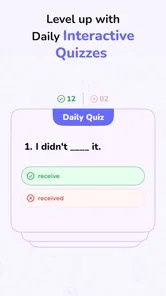
The app doesn’t just stop at conversations and vocabulary. It also includes interactive games that make learning fun. If you're anything like me, you’ll appreciate how these games sneakily teach you grammar and sentence structure while you’re busy trying to beat your high score. It’s a win-win!
The games can be a welcome change when open-ended speaking starts to feel tiring, but they are not the same as holding a conversation. I’d use them to break up practice or reinforce a point, then return to saying complete thoughts aloud. Compared with a standard vocabulary app, Sivi puts more emphasis on spoken interaction; compared with a live tutor or language exchange, it offers easier solo access but cannot provide the same human back-and-forth or personal judgement.
That distinction matters if you need detailed correction for a job interview, an exam, or a particular professional setting. In those cases, I’d pair app practice with a person who can ask follow-up questions and explain why a phrase sounds natural or awkward. If your goal is simply to become less hesitant in everyday English, private AI practice may be a more comfortable place to start.
Choosing between solo practice and a person
The usual alternatives each solve a different problem. A flashcard-focused tool may be a better fit if my main weakness is remembering vocabulary, because its central task is reviewing words rather than practising spoken answers. A structured course can make more sense if I want a planned progression through grammar and fundamentals. Sivi’s appeal is the chance to practise expressing myself aloud without first arranging a human partner.
A language exchange or tutor is stronger when I need someone to interpret my meaning, notice a recurring communication habit, and respond in an unpredictable way. That is especially important for learners who are preparing for a specific high-stakes conversation. I would use Sivi to get repetitions in between those human conversations, not to assume that simulated practice fully reproduces them. The best choice depends less on which tool has the most activities and more on the skill I am trying to build right now.
There is also a practical difference in how easy it is to keep a routine. A tutor requires coordination, while a language exchange depends on another person being available and willing to practise. A solo app removes that scheduling step, which can make a short session easier to fit into an ordinary day. The compromise is that I have to supply my own discipline and decide when a correction needs a second opinion.
Who is likely to get value
I think this is a good fit for learners who can already form basic English sentences and want more chances to say them out loud. It may also suit someone who feels self-conscious practising with other people, or who wants to turn spare moments into a small, repeatable speaking habit. Beginners can still explore it, but a learner who needs explanations from the very basics may prefer a structured course or a teacher alongside it.
I’d skip it as a main solution if I needed guaranteed human feedback, formal instruction, or a practice partner who understands my personal context. It also won’t help much if I mostly use it silently; the point is spoken English, so a quiet commute or a shared room may make the central activity awkward. Checking that you have a comfortable time and place to speak is a simple but important part of deciding whether you’ll actually use it.
Who should be cautious before paying
I would be cautious about buying anything before I know what I want from the app. Since the download is free but individual in-app purchases can vary widely in price, I’d first spend enough time with the available access to identify a real gap. Is there a particular practice option I want to use more often, or am I simply assuming that paying will make me more consistent? If I cannot name the benefit I expect, I would wait.
The purchase range also means that “free to start” and “everything is free” are not the same claim. I would check the exact item and its terms in the app before confirming a purchase, then decide whether that cost makes sense for my own use. I would not compare the highest-priced item with a full course or tutor unless I knew what it includes; price alone does not tell me the depth or fit of the learning experience.
Is Sivi AI Worth It?
Honestly, I was a bit skeptical at first. I mean, can an app really help improve my English speaking skills? But after using Sivi AI Learn English Speaking consistently, I noticed a significant improvement in my fluency. The app has this way of making learning feel less like a chore and more like a hobby.
Moreover, the app's ability to personalize lessons based on my progress was a game changer. It’s like having a tailor-made curriculum that grows with you, which I found incredibly motivating.
For anyone weighing the purchase options, I’d begin with the free access and decide what is missing before considering an in-app purchase. The app is currently at version 1.0.167 and requires Android 7.0 or later, so device compatibility is worth checking before installing. The paid range may make sense if a specific extra is clearly useful to your routine, but I wouldn’t pay simply because I felt I ought to unlock everything.
It is also worth being clear about what success would look like for you. If the goal is to feel less stuck when answering a familiar question, regular spoken practice may be a worthwhile step. If you need a complete study plan, formal evaluation, or confident performance in a demanding interview, I would use a course or human teacher as the main resource and treat this app as supplemental rehearsal. That distinction makes it easier to judge whether the experience is paying off instead of expecting one app to solve every part of learning English.
In conclusion, if you're looking to improve your English speaking skills and want a fun, interactive, and effective way to do it, give this app a try. I’ve genuinely enjoyed using it and it’s become a part of my daily routine. With its engaging features and user-friendly design, it’s definitely one of the best language-learning apps out there!
Sivi AI Learn English Speaking Frequently Asked Questions
Is Sivi AI Learn English Speaking available for Android, and what should I check before installing?
Sivi AI Learn English Speaking is an Android app for practicing spoken English. Before downloading, check that your device runs Android 7.0 or later and has enough available storage for installation. The app is listed in the Education category, and its focus is AI-supported speaking practice, so it may suit learners who want to work on spoken English through lessons and exercises.
What does Sivi AI Learn English Speaking help users learn?
The app focuses on spoken English, with practice intended to support vocabulary, pronunciation, conversational skills, and fluency. Its store summary describes it as an English speaking app for improving spoken English and fluency with AI support. It may be useful if your goal is to practice expressing yourself in English, rather than use an app focused mainly on another subject.
Is Sivi AI Learn English Speaking free to download, and are there optional purchases?
Sivi AI Learn English Speaking is free to download, so you can try the app without paying upfront. It also offers in-app purchases, with prices ranging from $0.99 to $99.99 per item. Review the available options in the app before purchasing, and check which features are included at no cost so you can decide whether its paid offerings suit your learning needs.
What is Sivi AI Learn English Speaking app?
Sivi AI Learn English Speaking is an educational application designed to help users improve their English speaking skills. It employs artificial intelligence to provide interactive lessons, real-time feedback, and personalized learning paths. The app aims to enhance vocabulary, pronunciation, and fluency, making it ideal for beginners and intermediate learners seeking to improve their spoken English.
How does Sivi AI Learn English Speaking work?
Sivi AI uses artificial intelligence to assess and improve your English speaking skills. The app provides interactive lessons and exercises that focus on pronunciation, vocabulary, and conversational skills. Users receive feedback and suggestions to improve their language proficiency. The AI adapts to your learning pace, aiming to provide a personalized learning experience.
Pros
- Interactive AI lessons enhance speaking skills.
- Personalized feedback for continuous improvement.
- Wide range of topics keeps learning engaging.
- User-friendly interface for easy navigation.
- Offline mode available for learning on the go.
Cons
- Requires strong internet for optimal performance.
- Limited free content
- subscription needed.
- Occasional AI feedback inaccuracies.
- Voice recognition can be inconsistent.
- Ads in free version can be distracting.