Pinu - Language Learning
- 21.00
- 3.8
- Installs
- 10.00K
- Price
- Free

Screenshots


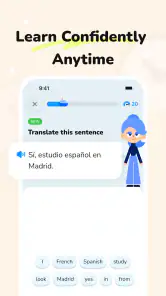




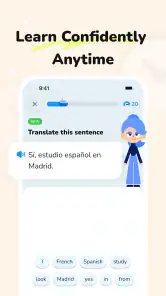
Analysis by Reviewed
I approached Pinu - Language Learning as a small, approachable education app rather than as a complete replacement for a traditional language course. Its central idea is easy to understand: you learn through a mix of play, speaking, and discovering language in a broader world context. That makes it appealing when you want something lighter than a textbook and more active than simply scrolling through translation cards.
After spending time with it, my impression is that Pinu works best as a repeatable daily practice tool. I would recommend it to someone who wants to build a habit, especially if formal lessons feel intimidating or difficult to fit into a busy routine. I would not treat it as the only resource for serious exam preparation, advanced grammar, or professional fluency. Its value is in making regular contact with a language feel manageable.
The app is free to install and is suitable for Everyone, although optional in-app purchases range from $1.99 to $99.99 per item. It comes from LEAF BOAT TECHNOLOGY LIMITED and is listed in the Education category. The current release is version 2.3.0, and it requires Android 9 or later. Those details matter because the experience is clearly aimed at broad accessibility, but the presence of optional purchases means I would still check what is available before committing to a long-term learning plan.
How I would build a useful daily routine with Pinu
A simple starting workflow that does not become overwhelming
My preferred way to use Pinu is to begin with a short session at a predictable time rather than opening it only when I happen to remember. A few minutes during a morning coffee, on a commute, or just before bed is more realistic than promising myself a long study block. The app’s playful approach helps with that first step because it feels less demanding than opening a dense grammar reference.
I would start by completing one focused activity, then pause long enough to recall what I just practiced. That second moment is easy to skip, but it changes how useful the session becomes. Instead of immediately tapping through another exercise, I would try to say the new word or phrase aloud once without looking. The speaking element is most valuable when it becomes an active part of the routine rather than something I leave for occasional practice.
A practical everyday scenario would be a learner preparing for a trip. During the week, I would use Pinu for short exposure to useful language, repeat phrases aloud, and note which expressions still feel slow. Before traveling, I would concentrate on the areas that affect real situations, such as greetings, ordering, asking for help, or understanding a simple response. I would still use a phrasebook or translation tool for backup, but Pinu could make those expressions feel more familiar before the trip begins.
The same workflow suits a student who already attends classes. After a lesson, I would use the app to keep the language active instead of expecting one weekly class to carry all the responsibility. It is especially helpful between lessons, when motivation often drops and the learner needs a low-friction way to return to the subject.
Why speaking aloud changes the experience
Many language apps are easy to use silently. That is convenient in public, but it can create a false sense of progress: I may recognize a phrase on screen while still struggling to produce it. Pinu’s emphasis on speaking encourages a more honest check. If a phrase feels awkward when I say it, I know it needs another pass.
I would not rush through spoken activities just to finish a session. My useful habit is to listen carefully, repeat at a natural pace, and then try again without copying the exact rhythm mechanically. This is a small but important distinction. Repetition should help me remember the phrase and become comfortable forming it, not merely reproduce a sound once.
There is also a trade-off. Speaking practice is harder to do discreetly than silent review, so Pinu may be less convenient in a crowded train or shared office. In those situations, I would use the quieter parts of a session for recognition and save spoken repetition for home or a private place. Planning around that limitation keeps the habit alive instead of making the app seem unusable whenever the environment is noisy.
Settings and choices worth checking early
Before settling into a routine, I would look through the available settings and learning controls rather than accepting every default. The most important checks are practical: confirm that the chosen language direction is correct, see how sound behaves, and understand whether the app is comfortable to use with headphones or without them. These are small adjustments, but they prevent avoidable frustration during repeated sessions.
I would also pay attention to how the app presents its activities. If a lesson feels too easy, I would avoid treating a perfect run as proof that the material is mastered. Recognition can be much easier than recall. My solution is to close the visual support briefly and test myself aloud. If the phrase disappears as soon as I cannot see it, I would repeat it later rather than moving on permanently.
The free access model deserves a deliberate check as well. Because optional purchases are present, I would explore the freely available learning path first and decide whether it genuinely fits my needs before buying anything. This is not a criticism of the model; it is simply good practice. A learner should know whether the free experience is enough for casual use and whether paid content would solve a specific problem, rather than purchasing because a progress screen creates pressure.
For families, the Everyone age rating makes Pinu broadly approachable, but I would still guide younger learners through the first sessions. The useful question is not only whether the content is age-appropriate, but whether the child understands the learning rhythm and knows when to repeat instead of tapping quickly through activities. Adult support can make a simple app much more effective without turning it into homework.
Faster patterns for busy learners
Experienced users usually do not rely on motivation alone. They reduce the number of decisions required to begin. With Pinu, I would keep the app in an easy-to-reach place, use the same time window each day, and decide in advance what counts as a successful session. That might mean one activity plus spoken recall, not an undefined promise to study until I feel satisfied.
Another efficient pattern is to separate exposure from correction. During the first pass, I would focus on understanding and pronunciation. On the second pass, I would pay attention to the items that caused hesitation. This prevents me from stopping every few seconds and losing the flow of the activity, while still giving difficult material a second look.
I would also use a three-step loop for phrases that refuse to stick. First, read or listen once for meaning. Second, say it slowly while concentrating on the structure. Third, use it in a tiny imagined situation. For example, I might picture asking for a table, greeting a neighbor, or describing what I need in a shop. This makes the phrase easier to retrieve than repeating it as an isolated sound.
A less obvious benefit of this method is that it reveals the difference between vocabulary gaps and confidence gaps. Sometimes I know the words but hesitate because I have never assembled them aloud. In that case, more silent review is not the best answer; a few calm spoken repetitions are more useful. If I truly cannot remember the meaning, then I return to the learning activity instead of forcing pronunciation without understanding.
Where Pinu fits beside conventional alternatives
Compared with a textbook, Pinu feels more inviting for short sessions and less useful as a complete reference. A book can explain grammar in depth, show exceptions, and let me compare examples on one page. Pinu is better when I need an immediate activity that gets me doing something rather than reading about language for a long time.
Compared with a flashcard-only tool, its play-and-speak orientation gives practice a little more variety. Flashcards remain excellent for deliberate vocabulary review, especially when I want to control exactly what appears. Pinu is a better choice when I need help starting a session and want the learning experience to feel less like maintaining a spreadsheet of words.
Compared with a private tutor or conversation exchange, Pinu cannot replace unpredictable human interaction. A person can correct a confusing sentence, adapt to my interests, and respond to what I actually mean. Pinu is much easier to use whenever I have a spare moment, and it costs nothing to begin, but it should be viewed as preparation and reinforcement rather than a complete speaking environment.
That comparison helps define its audience. Beginners and casual learners may appreciate the welcoming structure. Intermediate learners can use it to maintain momentum or revisit familiar material. Advanced learners looking for nuanced writing, specialized vocabulary, or detailed corrections will probably need stronger companion resources.
Limits that become clearer with regular use
The biggest limitation is not that Pinu is too simple; it is that a playful learning app can make progress feel smoother than it really is. Completing activities may improve recognition without automatically producing flexible conversation. I would measure success by what I can say without prompts, not only by how quickly I can finish an exercise.
Another limitation is the need for a broader study plan. If my goal were a formal test, workplace communication, or extended conversations, I would add grammar explanations, listening from varied speakers, writing practice, and real interaction. Pinu can support those goals, but it cannot carry every part of them by itself.
The purchase structure may also affect how different users judge the app. Someone who wants a completely open-ended learning resource may prefer an app with no paid layer. Someone else may be comfortable paying for extra access after testing the free experience. I would make that decision based on actual use: if Pinu is helping me return every day and the paid option addresses a clear need, it may be worthwhile; if I rarely open it, spending more will not fix the habit.
Device compatibility is another practical consideration. The Android requirement of version 9 or later is modest for many current phones, but anyone using an older device should check compatibility before planning around the app. I would also make sure the phone’s audio is comfortable enough for speaking practice, since weak sound or an inconvenient microphone can make a pronunciation-focused routine unnecessarily irritating.
Three habits that make the app more effective
My first recommendation is to keep a tiny “hesitation list” outside the app. I would write down only the words or phrases that repeatedly slow me down, not everything I encounter. Then I could revisit that short list before opening Pinu or after finishing a session. This creates a personal bridge between the app’s guided activities and the language I actually need.
Second, I would alternate silent and spoken sessions according to the setting. A quiet review can preserve the habit when I am in public, while a private session can focus on pronunciation and recall. The important point is not to abandon practice just because the ideal environment is unavailable. A shorter quiet session is better than waiting several days for perfect conditions.
Third, I would schedule a weekly reality check. Once a week, I would choose a few expressions practiced in Pinu and try to use them in original sentences or a short imagined conversation. If I can recognize them but cannot create anything with them, I know I need production practice. This simple test protects me from confusing app progress with usable language ability.
These habits do not require invented shortcuts or complicated customization. They work because they give each session a purpose: learn something, say it, notice what fails, and return to that weak point later. That is the kind of repeatable workflow that turns a pleasant app into a more dependable learning aid.
Who should choose it, and who should skip it
I think Pinu is a good fit for someone who is starting a language, returning after a long break, or struggling to maintain consistency with heavier study methods. It is also suitable for learners who enjoy a playful presentation and want speaking to be part of the routine from the beginning. The free starting point makes it easy to test without making an immediate financial commitment.
I would be more cautious if I needed a structured academic syllabus, detailed grammar instruction, or measurable preparation for a professional examination. In those cases, I would choose a course or reference that explains the language systematically, then use Pinu as a lighter practice companion. I would also skip it as a primary tool if I dislike game-like learning or prefer complete control over vocabulary selection and review order.
The audience size gives some useful context: the app has passed ten thousand installs, with an average rating of 3.8 from around forty ratings and twenty reviews. I read that as a modest but mixed signal rather than a reason to accept or reject it automatically. Pinu is still the kind of app I would judge through my own first few sessions, because the right fit depends heavily on whether its pace and presentation match my learning style.
My verdict after looking beyond the first session
Pinu succeeds when I use it for what it is: a friendly, accessible way to keep language practice moving through short activities, spoken repetition, and a sense of exploration. Its strongest quality is not that it promises to solve every language problem. It is that it can lower the resistance to beginning, which is often the real obstacle for a learner who knows what to do but does not do it consistently.
I would install it for a beginner who wants a gentle entry point, a traveler preparing basic communication, or an existing student who needs extra contact between lessons. I would pair it with more serious resources for grammar, writing, and real conversation. The app’s free availability makes that trial reasonable, while the optional purchases mean I would explore the basic experience carefully before paying for anything.
My final recommendation is to use Pinu as a habit builder, not as your entire language education. Give each session a small purpose, speak whenever your surroundings allow it, and test yourself away from the screen. If that rhythm suits you, the app can become a useful daily companion. If you need deep explanations, expert correction, or advanced subject-specific language, choose a more comprehensive alternative and let Pinu fill the lighter practice role.
Pros
- Short lessons fit easily into busy schedules.
- Useful vocabulary practice for everyday conversations.
- Progress tracking helps maintain learning motivation.
- Audio exercises support pronunciation and listening skills.
- Clean interface makes the app easy to navigate.
Cons
- Some advanced features may require a paid subscription.
- Grammar explanations can feel limited for serious learners.
- Lesson variety may become repetitive over time.
- Offline access may not be available for all content.
- Speaking practice may lack detailed pronunciation feedback.

- Category
- Education
- Version
- 2.3.0