PineDrama - Short Dramas
- 2.94K
- 4.3
- Installs
- 50.00M
- Price
- Free

Screenshots
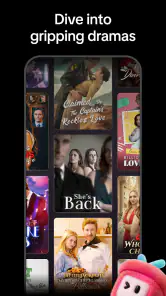

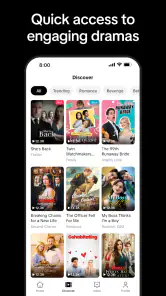

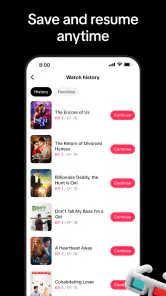
Analysis by Reviewed
I tried PineDrama - Short Dramas as a quick entertainment app for watching compact scripted stories and movie-style content on a phone. Its appeal is easy to understand: instead of committing to a long film or searching through a large general streaming catalog, I could open the app with a very specific intention—watch something dramatic, polished, and easy to follow in short sessions. That focused purpose makes it more interesting than a broad video platform when I only have a few spare minutes.
The app comes from TikTok Pte. Ltd. and sits in the entertainment category. It is free to install, aimed at a Teen audience, and supports devices running Android 6.0 or later. The current version is 46.4.4. Those details make it accessible to a wide range of Android phones, although the viewing experience still depends on the screen, speakers, network connection, and how comfortably you handle a fast-moving content feed.
My overall impression is cautious but positive. PineDrama is most convincing as a dedicated discovery space for short dramas, not as a universal replacement for a full streaming service. I would recommend trying it if you enjoy serialized stories and like making quick viewing decisions. I would be more careful if you dislike cliffhangers, prefer complete films, or want maximum control over what an entertainment app remembers and recommends.
What using PineDrama feels like in everyday viewing
The first useful distinction is that this is not simply a general-purpose video player. Its identity is built around short dramas and hit-movie discovery, so the experience is shaped by browsing rather than by managing a personal media library. I found that difference important. When I opened it during a short break, I was not looking for a particular actor or a carefully planned evening watch. I wanted the app to narrow the choice for me.
That can be a relief compared with large streaming services, where the amount of content can become its own obstacle. PineDrama’s narrower entertainment focus gives the browsing session a clearer mood. I could approach it as a quick emotional reset: choose a story, watch a little, and decide whether the characters or conflict are worth continuing with.
The trade-off is that short-form drama is designed to keep momentum high. Scenes need to establish tension quickly, and stories may encourage you to continue rather than stop after one segment. I personally found that useful when I wanted something immediately engaging, but less suitable when I was tired and wanted a calm, self-contained film. The app’s format rewards attention and curiosity more than passive background viewing.
A realistic use case is a commute or a lunch break. I might have enough time for several short viewing sessions but not enough certainty that I can finish a traditional movie. PineDrama fits that situation better than a cinema-style service because I can sample a story without planning an entire evening around it. I would still avoid starting an emotionally intense series just before an appointment, because the structure can make “one more part” surprisingly tempting.
More From Our News Desk

Clash of Clans Is Won Between the Battles

Android Auto Makes the Case for Quieter Car Software

MobiOffice: Transforming Mobile Productivity with Seamless Integration

EA SPORTS FC™ Mobile Soccer: Redefining Mobile Sports Gaming

How Microsoft OneDrive Became a Mobile Productivity Giant

How Google Translate Breaks Language Barriers Effortlessly
Another useful scenario is discovering what kind of drama you enjoy before investing in a longer subscription elsewhere. The app can act as a sampling tool for viewers who like romance, conflict, suspense, or heightened family stories. That does not make every title a perfect match, but it gives the experience a practical role: helping me decide whether this style of short storytelling is for me.
Why the focused catalog can work better than general video apps
Compared with a general video platform, PineDrama has a more deliberate entertainment identity. General platforms are excellent when I already know what I want, when I want creator-led videos, or when I need a huge range of formats. Their recommendation systems can also pull me away from scripted viewing into unrelated clips. PineDrama’s narrower purpose makes it easier to stay inside a drama-watching mood.
Compared with a traditional subscription streaming service, the difference is commitment. A large service may offer deeper catalogs, longer productions, stronger browsing tools, and a more familiar television experience. PineDrama is more appealing when speed matters and when I want to explore short stories rather than select a major release for a planned watch.
Compared with social video feeds, the advantage is narrative intent. A social feed is excellent for variety and spontaneity, but it can feel fragmented. PineDrama is aimed at stories with continuing dramatic movement, so I am less likely to treat every item as an isolated clip. The weakness is that I may have less of the broad creator variety and casual humor that makes social platforms useful.
My advice is to choose the app based on the viewing job. Use it for quick scripted discovery, not for replacing every other screen habit. If I want a complete, carefully paced film with dependable stopping points, a conventional streaming service is probably the better choice. If I want an endless mixture of comedy, news, creators, and live material, a general video platform remains more flexible.
Small habits that make short-drama viewing easier
I found three habits especially useful. First, I would give a new story a short trial rather than judging it from the opening seconds alone. Short dramas often establish their conflict quickly, but the tone and character chemistry may take a little longer to become clear. At the same time, I would not keep watching purely because the app makes the next part easy to open. A deliberate stopping rule helps prevent automatic viewing.
Second, I would use headphones in public and keep the screen brightness comfortable rather than assuming a fast-paced drama will be easy to follow in every environment. Short scenes can move quickly, and distractions matter more when the story has limited time to explain relationships. This is a simple viewing adjustment, but it makes the difference between following the plot and repeatedly rewinding.
Third, I would treat recommendations as a starting point rather than a final judgment about my taste. If the app presents a sequence of similar dramas, that may be convenient, but it can also narrow my choices. I prefer to pause occasionally and ask whether I am selecting a title because it genuinely interests me or because it is simply the most visible option.
These habits are not hidden buttons or technical tricks. They are ways to use the format more intentionally. The strongest benefit of PineDrama is convenience, and convenience can quietly turn into passive scrolling unless I keep control of the session.
Trust, controls, and moments that deserve attention
Because PineDrama is an entertainment app connected to a large technology company, I would not evaluate it only by asking whether the dramas are enjoyable. I would also pay attention to what choices are visible while using it. The developer is clearly identified as TikTok Pte. Ltd., and the app has a substantial presence on Android, with an average rating of 4.3 from around 307 thousand ratings and more than 50 million installs. That level of adoption can make an app feel familiar, but popularity alone is not a substitute for checking the choices presented on the device.
The app has around 2.9 thousand written reviews, which gives prospective users a useful place to look for recurring complaints or praise before settling into regular use. I would read recent comments with a specific purpose: look for patterns involving playback, account access, billing, recommendations, or unwanted interruptions. A single unhappy review tells me little; repeated comments about the same part of the experience deserve more attention.
The free entry point is helpful because I can test the catalog and the basic viewing experience before deciding whether it belongs on my phone. However, in-app purchases range from $2.99 to $199.99 per item. That is the point where I would slow down. I would not assume that “free” means every part of the viewing journey is free, and I would review each purchase screen carefully before confirming anything.
My practical rule is simple: never tap a payment option merely to see what happens. I would read the wording, check the amount, confirm whether the action unlocks a particular item or supports continued viewing, and use the device’s purchase authentication. If I were setting up the app on a family phone, I would also make sure the person using it understands that entertainment apps can present paid choices during an otherwise free experience.
The Teen content rating is another reason to use judgment rather than treating the app as automatically suitable for every viewer. A Teen label gives a general age signal, not a personal recommendation for every child or household. I would consider the maturity of the stories, the way conflict is presented, and whether the device is shared with younger viewers. For a teenager, I would still prefer an open conversation about spending and account controls instead of relying on the rating alone.
Data-sensitive moments require active attention
The moments I would watch most closely are the ordinary ones: first launch, account creation, sign-in, notifications, recommendation prompts, and purchase confirmation. These are the points where an entertainment app can ask for choices that affect how the service behaves. I would read each prompt rather than accepting everything quickly, especially when I am eager to start a drama.
I also would not grant a permission simply because the app appears to request it during setup. My approach is to consider whether the permission makes sense for the action I am trying to perform. If a choice is optional, I prefer to leave it off until I understand the benefit. If the app later needs a setting for a feature I actually want, I can make that decision at that moment instead of approving a broad collection of requests in advance.
Notifications deserve similar care. Reminders can be useful when I am following a continuing story, but frequent alerts can turn a short-drama app into a source of interruption. I would begin with a restrained notification setup and adjust it only if the reminders genuinely help me return to a series. The best entertainment app is one that fits my schedule, not one that dictates when I look at my phone.
Recommendation controls are also part of trust, even when they do not look like privacy settings. My viewing choices shape what appears next, so I would occasionally review whether the suggestions still reflect what I want to watch. If the feed becomes repetitive or too intense, I would take a break instead of assuming I must keep interacting to improve it.
Keeping control of accounts and spending
I would use an account setup that I can manage comfortably and avoid sharing login details with other people. On a shared device, separate user habits can make recommendations confusing and can create uncertainty about who initiated a purchase. That is a small household issue, but it matters when an app combines personal viewing with paid options.
I would also keep purchase confirmation enabled through the phone’s normal security controls. The wide range of possible in-app purchase amounts makes this more than a theoretical precaution. A free download is easy to try; an accidental purchase is harder to undo emotionally and practically. Taking a few seconds before confirming is the most useful control I can apply.
If I stopped using the app, I would remove it rather than leaving it forgotten in the background. Before doing that, I would review any account-related choices available inside the app and the device settings. I would not treat uninstalling as a substitute for understanding an account or purchase situation, but it is a sensible way to reduce clutter and avoid opening an app I no longer intend to use.
The Android requirement of version 6.0 or later means the app can run on many older devices, which is convenient for people who do not upgrade often. Still, compatibility does not guarantee a smooth experience on every phone. A smaller screen, older hardware, limited storage, or an inconsistent connection can make short dramas less enjoyable. I would test playback before committing time or money, particularly on an older handset.
Where the app is a good fit—and where it is not
I think PineDrama is a good fit for viewers who enjoy dramatic storytelling in compact sessions, like browsing for something new, and are comfortable making their own decisions about notifications and purchases. It is also useful for someone who wants a dedicated alternative to a noisy general video feed without committing immediately to a full television-style service.
I would skip it if my priority were a large, carefully organized library of complete films, a quiet background player, or the strongest possible separation between free viewing and paid choices. I would also hesitate to recommend it to a younger child simply because the content rating says Teen; adults should still decide whether the format and individual stories suit the household.
People who dislike cliffhangers may find the short-drama structure frustrating. The same design that makes a story easy to start can make it difficult to finish in one sitting. Viewers who prefer slow character development may also find the pacing too compressed. In those cases, a conventional movie service or a longer television series is likely to feel more satisfying.
For me, the deciding question is not whether PineDrama can replace every entertainment app. It cannot, and it does not need to. The more useful question is whether I want a focused place for short scripted drama and whether I am willing to stay attentive to the choices around recommendations, alerts, accounts, and purchases.
After trying it, I see PineDrama as a convenient sampler and a practical short-session viewer rather than an automatic all-purpose streaming solution. Its free starting point lowers the barrier to testing it, while its Teen rating and paid-item range mean I would use it with ordinary care. The app’s strongest quality is focus: it gives me a direct route into short dramatic stories when I do not want to search across an enormous catalog.
My cautious verdict is that PineDrama is worth trying, but not worth using on autopilot. I would install it for commutes, breaks, and casual story discovery, then decide whether the recommendations and viewing rhythm suit me. I would keep purchase authentication on, review prompts instead of rushing through them, and leave if the format began to feel repetitive or too demanding. For the right viewer, that balance makes it an enjoyable entertainment option; for everyone else, a traditional streaming service may offer more control and a calmer way to watch.
PineDrama - Short Dramas Frequently Asked Questions
What is PineDrama’s overall reputation among users?
PineDrama has an average rating of 4.3 from around 307,000 ratings, suggesting that many users have tried the app and shared their impressions. Ratings are only a broad guide: your experience may depend on the dramas you choose, how you feel about short-form storytelling, and whether the app’s viewing and purchase options suit you. It is helpful to read recent reviews as well as the overall score.
What does PineDrama offer for viewers who enjoy short-form entertainment?
PineDrama’s short description is simply “PineDrama,” while its store summary invites viewers to unlock a world of short dramas and discover series and hit movies. The app is aimed at people looking for entertainment in a mobile-friendly format, with short dramas as its central focus. If you prefer compact scripted stories over committing to longer episodes, that format may be worth exploring.
Who develops PineDrama, and what kind of app is it?
PineDrama is an entertainment app developed by TikTok Pte. Ltd. Its focus is short dramas and other video stories for mobile viewing, so it may suit people who want scripted entertainment in brief sessions rather than longer, traditional episodes. The app is free to download, while some content or features may involve in-app purchases.
What is PineDrama - Short Dramas?
PineDrama - Short Dramas is a mobile entertainment app focused on short-form scripted series. It is designed for viewers who enjoy dramatic stories divided into brief episodes that can be watched during quick breaks. The catalog may include romance, family conflict, suspense, revenge, and other popular drama themes. Episodes are generally presented in a vertical, mobile-friendly format, making the app convenient for watching on a phone or tablet.
Is PineDrama - Short Dramas free to download and use?
PineDrama can generally be downloaded without an upfront charge, but free access may be limited. Depending on the title and episode, the app may use advertisements, in-app purchases, virtual coins, subscriptions, or a combination of these options to unlock additional content. Before watching extensively, it is worth checking the pricing information shown in the app store and reviewing the purchase screen carefully so you understand whether an episode or subscription requires payment.
Pros
- Short episodes fit easily into quick breaks.
- Frequent plot twists keep many stories engaging.
- Simple interface makes browsing dramas straightforward.
- Episodes are generally easy to stream on mobile data.
- New content can provide a steady supply of stories.
Cons
- Many episodes may require coins or in-app purchases.
- Some storylines rely heavily on familiar drama clichés.
- Video quality and subtitles may vary between productions.
- Frequent ads can interrupt viewing for free users.
- Offline viewing may be limited or unavailable for some content.
- Category
- Entertainment
- Version
- 46.4.4