OurSongs: Custom Song Maker
- 286.00
- 4.7
- Installs
- 500.00K
- Price
- Free

Screenshots
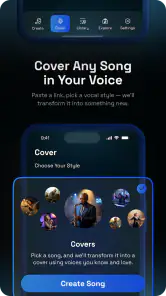
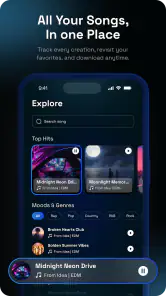
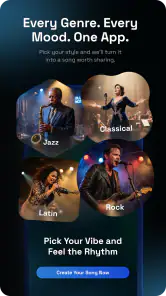
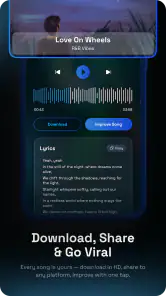
Analysis by Reviewed
Turning a personal memory into a song sounds like the kind of idea that is either wonderfully thoughtful or awkwardly complicated. After spending time with OurSongs: Custom Song Maker, I found it sits somewhere in between: the app makes the creative starting point approachable, but the quality of the final result depends heavily on how clearly you shape the story before you submit it. That makes it more interesting than a simple music player, yet less flexible than a full songwriting or audio-editing tool.
Developed by Innovtiv, this free Music & Audio app is designed around a very specific gift-making moment. You provide the personal material, and the service turns that idea into a custom song. The appeal is obvious for birthdays, anniversaries, weddings, friendship milestones, family tributes, or even a lighthearted message for someone who already owns everything. I would recommend trying it when the emotional meaning of the story matters more than having complete control over every musical detail.
The app has attracted a 4.7 average from around 3.2 thousand ratings and has passed 500 thousand installs. Those figures suggest that the concept is easy for people to understand and appealing enough to try. Still, popularity does not remove the need to prepare your material carefully. The best experience comes from treating the app less like a magic button and more like a guided creative commission.
How the basic OurSongs workflow feels in everyday use
The natural first step is to think about the person and the moment before opening the app. If I begin with a vague request such as “make a nice song for my partner,” I am giving the creative process very little to work with. A better starting point is a short collection of details: where we met, an expression that person always uses, a shared trip, a private joke, or the quality I most want the song to celebrate.
That preparation is the first practical lesson. A custom-song app can organize personal information, but it cannot create meaningful memories that were never supplied. I found that choosing two or three strong images works better than dumping every event from a relationship into one request. A focused story gives the result a clearer emotional center and makes the finished song feel intentional rather than like a list of references.
Once the idea is ready, the process is approachable for anyone who can write a message and follow an app workflow. You do not need to understand musical notation, recording software, or arrangement terminology. That is the strongest reason to choose this app instead of opening a traditional digital audio workstation. Those tools can offer far more control, but they also ask you to learn tracks, effects, timing, and exports before you can make anything satisfying.
OurSongs is better suited to people who want to express a story without becoming musicians first. I can imagine using it at the kitchen table while preparing a surprise, writing the details in a notes app and then shaping them into a more polished request. That small habit matters because it separates the emotional brainstorming stage from the submission stage. It also gives me a chance to remove details that are too private, too confusing, or simply not important to the recipient.
More From Our News Desk

Clash of Clans Is Won Between the Battles

Android Auto Makes the Case for Quieter Car Software

MobiOffice: Transforming Mobile Productivity with Seamless Integration

EA SPORTS FC™ Mobile Soccer: Redefining Mobile Sports Gaming

How Microsoft OneDrive Became a Mobile Productivity Giant

How Google Translate Breaks Language Barriers Effortlessly
A realistic everyday scenario would be a sibling preparing a birthday gift for a brother who has moved away. Instead of trying to summarize their entire childhood, I would choose one recurring family memory, one recent change, and one sincere message about staying close. The result has a better chance of feeling personal because it has a beginning, a recognizable middle, and a clear reason for existing. The app is most useful when it helps turn that structure into a musical keepsake.
There is also a difference between making a song for private enjoyment and making one for a public event. For a private gift, an unusual lyric or slightly imperfect emotional turn may feel charming. For a wedding reception or a room full of guests, I would be more cautious. The recipient may appreciate the thought, but the song still needs to suit the mood, length, and audience. I would prepare it well in advance rather than relying on it as the only important part of a ceremony.
What to decide before creating a song
I recommend writing the intended feeling in one sentence before adding any details. Is the song meant to be funny, romantic, grateful, nostalgic, encouraging, or celebratory? That sentence acts as a filter. If a memory does not support the main feeling, I would leave it out or save it for another project.
Next, decide how recognizable the references need to be. A close friend may understand a nickname or an indirect joke, while a broader family audience may need more context. This is a useful trade-off: highly personal details can make a song feel special, but too many unexplained references can make it difficult for anyone else to follow.
I would also read the final wording aloud before submitting it. Spoken language exposes awkward sentences, repeated ideas, and details that sound funny in a way I did not intend. This is one of the simplest ways to improve the result without asking the application to do extra creative work.
Settings and choices that deserve attention
The most important “setting” is not a technical switch; it is the way the request is framed. I get better creative direction from concrete language than from broad praise words. “Warm and reassuring, with a playful moment about our disastrous camping trip” gives a clearer target than “make it beautiful and emotional.” The former establishes both tone and contrast.
Think about the listener’s reaction as you write. A song can mention a private memory without explaining every part of it, but the emotional point should remain understandable. If the song is for a parent, the important message may be gratitude. If it is for a partner, the important message may be commitment. If it is for a friend, humor and shared history may carry more weight than romance.
Because the app is free to install, it is easy to begin experimenting without treating the first attempt as a major commitment. However, in-app purchases range from $9.99 to $79.99 per item, so I would make the creative brief as clear as possible before spending money. The practical approach is to decide what the song is for, who will hear it, and what level of finished presentation is appropriate before moving toward a purchase.
That pricing range also changes how I evaluate the app. It is not enough to ask whether the idea is fun. I would ask whether this particular occasion justifies paying for the result and whether a simpler alternative would do the job. For a meaningful anniversary or a once-in-a-lifetime family tribute, the personal value may make sense. For a casual joke that will be forgotten next week, writing a message or making a playlist may be the smarter choice.
The app is rated for Everyone, which fits its broad gift-oriented concept. Even so, I would still use judgment when writing personal material. A general age rating does not mean every story is suitable for every audience. If children will hear the song, keep the references clear and appropriate; if it is intended for adults, remember that a private joke can become uncomfortable when played in front of relatives or colleagues.
OurSongs runs on devices using Android 8.0 or later, which makes it accessible to many people using older phones. That is helpful if the person organizing the gift is not carrying a recent flagship device. I would still keep the phone updated and make sure there is enough time to review the experience calmly, especially when the song is part of a planned surprise.
Repeatable habits that make the process faster
Experienced use is less about rushing through the screens and more about reusing a reliable preparation pattern. I like to divide the story into four small notes: the relationship, the central memory, the desired feeling, and the closing message. This prevents the common mistake of writing a long paragraph that contains plenty of information but no clear emotional direction.
A second useful habit is to create a “must include” line and a “nice to include” line. The must-include material protects the meaning of the gift. The optional material can be removed if it makes the story crowded. This is especially valuable when several family members contribute memories and everyone wants their favorite moment included.
For a surprise, I would prepare the content away from the recipient and avoid composing it while they are nearby. That sounds obvious, but gift-making apps are often used in shared homes where a notification, preview, or visible title can spoil the plan. I would also choose a neutral description for the project if the device is likely to be seen by the person receiving the song.
Another practical pattern is to match the song to the delivery moment. A song played privately through headphones can be more intimate than one played across a crowded room. If the recipient is likely to feel embarrassed by public attention, I would share it one-to-one first. The app helps create the gift, but the way I present it determines whether the moment feels caring or performative.
When preparing several songs for different people, I would keep each brief separate rather than blending everyone into one large request. Separate notes make it easier to preserve each person’s voice and avoid accidental crossover between memories. This is a small organizational step, but it protects the personal quality that makes custom music worthwhile.
I also suggest listening with a critical ear instead of assuming that every personalized line will land perfectly. Ask whether the main message is easy to understand, whether the humor is kind, and whether the recipient would recognize themselves in the song. If a line feels too generic, the problem may be in the original story rather than in the app. Refining the source material is often more effective than simply trying again without changing the direction.
Where the app is less flexible than traditional music tools
The convenience of OurSongs comes with a clear trade-off: it is aimed at people who want a finished personalized concept, not musicians who want to control every part of a production. If I wanted to choose individual instruments, edit vocal timing, build a detailed arrangement, or mix separate tracks, I would look to a dedicated music-creation application instead.
That limitation is not automatically a flaw. In fact, it protects beginners from becoming trapped in technical decisions. The app’s value is in shortening the distance between “I have a story” and “I have a song connected to that story.” But users who already know how to compose may find the guided approach restrictive, particularly if they have a specific melody or arrangement in mind.
It is also not a replacement for a normal streaming service. A music player gives me immediate access to a broad library and makes discovery effortless. This app serves a different purpose: creating something tied to one person or occasion. If I simply want background music for studying, exercising, or commuting, I would choose a conventional music service rather than a custom-song maker.
Compared with writing lyrics myself, the app saves time and lowers the barrier to presentation. Writing from scratch gives me complete ownership of every word, but it can also leave the result unfinished or difficult to perform. Compared with commissioning a professional songwriter, OurSongs is more accessible and likely simpler to start, while a human collaborator may offer deeper revisions and a more nuanced understanding of a complicated story.
The purchase decision is therefore part of the creative decision. I would not pay merely because the app can produce a song; I would pay when the song has a clear role in a meaningful event. Before committing, I would make sure the intended recipient actually enjoys personalized gifts. Some people love being celebrated through music, while others would prefer a handwritten note, a photo book, or a practical present.
There is another subtle limitation: personalization can become too literal. Including a person’s name and several facts does not automatically create emotional depth. A song becomes memorable when the details reveal why the relationship matters. I would prioritize one honest observation over a dozen surface-level references, especially if the goal is to make the recipient feel understood rather than merely mentioned.
Who will enjoy it, and who should choose something else
I think the app is a strong fit for non-musicians who want a distinctive gift and are willing to spend a little time preparing the story. It is particularly suitable for people who feel that ordinary greeting cards are too limited but who do not have the skills or equipment to write and record a song themselves.
It also works well for a group gift, provided one person takes responsibility for editing the material into a consistent emotional direction. A group can contribute memories, but a committee-written song can become crowded. One editor should decide which references support the main message and which ones belong in a separate card or speech.
I would be more hesitant to recommend it to a songwriter who expects detailed musical control, or to someone who needs a polished commercial release. The app’s appeal is personal expression, not professional production workflow. Likewise, anyone who dislikes sentimental gifts may find the entire concept uncomfortable, regardless of how well the song is made.
The current version is 1.0.13, and that gives me another reason to approach it as a focused tool rather than a mature all-purpose studio. I would judge it by whether it makes a personal song easier to create, not by expecting the breadth of a long-established audio workstation. For its intended audience, simplicity is more important than a huge collection of controls.
My verdict after using it as a gift-making tool
The real strength of OurSongs is the bridge it creates between a personal memory and a shareable musical gift. It removes the intimidating parts of songwriting and encourages me to think about the story first. That makes it more useful than a generic novelty app, especially when I approach the process with a clear feeling, a few vivid details, and a realistic plan for how the recipient will hear it.
I would start with the free app because the concept is easy to understand and the age rating of Everyone makes it broadly approachable. I would not rush into an in-app purchase, particularly with individual items ranging from $9.99 to $79.99. First, I would prepare the story, decide whether the occasion is important enough for a custom song, and consider whether the recipient is comfortable with musical attention.
My final recommendation is positive, with conditions. Choose it when the emotional story is the main gift and you want help turning that story into music. Use a traditional music-making app when you need control over composition and production, and use a regular music service when you simply want songs to listen to. OurSongs has a narrower purpose, but within that purpose it offers a friendly and memorable way to create something personal.
For me, the best results come from treating it as part of a thoughtful workflow: collect the right memories, reduce them to a focused message, check the tone aloud, and plan the delivery before sharing. If you do that, OurSongs: Custom Song Maker can become more than a quick experiment. It can turn a small, specific piece of someone’s life into a gift that feels made for them.
OurSongs: Custom Song Maker Frequently Asked Questions
Who makes OurSongs: Custom Song Maker, and what kind of app is it?
OurSongs: Custom Song Maker is a Music & Audio app from Innovtiv. Its central idea is to turn a personal story into a custom song, which may suit someone looking for a creative gift or a musical way to express a message. The app is free to download, and its content rating is Everyone, so it is presented for a broad audience.
What is OurSongs: Custom Song Maker used for?
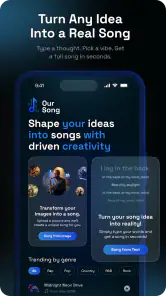
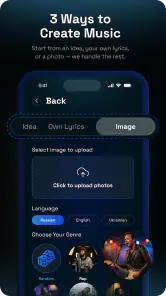
OurSongs: Custom Song Maker is designed for creating personalized songs from your own ideas, lyrics, and creative prompts. It can be useful for making birthday songs, romantic messages, humorous tracks, social media content, or simple musical experiments. Before downloading, remember that the final result may depend on the information you provide, the available creation tools, and whether certain features require an account or subscription.
Can I create a complete song without having musical experience?
Yes, the app is intended to be accessible even if you do not know how to compose music or play an instrument. You can generally begin with a concept, text, or theme and use the available customization options to shape the result. However, users looking for detailed control over melody, arrangement, vocals, or mixing should check the app’s current tools, because it may be more focused on quick creation than professional studio production.
Does OurSongs: Custom Song Maker require payment or offer in-app purchases?
The application is free to download, but it also offers in-app purchases priced from $9.99 to $79.99 per item. The exact price and limitations can vary by platform, region, and developer policies. It is advisable to review the purchase options carefully before creating content, especially if you plan to use the app frequently or need access to paid features.
Can songs made with the app be downloaded and shared?
OurSongs: Custom Song Maker is intended for creating songs that can be enjoyed or shared, but the exact export options may vary. Depending on the version, you may be able to save audio, share a generated track through other apps, or access creations through your account. Check the app’s permissions and terms before publishing music publicly, particularly when using copyrighted lyrics, recognizable names, commercial material, or content generated from third-party resources.
Pros
- Simple tools make it easy to create short custom songs.
- Useful for personal greetings
- jokes
- celebrations
- and social posts.
- Lets users experiment with lyrics and basic musical ideas.
- Creative format can be enjoyable for children and casual users.
- Custom creations feel more personal than using standard audio clips.
Cons
- Song quality depends heavily on the user's input and editing choices.
- Advanced musicians may find the composition features too limited.
- Some creations can sound repetitive without extra customization.
- Export or sharing options may vary by device and app version.
- Privacy settings should be checked before uploading or sharing creations.
- Category
- Music & Audio
- Version
- 1.0.13