ORTEX - Stock Market Analytics
- 8.00
- 3.6
- Installs
- 50.00K
- Price
- Free

Screenshots
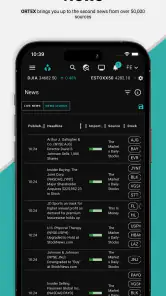
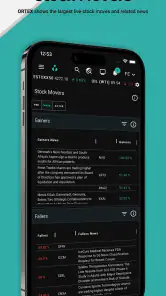
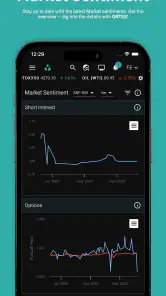
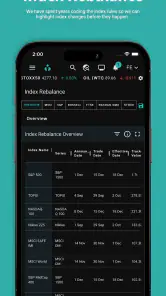
Analysis by Reviewed
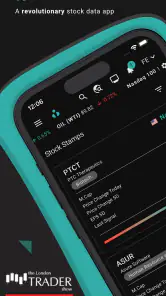
I approached ORTEX - Stock Market Analytics as a tool for making sense of market information rather than as a place to casually watch prices. The app comes from ORTEX and sits in the finance category, with a clear focus on turning data into decisions. That distinction matters in a household, because one person may want a quick market check while another may be trying to understand why a stock is moving before making a serious investment choice.
My overall impression is that it is most useful when I treat it as a research companion. It can help organize my thinking, challenge an initial opinion, and give a more structured starting point than a simple quote screen. At the same time, I would not hand it to a new investor and assume the numbers will explain themselves. The app rewards curiosity and patience, while people looking for a very simple “buy or sell” experience may find the analytical approach heavier than expected.
Using ORTEX in a shared household
A realistic shared-device situation is easy to imagine. I might check a company during breakfast, leave the phone on the table, and later have a partner or older family member open the same app to look at another stock. In that setting, the value of ORTEX is not just the information on screen. It is also the conversation it can support: why does this company look interesting, which signals deserve attention, and what should be checked before acting?
That shared use also exposes an important boundary. A finance app can be viewed by several people, but the decisions connected to it should remain personal. I would not treat a market screen as a shared household instruction board. If two people use the same phone, each person should know which watchlist, search, or conclusion belongs to whom. Otherwise, a quick glance can easily become a mistaken assumption that everyone agrees with the same investment idea.
I found the app better suited to discussion than to replacing discussion. A teenager learning how markets work might use it beside an adult who can explain unfamiliar terms. A couple could compare research notes before deciding whether a company deserves more attention. But I would avoid presenting the app’s analysis as an authority that settles an argument. Its role is to improve the questions we ask, not to remove judgement from the process.
The strongest household use is guided research, not shared trading decisions. That difference is easy to overlook because financial information feels objective when it is displayed in charts and indicators. In practice, the meaning still depends on the company, the time horizon, the user’s goals, and the risks they are willing to accept.
What the first setup feels like
ORTEX is free to install, which makes trying it less intimidating than committing to a paid finance service immediately. The app is rated for Everyone, so its general audience is broad. That does not mean every feature or piece of financial language will be suitable for a child, though. An age label describes access, not financial readiness, and I would still introduce the app differently to a beginner than to an experienced investor.
The Android requirements are also fairly approachable: the app works from Android 6.0 onward. I tested the experience with the mindset of someone who wants to get from opening the app to useful research without turning setup into a project. The current version is 1.0.14, and that makes it worth checking that the installed build is current before judging an issue as a permanent limitation. Finance applications depend heavily on timely information, so keeping the software updated is a sensible habit.
One point I would establish before sharing a device is who is responsible for interpreting what appears on screen. If I am helping a family member, I would explain that ORTEX is not a substitute for learning basic terms such as volatility, valuation, short interest, or earnings expectations. Even if the interface makes a signal look clear, the user should know what it represents before allowing it to influence a real decision.
The free entry point is helpful, but the in-app purchase range changes the conversation. Optional items run from $8.99 to $349.99 each, so I would review purchase settings before letting someone else explore the app on my device. This is especially important with a shared phone or tablet. A person may think they are simply opening a deeper research option, while the account holder sees a charge later. I would not call that a flaw unique to ORTEX, but it is a practical boundary that deserves attention.
Keeping accounts and conclusions separate
For household use, I would avoid assuming that one device should equal one shared financial identity. If the app offers a sign-in or account flow during use, each person should understand whose information is being viewed and who controls any subscription or purchase. I am deliberately careful here because finance tools are more sensitive than ordinary entertainment apps: a mixed-up profile can affect research history, saved ideas, and the context around a decision.
Even without inventing a family-management system, there are simple habits that help. I would close the app after a research session, avoid leaving a screen open beside someone who is not part of the discussion, and say aloud when a conclusion is only a first impression. If a household member borrows the phone, they should not have to guess whether a displayed stock is a personal holding, a watchlist candidate, or merely an example being studied.
This separation is particularly useful when people have different levels of experience. An experienced investor may understand that an attractive signal is only one part of a thesis. A beginner may read the same screen as a recommendation. I would therefore use ORTEX with a shared-device rule: explain the purpose of the current search, then let the other person form their own view instead of presenting the app as a ready-made answer.
There is also a useful workflow for avoiding impulsive reactions. When I notice a stock that looks interesting, I would first record the reason for opening it in plain language, then inspect the relevant analytics, and finally write down what information would change my mind. That three-step habit turns the app into a research checkpoint. It is more valuable than repeatedly refreshing the same screen while a price moves.
How I would coordinate research with another person
Coordination works best when each person has a defined role. One user can choose the company to investigate, while the other asks what evidence supports the interest. With ORTEX, that approach encourages people to look beyond a single attractive number. The goal is not to make the process formal for its own sake; it is to stop a shared conversation from becoming a quick reaction to whichever figure catches the eye first.
I also like the idea of separating discovery from action. During a first session, I would use the app to collect questions rather than make a purchase decision. For example, if a company appears worth examining, I would ask whether the signal fits a short-term trade or a longer-term investment, what event could invalidate the idea, and whether the household can tolerate the possible loss. Those questions are not features of the app, but they make its analytics more responsible to use.
For a couple managing money together, a short review routine could be more useful than constant checking. One person can explain why the stock entered the conversation, the other can challenge assumptions, and both can agree on what still needs independent verification. This is where ORTEX feels more distinctive than a basic market app: its purpose invites interpretation. The trade-off is that interpretation takes work, especially when the user has little experience with market research.
I would not coordinate by sending a screenshot and assuming the recipient has the full context. A screenshot freezes one moment and removes the surrounding reasoning. If I share something from the app, I would include the question I was trying to answer and the reason the information matters. That small habit prevents a chart or metric from being treated as a standalone prediction.
Another non-obvious benefit is that this method exposes disagreement early. If two people look at the same company and reach different conclusions, that is not necessarily a failure. It may reveal different time horizons or different ideas about risk. ORTEX can provide a common analytical reference point, but it cannot decide which household priority matters more. I would use the disagreement to clarify goals rather than force a single interpretation.
Age, trust, and financial judgement
The Everyone rating makes the app accessible in a general sense, but I would still be selective about how younger users interact with it. A child might enjoy exploring company names or learning how markets are described, while a teenager could be ready for a more serious discussion about risk. Neither should be encouraged to treat an analytical display as a promise of profit.
Trust is central here. If I introduce ORTEX to a younger family member, I would explain three things before opening a stock screen: market data can change, analysis can be wrong, and no app can know a person’s financial situation. I would also keep real-money decisions with the adult responsible for them. That is not because the app is unsuitable for learning; it is because learning and authorizing a financial commitment are very different activities.
For older relatives who are less comfortable with financial technology, the main challenge may be vocabulary rather than navigation. I would sit beside them the first time and ask them to describe what they think each important item means. If they cannot explain it, I would pause instead of rushing through the screen. This approach is slower, but it builds trust and reduces the chance that a confident-looking interface will hide confusion.
The app’s average rating is 3.6 from around seventy-eight ratings, with eight written reviews. I read that as a reason to keep expectations measured rather than as a verdict by itself. There is enough public response to show that people are forming different impressions, but not enough for me to treat the rating as a complete picture of every device or investing style. My own judgement is that the app’s usefulness depends strongly on whether the user wants analysis or simplicity.
The developer, ORTEX, gives the product a clear identity around market analytics. That focus can be a strength for someone who wants more than a price ticker. It can also create friction for a household member who only wants a quick answer about today’s movement. Before recommending it, I would ask what the person expects from a finance app. If the answer is “teach me how to evaluate information,” ORTEX is worth exploring. If the answer is “show me a clean balance and basic transactions,” a banking app or brokerage app may be the better fit.
Where it stands beside familiar alternatives
Compared with a standard brokerage application, ORTEX is better approached as an analysis layer than as the entire financial workspace. Brokerage apps are usually built around accounts, orders, balances, and portfolio activity. I would choose those when I need to manage investments directly. I would choose ORTEX when I want to examine market signals and improve the reasoning behind what I might research next.
Compared with a simple quote app, it offers a more thoughtful starting point for investigation. A quote screen is excellent when speed matters: open it, check the current movement, and leave. ORTEX is more appropriate when I want to ask why a company deserves attention. The exchange is that the extra context requires more reading and a willingness to learn. For a user who dislikes financial terminology, the simpler alternative may be more comfortable and more honest about what they need.
Compared with manually collecting information from news sites and spreadsheets, the app can make the research process feel more focused. The advantage is convenience and a shared analytical reference. The disadvantage is that a single app can encourage tunnel vision. I would still compare a promising idea with company information, broader market conditions, and my own financial plan. ORTEX should narrow the questions, not narrow the world of evidence.
One of my practical tips is to use it before reading commentary, not only after. If I first form a basic question and then inspect the app, I am less likely to absorb someone else’s conclusion uncritically. I can use the analytics to identify what deserves checking, then look for independent context. This workflow makes the app more valuable than simply opening it after a price spike and searching for confirmation.
Another useful trade-off concerns time. A quick user may gain little from the app if they never pause to interpret the information. A patient user can turn the same screen into a repeatable research process. I would therefore skip ORTEX for casual market glances and choose it for scheduled review sessions, learning, or conversations where the reasoning matters as much as the result.
Who should use it and who should pass
I would recommend ORTEX to an investor who already knows the basics and wants a more analytical way to examine companies. It also suits a curious beginner who is willing to learn terminology instead of expecting instant instructions. In a household, it can work well when an adult and a learner explore the same company together while keeping ownership, purchases, and decisions clearly separate.
I would be more cautious recommending it to someone who wants retirement planning, budgeting, bill management, or direct account administration in one place. Those needs belong closer to a personal finance or brokerage solution. ORTEX may complement those tools, but I would not expect it to replace them. I would also pass if the person tends to make impulsive decisions from a single signal or feels uncomfortable questioning analytical outputs.
The purchase range is another reason to match the app to the user. Since the app is free to start but includes individual purchases from $8.99 up to $349.99, I would explore the basic experience first and decide whether deeper access genuinely improves the research process. I would never make that decision on behalf of another household member without explaining the cost and confirming who controls the account.
Its reach is still modest compared with the largest finance platforms, with over fifty thousand installs. That does not determine quality, but it reinforces my preference for a careful trial rather than assuming the app will fit every workflow. I would test it with a small research question, see whether the analytics are understandable, and only then consider making it part of a regular routine.
My household verdict
After using ORTEX as a market-research tool, I see its best role clearly: it helps turn vague interest in a stock into a more structured investigation. The app is free to begin, available on older Android devices from version 6.0 onward, and its finance focus makes it more purposeful than a basic price viewer. ORTEX presents itself around better information and better decisions, but the second half still depends on the person holding the phone.
For shared use, I would recommend it with boundaries. Keep accounts and purchase responsibility clear, explain unfamiliar terms, avoid treating a screen as a household command, and use conversations to test conclusions. Those habits make the app safer and more useful without pretending it provides family controls or personalized financial advice.
My final recommendation is positive but specific. Choose ORTEX if you want to investigate market ideas, compare evidence, and build a more deliberate research habit. Choose a simpler quote tool if you only need quick prices, and choose a brokerage or budgeting app if your main task is managing money directly. In my experience, ORTEX earns its place when I use it as a question generator and a thinking aid—not when I ask it to make the decision for me.
Pros
- Clear market dashboards make complex stock data easier to scan.
- Useful alerts can help track price changes and important market events.
- Offers a broad range of technical indicators for deeper analysis.
- Historical data supports research beyond short-term price movements.
- Clean interface is suitable for both casual users and active investors.
Cons
- Many advanced tools and insights require a paid subscription.
- Data and alerts may be delayed depending on the selected market.
- The large amount of information can feel overwhelming for beginners.
- Coverage and feature availability vary across countries and exchanges.
- It is an analysis tool
- not a substitute for professional financial advice.

- Category
- Finance
- Version
- 1.0.14