OOC: The Playable Anime
- 4.00K
- 4.2
- Installs
- 1.00M
- Price
- Free

Screenshots


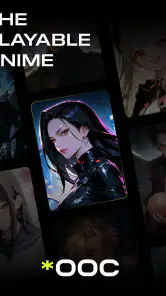
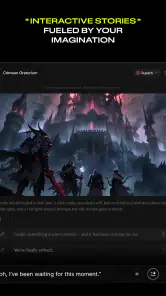
Analysis by Reviewed
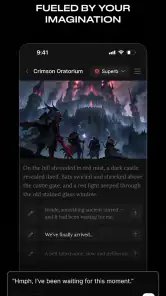
OOC: The Playable Anime is best approached as a story you take part in, rather than a conventional game built around constant action. That distinction matters: if you enjoy anime-style fiction and like imagining what happens next, its central appeal is easy to understand. If you mainly want precise combat, elaborate strategy, or a clear sequence of mechanical challenges, you may find the experience less satisfying.
I see it as a choice for readers who want their entertainment to leave room for personal interpretation. The premise is inviting, but it also sets a particular expectation: the pleasure comes from engaging with an unfolding narrative, not from treating every moment as a test to beat. That makes the game potentially absorbing in short sessions, while its pace and the way it asks you to participate will decide whether you want to keep returning.
What keeps the story moving
Early goals: finding your place in the fiction
The first goal in a playable anime novel is different from the first goal in an action game. Instead of immediately asking you to master controls or chase a score, the experience asks you to settle into the story and decide how much attention you want to give it. I would approach the opening with curiosity rather than a checklist mindset: notice what the scene is asking you to care about, and let that guide your engagement.
That is a useful fit for a break between other tasks. You can pick it up when you want a dose of fictional atmosphere without committing to a long play session, then pause once you reach a natural stopping point. The trade-off is that readers who need an obvious objective at all times may take longer to find their footing. A novel’s forward pull depends on interest in its characters and situations; it cannot rely on a new stage or challenge every few minutes.
One practical way to judge the opening is to ask whether you are curious about the next scene, not whether you have already discovered a deep game system. If you are waiting for complex mechanics to appear, you may be measuring it against the wrong kind of experience. If you are wondering what a character will do or how a moment will resolve, the story-led format is doing its job.
Progress signals: narrative momentum over a checklist
In a story-focused game, progress can feel quieter than it does in a title that constantly presents scores, equipment, or visible milestones. The meaningful signal is often your growing investment: you remember what just happened, recognize why a scene matters, and want to continue. I find that a useful way to evaluate this format because it separates genuine narrative momentum from the simple satisfaction of collecting things.
It also changes how I would use the game. Rather than rushing through while distracted, I would play when I can follow the writing and retain the context. A short, attentive session can be more rewarding than a longer one spent tapping through without absorbing the story. If you tend to forget where you left off, pausing at a clear scene transition and giving yourself a moment to take stock can make it easier to return.
This approach will not suit everyone. Players who want a progress bar, a detailed objective log, or frequent proof that they are improving may prefer a conventional game with transparent systems. Here, the more useful question is whether each stretch of play gives you a reason to care about what follows. That is a softer measure, but for interactive fiction it is also the one that matters most.
Difficulty and pacing: challenge is not always mechanical
The word “game” can suggest that difficulty means harder opponents, tighter timing, or increasingly demanding puzzles. A playable novel can challenge you in a different way: it may ask for attention, patience, and a willingness to think about a situation before moving on. I would not judge OOC by the same standards I use for a competitive or reflex-driven title. Its pacing is part of the experience, not merely a gap between challenges.
That can be a strength when I want a calmer alternative to fast action. It can also become a limitation if I am looking for frequent bursts of difficulty or a strong sense of mastery. Readers who like suspense and gradual scene-setting may welcome a slower build; readers who need immediate stakes and constant interaction may find themselves wishing the story would move faster.
A helpful test is to notice your own reaction during quieter stretches. If the slower moments make you more curious about the characters, they are building anticipation. If you keep checking the time because you are waiting for the game to become more active, the pacing may not match your taste. Neither response is a fault in the player; it is a sign that this kind of interactive reading has a narrower audience than games designed around continuous action.
Returning to it without turning the story into a chore
Any narrative experience has to earn the next session. OOC’s appeal is not simply whether the premise sounds interesting, but whether the story gives you enough reason to return after putting your device down. I would treat it like a book I read in manageable stretches, rather than an obligation to log in on a rigid schedule. That keeps the experience focused on curiosity instead of routine.
There is a small but meaningful trade-off here: a story may be easy to start and still demand a little effort to re-enter after a long break. If you play sporadically, taking a moment to recall the last scene before continuing can help you reconnect. If you prefer games that make every return immediately rewarding with a quick match or a clear task, this format may feel less convenient.
It is also worth being honest about spending. The game is free to download, with optional in-app purchases priced from $1.39 to $142.99 per item. That is a broad range, so I would decide what I am comfortable spending before browsing purchase options and avoid treating a paid item as a requirement for enjoying the story. If you prefer a predictable one-time price, a paid novel or game may be easier to budget for.
Who will enjoy this kind of play
I would recommend giving it a try if you like anime-inspired fiction, enjoy reading on a phone, and are comfortable with a game whose strongest pull is its narrative. It may fit a quiet commute, a few minutes before bed, or a relaxed moment when you want to follow a fictional scene rather than compete for a high score. For those situations, the story-first format can feel more personal than simply watching an episode pass by.
On the other hand, I would steer away from it if you want deep tactical choices, demanding action, or a progression loop that clearly rewards repeated play with visible mechanical growth. It is also not an ideal substitute for a traditional anime episode if you would rather sit back and watch without participating. The appeal depends on wanting some involvement in the act of following a story, even when that involvement is more reflective than hands-on.
Compared with ordinary visual novels, the label “playable anime” sets an expectation of an anime-oriented presentation and an interactive reading experience. Compared with action anime games, it suggests a very different priority: story comes first, while gameplay is not necessarily about combat or mastery. That makes it important to choose by mood. If you want to read and imagine, this is a more natural fit than a fighting game; if you want to control a character through demanding levels, the reverse is true.
Practical details before you install
OOC is a game in the Books & Reference category, developed by OOC. It is free, rated Teen, and has an average rating of 4.2 from around 25,000 ratings, with about 4,000 written reviews. More than a million installs suggest that it has found a substantial audience, although popularity alone cannot tell you whether its storytelling style will work for you.
The current version is 0.1.23, and it requires Android 7.0 or later. It was released on April 3, 2026. Those details make it easier to check basic compatibility before installing, especially if you use an older device. The Teen rating is also a useful reminder to consider whether the game’s intended audience suits the person who will be playing.
For a first session, I would keep the goal simple: give the story enough attention to see whether its tone and pacing hold your interest. Don’t judge it by how quickly it introduces conventional game systems, and don’t feel obliged to spend just because purchases are available. A few focused sessions should help you decide whether you naturally want to return or whether a more direct, mechanics-led game would be a better use of your time.
My verdict on its progression
My overall view is that OOC: The Playable Anime is most compelling when you treat progression as an unfolding story rather than a ladder of tasks. Its strongest potential is the simple pleasure of becoming invested in what comes next; its main risk is that readers looking for frequent challenges or obvious rewards may mistake a quiet narrative pace for a lack of momentum.
I would recommend it to someone who likes anime-flavored fiction and wants to participate in a story at their own pace. I would not make it my first pick for a player seeking demanding gameplay, rapid-fire action, or transparent advancement systems. The best reason to install it is not a promise of endless challenges, but the chance that its scenes will make you curious enough to keep reading. If that is the kind of motivation you enjoy, it is worth trying for free; if you need play to feel like a steady stream of tests and unlocks, another genre will likely serve you better.
OOC: The Playable Anime Frequently Asked Questions
What is OOC: The Playable Anime?
OOC: The Playable Anime is an interactive entertainment app built around anime-style storytelling and player participation. Rather than simply watching a story unfold, you make choices that can shape conversations, events, or how a scene develops. The exact experience may depend on the version available in your region, so check the store listing for its current description, supported features, and screenshots before downloading.
Is OOC: The Playable Anime free to download?
Whether OOC: The Playable Anime is free, paid, or offers optional in-app purchases can vary by platform and region. Before installing, review the Google Play or App Store listing for the price, any purchase options, and subscription details. If the app includes paid content, check what is available at no cost and whether purchases are required to access particular stories or features.
Does OOC: The Playable Anime work offline?
Offline availability is not something to assume for an interactive app. OOC: The Playable Anime may need an internet connection for its first launch, account features, content delivery, updates, or purchases, even if some previously loaded scenes can be viewed later. Check the app’s store information and test its behavior after installation if offline access matters to you, particularly when traveling.
Is OOC: The Playable Anime suitable for children?
Suitability depends on the app’s actual content, age rating, and the way it handles user interaction or purchases. Anime-inspired presentation does not necessarily mean that every scene is appropriate for younger players. Before downloading it for a child, review the age rating, content disclosures, privacy information, and parental-control options on the relevant app store, and supervise use if the available guidance is unclear.
Which devices support OOC: The Playable Anime, and how do I download it safely?
OOC: The Playable Anime may be available on Android, iOS, or both, but compatibility can vary with device model, operating-system version, and region. Confirm that your phone meets the requirements shown on its official Google Play or App Store page. Download from an official store where possible, and verify the developer name and requested permissions before installing rather than relying on unfamiliar third-party files.
Pros
- Combines anime-inspired storytelling with interactive choices.
- A distinctive concept for players who enjoy role-playing experiences.
- Lets you shape scenes through your character’s responses.
- May appeal to fans looking for a more personal anime-style adventure.
- Offers a change of pace from conventional action-focused games.
Cons
- The experience may feel limited if you prefer fast-paced gameplay.
- Interactive storytelling can be less engaging without strong character writing.
- Players who dislike role-playing may find the format unappealing.
- Its anime-focused style may not suit every player.
- The appeal depends heavily on enjoying the story and its choices.

- Category
- Books & Reference
- Version
- 0.1.23