OnSnap
- 1.00
- 4.4
- Installs
- 100.00K
- Price
- Free

Screenshots

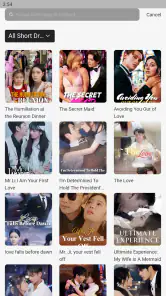

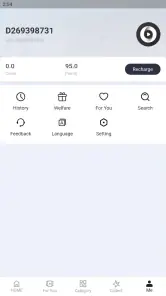
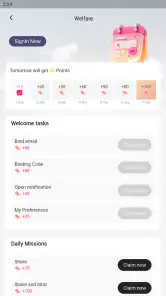
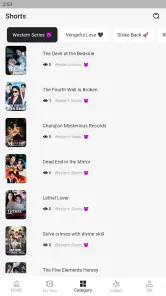
Analysis by Reviewed
I approached OnSnap as a music and audio app for a very practical reason: I wanted to understand what it feels like to move from discovering entertainment to actually using it as part of an everyday routine. Its store summary presents it as an entertainment platform for ethnic Chinese users, while the short description simply says “OnSnap.” That leaves the real question to the experience: does it make culturally relevant listening and entertainment easier to reach than a general-purpose audio service?
My overall impression is that it has a clear audience rather than trying to be everything for everyone. The app is free to install, carries an Everyone age rating, and is published by 香港瀚洋國際控股集團有限公司. It is available for devices running Android 7.0 or later, and the current release is version 1.0.9. Those details make it approachable for people using older Android hardware, although the actual value will depend much more on whether its content matches your language, interests, and daily listening habits.
From a vague entertainment need to a usable listening routine
Starting with the right expectation
The best way to approach this app is not as a direct replacement for every major music service. I would start with a more specific goal: finding Chinese-oriented entertainment in one place, browsing without having to assemble several separate sources, or giving someone in the family a simpler starting point for culturally familiar audio content. That distinction matters because a broad streaming service may be stronger for international catalogs, personalized discovery, playlists, and integrations, while OnSnap appears designed around a more focused audience.
That focus is also the app’s main reason to exist. If your listening is mostly built around mainstream English releases, niche electronic labels, podcasts from many countries, or advanced library management, you may naturally compare it with larger platforms and find their tools more mature. If your starting point is “I want entertainment connected to the ethnic Chinese community,” the comparison changes. Relevance and convenience can matter more than having the largest possible catalog.
I also like that the entry cost is low. There is no purchase required to get started, which makes it reasonable to install, explore, and decide whether it fits your routine. At the same time, the app includes in-app purchases ranging from $0.99 to $39.99 per item. I would therefore treat the free download as an invitation to evaluate the service, not as a promise that every part of the experience will remain completely free.
The first useful workflow: browse before committing
My recommended first session would be deliberately simple. Open the app when you have enough time to browse, look for the areas that match your interests, and test whether the available material feels naturally organized for you. Do not judge it only by the first screen. A focused entertainment platform can become useful after you understand its content lanes, whereas a quick glance may make it seem less familiar than a conventional music player.
For a new user, the important handoff is between intention and discovery. You begin with a broad need—music, audio, or Chinese-oriented entertainment—and the app has to turn that into something specific enough to play. This is where I would pay attention to how quickly you can recognize what each section is for, whether titles are comfortable for you to read, and whether the route from browsing to playback feels obvious.
More From Our News Desk

Clash of Clans Is Won Between the Battles

Android Auto Makes the Case for Quieter Car Software

MobiOffice: Transforming Mobile Productivity with Seamless Integration

EA SPORTS FC™ Mobile Soccer: Redefining Mobile Sports Gaming

How Microsoft OneDrive Became a Mobile Productivity Giant

How Google Translate Breaks Language Barriers Effortlessly
A practical tip is to test the app with two different moods rather than one. Try it when you want background listening, then try again when you are actively searching for something particular. A service can be pleasant for casual browsing but frustrating when you already know what you want. That difference tells you whether it belongs in your daily rotation or only works as an occasional discovery tool.
Moving from discovery to actual use
Once I find something appealing, I want the transition into listening to be uncomplicated. This is not just about pressing play. The useful outcome is whether the app helps me stay in the experience instead of repeatedly stopping to work out what to do next. OnSnap makes the most sense when it reduces the distance between culturally relevant discovery and the moment when entertainment becomes part of the day.
Imagine an everyday scenario: I am preparing dinner after work and want something familiar in the background rather than spending ten minutes building a queue. I would open the app, browse toward content that feels relevant, choose a starting point, and leave it running while I continue with the task. In that situation, the app does not need to outperform every specialist player. It needs to shorten the search and give me a comfortable place to begin.
A second scenario is a shared household. One person may be comfortable navigating a large international service, while another may prefer an environment that feels more culturally recognizable. A focused app can act as a handoff between those users: one person discovers or selects content, and another can return to the same environment later without learning a complicated ecosystem. That is a modest benefit, but it is exactly the sort of benefit that general comparisons often overlook.
Where handoffs create friction
The workflow becomes less convincing if the app asks too much of the user between browsing and listening. Every extra decision—unclear categories, difficult search, confusing purchase prompts, or an uncertain route back to a useful section—weakens the advantage of being focused. I would especially watch the point where free exploration meets paid items. Since purchases are available inside the app, it is sensible to read each prompt carefully before confirming anything.
I would also avoid assuming that a culturally focused service automatically has the perfect selection for every Chinese-speaking listener. “Ethnic Chinese” is a broad audience, and personal preferences can vary widely by region, age, language variety, and genre. Someone looking for a very specific artist, an extensive international catalog, or sophisticated audio controls may still prefer a larger established service. OnSnap’s appeal is strongest when its selection and presentation line up with your particular interests.
Another useful test is to hand the phone to someone else. Ask a family member or friend who shares your intended audience to find something without instructions. This reveals whether the app’s organization is genuinely intuitive or only easy after you have learned it. It is a better test than relying on your own first impression, especially if you are already familiar with music apps.
What the result feels like when it works
When the flow works, the result is not necessarily a dramatic replacement for every audio app on your device. It is a more targeted destination: a place you can open when you want entertainment connected to Chinese culture and do not want to start with a completely blank search box. That narrower role is a strength because it gives the app a recognizable purpose.
I see the greatest value for users who regularly share recommendations within a Chinese-speaking family or community, people who want a dedicated place to explore relevant entertainment, and listeners who find general-purpose services too broad at the moment they want something culturally familiar. The app may also suit someone with an older Android phone, since its minimum operating system is Android 7.0, assuming the device otherwise runs it comfortably.
The public response is encouraging without being enough to settle the decision by itself. OnSnap has a 4.4 average from around 429 ratings, along with over 100 thousand installs. I read that as evidence of real interest and generally positive reception, not as proof that every listener will find the same fit. A focused app can satisfy its intended audience very well while still being the wrong tool for someone with different listening priorities.
There is also a difference between an app being useful and an app becoming your main audio home. I would keep that distinction in mind. OnSnap can occupy a valuable specialist role even if you continue using another service for broad music discovery, personal uploads, international content, or established playlists. In fact, using it alongside another player may be the most realistic arrangement for many people.
How it compares with familiar alternatives
Compared with a mainstream music platform, OnSnap’s likely advantage is focus. Large services usually win on breadth, polished recommendation systems, cross-device continuity, and deep account ecosystems. They may also be better if your listening crosses many languages and genres. The trade-off is that culturally specific discovery can feel buried among a huge amount of unrelated content.
Compared with a simple local audio player, OnSnap offers a more destination-oriented experience. A local player is ideal when you already own files and want direct control over them, but it does not solve the discovery problem. If your goal is to browse entertainment rather than merely play audio stored on your phone, a dedicated platform is the more natural choice.
Compared with social feeds or video platforms, a music and audio app can be less distracting. Social services are excellent for finding unexpected clips and following personalities, but they also pull attention toward comments, short-form content, and unrelated recommendations. OnSnap is more appealing when you want the entertainment itself to remain the center of the session.
The trade-off is that a specialist service must earn its place through relevance. If you open it and repeatedly find that your preferred artists, styles, or formats are elsewhere, the narrower focus becomes a limitation rather than a benefit. I would not abandon an existing service immediately. I would use OnSnap for a few distinct listening situations and keep it only if it solves a problem the other app does not.
Where the workflow breaks down
The first possible breaking point is content fit. A broad label such as ethnic Chinese entertainment covers many tastes, so the app may feel highly relevant to one user and only partly relevant to another. Before treating it as your main service, check whether it supports the kind of listening you actually do, not merely the cultural category you identify with.
The second is the boundary between free access and paid content. In-app purchases can be perfectly reasonable, but they change how I evaluate the app. I would be comfortable exploring it at no cost, then making a purchase only when the item has clear value and the payment screen is understandable. Anyone who prefers a completely predictable subscription or no paid prompts at all may find a traditional alternative easier to manage.
The third is workflow depth. If you need extensive organization, advanced playback behavior, or a carefully managed personal library, a specialist entertainment platform may not provide the same level of control as an established music tool. That does not make OnSnap poor; it simply means its purpose should be judged by access and relevance rather than by features designed for power users.
The fourth is audience mismatch. The Everyone rating makes the app broadly approachable from an age-classification perspective, but that does not mean every piece of entertainment will suit every household preference. I would still make my own judgment about what younger family members use and how purchases are handled on a shared device.
Who should install it, and who should skip it
I would recommend trying OnSnap if you want a focused Chinese-oriented entertainment destination, often search for culturally familiar audio, or need a second service that complements a broader music app. It is particularly worth testing if your current routine involves jumping between several sources just to find content that feels relevant. The free starting point lowers the risk of finding out whether it belongs in that routine.
I would skip it if your priority is the largest possible international catalog, precise control over a personal music collection, or a mature all-purpose audio ecosystem. I would also be cautious if you dislike in-app purchasing altogether, because the presence of paid items means you should be comfortable navigating those boundaries. For a listener who already has a service that delivers exactly the right content and workflow, adding another app may create clutter rather than convenience.
My most useful advice is to judge it by a repeated task, not by a single impressive discovery. Use it when you are cooking, commuting, relaxing, or sharing audio with family, then notice whether it gets you to a satisfying result with less effort. If it repeatedly saves time or improves relevance, that is a stronger reason to keep it than a one-time browsing session.
My final take after following the complete flow
OnSnap has a sensible identity as a free music and audio app aimed at a broad ethnic Chinese entertainment audience. Its strongest quality is the possibility of making culturally relevant discovery feel more direct than it does inside a huge general platform. The app is not automatically the best choice for every listener, and I would not treat its rating, install count, or focused positioning as substitutes for checking the actual fit of its content.
For me, the decision comes down to the handoff from “I want something familiar” to “I am listening now.” If that transition is smooth and the available entertainment matches your tastes, the app can become a useful specialist companion. If you need maximum catalog breadth, advanced library tools, or a completely purchase-free environment, another option will probably serve you better.
My recommendation is to try it as a focused second audio destination rather than replacing everything at once. Give it a real role in your routine, pay attention to where browsing becomes playback, and be deliberate around paid items. If it consistently delivers the kind of Chinese-oriented entertainment you are looking for, its focused approach is a genuine advantage; if not, you will know quickly that a broader alternative is the better home for your listening.
OnSnap Frequently Asked Questions
What is OnSnap’s age rating, and is it suitable for children?
OnSnap has an Everyone content rating, so its store age classification is broad. That rating does not replace a parent’s judgment about social content or interactions. Parents should review the platform’s privacy controls, reporting and blocking options, and any communication features before allowing a child to use it. Avoid sharing sensitive personal information, use a private profile when possible, and supervise younger users because content and interactions may come from other members.
Which devices can run OnSnap?
OnSnap is available for Android devices running version 7.0 or later. Before downloading, check your device’s operating system version and make sure you have enough space for the app and its content. The app’s current version is 1.0.9, so keeping it updated can help you use the latest available release and maintain compatibility as the app changes.
What is OnSnap and what can I use it for?
OnSnap is a social photo and video app designed for capturing, editing, and sharing visual content. After exploring its main features, users can typically use it to create posts, apply creative effects, communicate with others, and discover content through the platform. The exact tools and available communities may vary by device, region, and the version installed from the official store.
Is OnSnap free to download and use?
OnSnap is free to download, but it also offers in-app purchases priced from $0.99 to $39.99 per item. Users should check the purchase details before paying and review the payment screen carefully, especially if an offer involves a recurring charge. The app’s free download does not mean every feature or item is necessarily available without payment.
Does OnSnap require an account or access to personal information?
Depending on the features you want to use, OnSnap may ask you to create an account or sign in through an existing service. It may also request permissions for the camera, microphone, photos, notifications, or location. During testing, users should grant only the permissions they consider necessary and review the app’s privacy policy to understand how profile details, uploaded media, device information, and activity data may be collected or shared.
Pros
- Quickly turns photos into polished
- shareable videos.
- Offers creative templates for different moods and occasions.
- Simple interface makes basic editing accessible to beginners.
- Useful effects and transitions add variety to photo stories.
- Convenient sharing options for social media and messaging apps.
Cons
- Some templates and effects may require in-app purchases.
- Export quality or options can vary depending on the selected template.
- Heavy use of effects may make projects feel repetitive over time.
- Video creation can consume noticeable battery and storage space.
- Some features may require an internet connection to work properly.
- Category
- Music & Audio
- Version
- 1.0.9