NTS Radio: Music Discovery
- 91.00
- 4.4
- Installs
- 100.00K
- Price
- Free

Screenshots
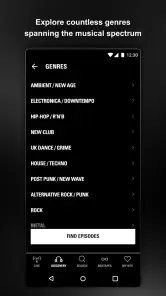
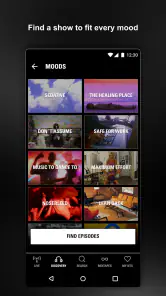
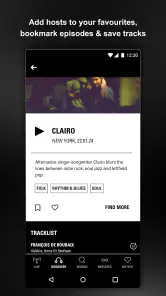
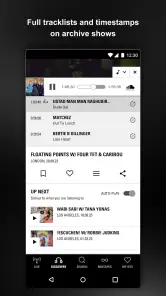

Analysis by Reviewed
I came away from NTS Radio: Music Discovery feeling that it is less like a conventional music player and more like a doorway into someone else’s carefully chosen listening world. Instead of beginning with a familiar artist, album, or playlist, I usually begin with a live station or a show and let the selection take me somewhere unexpected. That makes it a refreshing choice when ordinary streaming routines have started to feel predictable.
The app belongs to the Music & Audio category and is developed by NTS Radio. It is free to download, carries a Teen content rating, and has built a solid audience with over one hundred thousand installs. Its average rating sits at 4.4, which matches my impression: the central idea is appealing and distinctive, although the experience is not designed to replace every feature found in a full streaming subscription.
A more personal way to discover music
The main attraction is the human presence behind the music. NTS Radio focuses on DJs and artists sharing selections they genuinely want to play, so the experience feels closer to turning on an adventurous radio station than searching a database for something I already know. I can start with a mood or a broadcast and allow the programming to guide me rather than spending several minutes building a queue.
That difference matters. Standard streaming apps are excellent when I know exactly what I want: a particular record, a familiar artist, or a playlist for a specific activity. NTS Radio works better when I want to hear something outside my normal habits. It rewards curiosity, especially if I am willing to stay with a set long enough for its character to emerge.
I found it particularly useful during work that needed concentration but did not require silence. A conventional playlist can become repetitive because I recognize its structure too quickly. With NTS, the changing selections create movement without demanding constant interaction. I can leave a broadcast running while writing, cooking, or tidying up, and the music provides a sense of discovery in the background.
Its strongest quality is editorial personality rather than sheer convenience. The app gives the impression that the music has been chosen by people with a point of view. That makes even an unfamiliar track more interesting, because it arrives as part of a wider musical conversation instead of appearing as an isolated recommendation.
Why the listening experience feels different
My favorite way to use it is to treat each session as a small listening adventure. I choose a broadcast that sounds promising, avoid skipping too quickly, and make a note of artists or tracks that catch my attention. This approach works better than treating the app like an on-demand jukebox. The less I try to control every minute, the more rewarding it becomes.
More From Our News Desk

Clash of Clans Is Won Between the Battles

Android Auto Makes the Case for Quieter Car Software

MobiOffice: Transforming Mobile Productivity with Seamless Integration

EA SPORTS FC™ Mobile Soccer: Redefining Mobile Sports Gaming

How Microsoft OneDrive Became a Mobile Productivity Giant

How Google Translate Breaks Language Barriers Effortlessly
There is also a useful psychological advantage to this format. When I open a typical streaming service, I can spend more time comparing options than actually listening. NTS reduces that decision fatigue. I make one broad choice, press play, and let the programming do much of the work. For anyone who feels overwhelmed by endless catalogs, that simplicity can be a genuine benefit.
At the same time, I would not describe the app as passive in the dull sense. The best sessions have encouraged me to explore unfamiliar styles and follow the trail from one artist to another. It is a good companion for people who enjoy collecting musical references, even if they later use another service to save albums or build a permanent library.
Practical ways I would use it every day
One realistic routine is a late-afternoon reset. After finishing the most demanding part of my workday, I can start a NTS session while making food. Rather than choosing a highly familiar playlist, I use the broadcast as a change of atmosphere. If the selection is not right, I move on; if it is compelling, I let it play while I cook. The app is at its best in this kind of open-ended moment.
It also works well for a focused listening exercise. I can set aside half an hour, listen without multitasking, and write down the names of sounds that stand out. This is more effective than casually tapping through recommendations because it gives the programming enough time to reveal its direction. People learning about electronic, experimental, global, or less familiar scenes may find this method especially useful.
A third approach is to use it as a bridge between friends with different tastes. Instead of arguing over a shared playlist, one person can choose a broadcast and everyone can react to the selections as they arrive. That makes the app a conversation starter. It is not just background audio; at its best, it creates a reason to talk about what is playing and why it works.
What it does better than ordinary streaming apps
The comparison with mainstream music services is important. Those services usually win on search, personal libraries, familiar recommendations, and direct control. If I want to replay one album, organize saved tracks, or jump immediately to a specific song, I would choose a conventional streaming app first. NTS Radio is not trying to make that process its main event.
Where NTS has the advantage is in curation with a human accent. Algorithmic recommendations often reflect what I have already played, which can quietly narrow my habits. A DJ-led broadcast can interrupt that pattern. It may introduce a style I would never have searched for or place a known artist beside unexpected material. That element of surprise is the reason I keep coming back.
The trade-off is control. A listener who wants to skip every unwanted track, arrange a precise sequence, or keep a clean record of every discovery may find the radio format restrictive. I have had to accept that not every session will match my mood perfectly. The app asks me to listen with a little patience, and that will feel liberating to some people but inconvenient to others.
The friction I noticed while using it
The biggest weakness is that the experience depends heavily on being in the right frame of mind. If I need a predictable soundtrack, NTS can feel too open-ended. A broadcast may move in directions I appreciate artistically but do not want during a particular task. In those moments, the stronger choice is a service that lets me specify tempo, genre, artist, and sequence more precisely.
Discovery also creates a follow-up problem. Hearing an excellent track is only the first step; I may then want to identify it, save it, or find the full release elsewhere. That extra effort is part of the charm for listeners who enjoy digging, but it can frustrate anyone expecting a seamless path from discovery to permanent collection. I recommend keeping a notes app nearby if finding new music is one of your main goals.
Another limitation is emotional rather than technical: the app can make listening feel less efficient. I cannot always tell in advance whether a session will suit me, and the reward often comes after giving it time. If I only have a few minutes and want an immediate answer, browsing a familiar catalog is more practical. NTS is better suited to unhurried listening than quick musical problem-solving.
The free price makes experimentation easy, but users should still pay attention to the possibility of in-app purchases, listed from $3.99 to $214.99 per item. I would not approach the app assuming that every optional element has the same cost or purpose. The sensible approach is to enjoy the core listening experience first and decide carefully whether any purchase adds enough value for your habits.
Who will enjoy it most
I would recommend NTS Radio to listeners who are tired of hearing the same recommendations and want a stronger sense of human curation. It is a particularly good fit for curious music fans, people who enjoy radio-style discovery, and anyone who likes the idea of hearing DJs and artists shape a session rather than simply pressing play on a personalized algorithmic mix.
It can also suit creative workers who need atmosphere without a rigid playlist. Designers, writers, photographers, and anyone doing repetitive tasks may appreciate the way a broadcast gives the room a changing identity. The app is also a good option for someone building musical knowledge gradually, because the listening journey can lead to artists and scenes that would be difficult to find through obvious searches.
I would be more cautious about recommending it to someone who mainly wants a personal music locker. If your priorities are downloaded albums, exact track control, carefully sorted playlists, or instant access to a known catalog, another music service will probably serve you better. NTS should complement that kind of app rather than automatically replace it.
It is also not my first choice for a party where everyone expects familiar songs. The app’s unpredictability is its identity, but that can become a liability when the audience wants guaranteed crowd-pleasers. For solo listening, small gatherings, or discovery-focused sessions, the same unpredictability becomes much more valuable.
Device support and current position
The app supports Android 6.0 and later, which makes it accessible on a broad range of Android devices. Its current version is 3.3.3, and the project has been available since June 11, 2019. Those details matter less than the listening concept, but they make the app a practical option for people using older compatible phones rather than only the newest hardware.
Its audience size and review history suggest that this is an established listening choice rather than an obscure experiment. I see the numbers as a sign of sustained interest, not a guarantee that every listener will love the format. The experience remains highly personal: someone who values discovery will notice its strengths quickly, while someone who measures quality by control and catalog management may remain unconvinced.
I also appreciate that the app has a clear identity. Many audio products try to cover radio, podcasts, playlists, social sharing, and library management at once. NTS feels more focused. That focus helps it stand out, although it also means I need another tool when I want the broader organizational features of a traditional streaming platform.
My final recommendation
After spending time with it, I see NTS Radio: Music Discovery as a specialist listening companion with unusually strong editorial character. It is not the most efficient way to play a specific song, and it does not remove every step involved in turning a discovery into a saved favorite. Its value lies elsewhere: it makes the act of finding music feel active, personal, and occasionally surprising.
I would install it if I wanted to break out of familiar listening patterns, refresh a workday, or explore music through the taste of DJs and artists. I would skip it if my ideal app is a perfectly controlled library with immediate search and predictable playback. For everyone in between, the best strategy is to use it alongside a conventional streaming service: let NTS provide the discoveries, then use the other app for the tracks and albums I decide to keep.
That division of labor captures my honest verdict. NTS Radio is strongest when I stop treating music as a list of choices and start treating it as a guided journey. Give it time, accept a little uncertainty, and it can become one of the most rewarding ways to make an ordinary hour sound less ordinary.
NTS Radio: Music Discovery Frequently Asked Questions
Is NTS Radio suitable for listeners who want to explore unfamiliar music?
Yes. NTS Radio is built around curated listening and music discovery, so it can suit people who enjoy finding artists, sounds, and scenes they may not encounter through mainstream radio. Its mix of live broadcasts and on-demand programming makes it possible to dip into a show or spend more time with a particular host’s selections. The app is free to download, with optional in-app purchases.
Does NTS Radio offer live broadcasts as well as shows I can play on demand?
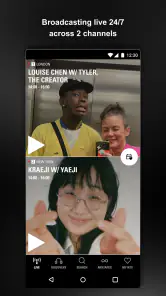
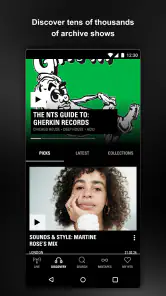
NTS Radio brings together live broadcasts and archived shows, giving listeners more than one way to tune in. You can follow a live program or explore recorded selections when it suits you. The experience centers on music chosen by DJs and artists rather than a conventional hit-radio playlist, which makes it useful for both casual listening and exploring a host’s musical interests.
What is NTS Radio: Music Discovery?
NTS Radio is a global music-streaming app focused on discovery rather than conventional hit-radio programming. It offers live broadcasts, archived shows, DJ mixes, interviews, and specialist programs covering genres from electronic and ambient music to jazz, hip-hop, experimental sounds, and world music. The app is designed for listeners who enjoy curated selections and want to discover artists, scenes, and tracks outside the mainstream.
Is NTS Radio free to use?
Yes, NTS Radio can generally be used without paying for a standard subscription. You can listen to live stations and access a broad range of shows through the app, although availability and features may change over time. Optional supporter or membership plans may be offered in certain regions, potentially providing additional benefits while helping fund the station and its independent programming. The app is free, with optional in-app purchases priced from $3.99 to $214.99 per item.
Can I listen to NTS Radio offline?
NTS Radio is primarily designed for online listening, so an active internet connection is normally required for live broadcasts and on-demand programs. Offline downloading may not be available in the same way as it is on traditional music subscription services. If you plan to listen while traveling, check the current app features and consider saving mobile data by using a reliable Wi-Fi connection beforehand.
Pros
- Excellent selection of underground and independent music
- Live radio shows offer fresh discoveries throughout the day
- Curated by knowledgeable DJs with distinctive musical tastes
- Available on both Android and iOS devices
- Supports background listening while using other apps
Cons
- Some shows may be too niche for casual listeners
- Limited control over the music during live broadcasts
- On-demand access can vary depending on the program
- Audio quality depends heavily on your internet connection
- Premium features may be needed for the full listening experience
- Category
- Music & Audio
- Version
- 3.3.3