Misfits Market Grocery App
- 994.00
- 4.4
- Installs
- 100.00K
- Price
- Free

Screenshots
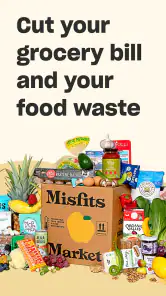
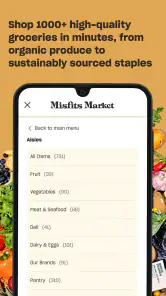
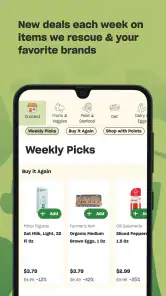
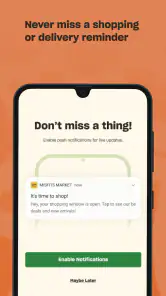
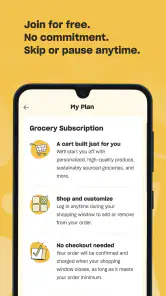
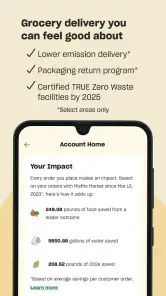
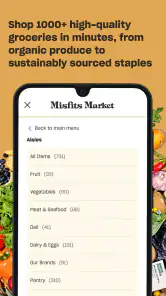
Analysis by Reviewed
I approached Misfits Market as I would any grocery app I might recommend to a friend: not just by looking at its promise of organic delivery, but by considering whether it can genuinely make weekly food shopping easier. Developed by Misfits Market, this Food & Drink app is free to install and aimed at everyone, with a straightforward purpose: helping shoppers arrange grocery orders without making a trip to a store.
Misfits Market makes the most sense for people who already buy organic groceries and are comfortable planning a basket online. It is less compelling for someone who needs a highly predictable, instant shopping trip, wants to inspect every item personally, or relies on a very specific local selection. My overall impression is positive, but it is a practical tool rather than a complete replacement for every kind of grocery run.
How the app feels in everyday use
The current experience is built around browsing food, deciding what belongs in the order, and arranging delivery through a mobile interface. That sounds simple, and in many ways it is. The main advantage is convenience: I can think through a grocery list while sitting at home instead of walking through aisles and adding items impulsively.
That convenience changes how I shop. In a physical supermarket, I often remember an ingredient only after passing the relevant section. With a delivery app, I can keep the meal plan beside me and search or browse with a clearer purpose. For a household trying to buy more organic food, that can make the weekly routine feel more deliberate.
The app is also useful when the problem is not a lack of nearby stores, but a lack of time. A parent planning meals after work, a remote worker trying to avoid a midday errand, or someone managing groceries around limited mobility may value the ability to build an order from a phone. The benefit is strongest when the user is willing to plan ahead rather than expecting a last-minute solution.
I would not treat the app as a magic answer to grocery budgeting. Online browsing can reduce impulse purchases, but it can also encourage users to keep adding items because the basket is always visible and easy to edit. I found that the best approach is to start with meals, then check staples, and only afterward browse for extras. That workflow keeps the app useful instead of turning it into a digital version of wandering through a supermarket.
A realistic weekly scenario
Imagine planning dinners for a busy week: vegetables for several meals, fruit for breakfasts, pantry basics, and a few organic items that are not always convenient to find locally. I would open the app with a written list, add the ingredients that fit the plan, and then review the basket as a whole. The important step is not simply placing the order; it is checking whether the selected groceries can be used across several meals.
More From Our News Desk

Clash of Clans Is Won Between the Battles

Android Auto Makes the Case for Quieter Car Software

MobiOffice: Transforming Mobile Productivity with Seamless Integration

EA SPORTS FC™ Mobile Soccer: Redefining Mobile Sports Gaming

How Microsoft OneDrive Became a Mobile Productivity Giant

How Google Translate Breaks Language Barriers Effortlessly
For example, one vegetable can serve as a side dish, a soup ingredient, and part of a lunch bowl. Thinking this way helps offset one of the natural weaknesses of grocery delivery: I am choosing from what is currently available rather than adapting in real time to a store shelf. A little meal planning makes the service feel more economical and reduces the chance of buying ingredients that sit unused.
I also recommend setting aside a few minutes for the final review. Delivery shopping removes the quick visual comparison that happens in a store, so I pay closer attention to quantities, substitutions where relevant, and whether the order still reflects the original list. That small habit is one of the most useful ways to avoid disappointment with any grocery-delivery service, including this one.
What sets it apart from an ordinary supermarket trip
The most obvious difference is the focus on organic grocery delivery. A traditional supermarket gives me immediate control over brands, package sizes, ripeness, and replacements. Misfits Market gives me the comfort of shopping from home and the ability to organize the basket around a planned order.
That trade-off matters. If I am cooking for guests tonight, I would usually prefer a nearby store because I can see exactly what is available and take it home immediately. If I am preparing a normal weekly order and want organic groceries delivered, the app becomes more attractive. It is better suited to routine planning than emergency shopping.
Compared with a general supermarket app, its identity is clearer. A broad retailer may offer more familiar local inventory or more ways to combine groceries with household products. Misfits Market is more appealing when the food-selection philosophy is part of the reason I am shopping online in the first place.
Compared with a local organic market, the app may save time and reduce the need to travel, but it cannot reproduce the personal feel of choosing produce by hand. I would use the app when convenience and planned delivery matter more than tactile inspection. I would choose the store when freshness judgments, exact brands, or immediate availability are the priority.
The practical details that influence the decision
The app has an average rating of 4.4 from around 4.4 thousand ratings, alongside close to a thousand written reviews. It has passed 100 thousand installs, which suggests that it has found a real audience without making popularity the only reason to try it. Those figures are useful context, but they do not eliminate the need to decide whether its shopping model fits my routine.
There is no purchase price to download the app. That is welcome, especially for someone who wants to explore the catalog before committing to a regular delivery habit. Still, free installation should not be confused with free groceries or universally low total costs. I would judge value by the complete order, delivery terms, available quantities, and how much waste the shopping plan prevents.
The age rating is Everyone, which matches the basic nature of the service. It is not a game or a specialist professional tool; it is a consumer grocery app. The minimum operating-system requirement is Android 7.0, so people using older phones should check compatibility before relying on it for a weekly shop.
How the recent version fits into the product’s evolution
The current version is 3.3.33, and the app was released on March 24, 2022. I see that version information as a sign that the product has moved beyond a one-off launch and is being maintained as an ongoing shopping service. It does not, by itself, prove that every part of the experience has changed recently, so I would avoid treating the version number as a promise of a particular feature.
What matters to existing users is whether the current build keeps the basic path reliable: browsing groceries, building a basket, reviewing the order, and arranging delivery. For a grocery app, quiet improvements can be more valuable than flashy redesigns. Faster navigation, clearer order review, and fewer interruptions during checkout would directly affect the weekly routine.
New users should approach the current release with a simple test. Install it, browse as though preparing a real meal plan, and see whether the selection and ordering flow feel natural before making it central to the household. Existing users can use the same test after updating: if the app feels different, rebuild a small planned basket first rather than experimenting with a large order.
This is also where expectations need to stay realistic. A newer version does not automatically solve the fundamental trade-offs of delivery shopping. The app can improve the interface, but it cannot make every item available at all times, remove the need to plan, or give me the same control as selecting produce in person.
Small habits that make the service work better
My first tip is to separate “must have” items from “nice to have” items before opening the app. This is more useful than browsing without a plan because it gives the order a clear structure. If an optional item is unavailable, the core meal plan can still survive; if a required ingredient is missing, I know early that I may need a store visit or a different recipe.
My second tip is to plan around ingredients rather than isolated recipes. A delivery order becomes more efficient when one purchase supports several meals. This is especially important for produce, where buying with no follow-up plan can create waste. I would rather choose a smaller set of versatile ingredients than fill the basket with attractive but disconnected items.
My third tip is to keep a backup meal in mind. Delivery shopping is convenient, but it is not the same as standing in a store and immediately replacing something from another shelf. A flexible dinner such as pasta, grains, or a simple soup can protect the week if a preferred ingredient is not available or the final basket needs adjustment.
A fourth useful habit is to review the order away from the excitement of browsing. I ask myself whether the basket covers breakfasts, lunches, dinners, and snacks, then remove anything that has no clear place. This turns the app from a catalog into a planning tool and makes the final cost easier to understand.
Where the experience still has friction
The biggest limitation is the loss of physical control. I cannot squeeze an avocado, compare several bunches of herbs, or decide between package sizes by holding them. For shoppers who are particular about freshness, that is not a minor inconvenience; it may be the deciding factor against delivery.
Availability can also shape the experience more than expected. A grocery app is only as useful as the items that can be ordered for the relevant delivery window. If my meals depend on exact ingredients, I need enough flexibility to change the plan. Someone who dislikes substitutions or has dietary requirements that leave little room for alternatives may find a conventional store more dependable.
There is also a psychological difference between seeing a full supermarket and seeing a curated mobile selection. The app can make shopping faster, but it may not be the best place to discover a particular local product or compare every competing brand. That is a genuine trade-off, not a flaw that an interface update can completely remove.
I would also skip it as my only grocery option if I frequently need food immediately. Delivery is naturally better for planned replenishment than urgent errands. Keeping a small local-store backup is sensible for forgotten ingredients, unexpected guests, or days when the delivery schedule does not match the cooking schedule.
Who should use it, and who should look elsewhere
I think Misfits Market is a good match for shoppers who value organic groceries, prefer ordering from home, and can plan at least part of the week in advance. It is particularly suitable for people who want to reduce routine store visits and are willing to build meals around what fits the available selection.
It is less suitable for someone who wants the absolute lowest total bill without comparing alternatives, needs exact brands every time, or prefers to select produce personally. It may also frustrate people who view grocery shopping as a quick, spontaneous task rather than a scheduled household routine.
Families can benefit from the shared planning aspect, but they should be careful about quantities. Online baskets make it easy to underestimate how much fresh food a household will actually use, or to buy too much because the items look convenient individually. Couples and solo shoppers may find the app easier to manage if they deliberately plan portions and avoid treating every appealing item as an essential.
For someone new to organic shopping, I would use the app as a comparison tool rather than assume every order will be the best option. Start with a modest basket, compare it with the usual local alternative, and consider both money and time. The better choice is the one that fits the complete routine, not merely the one that looks easiest during checkout.
What I would watch before making it a regular habit
Before relying on the app every week, I would watch how well the available groceries fit my actual meals. A service can look excellent in a general browse and feel less useful when I need specific ingredients on a particular schedule. I would also pay attention to how often I need to alter recipes or make a separate store trip.
I would watch the order-review experience closely as the app evolves. For a grocery service, clarity matters: I want to understand what is in the basket, what I am paying for, and when the order is expected without having to reconstruct the details. Improvements in those areas would have a greater practical effect on me than decorative changes.
Existing users should also notice whether updates make familiar actions easier or introduce unnecessary friction. A redesigned screen is worthwhile when it shortens the path from list to order. It is less helpful when regular shoppers must relearn basic tasks without gaining better control over the groceries themselves.
Finally, I would judge the service by consistency rather than by one especially good order. Grocery delivery becomes valuable when it works repeatedly with sensible planning. One successful basket can be encouraging, but a dependable routine is what determines whether the app deserves a permanent place on the phone.
My final view
Misfits Market is a focused grocery app that I would recommend to a friend who wants organic food delivered and is comfortable planning around an online selection. Its free entry point, clear purpose, and maintained current version make it easy to try. The strongest use case is a planned weekly shop where convenience matters and recipes can adapt slightly.
I would not recommend treating it as a universal substitute for supermarkets or local organic stores. The lack of hands-on produce selection, the need to work with available groceries, and the weaker fit for urgent purchases are meaningful limitations. For those situations, a nearby store or a broader retailer may be the better choice.
My advice is to begin with a small, meal-based order and compare the result with your normal shopping routine. If the app saves a trip without creating waste or forcing too many compromises, it has earned a place in your schedule. The real strength is not simply delivery; it is turning organic grocery shopping into a repeatable plan.
After using it with that expectation, I see Misfits Market as a useful specialist option rather than an all-purpose grocery solution. For the right household, that narrower focus is exactly what makes it worthwhile.
Misfits Market Grocery App Frequently Asked Questions
Is the Misfits Market app free, and what devices can run it?
The Misfits Market app is free to download and is intended for grocery shopping through the service. It is rated for everyone and supports devices running Android 7.0 or later. Before installing, check that your phone’s operating system meets this requirement and that you have enough storage for the app. You can then explore its grocery-shopping features on your device.
Who makes the Misfits Market app, and what do users think of it?
Misfits Market develops the app, which is listed in the Food & Drink category. It has an average rating of 4.4 from around 4.4 thousand ratings, with 994 written reviews, and has been installed over 100 thousand times. Those figures can give you a broad sense of its reach and reception, but your own experience may depend on your device and whether the service works for your location.
What is the Misfits Market Grocery app and how does it work?
Misfits Market is an online grocery shopping service focused on delivering food and household products directly to your door. Through the app, you can browse available items, add products to your cart, select a delivery window, and manage your order. Its catalog may include organic produce, pantry staples, meat, seafood, snacks, beverages, and products sold at discounted prices.
Is Misfits Market available everywhere, and how can I check delivery eligibility?
Misfits Market does not deliver to every location, so availability depends on your ZIP code and the company’s current service area. Before spending time building a cart, enter your delivery address in the app or on the official website to confirm eligibility. Delivery options, fees, product selection, and available time slots can also vary by region.
Are the products on Misfits Market really cheaper than those at regular grocery stores?
Misfits Market often advertises savings on groceries, surplus goods, organic items, and products with cosmetic imperfections or short-dated packaging. However, prices can change frequently, and the final cost may include delivery charges, service fees, taxes, or minimum-order requirements. It is worth comparing the complete checkout total with local store prices before placing an order.
Pros
- Discounted prices on surplus and imperfect groceries
- Convenient home delivery saves time on weekly shopping
- Wide selection of pantry staples
- produce
- and household items
- Personalized shopping lets you skip or add items before billing
- Helps reduce food waste by selling rescued inventory
Cons
- Delivery availability varies by ZIP code and region
- Some fresh items may arrive bruised or less ripe than expected
- Minimum order requirements can make small purchases impractical
- Substitution and inventory changes may affect your planned order
- Recurring orders require attention to avoid unwanted weekly charges
- Category
- Food & Drink
- Version
- 3.3.33