MetroNovel - Let Stories Shine
- 561.00
- 3.7
- Installs
- 100.00K
- Price
- Free

Screenshots




Analysis by Reviewed
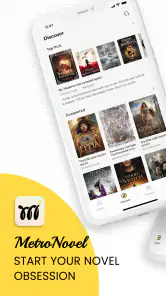
I approached MetroNovel - Let Stories Shine as a reader looking for an easy way to spend a few spare minutes with serialized fiction, rather than as a replacement for a full digital library. That distinction matters. This is a free Books & Reference app from LITERIE, aimed at readers who enjoy opening a phone and immediately finding a story to continue. Its basic appeal is simple: it puts online fiction into a focused reading environment instead of making me search across general websites or keep several unrelated reading tools open.
After using it as a casual reading companion, I think its value depends less on whether you read every day and more on how you like to discover stories. If you enjoy ongoing fiction, short reading sessions, and the feeling of following a story over time, it is an easy app to consider. If you want a carefully curated personal library, broad reference material, or a reading experience with no purchase prompts, you may find the usual alternatives more comfortable.
How I Would Decide Whether MetroNovel Fits
My first decision criterion would be reading habit. MetroNovel makes the most sense for someone who reads in fragments: during a commute, while waiting for an appointment, or before bed when a long book feels like too much commitment. The app’s store summary presents it as an online gateway to stories, and that description matches the role I would give it: a convenient fiction destination rather than a general-purpose reading shelf.
The second criterion is tolerance for serialized reading. A traditional ebook usually gives me a complete volume that I can own, archive, annotate, and revisit on my own terms. A story-focused app encourages a different rhythm. I return to an ongoing title, read a section, and decide whether I want to keep following it. That can be motivating, but it can also make the experience feel less settled than finishing a conventional book.
I would also consider how carefully I want to control my reading environment. People who mainly want novels and do not need academic references, news, manuals, or personal documents will probably find the narrow focus useful. Someone who expects one app to handle every kind of reading should look elsewhere. MetroNovel belongs to the fiction-discovery side of Books & Reference, not the document-management side.
The audience label is Teen, so I would treat it as a sign to check individual story suitability rather than assuming every title will feel the same. A teenager may enjoy the format, while an adult reader can also find it appealing, but parents should still use their own judgment about particular stories and themes.
The first-session experience I would recommend
Rather than opening the app and choosing the first title that appears, I would spend a few minutes testing several story descriptions. This is one of the most useful ways to judge whether the catalog matches your taste. Read enough of a premise to identify the tone, then try a second title from a different genre or mood. The goal is not to find a permanent favorite immediately; it is to see whether discovery feels natural to you.
More From Our News Desk

Clash of Clans Is Won Between the Battles

Android Auto Makes the Case for Quieter Car Software

MobiOffice: Transforming Mobile Productivity with Seamless Integration

EA SPORTS FC™ Mobile Soccer: Redefining Mobile Sports Gaming

How Microsoft OneDrive Became a Mobile Productivity Giant

How Google Translate Breaks Language Barriers Effortlessly
I would then read at least one complete section before deciding whether the app belongs in my daily routine. A title can sound attractive in a short description but fail to hold attention once the writing begins. This small test also reveals whether the pacing suits short sessions. If I am constantly stopping because the story has not reached a satisfying pause, a conventional ebook may be a better match.
Another practical test is to use the app at the exact time I expect to read. A service that feels enjoyable in a ten-minute trial may be less useful when I am tired, offline, or trying to avoid distractions. MetroNovel is best judged as part of a real reading routine, not only as a catalog of tempting covers and summaries.
Where the focused story format wins
The strongest advantage is concentration. General ebook apps often mix purchased books, samples, documents, audiobooks, recommendations, and account features. That breadth is useful, but it can also make choosing something to read feel like managing a library. MetroNovel’s story-centered identity gives me a clearer purpose when I open it: browse fiction, select a title, and continue reading.
That focus is particularly helpful for readers who are indecisive. A large personal collection can create its own problem because every book competes for attention. A serialized-fiction app narrows the decision to what is currently interesting. For a reader who wants a fresh story without researching publishers, editions, or formats, that reduction in choice can be a genuine benefit.
I also see value in the low entry barrier. The app is free to install and use as a starting point, which makes experimentation easier than committing immediately to a paid ebook. The trade-off is that in-app purchases range from $2.99 to $99.99 per item. I would therefore treat the free entry as an invitation to explore, not as a promise that every part of a long reading journey will remain free.
My advice is to decide on a personal spending boundary before becoming invested in several stories. That is not a criticism unique to this app; it is simply sensible when a free reading service offers optional purchases. A reader who dislikes making repeated decisions about spending may prefer buying complete ebooks in advance, even if the initial cost feels less flexible.
Three practical habits that improve the experience
- Use a trial-reading rule: give a new story enough time to show its voice and pacing before following several titles at once. This reduces the chance of filling your reading time with stories that only looked appealing at first.
- Keep one primary story and one backup: a main title gives your routine continuity, while a second choice helps when the first story reaches a slow section. This works better for me than opening many stories and losing track of why I started them.
- Review purchase choices as part of the reading decision: do not judge a title only by its premise. Consider whether you are comfortable continuing it through the app’s purchase model before investing emotionally in a long-running story.
These habits are small, but they address the real friction of serialized reading: discovery can be exciting, yet too many open possibilities can make the experience feel scattered. MetroNovel works best when I give it a simple structure instead of treating it as an endless stream of titles.
How it compares with familiar alternatives
Compared with a standard ebook store, MetroNovel is more appealing when discovery and ongoing reading matter more than ownership. A conventional store is usually the better choice when I already know the exact book I want, need a complete title immediately, or want to build a collection that remains organized around finished books. MetroNovel is better suited to browsing and sampling the kind of fiction that rewards returning regularly.
Compared with a library app, the decision is more personal. Library services can be excellent for readers who want access to established books through borrowing, while MetroNovel offers a more dedicated environment for online stories. If my priority is borrowing a specific published title, I would start with the library. If I want to explore app-based serialized fiction without selecting a particular book in advance, I would give MetroNovel the advantage.
Compared with reading fiction through a mobile browser, a dedicated app should feel more intentional. I am less likely to mix the story with unrelated tabs, alerts, and search results. The browser remains the better option for someone who wants maximum flexibility across many websites or does not want another app on the phone. MetroNovel is the more focused choice, provided its catalog and reading style match my interests.
Compared with a general reading app, the trade-off is breadth versus purpose. General tools are often preferable for PDFs, personal files, reference books, and mixed media. MetroNovel’s identity is narrower, and that narrowness is exactly why it can be more comfortable for someone who opens an app specifically to read fiction.
What may make another option the better choice
I would not recommend MetroNovel as the first choice for a reader who wants a single payment and no further decisions. The possible in-app purchase range means the financial experience deserves attention before you commit to following multiple stories. A traditional ebook purchase may be easier to understand: pay for a complete book, download it, and read without thinking about the next step.
I would also steer a reader toward another category if they need strong reference functions. Students looking for textbooks, dictionaries, study materials, or searchable documents are asking for a different tool. MetroNovel’s appeal comes from stories and reading continuity, not from being a universal information cabinet.
It may also be a poor fit for people who rarely enjoy unfinished narratives. Serialized fiction can create anticipation, but it can also interrupt the satisfaction of reading a complete novel in one uninterrupted arc. If you prefer to start only when the entire book is available to you, a conventional ebook service will probably feel less demanding.
Finally, readers with very specific literary tastes should test the available selection before making the app their main reading home. A focused fiction app can be enjoyable without matching every niche preference. I would not abandon a trusted library or ebook collection until MetroNovel has demonstrated that it regularly offers stories I genuinely want to continue.
What switching to it really involves
Moving from a browser or ebook app to MetroNovel is not technically difficult, but the bigger change is behavioral. I would need to accept a discovery-led routine instead of beginning with a known book. That means spending time comparing premises, learning which stories hold my attention, and deciding how many titles I can follow without turning reading into another task list.
The cost of switching is also measured in unfinished commitments. When a story is easy to start, it is tempting to collect several. My practical approach would be to move only one active reading habit at first. Keep the usual ebook app available, try MetroNovel for a few sessions, and compare which one makes me read more often rather than which one displays more choices.
There is little reason to make the change permanent immediately. MetroNovel can sit alongside a library app, a browser, or an ebook reader because each serves a different purpose. I would use it for discovering serialized fiction and keep another tool for complete books and reference documents. That combination avoids forcing one app to solve every reading need.
Device compatibility is reasonably approachable for older Android users because the current version, 1.5.4, requires Android 6.0 or later. I would still check the app’s behavior on the specific phone I plan to use, especially if reading comfort depends on an older device. The important point is that the stated minimum is not limited to only recent Android releases.
My recommendation for different kinds of readers
For a casual fiction reader, I think MetroNovel is worth trying. The free starting point lowers the risk, and the focused story format can turn spare moments into a consistent reading habit. I would recommend it especially to someone who likes discovering unfamiliar titles rather than downloading only books they already know.
For a devoted ebook buyer, my recommendation is more cautious. Keep your existing store or library service as the main collection, then use MetroNovel as a discovery supplement. It may add variety, but it does not automatically replace the advantages of owning complete books and organizing them in a familiar library.
For parents and younger readers, the Teen content rating deserves attention. I would look at individual story descriptions and make choices together when appropriate. The rating helps set expectations, but personal suitability still depends on the themes a particular reader is comfortable with.
For budget-conscious readers, the free access is attractive, but I would not start several long stories until I understand how optional purchases affect my own use. Set a limit, follow one title, and decide whether the reading value justifies spending before expanding your list.
For people who want reference material, personal document storage, or a complete digital bookshelf, I would skip MetroNovel as the primary app. A general ebook reader, library service, or document tool will be more practical. The narrower focus is a strength only when fiction is the thing you came to read.
MetroNovel has reached over one hundred thousand installs and holds a 3.7 average from around 2.4 thousand ratings, with 561 written reviews. Those figures suggest a real user base while also showing that the experience is not universally loved. I read that combination as a reason to try it personally rather than treating popularity as proof that it will suit every reader.
In the end, I see MetroNovel as a useful specialist rather than an all-purpose reading solution. LITERIE has positioned it around online stories, and that focus gives it a clear place beside, not necessarily instead of, ebook stores and library apps. My recommendation is to try it if you want an easy fiction-discovery routine, but keep your expectations—and your spending—deliberately controlled. If you enjoy returning to ongoing stories in short sessions, it can become a pleasant part of your reading day. If you want complete books, broad reference tools, or a predictable one-time purchase, another category will serve you better.
MetroNovel - Let Stories Shine Frequently Asked Questions
What devices can run MetroNovel - Let Stories Shine?
MetroNovel is a Books & Reference app for mobile reading, and it supports Android devices running Android 6.0 or later. The app is available for free, so you can install it without paying an upfront download fee. Keep in mind that reading features and access to paid content may involve separate in-app purchases.
Is MetroNovel suitable for younger readers?
MetroNovel has a Teen content rating, which makes it a better fit for readers comfortable with fiction intended for teenagers and older audiences. Its catalog includes genres such as romance, fantasy, and drama, and individual stories may vary in tone and themes. Parents and younger readers should consider the rating and review a story’s description before starting it.
What is MetroNovel - Let Stories Shine?
MetroNovel - Let Stories Shine is a mobile reading platform focused on serialized fiction, including romance, fantasy, drama, and other popular story genres. After exploring the app, its main appeal is the large collection of chapter-based novels that can be read directly on a phone. Stories are generally updated regularly, allowing readers to follow ongoing plots and discover new authors and series.
Is MetroNovel - Let Stories Shine free to use?
MetroNovel can generally be downloaded and used without an upfront purchase, and some chapters or stories may be available for free. However, access to later chapters can depend on the title and the app’s reading system. Certain content may require virtual coins, rewards, subscriptions, or other in-app purchases, so users should review the pricing details before spending money.
Does MetroNovel require an internet connection?
An internet connection is usually needed to download the app, browse the catalog, synchronize your account, load new chapters, and access online reading features. Depending on the version and the specific title, some chapters may be cached or available for offline reading, but users should not assume that every novel can be downloaded permanently. Mobile data usage may also increase when loading many chapters.
Pros
- Large selection of romance
- fantasy
- and drama stories
- New chapters are added regularly across popular titles
- Personalized recommendations help discover similar novels
- Reading progress syncs conveniently across supported devices
- Offline reading can reduce mobile data usage
Cons
- Many chapters may require coins or in-app purchases
- Frequent ads can interrupt browsing and reading
- Story quality varies between authors and translations
- Some novels release chapters slowly or inconsistently
- Offline access may be limited for certain content
- Category
- Books & Reference
- Version
- 1.5.4