MedicTests 2026 EMS Education
- 257.00
- 4.7
- Installs
- 50.00K
- Price
- Free

Screenshots
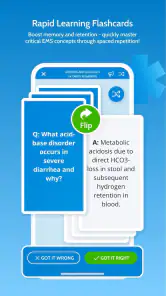
Analysis by Reviewed
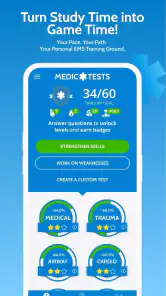
I found MedicTests 2026 EMS Education most useful when treating it as a focused study companion rather than a complete replacement for classroom training, practical drills, or instructor feedback. It is an education app from MedicTests, aimed at people preparing for emergency medical services exams and reviewing the knowledge behind them. I like that it can turn short gaps in the day into deliberate practice, although the value depends heavily on how thoughtfully you use the questions instead of simply chasing a higher score.
The app is free to install, with optional in-app purchases ranging from around thirty-five dollars to two hundred dollars per item. That difference matters because a curious learner can try the basic experience without paying immediately, while a serious candidate needs to look carefully at which study material is included before deciding whether an upgrade fits their plan. The app is marked for Everyone, but its subject matter is clearly more suitable for students, trainees, and working responders than for casual family entertainment.
How MedicTests fits into a shared household study routine
A realistic use case is a household where one person is preparing for an EMS exam and shares a phone or tablet with another family member. The app works well in that setting when the learner has a predictable study window. For example, I would use it during a quiet twenty-minute break, complete a focused question session, and then write down the topics that caused hesitation. That creates a useful loop: answer, identify uncertainty, review the underlying concept elsewhere, and return later to check whether the mistake was understood.
The important distinction is between shared device access and shared academic progress. A family member can hand over the phone without that automatically making the study experience collaborative. The app is still centered on the individual learner’s preparation. If two people are using the same device, I would keep a simple paper or digital note showing whose session it was, which subjects were reviewed, and which questions need another look. Without that small habit, scores and progress can become difficult to interpret.
This is also where the app feels different from a general flashcard tool. A flashcard app is often better for building a personal deck from class notes, while MedicTests is designed around EMS test preparation. That focus saves time when I want practice that feels related to the exam environment, but it can feel restrictive if my main goal is to organize local protocols, lecture slides, or highly personalized notes.
What a useful everyday session looks like
I would not open it with the vague intention of “studying everything.” A better routine is to choose one narrow goal before starting, such as checking recall after a lesson or exposing weak areas before a revision session. When I miss an answer, I would avoid immediately repeating the same question until it feels familiar. Instead, I would pause and ask why the wrong option seemed attractive. That approach helps separate a knowledge gap from a reading mistake or a rushed decision.
For a shared household, a short handover note can be surprisingly valuable. The learner might record, “review airway assessment concepts,” rather than merely writing down a score. This keeps the next session purposeful even if someone else used the device in between. It also prevents the common trap of mistaking repeated recognition for genuine recall.
More From Our News Desk

Clash of Clans Is Won Between the Battles

Android Auto Makes the Case for Quieter Car Software

MobiOffice: Transforming Mobile Productivity with Seamless Integration

EA SPORTS FC™ Mobile Soccer: Redefining Mobile Sports Gaming

How Microsoft OneDrive Became a Mobile Productivity Giant

How Google Translate Breaks Language Barriers Effortlessly
Another practical use is pre-class preparation. A trainee can use a brief session to discover which areas deserve attention before meeting an instructor. In that role, the app is not the authority that settles every question; it is a structured way to reveal uncertainty. I would bring confusing topics to a teacher, especially when a question appears to conflict with local teaching or current practice.
Setting boundaries before more than one person uses it
The first boundary I would establish is simple: each learner should know whether the device is being used for their own session or someone else’s. That sounds obvious, but a shared screen can blur responsibility quickly. If one person answers questions casually and another later interprets the resulting performance as meaningful, the app becomes less useful as a study measure.
I would also keep account ownership clear. The person preparing for an EMS exam should be the one who decides whether to make purchases, manage study records, or continue a paid plan or item. A parent, partner, or roommate may help with the device, but that does not make them the academic owner. This is especially important because the app is free at the entry point but includes optional purchases with a wide price range.
Before spending money, I would first test how naturally the free experience fits the learner’s routine. Does the question format encourage careful reasoning? Is the available material enough to identify whether the app suits the exam being prepared for? Can the learner explain why an answer is correct rather than merely recognizing it after repetition? Those are better decision points than buying because the app looks polished or because a single session feels productive.
There is a trade-off here. A dedicated preparation app can be more efficient than assembling scattered resources, but it may also encourage a narrow view of readiness. Passing practice questions is not the same as performing a patient assessment, communicating under pressure, or applying skills in a practical setting. I would use this app alongside hands-on education, not instead of it.
Keeping progress meaningful on a shared phone or tablet
When several people use one device, I would avoid making the visible score the center of the routine. Scores can be affected by familiarity, guessing, interruptions, and whether a learner has already seen a question. A better household system is to track topics and confidence. After a session, the learner can mark each area as secure, uncertain, or needing instruction. That gives an instructor or study partner something more useful to discuss than a number alone.
Notifications and interruptions are another practical concern, even without assuming any particular feature or permission. If the learner is answering during a busy family moment, concentration may be poor. I would choose a quiet period and stop when attention drops. EMS preparation involves details where a small reading error can matter, so rushed practice may reinforce careless habits.
I also would not let a younger household member use the app unsupervised simply because its content rating is Everyone. The rating describes suitability in a broad store context, while EMS terminology and medical scenarios may still be confusing or emotionally unsuitable for a particular child. The app is educational, but that does not make every lesson appropriate for every age or learning level.
Coordination between learner, family, and instructor
MedicTests becomes more useful when the household treats it as one part of a coordinated plan. A family member can help protect study time, but should not turn practice results into pressure. The most constructive question is, “Which topic should we make easier to review this week?” rather than, “Why is your score not higher?” That difference matters because exam preparation already creates enough stress without turning every session into a judgment.
If a learner is working with an instructor, I would use missed questions as conversation starters. The app can point toward a weak area, while the instructor can explain the reasoning, context, and practical application. This is particularly important for medical education, where a concise test explanation may not cover all the conditions that influence a real decision. The app’s strongest role is structured retrieval practice; the instructor’s role is interpretation and correction.
For two EMS learners in the same household, coordination can be helpful but should remain separate. They might agree on a shared study hour and discuss broad topics afterward, yet each person should answer independently. Comparing explanations is more valuable than comparing raw results. If one person remembers a concept differently, both should verify it through their course materials or instructor rather than assuming the more confident explanation is correct.
A useful weekly rhythm would be to begin with a review session, reserve time for notes and outside study, then return to the app later in the week. I would not use it continuously for hours. Short sessions make it easier to notice patterns in mistakes and reduce the temptation to answer mechanically. The app is best when it supports a plan, not when it becomes the plan.
Where it beats ordinary study alternatives
Compared with ordinary notes, the app offers a more active way to test recall. Reading a chapter can feel comfortable because the information is in front of me, while questions reveal whether I can retrieve and apply it without that support. Compared with generic quiz apps, its EMS focus is a clear advantage for a learner whose exam preparation matches that subject area.
However, the usual alternatives still win in specific situations. A textbook or instructor-led course is better when I need a full explanation, diagrams, clinical context, or a carefully sequenced lesson. Personal notes are better when an instructor emphasizes local terminology or a particular curriculum. Hands-on practice is essential for skills that cannot be demonstrated by selecting an answer on a screen. I would choose MedicTests for repetition and self-checking, not as the only source of truth.
The optional purchase structure also makes comparison important. A free starting point lowers the barrier to trying it, but the higher-priced items mean that a learner should compare the cost with other preparation resources before committing. Someone who only needs occasional revision may get more value from existing course materials. Someone who benefits from frequent, organized question practice may find the dedicated format worth paying for.
Age, trust, and responsible use of medical study content
The Everyone content rating makes the app broadly accessible, but I would still distinguish accessibility from suitability. A child may be able to open an educational app without being ready to understand emergency-care terminology. For a teenager considering EMS training, supervised discussion can help place the material in context. For an adult learner, the main concern is not age restriction but whether the content aligns with the course and exam they are actually taking.
Trust is equally important. I would not treat a correct-looking answer as permission to improvise medical care in real life. Exam preparation and emergency response are related, but they are not interchangeable. In a household, this boundary should be explicit if younger people are present or if someone tends to treat app content as practical instruction.
I also prefer honest progress over impressive-looking progress. If a learner shares a device with a family member, they should say when a session was interrupted, guessed, or completed after reviewing the answer. That information protects the meaning of future practice. A trustworthy study routine is not one that produces the highest visible result; it is one that exposes what still needs work.
The developer, MedicTests, positions the product around EMS training and test preparation, and the current app version is 11.3.2. It has been available since early 2021 and has built a 4.7 average from over nine hundred ratings, with more than fifty thousand installs. Those figures suggest that it has found a real audience, but they do not remove the need to check whether its approach matches an individual course.
Who should use it, and who should skip it
I would recommend trying it if you are an EMS student, a trainee building exam confidence, or a responder who wants a structured way to revisit knowledge. It is particularly suitable for people who already know how they learn best through questions and who can turn incorrect answers into follow-up study. It also fits a household where one person needs a compact study tool and others can respect a defined practice time.
I would be more cautious if you are looking for a complete beginner’s course with extensive teaching before every question. The app may feel too test-oriented for someone who has not yet learned the underlying material. I would also skip it as a primary resource if your exam follows a curriculum that differs substantially from the EMS topics you need, or if your main requirement is practical skill coaching.
It is not the right choice for a family seeking a shared educational game, either. The content is specialized, and the household benefits come from coordination and respectful device sharing, not from turning medical preparation into group entertainment. A general learning app would be a better fit for children who simply want broad educational activities.
My household verdict after using it as a study companion
My overall view is positive, with a clear condition: use MedicTests 2026 EMS Education to test and organize your learning, not to replace learning itself. Its focused EMS purpose gives it an advantage over generic quizzes, and its free entry makes it reasonable to explore before considering optional purchases. The strongest results come from short, intentional sessions followed by explanation, notes, instructor discussion, or hands-on practice.
For shared-device households, I would establish separate ownership of study sessions, keep purchases under the learner’s control, and avoid judging people by a single score. A simple record of topics and confidence makes coordination much easier. Parents and partners can protect time and encourage consistency, while instructors remain the right people to resolve confusing or clinically important points.
The app is a good match for a serious EMS learner who wants regular retrieval practice in a convenient format. It is less suitable for someone needing a full course, practical instruction, or a general family learning experience. I would start with the free version, test whether the question style genuinely improves recall, and only then consider an optional purchase. Used with that discipline, it can earn a useful place in a household study routine without pretending to be more than it is.
MedicTests 2026 EMS Education Frequently Asked Questions
Is MedicTests 2026 EMS Education available for my device?
MedicTests 2026 EMS Education is an Education app from MedicTests, and its minimum operating-system requirement is version 7.0. Check your device’s software version before downloading so you can confirm compatibility. The app is listed as suitable for everyone, though the EMS study material is most relevant to learners and professionals preparing for emergency medical services exams.
What does MedicTests 2026 EMS Education cost?
The app is free to download, with in-app purchases ranging from $34.99 to $199.99 per item. That means you can install it without an upfront purchase, but access to some study resources may involve additional costs. Review the purchase options and their terms in the app store before buying, and make sure the available content suits your study needs and budget.
What is MedicTests 2026 EMS Education?
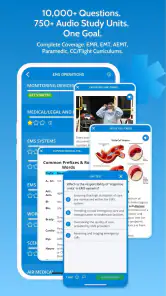
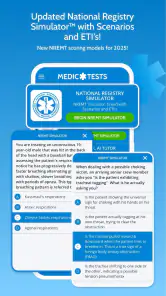
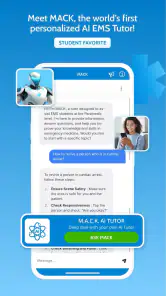
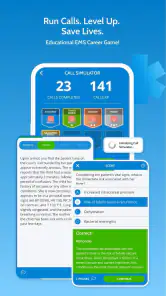
MedicTests 2026 EMS Education is a mobile study platform designed to help emergency medical services students and professionals prepare for certification and recertification exams. It typically combines practice questions, explanations, quizzes, and educational reference material for subjects such as EMT, paramedic, and other EMS-related topics. The app is intended as a study aid, not a replacement for accredited classroom instruction or official testing guidance.
Who can benefit from using MedicTests 2026 EMS Education?
The app may be useful for people preparing for EMT or paramedic examinations, current EMS providers reviewing important concepts, and students who want extra practice outside the classroom. Its question-based format can help identify weak areas and improve familiarity with exam-style wording. However, users should confirm that the available content matches their certification level, local requirements, and the current examination standards in their region.
Does MedicTests 2026 EMS Education work without an internet connection?
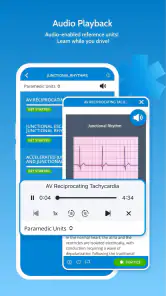
Offline availability can depend on the specific feature, subscription, and app version. Some study materials may be downloaded for later use, while account access, progress synchronization, updates, or certain explanations may require an internet connection. Before relying on the app during travel or in areas with poor reception, open the relevant lessons and quizzes while online and check whether they remain accessible offline on your device.
Pros
- Covers EMT and paramedic topics in a focused study environment.
- Practice questions help reinforce terminology and emergency-care concepts.
- Useful for reviewing material during short study sessions.
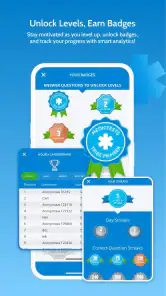
- Progress tracking can make preparation more structured and consistent.
- Designed specifically for EMS learners rather than general medical students.
Cons
- Question quality and accuracy may vary across different subject areas.
- It cannot replace hands-on training
- instructors
- or clinical experience.
- Some learners may find repeated practice questions become monotonous.
- Advanced topics may require additional textbooks or official study resources.
- Access to all content may depend on in-app purchases or a subscription.
- Category
- Education
- Version
- 11.3.2