LocalAll - Everything Local
- 151.00
- 4.9
- Installs
- 100.00K
- Price
- Free

Screenshots

Analysis by Reviewed
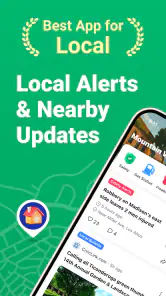
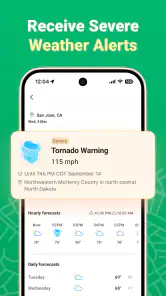
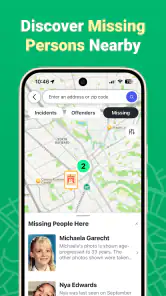
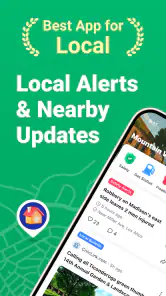
I like local apps that solve a real problem without asking me to build a complicated routine around them. LocalAll takes that approach by bringing several kinds of nearby information into one place: safety alerts, wildfire maps, fuel prices, free items, and neighborhood updates. It is a free lifestyle app from Scoopz LLC, and its appeal is easy to understand: instead of checking several unrelated services, I can start with one local feed and decide what deserves my attention.
That convenience also creates an important question. Is this a dependable everyday tool, or simply a busy stream of community posts? After spending time with the app, my view is that it is most useful as a local awareness layer rather than as a replacement for emergency services, a dedicated navigation app, or a specialist fuel-price tracker. It can help me notice what is happening around me, but I still need judgment when an alert is urgent or a price comparison needs to be exact.
How LocalAll feels in its current form
The app’s current version is 26.34.0, and the overall experience is built around quick scanning. That matters because local information is rarely useful when it takes several menus to reach. I can open the app with a particular question in mind—whether there is a nearby safety issue, whether wildfire conditions deserve attention, or whether someone in the neighborhood is giving something away—and then move on without turning the process into a research project.
The strongest idea here is the combination of practical and social information. A wildfire map and a gas-price update serve very different needs, while a free-item post or neighborhood note belongs to a more informal part of local life. Putting them together makes LocalAll feel less like a single-purpose utility and more like a local noticeboard with useful tools attached.
That mix is also the app’s main challenge. A person checking for a serious safety update does not necessarily want to wade through casual neighborhood activity. The value depends on how clearly the app separates urgent information from ordinary community chatter. When that distinction is obvious, the broad scope feels helpful. When it is not, the feed can feel less focused than a dedicated service.
I would describe the interface as approachable for people who prefer a feed over a collection of specialized dashboards. The store summary points to local safety alerts, wildfire maps, gas prices, freebies, and neighborhood updates, but the practical benefit is the ability to switch mental contexts without changing apps. I can look for a useful giveaway one moment and then check a local condition the next.
Useful for awareness, not a substitute for authority
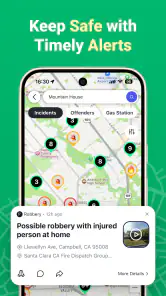
My most important advice is to treat LocalAll as an awareness tool. If I see a safety-related post, I would use it as a prompt to investigate further rather than as the only basis for a decision. For evacuation instructions, active emergencies, road closures, or anything that could put someone at risk, official local sources remain the better final reference.
More From Our News Desk

Clash of Clans Is Won Between the Battles

Android Auto Makes the Case for Quieter Car Software

MobiOffice: Transforming Mobile Productivity with Seamless Integration

EA SPORTS FC™ Mobile Soccer: Redefining Mobile Sports Gaming

How Microsoft OneDrive Became a Mobile Productivity Giant

How Google Translate Breaks Language Barriers Effortlessly
This is not a criticism unique to LocalAll. Community-focused apps naturally sit between official announcements and personal reports. Their advantage is speed and local context; their weakness is that a post may need interpretation. The app is valuable when it helps me notice a developing situation, but it should not encourage me to ignore verified emergency guidance.
The same principle applies to wildfire maps. A map can make a broad situation easier to understand, especially when I want to see whether an area near home or a planned route deserves attention. However, a visual overview is not the same thing as a personalized safety instruction. I would still check current authorities before traveling, staying in an affected area, or making decisions for vulnerable family members.
A practical routine for everyday use
For me, the best workflow is short and deliberate. I would open the app once or twice during the day, scan the local information that has changed, and save my attention for posts that affect my plans. I would not leave it running as a constant stream of noise. That approach makes the app more useful because local updates are easier to understand when I have a specific reason for checking them.
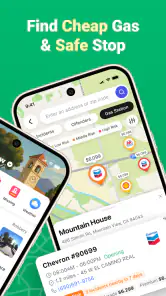
For example, imagine I am planning a weekend drive. I can use the local feed to look for nearby warnings, check the wildfire map for areas along the route, and compare the gas-price information before choosing where to stop. If I notice a neighborhood post about a road problem or a local disruption, I can adjust my plans and then confirm the detail through a more authoritative source. This is a realistic strength: the app helps connect several small decisions that would otherwise be scattered across different services.
A second useful routine involves moving or settling into a new area. Instead of searching separately for community activity, free items, and local updates, I can use the app to get a quick sense of what people nearby are discussing. Freebie posts may be especially practical for someone furnishing a home or clearing out belongings. The trade-off is that informal listings require common sense: I would inspect an item carefully, arrange a safe exchange, and avoid assuming that every post is current.
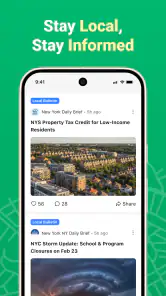
A third workflow is for people who want local context without participating heavily. I do not need to post constantly to benefit from neighborhood updates. I can use the app as a passive local bulletin, checking it when I want a sense of what is happening nearby. That makes it more suitable for quiet observers than a community platform built mainly around conversation.
What has changed and what that means for users
The app was released on May 21, 2025, and the move to version 26.34.0 suggests an actively evolving product rather than a finished, unchanging utility. I would read that as encouraging, but carefully. A version number by itself does not prove that a particular issue has been fixed or that a particular feature has arrived. What it does tell me is that the app is being maintained and that the developer, Scoopz LLC, has room to refine how local information is organized.
For someone already using LocalAll, the current version is most meaningful when it improves the day-to-day basics: clearer separation between alert types, easier scanning, more useful location relevance, and less effort when moving between local categories. Those are the changes that would affect whether I open the app regularly. A new feature is less valuable if the main feed becomes harder to interpret.
New users benefit from approaching the app with realistic expectations. The current release is not something I would install solely for one emergency function or one exact fuel-price lookup. Its value comes from combining several local needs. If that combination matches the way I make decisions, the app can earn a place on my phone. If I only want one narrow service, a dedicated alternative will probably feel faster.
The rating is a 4.9 average from around 2.1 thousand ratings, with 151 written reviews, and the app has passed 100 thousand installs. Those figures suggest that the concept is resonating with a meaningful audience, but they do not remove the need to judge the app against my own area. Local usefulness can vary considerably from one community to another. A well-organized local feed in one place may feel much more valuable than a quieter or less relevant feed elsewhere.
The age rating is Teen, which fits the broad nature of the content. This is not an app I would hand to a child as an unsupervised source of safety information. Teen users can understand the practical purpose, but families should still discuss privacy, location awareness, and safe behavior around neighborhood exchanges. The app’s local focus makes those habits more important than they would be in a purely entertainment app.
Where it beats the usual alternatives
The usual alternative is to assemble a personal toolkit: one app for official alerts, another for wildfire information, a fuel-price service for gas comparisons, and a local social group for neighborhood activity. That setup can be more precise, but it also creates friction. I have to remember which app contains which information, repeat location searches, and compare different interfaces.
LocalAll’s advantage is the starting point. I can open one app and discover that several unrelated local details are relevant to the same day. That is particularly useful when I am traveling within my area, planning errands, or trying to understand a developing local situation. The app is less about replacing every specialist and more about reducing the number of places I need to check first.
Dedicated alternatives remain better in several situations. An official alert channel is preferable when I need authoritative emergency instructions. A navigation app is stronger for turn-by-turn routing and traffic decisions. A specialist fuel tool may be better when I want a tightly focused price comparison. A large community network may offer more conversation if my main goal is discussion rather than quick local awareness.
That comparison helped me define the app’s proper role. I would use LocalAll as the front door to local information, then move to a specialist or official source when the decision becomes important. That two-step workflow is not a weakness; it is a sensible way to use a broad local app without expecting it to perform every job perfectly.
Small decisions that make the app more useful
One non-obvious advantage of a combined local feed is that information can be read in relation to other information. A gas-price update is more useful when I am already checking a local trip. A neighborhood update matters more when it affects a planned errand. A free-item post becomes more practical when I am already moving through that area. I recommend checking the app with a real task in mind rather than browsing indefinitely.
I would also separate discovery from verification. Use the app to discover a possible issue, opportunity, or change, then confirm the important details before acting. This is especially useful for safety alerts, wildfire conditions, and free-item arrangements. It reduces the chance of treating an old or incomplete local post as a complete picture.
Another practical tip is to avoid judging the app after only one quiet session. A local-information service depends on what is happening in the surrounding area. If I open it during a calm period, the feed may seem unremarkable. Its value is easier to assess over several ordinary days: do the posts help me make decisions, do the categories feel relevant, and can I quickly distinguish useful information from background noise?
Finally, I would decide in advance which information deserves immediate action. That sounds simple, but it prevents the app from turning every update into an interruption. LocalAll works best when I remain in control of the attention it receives. The broad selection is an advantage only if I can filter mentally and avoid treating each item as equally important.
Where the experience still has friction
The biggest limitation is the tension between breadth and focus. Safety alerts, wildfire maps, gas prices, freebies, and neighborhood updates do not have the same urgency or the same level of reliability. A user may need a clear way to understand why an item is appearing and how much confidence to place in it. If the presentation does not make that obvious, the app asks the reader to do too much sorting.
There is also a natural freshness problem with local content. A giveaway can disappear quickly. A neighborhood report can become outdated. A gas price can change after it is posted. A safety situation can develop faster than any community feed. I would therefore avoid assuming that an item is current simply because it is visible. The app is most useful when I treat local posts as time-sensitive clues.
Privacy and personal safety deserve attention too. A local app can feel friendly, but location-based information may reveal more about routines than a user intends. I would be selective about what I share, avoid posting details that identify when my home is empty, and use caution when arranging an in-person exchange. These are sensible habits for any neighborhood service, but the app’s wide local scope makes them especially relevant.
People who want a polished, specialist experience may also find the broad approach less satisfying. If my only goal is monitoring official emergency notices, I would choose the official channel. If I only care about fuel prices, I would choose a dedicated comparison tool. If I want a lively discussion forum, I would choose a platform designed around conversation. LocalAll is for the person who values convenience across several local needs more than maximum depth in one of them.
Who should install it, and what I would watch next
I would recommend LocalAll to renters, homeowners, commuters, people new to an area, and anyone who likes having a quick local overview before making everyday plans. It is also a good fit for someone who wants to discover free items or neighborhood activity without maintaining several separate services. The free price makes trying it low-risk, and the app’s lifestyle focus keeps it relevant beyond emergencies.
I would be more cautious about recommending it to someone who needs guaranteed official alerts, precise navigation, or a single-purpose professional tool. Those users should keep their specialist services. I would also skip it if I know I will interpret every local post as confirmed fact or if I dislike feeds that combine serious and casual information.
As the product continues to evolve, I would watch how it handles trust and prioritization. The most valuable progress would be clearer distinctions between urgent alerts, map-based information, price updates, and community posts. I would also look for improvements that make it easier to understand whether an item is still relevant, without adding clutter to the quick-scan experience.
For existing users, those details will determine whether the app becomes a daily habit or remains an occasional check. For new users, they are a good reason to test it with concrete tasks rather than judging it by the feature list alone. I would open it before a local trip, during a move, or when looking for useful neighborhood activity, then compare what I find with the sources I already trust.
Overall, I see LocalAll as a thoughtful local-information companion with a clear practical purpose. Its best quality is not any single category; it is the way several kinds of nearby information can support one another during an ordinary day. Its main weakness is the responsibility that comes with that range: I have to distinguish discovery from confirmation and urgency from convenience.
For me, that balance is acceptable. I would keep the app as a first stop for local awareness, while relying on official and specialist services when accuracy, timing, or safety is critical. If you want one free place to notice what is happening around you—and you are comfortable applying a little judgment—LocalAll is worth trying. It is not a replacement for every local tool, but it can make the first step much easier.
LocalAll - Everything Local Frequently Asked Questions
What does LocalAll offer beyond ordinary neighborhood listings?
LocalAll brings several kinds of local information together, including safety alerts, wildfire maps, gas prices, freebies, and neighborhood updates. Its focus is on practical, nearby information as well as things to explore, so it can be useful when you want to keep up with what is happening around you or look for local resources. What appears most relevant will depend on your area.
What is LocalAll - Everything Local used for?
LocalAll - Everything Local is designed to help users discover nearby businesses, services, events, deals, and other points of interest in one place. Instead of searching across several platforms, you can use the app to explore what is available around your current location or a selected area. It may be useful for finding restaurants, shops, activities, and local services while traveling or exploring your own neighborhood.
Does LocalAll require access to my location?
The app may request location permission to show relevant places, businesses, events, and offers near you. Location access can make local searches faster and more accurate, but you should review the permission request before accepting it. Depending on your device and the app’s available features, you may be able to search manually by entering a city, neighborhood, or address instead of sharing your precise location.
Is LocalAll free to download and use?
LocalAll - Everything Local is free to download. Before installing, review the official app-store page for any details about advertisements, subscriptions, in-app purchases, or other charges related to particular features or services. Pricing and availability can vary by country and platform, so check the listing for your device to understand what applies where you live.
Can I trust the businesses and information shown in LocalAll?
LocalAll can be a convenient way to discover local businesses and services, but users should still verify important details before making a purchase, booking an appointment, or visiting a location. Business hours, prices, availability, contact information, and promotions can change. Reviews and listings may come from different sources, so it is sensible to confirm information directly with the business when accuracy is especially important.
Pros
- Finds nearby businesses
- services
- events
- and local deals in one place.
- Useful for discovering independent shops and lesser-known neighborhood spots.
- Location-based results make searches more relevant to your current area.
- Can help compare local options before visiting or making contact.
- Convenient for planning errands and exploring a new neighborhood.
Cons
- Coverage and listing quality may vary significantly between locations.
- Some business information may be outdated or incomplete.
- Requires location access for the best nearby recommendations.
- Smaller towns may offer fewer results than major cities.
- User reviews and local content may be limited in less active areas.
- Category
- Lifestyle
- Version
- 26.34.0