Laudate
- 6.13K
- 4.7
- Installs
- 1.00M
- Price
- Free

Screenshots
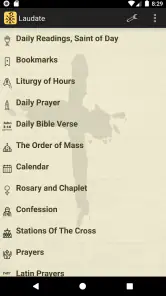
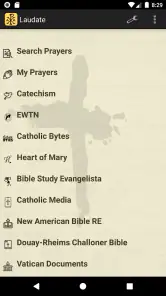
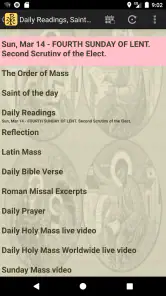
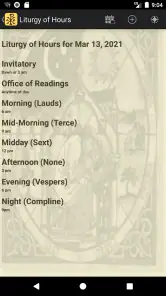

Analysis by Reviewed
I found Laudate most useful when I treated it as a shared reference shelf rather than just another prayer app. It brings daily Catholic readings, prayers, podcasts, and rosaries into one place, so a person can open it for a quick moment of reflection or return to it throughout the day. That combination makes sense on a household device: one family member may want the day’s reading, another may use a rosary, and someone else may listen to a podcast without switching between several unrelated apps.
My overall impression is warm but practical. This is a broad Catholic resource, not a minimalist tool built around one single habit. Its range is the main attraction, although that same range can make the experience feel busy if you only want a very simple daily reading. The app is free, aimed at Everyone, and developed by Aycka Soft. With a 4.7 average from around 31 thousand ratings and over 1 million installs, it has clearly become a familiar choice for people looking for a Catholic reference app on Android.
How Laudate works in a shared household
A useful common shelf for prayer and reading
On a shared phone or tablet, I would place Laudate somewhere between a personal devotional notebook and a small Catholic library. It is not necessary for every person in the home to approach it in the same way. The daily readings offer a predictable starting point, while the prayer and rosary material supports shorter or more focused use. Podcasts add a listening option for moments when reading is inconvenient.
A realistic example would be a household preparing for the day. One person checks the daily reading over breakfast, another opens a rosary later during a commute or quiet break, and a parent plays a podcast while doing routine work. Nobody needs the same feature, and that is where the app’s breadth becomes more valuable than a single-purpose prayer tool.
I also like that this kind of shared use does not require the app to become a social platform. There is no need to turn a private devotional routine into a public activity. A family can simply keep the app available on a common device and let each person choose what fits. That makes it suitable for households where religious practice is shared in some ways but personal in others.
Why the broad feature mix matters
The daily readings are probably the most natural entry point, because they give the app a recurring reason to open it. The prayers and rosaries make it more useful after that first visit. Instead of reading once and leaving, I can move from a passage into a more deliberate prayer session, or choose audio-oriented content when my attention is not available for a screen.
That progression is one of the app’s less obvious strengths. I would not judge it only by whether its reading section feels polished in isolation. The real benefit comes from having several forms of Catholic material close together. If your routine changes from day to day, Laudate is more adaptable than an app that offers only a fixed reading plan.
More From Our News Desk

Clash of Clans Is Won Between the Battles

Android Auto Makes the Case for Quieter Car Software

MobiOffice: Transforming Mobile Productivity with Seamless Integration

EA SPORTS FC™ Mobile Soccer: Redefining Mobile Sports Gaming

How Microsoft OneDrive Became a Mobile Productivity Giant

How Google Translate Breaks Language Barriers Effortlessly
The trade-off is discoverability. A large collection can make a newcomer wonder where to begin. I recommend choosing one regular doorway first, such as the daily readings, and ignoring the rest until the habit feels comfortable. Trying to explore everything immediately can turn a calm devotional tool into a browsing task.
What I would do before handing over a shared device
For household use, I would open the app privately first and decide which sections are appropriate for the people who will use the device. This is not because the app is difficult, but because a shared screen changes the context. A child, guest, or older relative may tap through areas without knowing what they contain, while another family member may prefer not to have personal devotional material exposed during casual use.
I would also agree on a simple routine: perhaps the daily reading stays available from the main screen, while podcasts and rosaries are used individually. That small boundary avoids confusion without pretending that the app provides a family-management system. Laudate is best handled through household agreement, not through assumptions about separate profiles or automatic restrictions.
Setup, boundaries, and everyday coordination
Starting without making the app feel like a project
Because Laudate covers several kinds of content, the first session should be about orientation rather than completion. I would spend a few minutes locating the daily readings, prayer material, rosaries, and podcasts. Once I knew where those areas were, I would stop exploring and use one section normally. This approach keeps the first impression focused and makes it easier to decide whether the app belongs in a daily routine.
The current version is 2.91 and it runs on devices using Android 6.0 or later. That makes the compatibility requirement important for anyone considering an older household phone or tablet. Before planning to install it on a spare device, I would check that the operating system meets that baseline. A device that cannot run the app is a more practical limitation than any question of personal preference.
The app’s free price also helps with shared-device decisions. There is no purchase discussion needed before a family can try it, which lowers the barrier for households that want to evaluate it together. Free access does not automatically make every experience frictionless, though. I would still test the app on the actual device intended for communal use, especially if the screen is small or the hardware is dated.
Keeping personal boundaries clear
One point I would explain to every household member is that a shared installation is not the same as separate personal spaces. If several people use the same device, they should assume that anything left open on screen may be visible to the next person. That matters when someone is reading privately, listening with headphones, or simply wants a quiet moment without discussion.
For that reason, I would close the app or return it to a neutral section after using it. This is a small habit, but it prevents the next user from landing in a personal passage or an audio session unexpectedly. It also keeps the shared device feeling orderly. Laudate can support different routines, but the people using it need to provide the boundaries.
I would not present the app as a replacement for a family calendar, a parish communication channel, or a coordinated study plan. Its strength is access to Catholic material, not household administration. If a family needs assigned readings, attendance tracking, or formal group coordination, another tool will be a better fit alongside it.
Coordinating without overcomplicating the routine
A simple rotation can make the app feel more useful. One person might choose the daily reading in the morning, while another uses a rosary in the evening. Podcasts can fit into times when nobody wants to hold the device. This division gives each feature a purpose and avoids the common problem of downloading a broad app, opening every section once, and then abandoning it.
I also found that the app works better when the household agrees on whether use is silent or shared. A podcast may be suitable for a common room, but a reading or prayer may be better treated as individual screen time. Agreeing on that beforehand is especially helpful in homes with different schedules, because it prevents the app from becoming a source of small interruptions.
For a group prayer setting, I would use Laudate as a reference rather than assume it will organize the whole gathering. One person can open the relevant material while the others participate, but the app should remain in the background of the experience. The point is to support the routine, not make everyone watch a screen continuously.
Where alternatives may be better
Compared with a printed prayer book, Laudate is more portable and offers more variety, but it depends on a charged device and can invite distractions. A book remains calmer for someone who wants no notifications, no browsing, and no temptation to switch tasks. I would choose print for a deliberately screen-free routine, especially in a household where the device is constantly in demand.
Compared with a narrowly focused daily-reading app, Laudate gives me more ways to continue after the reading. That is valuable when I want prayers, rosaries, and podcasts in the same place. The focused alternative may feel cleaner, however, for a person who wants one screen, one passage, and no broader library to explore.
Compared with general podcast or reading apps, Laudate has the advantage of keeping the Catholic context together. A general app may offer stronger discovery tools for unrelated audio or books, but it also makes the user assemble a personal collection from different sources. Laudate is more convenient when the goal is specifically Catholic reference material rather than broad media consumption.
Age, trust, and the limits of shared access
Who can use it comfortably
The Everyone age rating makes Laudate approachable for a wide household audience. I can imagine adults, teenagers, and younger users opening it for different reasons, provided an adult has already explained how the shared device is meant to be used. The rating is helpful context, but it should not replace ordinary family judgment about screen habits, privacy, and attention.
For children, I would introduce one section at a time instead of presenting the entire app as a large catalogue. A child who is asked to find a daily reading or follow a rosary has a clear task. A child left to browse every available area may simply lose interest or tap around without understanding the purpose. The best experience depends less on technical controls and more on guidance from a trusted adult.
Older relatives may appreciate the app’s range but need a little assistance at the beginning. I would show them the exact route to the material they want, then leave that section easy to reach. The audio options can be particularly useful for someone who finds extended reading on a phone tiring, although the household should make sure the volume and device placement are comfortable.
Trust matters more than pretending the app is private by default
Laudate is suitable for shared use when everyone understands that the device itself is shared. I would not use a communal phone for deeply personal notes or sensitive conversations simply because the app is installed there. The safest approach is to keep private devotional use on a personal device and reserve the household installation for readings, group moments, and material everyone is comfortable seeing.
This distinction also helps with age context. A parent can decide which sections to introduce, while an older child can gradually take more responsibility for finding readings or choosing a rosary. That is a healthier arrangement than assuming the app should manage every boundary automatically. The app supplies content; the household supplies the rules and supervision.
Trust also affects coordination. If one person leaves a podcast playing or changes the device’s position, the next user may have a different experience. A quick agreement about headphones, volume, and returning the device to its usual place solves more problems than a complicated routine. These are small details, but they determine whether a shared app feels welcoming or inconvenient.
When I would recommend skipping it
I would skip Laudate if you want an extremely restrained interface with only one carefully defined purpose. Its collection of readings, prayers, podcasts, and rosaries is the reason to choose it, but it can feel broader than necessary for someone who already has a preferred prayer book or a dedicated reading app.
I would also look elsewhere if your main need is structured household management. Families seeking separate accounts, formal progress records, child-specific controls, or a shared schedule should not assume that a Catholic content app will provide those functions. Laudate can sit beside those tools, but it should not be expected to replace them.
Finally, it may not suit someone who avoids phones during prayer altogether. Even a well-organized app remains part of a digital device, with the distractions and practical interruptions that come with that setting. For those users, a physical book or a deliberately offline routine is likely the more satisfying choice.
My household verdict after using the full range
What makes Laudate worthwhile is not one isolated feature. It is the way daily readings, prayers, podcasts, and rosaries give a Catholic household several entry points into the same app. I can use it briefly, return for a longer session, or keep it available as a reference when a printed resource is not nearby. That flexibility is more convincing than a simple claim that it contains a lot of material.
Aycka Soft has positioned it as a broad Books & Reference app, and that description fits my experience better than calling it merely a prayer timer or reading tool. It functions as a digital Catholic shelf: useful when I know what I want, and still valuable when I am deciding how to spend a quiet moment. The free access makes experimentation easy, while the Everyone rating supports a wide range of household situations.
My practical advice is to give it a defined role. On a personal phone, that might be the daily reading each morning followed by a prayer. On a shared tablet, it might be a common reference for family use, with clear expectations about privacy, audio, and returning the device to a neutral screen. Those small decisions reveal whether its broad design will help or overwhelm you.
The long release history, current 2.91 version, and strong user response suggest a mature app rather than a short-lived experiment. Still, popularity does not remove the need to match the tool to your habits. I would recommend it to Catholic readers who want several types of devotional content together and to households willing to coordinate shared access sensibly. I would choose a printed book or a more focused alternative for anyone who wants a quieter, narrower, or fully screen-free experience.
In the end, I see Laudate as a generous and practical companion, especially when a family wants one accessible place for different forms of Catholic practice. It is not a substitute for personal judgment, family conversation, or a well-chosen physical resource. Used with those limits in mind, it earns a place on my device because it makes the next reading, prayer, rosary, or podcast easy to reach without forcing everyone to follow the same routine.
Laudate Frequently Asked Questions
Can I use Laudate to listen to prayers or other audio content?
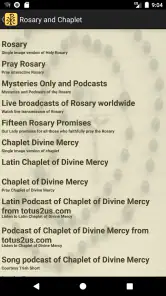
Laudate’s store summary highlights prayers, rosaries, daily readings, and podcasts, so it may suit people who want devotional material alongside written references. Audio can be useful while traveling or when it is difficult to read from a screen. Listening features may depend on an internet connection and the content available in the version you install.
Is Laudate intended only for Catholics?
Laudate is centered on Catholic prayer and reference materials, including daily readings and rosaries. Catholics may use it to support regular devotional practices, while people from other backgrounds may find it useful for learning about Catholic traditions. Its focus is specifically Catholic, so it is best suited to users seeking resources within that tradition rather than a general-purpose religious app.
Can Laudate help me follow daily readings and prayers?
Yes. Daily readings and prayers are among the app’s central resources, making Laudate a convenient place to look for devotional material during the day. The store summary also highlights rosaries and podcasts. Users who rely on liturgical content should still check that the readings and other resources meet their needs and fit their local practice.
Can Laudate be used on my phone or tablet?
Laudate is a Books & Reference app for mobile devices, and its current version requires Android 6.0 or later. Before downloading, check that your device meets this requirement and that you are choosing the version available for your operating system. The app is listed as suitable for everyone, making it an option for users looking for Catholic prayer and reference resources on a mobile device.
Who develops Laudate, and is it widely used?
Laudate is developed by Aycka Soft and is intended for people who want Catholic prayers and reference materials in an app. It has an average rating of 4.7 from around 31,000 ratings, with roughly 6,100 written reviews and over 1 million installs. Those figures suggest that it has reached a broad audience, though individual experiences can still vary by device and personal needs.
Pros
- Large collection of Catholic prayers
- Bible readings
- and devotional content.
- Includes daily readings
- saint information
- and resources for different traditions.
- Audio prayers and reflections make the app useful while commuting or traveling.
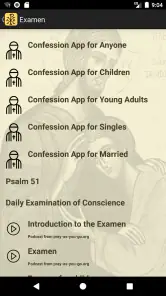
- Offers examination of conscience and confession guides for practical spiritual support.
- Many features are available without requiring a paid subscription.
Cons
- The amount of content can feel overwhelming for first-time users.
- Some resources may reflect Catholic terminology unfamiliar to non-Catholic users.
- Audio quality and availability can vary between individual recordings.
- The interface may feel dated compared with newer religious apps.
- Certain content and features may require an internet connection or extra downloads.

- Category
- Books & Reference
- Version
- 2.91