Just Between Us
- 307.00
- 4.6
- Installs
- 100.00K
- Price
- Free

Screenshots


Analysis by Reviewed
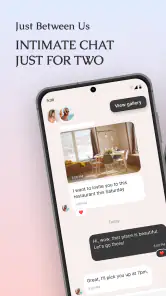
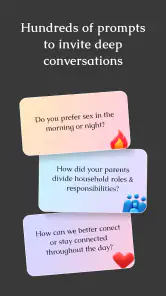
Some relationship apps try to turn communication into a stream of reminders, advice, or public discussion. Just Between Us takes a narrower and more personal route: it is built around intimate conversation for couples. After spending time with it, I see its main value less as a replacement for messaging and more as a deliberate space for topics that are easy to postpone when everyday life gets busy.
That distinction matters. You can already talk with a partner through ordinary messages, calls, or a shared notes app. The reason to try this app is the change in context. A dedicated couple-focused environment can make a conversation feel intentional rather than like another message buried between work updates and errands. Whether that difference is useful depends heavily on how both people approach it.
What the app is really trying to solve
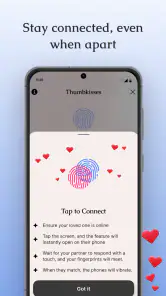
Just Between Us is a free communication app from Get Your Marriage On! Its store summary describes it as intimate chat for couples, and that is a better guide to its purpose than treating it like a general social network. I would not install it expecting a full messaging replacement, a broad community, or a relationship course. I would install it when my partner and I wanted a more focused place to talk privately and make room for conversations we might otherwise avoid.
The app belongs to the communication category, but its audience is unusually specific. It is aimed at couples who want to discuss personal subjects with more structure or privacy of attention than a normal chat thread provides. That can include partners living together, couples managing different schedules, or people who communicate more comfortably in writing before discussing something face to face.
Its popularity gives it a reasonable level of visibility: the app has passed one hundred thousand installs, with an average rating of 4.6 from around 1.3 thousand ratings. Those figures suggest that the concept has found an audience, but they do not tell me whether it will suit a particular relationship. A high rating cannot replace agreement between two people about how the app should be used.
The app is free to install, while in-app purchases range from $4.99 to $49.99 per item. That makes the first step relatively easy, but I would still look carefully at any purchase screen before committing. A free starting point is useful for testing whether both partners actually return to the app, rather than paying for an idea that sounds helpful but never becomes part of the routine.
A calmer alternative to ordinary messaging
The strongest case for this app is not that it can do something a phone’s regular messenger cannot technically do. The stronger case is that it can help separate relationship conversations from the noise of normal communication. In a standard chat, a thoughtful message may sit next to a grocery request, a delivery update, and a string of quick reactions. Just Between Us gives the conversation a different psychological frame.
You May Like

Clash of Clans Is Won Between the Battles

Android Auto Makes the Case for Quieter Car Software

MobiOffice: Transforming Mobile Productivity with Seamless Integration

EA SPORTS FC™ Mobile Soccer: Redefining Mobile Sports Gaming

How Microsoft OneDrive Became a Mobile Productivity Giant

How Google Translate Breaks Language Barriers Effortlessly
I found that distinction most useful when the subject needed patience. If one partner sends a difficult question during a busy afternoon, the other person may answer too quickly or forget to come back to it. A dedicated couple space encourages both people to recognize that the exchange deserves attention. It does not solve poor communication by itself, but it can make avoidance more visible.
There is also a trade-off. A separate app creates another place to check. If one person already struggles with notifications or does not enjoy writing, the dedicated setting may feel like an obligation rather than an invitation. In that situation, a familiar messaging app may be more effective because both partners already use it naturally.
Trust begins with visible choices
For an app centered on intimate conversation, I would judge trust through what the app visibly lets me control, not through assumptions about its intentions. Before sharing anything sensitive, I would review the account setup, notification behavior, sign-in choices, and any privacy or data explanations shown inside the app or its store-facing materials. Those are practical checks, and they are more useful than assuming that a relationship-focused brand automatically means every conversation is protected in the same way.
I would also pay attention to the difference between a private-feeling interface and clearly explained data practices. A quiet design can feel discreet, but appearance is not proof of how information is stored, processed, or handled. When an app is used for personal relationship discussions, I want the available privacy choices to be easy to find and understandable enough for both partners to make an informed decision.
That caution is not a criticism unique to this product. It is simply the right standard for any communication tool. The more intimate the subject, the less comfortable I am with vague settings or accidental sharing. I would avoid entering highly sensitive details until I had checked every visible control that affects account access, notifications, and data handling.
My central trust rule is simple: use the app only at the level of privacy you can verify and accept. That means discussing it with your partner before creating a shared habit. One person may be comfortable with intimate prompts or personal reflections, while the other may prefer to keep those conversations offline. The app should support mutual consent, not quietly become a test of commitment.
Account control should be a joint decision
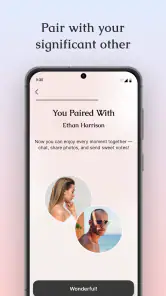
Couple-focused apps can create an unusual account question: is the account primarily mine, primarily my partner’s, or something we both manage? I would settle that before adding personal material. Both people should know how access works, which device is signed in, and what happens if one phone is lost, replaced, or shared with someone else.
I would not treat shared access as permission to inspect everything without discussion. A couple can choose openness while still agreeing on boundaries. For example, you might decide that the app is for conversations both people intentionally contribute to, rather than a place where one partner expects constant access to every private thought. That agreement is more important than any feature label.
If you are considering the app during a separation, a period of conflict, or a relationship where one person feels monitored, I would be especially careful. A communication tool cannot create safety where trust is already damaged. In those circumstances, a neutral counselor, an ordinary private conversation, or a tool with clearly understood individual accounts may be a better choice.
The app is marked for Teen users, which is relevant when a device is shared with younger family members or when notification previews appear on a lock screen. I would check what is displayed outside the app and adjust notification visibility if the phone is often left where other people can see it. Even a harmless-looking alert can reveal more context than intended.
Everyday use: making room for a difficult conversation
Imagine two partners who both arrive home tired. One wants to discuss finances, intimacy, or a recurring disagreement, while the other needs time to think before responding. In a normal conversation, the topic may become an argument because it starts at the worst possible moment. With Just Between Us, one partner can open the subject in a more deliberate setting, and the other can return when they are ready to engage properly.
The important workflow is not simply “send a message and wait.” I would agree on a small routine: introduce one subject, say whether an immediate answer is expected, and decide when to continue the discussion in person. That prevents the app from becoming a place where serious issues remain indefinitely in writing. Written communication can clarify thoughts, but tone is still easy to misread.
A useful approach is to use the app as a bridge. Start with what you are trying to understand, explain what kind of response would help, and then move to a call or face-to-face conversation when the issue becomes too nuanced for text. This is one of the less obvious strengths of a dedicated couple space: it can help a partner begin a conversation without pretending that text is always the final answer.
I would also avoid sending a long chain of emotionally charged messages late at night. The app may make it easy to continue typing, but convenience is not the same as good timing. If both people agree to pause and revisit the subject later, that pause should be treated as part of the communication plan rather than as rejection.
Where the focused format helps—and where it does not
Compared with ordinary messaging, the app’s advantage is focus. Compared with a shared notes app, its advantage is that the purpose is clearly relational rather than administrative. Compared with video calls, its advantage is that each person can think before answering. Compared with relationship counseling, however, it does not offer the same outside perspective or professional guidance.
That comparison helps define its limits. If you need fast coordination about appointments, shopping, travel, or household tasks, a normal messenger or shared calendar will probably be better. If you need help working through recurring conflict, a dedicated conversation app may be a supplement, but it should not be mistaken for therapy. If you want a large social community, this is also the wrong category of tool.
The focused format can even expose a mismatch between partners. One person may enjoy reflective written conversation, while the other finds it artificial. In that case, forcing regular use could make communication feel like homework. I would treat the app as an experiment with a clear opt-out: try it together, discuss whether it helps, and stop if it creates pressure.
Practical setup habits that make a difference
My first recommendation would be to explore the app together rather than having one partner quietly install it and present it as a solution. Agree on what belongs there, how quickly either person is expected to answer, and whether notifications should appear on the lock screen. These small decisions prevent many avoidable misunderstandings.
Second, keep the first conversations low-stakes. Use the early sessions to learn whether the interface feels comfortable, whether both people remember to check it, and whether written replies improve or complicate the discussion. Starting with the most painful relationship issue can make it difficult to judge the app fairly.
Third, be selective about permanent records. Before writing names, financial details, health information, or anything that could cause harm if exposed, review the visible privacy and account controls. Even when two people trust each other, phones can be lost, replaced, repaired, or accessed by others. Privacy is a shared practice, not just a setting.
Fourth, use a time boundary. A short exchange followed by a planned conversation is often healthier than an endless thread. This is particularly important when messages are being used to delay a necessary discussion. The app can create a doorway to honesty, but both partners still have to walk through it.
What the current app details mean in practice
The app was released on March 26, 2020, and its current version is 2.6.8. It supports devices running Android 7.0 or later, so compatibility should be straightforward for many Android users, although anyone with an older phone should check the operating system before trying to install it. I would also keep the app updated through the normal store process, especially for a communication tool where account behavior matters.
The developer is listed as Get Your Marriage On!, a name that makes the intended audience clear. That may appeal to couples looking for relationship-oriented material, but it could feel too narrowly framed for people who want a neutral communication utility. I would consider whether that tone matches your relationship and your expectations before making the app part of a shared routine.
The Teen content rating is another reminder to think about context rather than assume that every conversation is suitable for every device environment. If a phone is used by multiple family members, review previews, lock-screen behavior, and account switching before storing personal conversations. The rating does not remove the need for adult judgment about what you choose to write.
Because purchases are available inside the free app, I would test the basic experience before spending money. Around $4.99 to $49.99 per item is a broad range, so I would read each purchase screen carefully, identify what is being unlocked, and confirm that both partners agree. A paid feature is worthwhile only if it supports a habit you are already using, not if it is being bought in the hope that it will repair communication automatically.
Who will get the most from it
I think the app is best for couples who already want to communicate better and need a focused place to begin. It can suit partners with different work schedules, couples who prefer writing before talking, and people who want to make intentional room for personal subjects. It is also useful for couples who recognize that ordinary chat has become too mixed with logistics to support meaningful conversation.
It is less suitable for someone seeking a complete relationship program, professional counseling, or a universal solution to conflict. I would also skip it if my partner did not want to use it, if either person expected immediate replies at all times, or if the app’s relationship-focused tone felt uncomfortable. A tool cannot be genuinely private or constructive when participation is pressured.
I would be cautious for couples dealing with controlling behavior, threats, or fear around digital access. In those circumstances, shared communication records can create additional risk. The safer option may be advice from a qualified professional or a support service that can discuss digital safety in your particular situation. No couple app should be treated as a substitute for that kind of help.
My verdict after weighing the trade-offs
Just Between Us is a focused communication app with a clear purpose: helping couples give intimate conversation its own space. I like the idea because it addresses a real everyday problem—the way important relationship topics disappear inside ordinary messages and busy schedules. Its best use is as a gentle starting point or a bridge toward a deeper conversation, not as a replacement for listening, timing, or professional support.
The free entry point makes it reasonable to try with a partner, while the available purchases mean I would inspect upgrade details before paying. I would also make privacy and account decisions together, keep sensitive information limited until the visible controls are understood, and agree on notification and response boundaries from the beginning.
My recommendation is therefore cautious but positive. If both partners want a dedicated space and are comfortable with its account and data choices, it is worth testing. If you only need quick coordination, a standard messenger is simpler. If you need help resolving serious or repeating conflict, seek a qualified human guide. For couples who want to slow down, write more intentionally, and turn a difficult message into a real conversation, this app can be useful precisely because it asks you to treat communication as something worth setting aside time for.
Just Between Us Frequently Asked Questions
Who develops Just Between Us, and what kind of app is it?
Just Between Us is a communication app developed by Get Your Marriage On! Its store summary describes it as “Intimate Chat for Couples,” so it is aimed at partners looking for a space for personal conversations. The app has a Teen content rating. If you are considering it for a particular relationship or communication style, review its current store description and decide whether that focus suits you.
What is Just Between Us, and who is the app designed for?
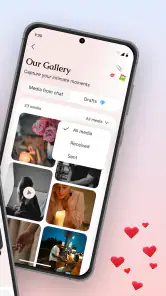
Just Between Us is a private communication app intended for people who want to share messages, photos, memories, or personal updates with a selected partner or small circle rather than posting publicly. Its appeal is centered on more intimate conversations and a quieter social experience. Before downloading, users should review the current store description to confirm whether the available features match their relationship, privacy, and communication needs.
Is Just Between Us free to download and use?
The app is free to download, but optional in-app purchases are available, with prices ranging from $4.99 to $49.99 per item. The cost of any purchase can add up, so check the price and terms shown in the app before confirming a transaction. Consider whether the free experience meets your needs before choosing to buy anything.
Does Just Between Us require an account or personal information?
Depending on the version and platform, Just Between Us may request information such as an email address, phone number, profile details, or permission to access notifications, photos, and other device functions. These requests can support account recovery, invitations, and content sharing. Read the app’s privacy policy carefully, and only grant permissions that are necessary for the features you actually plan to use.
Can I use Just Between Us on both Android and iPhone?
Availability can differ by country, operating system, and app version, so users should confirm compatibility directly on their device’s official app store. On Android, the app requires version 7.0 or later. If you plan to communicate with someone using another platform, verify that the app is available on their device and check whether cross-platform use meets your needs before downloading.
Pros
- Private spaces make sharing personal updates feel more comfortable.
- Simple interface is easy to understand for first-time users.
- Useful for keeping selected conversations separate from public social feeds.
- Encourages more focused communication with trusted contacts.
- Notifications help users stay updated without checking constantly.
Cons
- Requires both people to use the app for the experience to work fully.
- The smaller user base may limit its usefulness for some users.
- Privacy still depends on account security and the other person’s behavior.
- Some features may feel unnecessary for users who prefer regular messaging apps.
- Limited public content can make the app feel less engaging over time.

- Category
- Communication
- Version
- 2.6.8