Holy Bible Path:Audio&Verse
- 95.00
- 4.5
- Installs
- 100.00K
- Price
- Free

Screenshots



Analysis by Reviewed
Finding a quiet moment for Scripture is often harder than deciding that you want one. The Bible may already be on your phone, yet opening it, locating the right passage, and staying focused can feel like another task squeezed between messages, travel, work, and family responsibilities. Holy Bible Path:Audio&Verse approaches that recurring problem as a simple tools app: it is meant to place God's word into ordinary parts of the day instead of waiting for a perfectly planned study session.
I reviewed it as a lightweight companion rather than as a replacement for a full Bible study platform. Its store summary points to Scripture accompanying daily life, and that idea is clearer in practice than a feature-heavy approach would be. The app is free, rated for Everyone, and developed by Dev.Valley.app. That combination makes it easy to try, especially if you want a direct way to read and listen without committing to a paid service.
The important question is not whether a Bible app can display verses. Most can. The better question is whether it reduces the small pieces of friction that make people postpone reading. In my experience, Holy Bible Path:Audio&Verse is most appealing when you want a straightforward routine: open the app, choose a passage, and let reading or audio fit into a moment that would otherwise disappear.
How Holy Bible Path:Audio&Verse fits into real routines
A first setup that stays out of the way
My first impression is that this is an app to approach with a clear purpose. Rather than treating it like a large reference library with endless menus, I would begin by deciding how I actually want to use it: short reading during breakfast, listening while getting ready, or a verse during an evening pause. That decision matters because the app's value comes from repetition. A complicated setup would work against the very habit it is supposed to support.
The Android requirements are also approachable. The current version is 1.1.0 and works from Android 8.0 onward, so people using older but still serviceable phones are not automatically excluded. I would still check the app on the device where I intend to use it most, particularly if that device is older, because audio apps can feel less convenient when storage, battery, or background behavior is already a concern.
One useful way to begin is to choose a single daily window instead of attempting an ambitious plan. For example, I would use a short reading after turning off an alarm, then leave longer listening for a walk. This separates two activities that are often confused: reading requires visual attention, while audio can accompany a routine. Treating them differently makes the app more practical and avoids the disappointment of expecting every session to look like formal study.
I also recommend keeping the first session deliberately simple. Open a passage, listen for a few minutes, and notice whether the voice, pacing, and controls suit your environment. If you are at home, headphones may not be necessary; in a shared space, they may make the difference between using the app and abandoning it. This is a small but important test because an audio feature is only useful when it fits the places where you actually spend time.
Reading and listening serve different kinds of attention
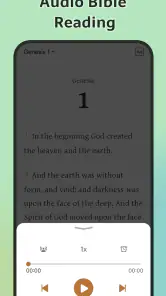
The central appeal is the combination suggested by the name: audio and verse. Reading gives me control over pace and makes it easier to pause over a sentence. Listening is more suitable when my hands and eyes are occupied. I would not treat one as superior to the other. The better choice depends on the moment and on whether I want careful reflection or a gentle way to remain connected with Scripture during a routine.
A practical workflow is to listen first and read afterward. During a commute or household task, audio can introduce a passage without demanding that I stare at the screen. Later, a brief visual reading can help me return to a line that stood out. This two-stage approach is more realistic than trying to annotate or deeply analyze text while moving around, and it turns otherwise unused minutes into a consistent point of contact.
Another workflow is the reverse: read a short section when I have concentration, then replay it later as audio. That can help with familiarity, especially when I want the spoken version to reinforce the structure of the passage. The trade-off is that listening is less precise for comparing wording or jumping between references, so anyone doing detailed study should keep a traditional Bible, study edition, or reference tool nearby.
Everyday situations where the app earns its place
Consider a weekday morning. There may be enough time for a short passage but not enough patience for searching through a large collection of resources. A focused Bible app can remove that initial decision fatigue. I would open it while drinking coffee, read a manageable section, and stop before the routine becomes rushed. The benefit is not dramatic automation; it is the removal of a few steps that often cause a good intention to vanish.
Listening is more useful during repetitive tasks. While preparing food, folding clothes, or walking through a familiar route, I can use audio without holding a book or keeping my eyes on a display. This is where the app's concept feels most natural. It does not need to compete with a full study session; it simply makes Scripture available in moments that are already part of the day.
Evening use has a different character. I would lower the pace of the session, read rather than listen if I wanted to reflect, and avoid turning the app into background noise. Audio can be calming, but constant passive listening is not automatically meaningful. The app helps create access; the quality of attention still depends on how deliberately I use it.
It can also work for someone who finds small screens tiring. Listening offers an alternative to extended reading, while short passages keep the activity approachable. That does not make it a dedicated accessibility tool, and people with specific visual or hearing needs should judge the experience against their own requirements. Still, the option to move between text and audio is more flexible than relying on a text-only reader.
Where it saves time and where it does not
The strongest time-saving benefit is at the beginning of a session. A focused app can make the path from intention to passage shorter than opening a browser, sorting through search results, and deciding which page is trustworthy. That matters most for repeated use. Saving a minute once is barely noticeable; removing the same hesitation every day can make a habit feel possible.
It also reduces the need to carry a physical Bible for casual listening. I still prefer a printed Bible for longer study because paper makes it easy to see surrounding passages and mark connections without navigating a screen. Holy Bible Path:Audio&Verse is better suited to access and continuity than to replacing every form of Bible reading.
The app does not remove every kind of friction. Audio requires a suitable listening environment, and reading still requires attention. If I am distracted, a spoken passage can become indistinct background sound. If I need historical notes, cross-references, multiple translations, or a structured study plan, a more comprehensive Bible platform may save time in the long run even if it takes longer to open.
This distinction is important for choosing the right tool. A minimalist app can be faster precisely because it asks less of me, but that also means it may provide less help when my question moves beyond the text itself. I see that as a trade-off rather than a defect: the app is strongest when access is the problem, not when research is the problem.
Small habits that make the experience more dependable
I found three habits especially useful for getting more from this kind of app. First, I would assign audio to activities that are predictable and safe, such as walking a familiar route or doing household chores. That prevents the app from becoming something I remember only when I have spare time, because spare time is often the least reliable part of a day.
Second, I would keep reading sessions short enough to finish comfortably. Stopping at a natural point is better than forcing a long session and associating the app with pressure. The goal is a repeatable rhythm, not an impressive first day. This is particularly helpful for new users who are tempted to compensate for missed reading by attempting too much at once.
Third, I would use audio as a bridge rather than a substitute for every other form of engagement. After listening, I might recall one phrase, reread a section later, or discuss it with someone. That simple follow-up turns passive availability into a more intentional practice. It is also a way to discover whether the app is genuinely helping me or merely filling silence.
There is a useful privacy-minded habit as well: I would review the app's behavior on my own phone before making it part of a sensitive routine. That means noticing how it handles interruptions, whether audio behaves as expected when the screen changes, and whether the controls are easy to reach. These are ordinary usability checks, but they matter more than a polished description when an app is meant to be used repeatedly.
Who will appreciate it most
I would recommend it first to someone who wants a free Bible app with a direct reading-and-listening focus. It suits people who already know they are more consistent when Scripture is available during ordinary activities, and it may be especially helpful for users who alternate between visual reading and audio depending on their energy or surroundings.
It is also a sensible starting point for someone who feels overwhelmed by large religious apps. Many tools in this category combine devotionals, communities, plans, notes, reminders, media, and study material. Those additions can be valuable, but they can also create another place to browse instead of read. Holy Bible Path:Audio&Verse appeals to the person who wants fewer decisions and a clearer path into the text.
The app has reached over one hundred thousand installs and holds a 4.5 average from 754 ratings, with 95 written reviews. Those figures suggest that it has found an audience, but I would not use popularity as a substitute for personal fit. Audio pacing, reading preferences, and tolerance for a simple interface vary widely. The best test is whether I can complete several ordinary sessions without feeling that the app is getting in the way.
Who should choose another option
I would look elsewhere if my main goal were serious comparative study. Someone who regularly needs extensive notes, original-language tools, commentaries, maps, linked references, or a large library may save time with a more advanced Bible platform. Those apps can be busier, but their additional structure is useful when the question is not merely “What should I read?” but “How do these passages connect, and what background explains them?”
I would also be cautious about choosing it as the only option for group study. A group may need consistent translation controls, shareable references, discussion tools, or material that everyone can access in the same format. A simple personal reader can support preparation, but it may not cover the organizational side of a study group.
People who dislike listening to synthetic or unfamiliar voices should test the audio experience before building a routine around it. The name makes audio central, but a feature's existence does not guarantee that its delivery will suit every listener. If the voice distracts me, the reading side may still be useful, though another app could provide a better overall experience.
My verdict after weighing convenience against depth
Holy Bible Path:Audio&Verse succeeds when I judge it by the problem it is trying to solve: making Scripture easier to reach during a normal day. It is free, accessible on older Android versions, and simple enough to fit into short routines. The combination of verse reading and audio gives it more flexibility than a text-only utility, especially for people whose schedules leave little uninterrupted time.
Its limitations are closely tied to that simplicity. I would not choose it expecting a complete study ecosystem, deep research tools, or a replacement for every Bible format I already use. The app is most effective as a dependable doorway into Scripture, not as an all-purpose theological library. That honest boundary makes the recommendation clearer rather than weaker.
For me, the deciding test is whether an app helps me begin without making the beginning feel like work. This one has a credible place in that role. If you want a free, Everyone-rated tools app from Dev.Valley.app that lets reading and listening share the same daily routine, I think it is worth trying. Its real strength is friction removed at the moment when good intentions usually fade.
The release date is Jun 2, 2026, and the app is currently at version 1.1.0, so I would keep expectations practical and pay attention to how it develops over time. For now, I would use it alongside a fuller Bible resource when I need study depth, and on its own when I need a quick, uncomplicated way to bring Scripture into a walk, a morning pause, or a quiet evening.
Pros
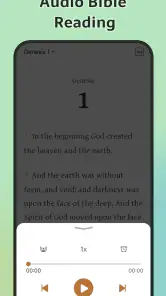
- Audio playback makes Bible reading convenient while commuting or relaxing.
- Verse browsing is simple
- helping users find passages without much effort.
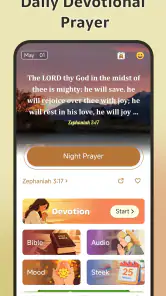
- Useful for building a consistent daily Scripture-reading routine.
- Can support personal reflection
- prayer
- and quiet study sessions.
- A practical option for users who prefer listening over extended reading.
Cons
- Audio quality and narration style may not suit every listener.
- Some features may require an internet connection or additional downloads.
- The app may offer limited study tools compared with dedicated Bible apps.
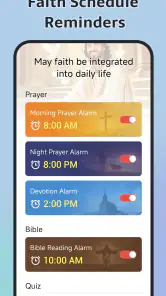
- Frequent reminders or notifications could feel intrusive to some users.
- Translation availability may vary depending on the user’s language preferences.

- Category
- Tools
- Version
- 1.1.0