Gospel Partner: Daily Bible
- 413.00
- 4.9
- Installs
- 100.00K
- Price
- Free

Screenshots






Analysis by Reviewed
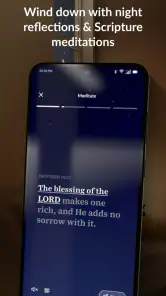
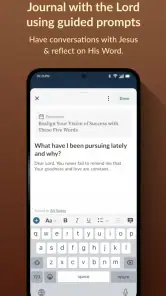
I spent time with Gospel Partner: Daily Bible as a quiet, repeatable companion for Bible reading, prayer, and personal notes. It sits in the Books & Reference category, but it feels less like a traditional reference shelf and more like a guided daily habit. The focus is not on replacing a full study Bible or a broad search tool. Instead, it brings devotional reading, prayer, and journaling into one place for people who want a simple spiritual routine.
That distinction matters. If I want to compare translations, investigate a word, or move quickly through a large collection of passages, I usually expect more specialist Bible software. When I want a calmer start to the day, a prayer prompt, or somewhere to record a personal thought, this app makes more sense. My overall impression is that it is approachable, focused, and easy to return to, although its usefulness depends heavily on whether its devotional style matches what you are looking for.
How the app feels during everyday use
A gentle start rather than a demanding study session
The first thing I noticed is the app’s emphasis on consistency. A daily devotional works best when it does not make the user work too hard before reading anything, and Gospel Partner: Daily Bible is built around that idea. I can open it with a specific intention—read, pray, or write—and stay within the same general experience instead of jumping between several unrelated tools.
That makes it a practical choice for short sessions. I can imagine using it before work, during a lunch break, or in the evening when I want to slow down without beginning a long research project. The design direction implied by the “Daily Devo, Prayer & Journal” summary is clear: this is meant to support a rhythm, not overwhelm me with a library of options.
In my experience, perceived speed is especially important for an app used in small moments. If I only have a few minutes, I do not want to spend that time navigating through layers of content. The app feels most valuable when I treat it as a doorway into a focused pause. That is a different goal from opening a reference app to find a particular verse or answer a detailed question.
What happens when I use it heavily
Light use is the natural fit, but the more interesting test is what happens when I combine its main purposes. A realistic session might begin with the daily devotional, continue into prayer, and finish with a journal entry. That workflow is more demanding than simply opening one reading, because I am asking the app to support several kinds of activity in one visit.
The benefit of this arrangement is continuity. A thought from the devotional can lead directly into a prayer, and the journal gives me a place to capture what I want to remember. I do not have to rely on a separate notes app and then reconstruct the context later. For someone trying to build a personal practice, that connection is more useful than having a large number of unrelated features.
More From Our News Desk

Clash of Clans Is Won Between the Battles

Android Auto Makes the Case for Quieter Car Software

MobiOffice: Transforming Mobile Productivity with Seamless Integration

EA SPORTS FC™ Mobile Soccer: Redefining Mobile Sports Gaming

How Microsoft OneDrive Became a Mobile Productivity Giant

How Google Translate Breaks Language Barriers Effortlessly
The trade-off is that the app is not necessarily the best tool for every kind of intensive Bible use. If I spend a long time searching, comparing passages, or building a detailed study system, I would prefer an app designed around those tasks. Gospel Partner: Daily Bible is stronger as a guided routine than as an all-purpose research workstation.
A useful habit is to decide what I want from the session before opening it. On a busy morning, I might read and leave. On a quieter evening, I might add prayer and journaling. Treating those as flexible layers prevents the experience from becoming another obligation. It also helps reveal the app’s real strength: it can support different depths of engagement without requiring every visit to be lengthy.
Reliability and the value of returning
For a daily devotional app, reliability is not only about whether it opens. It is also about whether I can trust the routine to remain easy to resume. A reading habit is fragile; a confusing interface or an awkward return point can make it easier to skip the next session. Gospel Partner: Daily Bible benefits from having a clear purpose, because I generally know why I am opening it.
The developer is JosephPrince.com, and the app’s identity is closely tied to the Gospel Partner concept rather than being a neutral Bible utility. That gives it a recognizable voice and direction, which can be a positive for users who already appreciate that approach. It can also be a limitation for readers who want a more denomination-neutral or academically oriented tool.
The public response suggests strong user satisfaction: the app holds a 4.9 average from around 3.9 thousand ratings, with over 400 written reviews. It has also passed the 100 thousand install mark. Those figures do not tell me whether every person will enjoy the content, but they do indicate that the daily devotional format has found a substantial audience.
I would still judge reliability through my own routine rather than through popularity alone. A highly rated app can be the wrong match if its tone, reading approach, or devotional emphasis does not suit me. Conversely, someone who wants a familiar Gospel-centered companion may find its focused identity reassuring rather than restrictive.
Device age, storage, and practical constraints
The app supports Android 7.0 and later, so it is available to people using older Android devices as well as newer phones. That broad compatibility is useful for anyone who keeps an older handset as a dedicated reading device or does not upgrade frequently. It also lowers one common barrier to trying a devotional app.
Still, compatibility should not be confused with identical performance on every phone. An older device may take longer to open apps generally, especially when several other applications are active. I would avoid judging a short delay as a problem with this particular app without considering the phone’s age, available storage, and background workload.
Resource demands are most noticeable in the way any app competes for attention and system capacity during a longer session. For this kind of reading-focused use, I would expect the main pressure to come from switching between devotional content, prayer, and journaling while other apps remain open. Closing unnecessary background apps can make the whole phone feel more responsive, not just this one.
There is also a personal-device constraint that matters more than technical specifications: privacy and comfort. Journaling can contain thoughts I would not want to lose or expose casually. I would treat entries as meaningful personal records and use sensible device security. The app’s journal function is convenient, but convenience should not replace my own care with sensitive writing.
Free access and where the decision becomes more personal
Gospel Partner: Daily Bible is free to download and use, which makes it easy to explore without paying at the start. The app includes in-app purchases ranging from $6.99 to $54.99 per item. That means I would pay attention to the purchase screen and decide whether any optional material genuinely adds value to my routine before committing.
The free entry point is important because devotional preferences are personal. I would not recommend buying anything immediately simply because the app feels polished or because I enjoy the first few sessions. I would first test whether I return voluntarily, whether the prayer and journal workflow fits my day, and whether the content feels spiritually helpful rather than repetitive.
For a user who only wants a free Bible text, the presence of optional purchases may make a simpler reference app more attractive. For someone who wants a more guided experience and is comfortable paying for selected extras, the purchase model may be reasonable. The right choice depends less on the existence of purchases and more on whether the added material supports a habit I would actually maintain.
Who will benefit most from this format?
I think this app is best for readers who want structure without turning their devotional time into a formal course. It suits someone who likes receiving a daily focus, moving naturally into prayer, and keeping a personal record of thoughts. It may also help a person who has tried to build a Bible habit with a separate reading app and notes app but keeps losing the thread between them.
It is particularly useful in an everyday scenario such as a rushed weekday morning. I can open the app before leaving home, read the devotional while drinking coffee, write one sentence about what stood out, and return to the day without preparing a study plan. The value is not that the session is elaborate; it is that the app gives a small moment a clear shape.
It can also work for an evening reset. After a stressful day, I might prefer a guided devotional and prayer prompt over scrolling through social media. The journal can help me record a concern, a gratitude, or a question to revisit later. That workflow is more intentional than keeping a loose note in a general-purpose app, because the writing remains connected to the spiritual routine.
I would be more cautious recommending it to someone who wants extensive scholarly tools, broad customization, or a neutral collection of resources. A dedicated Bible study app may be better for cross-references, original-language research, detailed reading plans, or comparing many translations. A paper Bible and notebook may be better for a person who wants no screen involved at all.
How it compares with familiar alternatives
Compared with a standard Bible reader, this app places more weight on devotional guidance and personal response. A conventional reader usually wins when I already know the passage I want and need fast navigation. Gospel Partner: Daily Bible wins when I want help beginning the session and a natural place to continue with prayer or reflection.
Compared with a general notes app, it offers a more relevant setting for journaling. A notes app is more flexible and can hold anything, but that flexibility can make a spiritual habit feel scattered. Here, the journal belongs to the same experience as the devotional and prayer elements. That connection is a real advantage for users who value context over unlimited formatting.
Compared with a paper journal, the app is more convenient when I carry my phone everywhere and want to return to previous thoughts without carrying another item. Paper remains better for distraction-free writing, free-form sketches, and people who deliberately want their devotional time away from notifications. Neither option is universally superior; the choice depends on whether convenience or separation from the phone matters more.
Compared with a broad Christian content platform, this app feels more focused. A larger platform may offer more media and variety, while this one is easier to approach when I want a specific daily practice. The narrower purpose can make it less exciting for exploration, but that same limitation can protect the routine from becoming endless browsing.
Small workflow choices that improve the experience
My first practical tip is to use the journal as a response tool rather than a second diary. Instead of trying to write a long entry every time, I can capture one idea, one prayer, or one action I want to remember. This keeps the habit sustainable and makes it easier to look back later. The app’s value grows when the writing reflects the reading rather than becoming a separate task.
My second tip is to separate “daily minimum” from “deeper session.” The minimum might be reading the devotional and taking a moment to pray. A deeper session can include more journaling when I have time. This prevents a busy day from feeling like failure and makes the app more adaptable than a rigid plan.
My third tip is to evaluate the app after a real period of use, not after one impressive opening. The important question is whether I return when the initial novelty fades. If I consistently use the devotional, prayer, and journal together, the integrated design is doing something useful. If I only open it when I am already motivated, a simpler Bible reader may be enough.
A fourth consideration is to keep the app’s role clear. I would not use it as my only resource for serious Bible research unless it meets those needs directly for me. I would pair it with a trusted Bible, commentary, or study resource when I need context and comparison. That approach lets Gospel Partner: Daily Bible do what it does best without asking it to become a different kind of product.
Version, audience, and long-term fit
The current version is 5.4.6, and the app is marked for Everyone. That makes it approachable for a wide audience, including households looking for a straightforward devotional tool rather than an app aimed at a narrow age group. The age label does not decide whether the content will suit every family or every tradition, so I would still consider the app’s tone and theological perspective before recommending it to someone else.
The app was released on June 2, 2016, giving it a long presence compared with many newer devotional tools. Longevity can be reassuring because the product has had time to develop an identity, but it also means the experience may feel more established than experimental. Users seeking the newest design trends or the most advanced study features may prefer a newer specialist app.
What matters most to me is whether the app remains useful after the first week. Its strongest long-term feature is not a flashy function; it is the possibility of making reading, prayer, and reflection part of one repeatable loop. That loop is simple enough to use often, but personal enough to become meaningful if I engage with it honestly.
My performance verdict
From a performance perspective, Gospel Partner: Daily Bible is best understood as a focused, routine-oriented app rather than a demanding multimedia platform or a comprehensive research suite. Its perceived speed matters during short visits, and its concentrated purpose helps the experience feel manageable. I would expect the smoothest results from a reasonably maintained device, while older phones may naturally make opening and switching feel less immediate.
Its stability is tied to habit design. The more clearly I know whether I am reading, praying, or journaling, the less friction I feel. Heavy use can expose the limits of a devotional app when I ask it to replace specialist study software, but that is a mismatch of expectations rather than a reason to dismiss its core purpose.
I recommend trying it if you want a free starting point for a daily Gospel-centered routine and appreciate having devotional reading, prayer, and journaling together. I would skip it if your priority is advanced Bible research, complete neutrality of perspective, or a screen-free practice. For the right reader, the strongest reason to keep it installed is the simple return path from reading to prayer to personal reflection.
My final view is positive but specific: this is not the universal Bible app I would hand to everyone. It is a companion for people who want a guided daily pause and who connect with the approach associated with JosephPrince.com. If that describes you, the free download makes experimentation easy, and the app’s high 4.9 average suggests many readers find the format rewarding. I would begin slowly, protect the journal as a personal space, and judge success by whether it helps me return tomorrow.
Gospel Partner: Daily Bible Frequently Asked Questions
What devices can I use Gospel Partner: Daily Bible on?
Gospel Partner: Daily Bible is available for Android and iOS devices, so you can use it on a compatible phone or tablet. On Android, it requires version 7.0 or later. The app is listed for users of all ages, though younger readers may still benefit from guidance when exploring devotional material and reflecting on Scripture.
Who develops Gospel Partner: Daily Bible?
The app is developed by JosephPrince.com and is focused on daily devotional and Bible-related content. Its store summary describes it as offering a daily devotional, prayer, and journaling experience. That makes it relevant to users looking for a single mobile place to support a regular routine of reading, prayer, and personal reflection.
What is Gospel Partner: Daily Bible?
Gospel Partner: Daily Bible is a Christian devotional and Bible-focused app designed to help users spend time in Scripture every day. It typically combines Bible reading with devotional messages, spiritual encouragement, prayer-oriented content, and tools for building a consistent faith routine. The app is intended for personal reflection and is suitable for users who want convenient access to Christian content on an Android or iOS device.
What features does Gospel Partner: Daily Bible offer?
The app focuses on daily Bible engagement through devotional readings and inspirational Christian content. Depending on the version and platform, users may find reading plans, Scripture passages, reminders, saved content, audio or video messages, and sharing options. Its main strength is convenience: instead of searching for separate resources, users can open one app for regular Bible study, encouragement, and reflection throughout the day.
Is Gospel Partner: Daily Bible free to download and use?
Gospel Partner: Daily Bible is free to download, while optional in-app purchases range from $6.99 to $54.99 per item. The free download lets you try the app, but purchases may apply to additional content or features. Check the purchase details shown in your app store before confirming a transaction, and review any purchase prompts carefully so you know what you are choosing.
Pros
- Daily Bible readings make it easy to build a consistent devotional routine.
- Audio Bible access is useful when reading on the go or during quiet activities.
- Personal notes and highlights help organize meaningful verses for later reflection.
- Prayer and devotional content adds variety beyond standard Scripture reading.
- Clean navigation makes the app approachable for both new and experienced Bible readers.
Cons
- Some content or features may require an internet connection to access fully.
- The number of available Bible translations can vary by language and region.
- Notifications may feel repetitive if daily reminders are not customized.
- Advanced study tools may be limited compared with dedicated Bible study apps.
- Audio playback can use significant mobile data when downloads are unavailable.
- Category
- Books & Reference
- Version
- 5.4.6