Google Keep - Notes and lists
- 56.45K
- 4.7
- Installs
- 1.00B
- Price
- Free

Screenshots
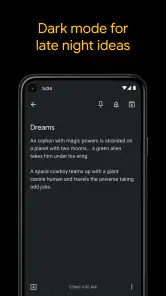
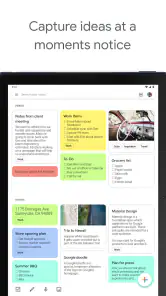
Analysis by Reviewed
I reach for Google Keep - Notes and Lists when I need to catch an idea before it disappears, not when I want to build an elaborate productivity system. That distinction explains both its appeal and its limits: it makes everyday notes quick to capture and easy to revisit, but it doesn’t replace a full task manager or a carefully structured notebook. For errands, reminders, short plans, and bits of information I want close at hand, I find it refreshingly low-friction.
That quick-capture role is especially useful in the gaps of an ordinary day: while I’m walking between appointments, unpacking groceries, or listening to someone explain a plan. I can save the useful detail first and decide what to do with it later. The app works best when I treat it as a reliable landing spot for small pieces of information, rather than expecting it to organize every part of my life automatically.
Where quick capture pays off
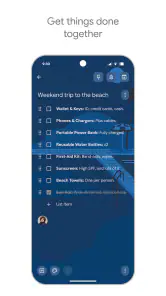
A realistic example is planning a weekend away. I can start a packing checklist, add places friends recommend to a separate note, and keep a shared list of things to buy before leaving. Each note has a narrow job, so I can find the right information without scrolling through a long document. Once the trip is over, archiving those notes clears them from the active view without requiring me to delete details I might want later.
The Latest on Google Keep - Notes and lists
For a busy household, a shared list can also reduce the familiar back-and-forth of asking who remembered what. I would keep it focused on items that people can add or tick off, rather than using the same note to hold dates, decisions, and lengthy discussion. That simple boundary makes collaboration more useful: the list stays readable, and everyone can see the current state without sorting through a conversation history.
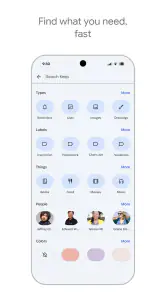
Voice capture is handy when typing would interrupt what I’m doing, but I see it as a way to get a thought down rather than a polished record. I would quickly revisit an important voice note and make its purpose clear, especially if I expect to search for it later. The same principle applies to images: they are useful when a picture is the information I need to retain, but a short descriptive title makes that saved item easier to recognize among other cards.
Unpacking the Features
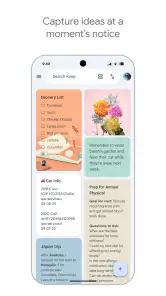
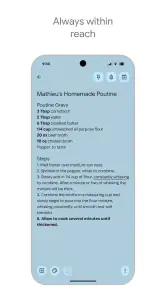
First off, let’s talk about the goodies packed into Google Keep. You can create notes in various formats - think text, lists, images, and even voice memos. This feature alone is a game-changer for those of us who like to capture ideas or reminders in the most convenient way possible. You can even color-code your notes, which is a delightful touch for the visually-oriented among us.
Those formats work best when each note has one clear purpose. I might keep a running grocery list separate from a quick note about a book someone recommended, rather than turning one note into a catch-all page. Color can then serve as a lightweight visual cue: for instance, I can use one shade for household errands and another for ideas to revisit. It is not a substitute for folders or a detailed filing system, but it can make a busy screen easier to scan.
More From Our News Desk

MobiOffice: Transforming Mobile Productivity with Seamless Integration

EA SPORTS FC™ Mobile Soccer: Redefining Mobile Sports Gaming

How Microsoft OneDrive Became a Mobile Productivity Giant

How Google Translate Breaks Language Barriers Effortlessly
Why Google Sheets Is the Ultimate Mobile Productivity Tool

Unveiling the Dynamic World of My Talking Tom Friends
One useful habit is to decide what a color means before applying it widely. If I use the same shade for unrelated things, it stops helping; if I reserve it for a recurring kind of note, I can spot that group faster. Titles do a different job from color: they tell me what a note contains, while color gives me a quick visual hint. Using both sparingly is more effective than trying to turn the home screen into a complicated filing scheme.
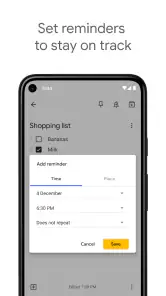
Another cool feature is the ability to set location-based reminders. So, next time you’re near the grocery store, Google Keep will nudge you to pick up those much-needed snacks. It’s like having a personal assistant who remembers all the things you tend to forget. And if you’re working on a project with friends or family, the app allows you to share notes and collaborate in real-time. It’s perfect for planning that surprise birthday party or organizing a group trip.
A useful everyday routine is to add items to a shared trip or meal-planning note as they come up, then let everyone involved update the same list instead of passing around screenshots. For personal errands, a location reminder can be more useful than a plain checklist when the task only makes sense at a particular place. I would still keep the note concise: reminders are most dependable as prompts for a specific action, not as a replacement for planning a complicated schedule.
Reminders and collaboration need a light touch
Location reminders are most valuable when the place itself is the trigger: picking up a particular item near a shop, or remembering to ask a question when I arrive somewhere. They are less suited to tasks that depend on a precise sequence or several changing conditions. I would write the action in direct language and avoid bundling unrelated errands into one reminder, so the prompt is still meaningful when it appears.
Shared notes are similarly strongest when collaborators have a clear, modest task. A shopping list or a short collection of trip suggestions is easy for everyone to understand and update. For a plan that needs extensive discussion, ownership, or a record of decisions, I would pair Keep with a communication or project tool instead. A shared note keeps the current list visible; it is not a substitute for coordinating a complicated project.
Why It Stands Out
What really makes Google Keep shine is its seamless integration with other Google services. If you’re already in the Google ecosystem, syncing your notes across devices is as smooth as butter. Your notes are accessible anywhere, anytime - whether you’re on your phone, tablet, or computer.
That cross-device convenience changes how I use it: I can jot something down on my phone while out, then pick it up later from another device without having to copy it manually. Google Keep is made by Google LLC, and the familiar Google account environment is a natural fit for people who already use its services. If you prefer to keep work, school, and personal information in separate ecosystems, though, that same close fit may be less appealing.
For example, I might note a question during a commute and then open it later while working at a computer, where it is easier to turn the thought into a more considered plan. That handoff is useful because I do not have to decide at capture time whether an idea deserves a permanent home. It also means the app can serve as a bridge between spontaneous notes and more formal work, provided I move important material into a better-structured place when it grows.
The user interface is another highlight. It’s simple, clean, and intuitive, making it easy for anyone to dive right in without a steep learning curve. Plus, it’s free! In a world where apps often come with a price tag, having such a robust tool for free is a breath of fresh air.
In practice, the quick-capture approach is the point: I can save a thought without first deciding which project folder, database, or elaborate template it belongs in. That makes it a strong companion for people who want a digital scratchpad and a shared list, rather than a workspace they need to maintain. It also suits occasional note-takers who would rather open one straightforward app than learn a system with lots of settings.
Compared with a basic notes app, Keep puts more emphasis on visual cards, checklists, colors, and reminders. Compared with a task manager, it asks for much less setup but also gives less structure for priorities and multi-step work. A notebook-style app can be a better choice when I want chapters, nested sections, and long-form writing; Keep is better when I want to capture something quickly and see it without navigating a deep hierarchy.
That difference can help answer a common question: should Keep become the one place for every note? I would not make it my only archive if I regularly write long documents or need a carefully organized reference library. For short-lived plans and small facts I want to retrieve quickly, its lighter structure is an advantage. For material that will be revised, cited, or built on over time, a dedicated notebook or document editor is the safer fit.
Google Keep is a free productivity app for everyone. Its 4.7 average rating from around 2.1 million ratings, along with over 1 billion installs, suggests that this simple approach has broad appeal. Those figures are useful context, but I would choose it for the way it fits my habits, not because it is popular.
Room for Improvement
Of course, no app is perfect. While Google Keep offers a lot, it could still use a few tweaks. For instance, more formatting options for text notes would be a welcome addition. Sometimes, you just want to bold or italicize a word, you know? Also, while the app is fantastic for quick notes and reminders, it might not satisfy those looking for more advanced task management features.
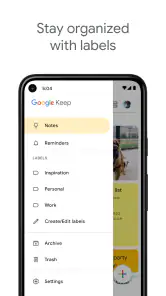
This is where I would draw a practical line. If I needed to track a project through several stages, assign detailed responsibilities, or review a long document with rich formatting, I would choose a tool built for that job. Keep’s cards can become cluttered when every thought becomes a separate note, and a color scheme only helps if I use it consistently. A small habit helps: title notes so they are recognizable at a glance, and archive finished items instead of letting old lists crowd the active ones.
The lack of a deeper structure also changes how I would use it for study or research. It can hold a quick definition, reading reminder, or idea for an essay, but a growing body of notes may become harder to connect and review. If I need to compare sources, maintain a detailed outline, or build a reference collection with several layers, I would choose a tool designed around that workflow rather than forcing Keep’s cards to behave like a formal notebook.
There is a similar trade-off with task planning. A checklist is clear when the next action is obvious, such as packing several items or picking up groceries. It becomes less helpful when tasks have dependencies, deadlines, or different people responsible for each step. In that situation, a dedicated task manager can show progress and ownership more clearly. Keep is not failing at its job; the job is simply narrower than full project management.
It is also worth thinking about what belongs in a quick-note app. I use it for ordinary reminders, lists, and ideas, not as my only home for information that needs formal structure or careful long-term organization. People who want nested notebooks, extensive formatting, or a detailed workflow may be happier with a dedicated notes or project-management app. The trade-off is that those alternatives can take more setup, while Keep stays easy to open and use.
For privacy-minded users, my practical advice is to be deliberate about what goes into any account-based note service. Keep is convenient for routine information, but I would avoid treating a casual note as a secure document vault for sensitive records. If the contents require strict controls or a specialized privacy workflow, I would select a service built around those needs rather than relying on convenience alone.
But hey, for a straightforward, easy-to-use note-taking app, Google Keep - Notes and Lists hits the mark on many fronts. It’s like that trusty notebook you carry everywhere, only smarter.
So, if you’re searching for a way to streamline your thoughts and keep your life in check, give Google Keep a whirl. You might just find it’s the organizational tool you never knew you needed.
My recommendation is specific: try it if you want a free, approachable place for short notes, checklists, quick voice captures, and shared plans. Skip it if your ideal setup depends on deep document editing or rigorous project tracking. I see its strength as making small tasks easier to remember, without asking me to turn note-taking into another project.
Who will get the most from it
I think Keep is a particularly good fit for people whose notes are mostly small and practical: students tracking quick reminders, households maintaining shared lists, or anyone who wants somewhere to put an idea before getting back to the day. It is also useful for people who move between a phone and a computer and already use Google services, because the familiar account environment can make those notes feel close at hand.
I would be more cautious recommending it to someone who enjoys building a carefully layered personal knowledge system. The open, card-based feel is freeing at first, but it puts more responsibility on the user to keep titles clear, archive what is finished, and avoid accumulating an unsearchable pile of fragments. If organizing the archive is as important as capturing the thought, a notebook app with deeper structure may be a better match.
My final test is simple: if I can describe the thing I need to remember in a sentence or two, Keep is often a comfortable place for it. If I need to explain the background, track several contributors, or preserve a polished document, I would move to a tool made for that work. Used within that boundary, it remains a genuinely useful everyday companion rather than an underpowered replacement for every productivity app.
Google Keep - Notes and lists Frequently Asked Questions
Is Google Keep a good choice for quick reminders and everyday notes?
Google Keep is built for capturing information without turning note-taking into a complicated process. You can save written notes, make lists, and use reminders to bring tasks back to your attention. It suits everyday planning, shopping lists, and ideas you want to revisit. If you need a more elaborate project-management workspace, its straightforward approach may feel limited.
Who develops Google Keep, and what is its age rating?
Google Keep is developed by Google LLC and is rated Everyone, making it suitable for a broad audience. It is a productivity app focused on notes and lists, rather than a specialized tool for a particular profession or age group. The simple format is approachable for everyday use, whether you want to collect ideas, organize small tasks, or keep practical information in one place.
Can I use Google Keep without an internet connection?
Google Keep is useful for capturing ideas and checking notes while you are away from a connection, though syncing changes across devices requires internet access. If you edit a note offline, those changes can sync once your device reconnects. This makes the app practical for quick lists and reminders on the go, while keeping your notes available across platforms.
Do I need a Google account to use Google Keep?
Google Keep is designed to work with Google services, so a Google account is central to accessing and synchronizing your notes. Signing in lets you use the same collection across supported devices and the web. Before downloading, consider whether you are comfortable keeping notes within your Google account, especially if you plan to use Keep for personal lists or shared projects.
Can Google Keep turn voice recordings or images into notes?
Google Keep supports voice memos as well as written notes and lists, making it handy when typing is inconvenient. You can also keep images alongside your notes, which can help when saving visual references or information you want to revisit. These options make Keep more flexible than a basic text-only notepad, while still keeping everyday capture simple.
Pros
- Easy cross-device syncing
- Intuitive user interface
- Voice memos and transcriptions
- Handwritten notes support
- Collaboration with others
Cons
- Limited formatting options
- No dedicated desktop app
- Basic organization features
- No offline mode
- Limited export options
- Category
- Productivity
- Version
- Varies with device